Researchers are tackling Alzheimer’s disease earlier than ever before, with new strategies to detect, prevent, and treat the disease highlighted at the Clinical Trials on Alzheimer’s Disease (CTAD) conference, held November 16-19, 2026, in Boston. Researchers shared longer-term results for a promising tau-targeting therapy, new data on a daily pill and an at-home light and sound device, and growing evidence that a common vaccine may help protect the brain.
Continue reading to learn about the latest findings shaping the future of Alzheimer’s treatment and care.

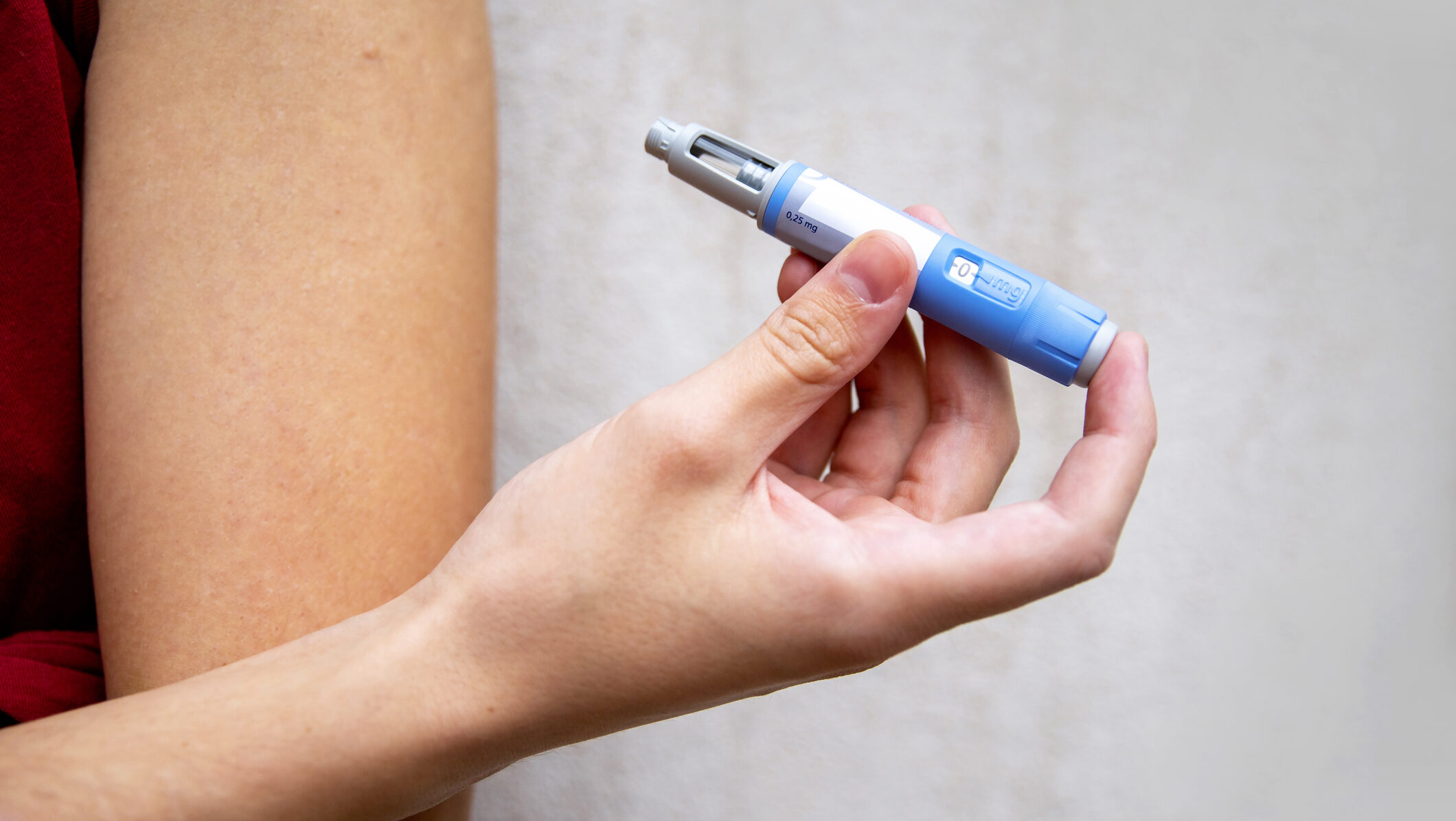
Can the shingles vaccine reduce dementia risk?
Stanford researcher Dr. Pascal Geldsetzer presented growing evidence of a link between a shingles vaccine and reduced risk of developing dementia. His team took advantage of “natural experiments” in Wales, Australia, Canada, England, and Scotland, where an older, live version of the shingles vaccine was offered only to people born after a specific date. In Wales, for example, people born after September 2, 1933, could get the vaccine, while those born before could not.
People who were eligible for the vaccine were less likely to be diagnosed with dementia or mild cognitive impairment, and the benefit was consistently stronger in women in the Welsh and Australian data. Newer findings suggest that the vaccine could also slow memory decline years before diagnosis and possibly even reduce deaths among people living with dementia.
It’s important to emphasize that these data do not come from randomized clinical trials but rather from comparing groups of people separated by a specific cutoff date. The research also involved an older form of the shingles vaccine that is different from the one used in the U.S. today. Finally, several of the findings presented are still awaiting peer review, and scientists don’t know how the vaccine might protect the brain. Nevertheless, Dr. Geldsetzer emphasized that a 20% reduction from a single, safe vaccine is a large effect even with several outstanding questions.
The shingles vaccine is already recommended in the U.S. for adults 50 and older. Talk to your doctor to learn more.

Alzheimer’s drug shows greater benefit after two years
Biogen shared two years of results from its CELIA study, which looked at diranersen—an experimental drug that takes a different approach from today’s approved Alzheimer’s treatments. Instead of working to clear amyloid tangles, diranersen reduces the brain’s production of tau, the protein that can form tangles inside of nerve cells. Given by spinal injection, it was tested in people with early Alzheimer’s disease.
At the lowest dose tested, diranersen given twice a year slowed decline in memory and daily functioning by 38%. This was an improvement over the 26% decline at 18 months that had been previously reported. People’s ability to handle everyday tasks, which hadn’t shown improvement at 18 months, now showed 30% slower decline, and the drug remained well tolerated with no new safety concerns.
While encouraging, there are some important caveats to these findings. The participants tested at two years knew whether they were receiving the drug, and the lowest-dose group only included about 60 people. Furthermore, higher doses did not perform as well as the lowest dose, which was unexpected. In a statement, Biogen says it plans to use these results in support of a phase 3 trial designed to verify its efficacy and safety.
Learn more about the connection between Alzheimer’s and tau.

POLARIS-AD trial shows mixed results for Alzheimer’s pill
A repurposed medication, AR1001 (mirodenafil), slowed cognitive decline by 31% in people with Alzheimer’s who were not already taking another medication according to phase 3 trial results presented by AriBio. AR1001 is a once-daily pill designed to boost a chemical messenger used by brain cells to form memories and stay healthy, and it may also improve blood flow in the brain. The POLARIS-AD trial was a one-year test of more than 1,500 people in 13 countries who are living with early Alzheimer’s.
Looking at everyone in the study, the pill did not slow decline more than a placebo. However, among the 604 people who weren’t taking other Alzheimer’s medications, cognitive decline slowed significantly. In addition, a marker of tau in spinal fluid was also modestly reduced in this group. Importantly, the study was designed in advance to test both groups of participants.
“The work of POLARIS-AD is another step towards filling an unmet need in early Alzheimer’s disease in which patients need more options for treatment,” said Sharon J. Sha, MD, MS, global principal investigator of POLARIS-AD in a statement.
A pill taken at home, without infusions or the need for regular brain scans, would be a major step for people living with Alzheimer’s and their families. Additional testing is needed before AR1001 can be approved for use, but these initial results are encouraging.
Listen to a recent Zoom In on Dementia & Alzheimer’s episode discussing blood flow, cognitive decline, and vascular dementia.
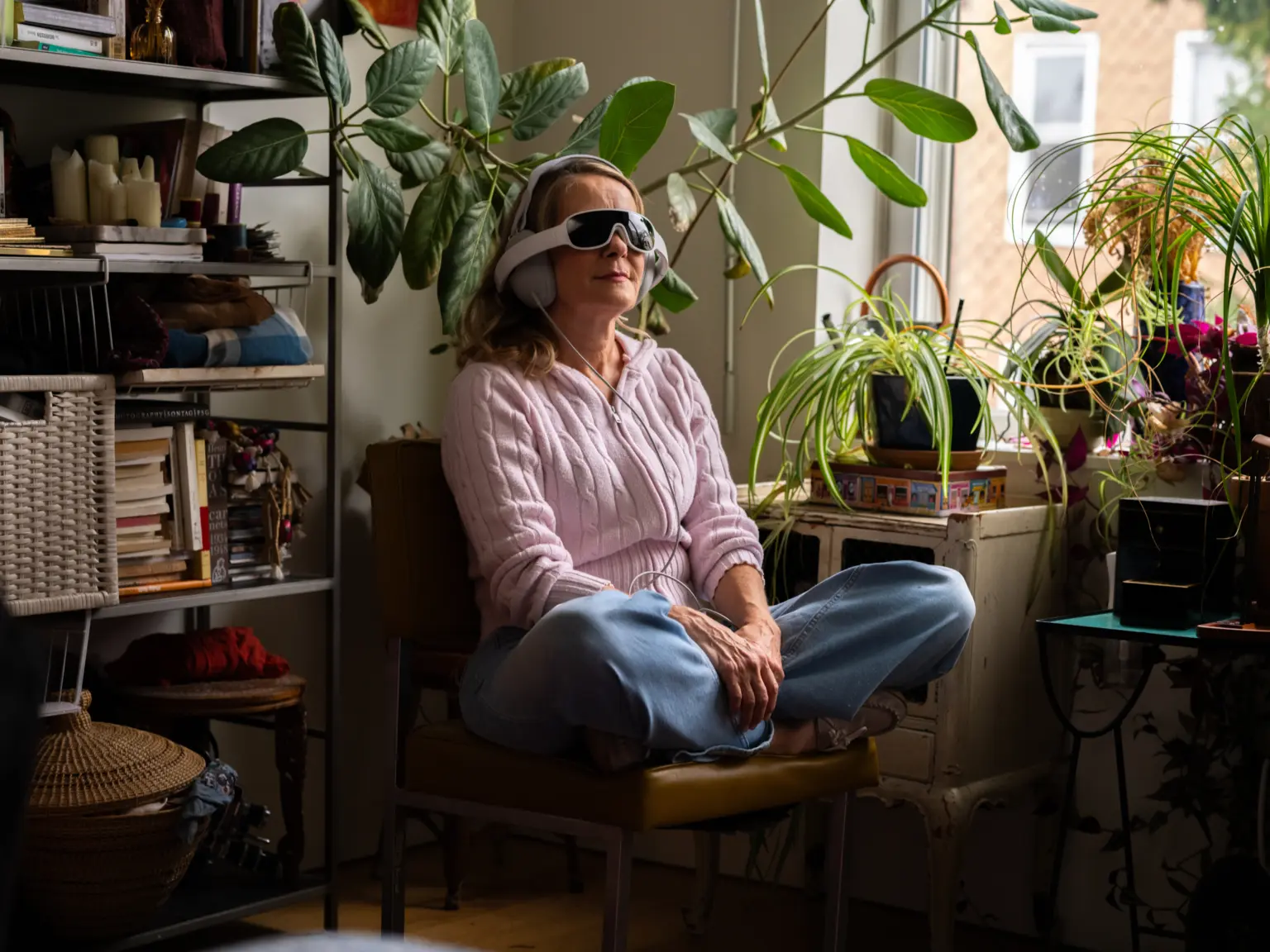
Light and sound therapy shows promise in mild Alzheimer’s
Cognito presented results from its HOPE Study, testing an investigational, non-invasive device that delivers 40 Hz audiovisual stimulation at home in people with mild-to-moderate Alzheimer’s disease.
The device, called Spectris, did not meet its primary endpoint overall, but showed promising results in slowing disease progression in people with mild Alzheimer’s. Compared to a control device, Spectris slowed decline in five different measures of efficacy, with effects ranging from 28.6% to 55.8%.
Spectris is a device worn over the eyes and ears for about an hour a day. It delivers light and sound pulsing 40 times per second, and this kind of stimulation has been shown to boost gamma waves in the brain, a type of rhythm linked to memory and attention.
“These findings provide additional evidence that gamma sensory stimulation has the potential to modulate brain network activity in ways that may be clinically meaningful for patients with neurodegenerative disease,” said Christian Howell, Chief Executive Officer, Cognito Therapeutics in a statement.
Want to learn more? Register to join a conversation on December 3, 2026, with Ralph Kern, MD, MHSc, who will discuss what these results mean for people living with Alzheimer’s.
Read our November 16, 2026 announcement.
Explore a couple of hot topics discussed at the conference:
Making strides in prevention and early detection
Across findings shared at the conference, the best results came when people were treated earliest. Based on five years of data on Leqembi (lecanemab), two-thirds of people who started treatment with low levels of tau showed no decline. New trials are moving earlier, such as Roche’s PrevenTRON study, which tests a new anti-amyloid drug in people with no symptoms who are at high risk and have been screened with a simple blood test. Those blood tests are making their way into primary care, pointing to a potential future where Alzheimer’s is found and treated before memory loss begins.
Inflammation’s connection to Alzheimer’s
The immune system and inflammation are increasingly seen as key drivers of Alzheimer’s. Roche announced the launch of a new phase 2 trial called TARBELA-AD to test a daily pill that blocks a key component of the immune machinery that sparks inflammation in the brain.
The shingles vaccine findings also point to a role for the immune system in Alzheimer’s. These efforts are still early, and there is still no direct evidence that calming inflammation slows progression, but the preliminary findings so far reflect a growing view that it will take several approaches working together to defeat Alzheimer’s disease.