The U.S. Food & Drug Administration (FDA) recently cleared two blood tests, PrecivityAD2® (C2N Diagnostics) and Elecsys® pTau217 (Roche and Lilly), to help identify the amyloid plaques associated with Alzheimer’s disease in adults with symptoms of cognitive impairment. These join Fujirebio’s Lumipulse and Roche’s previous pTau181 test as the only four FDA-cleared blood tests to help evaluate and diagnose Alzheimer’s disease.
“Alzheimer’s blood tests are a promising piece of the complex puzzle that is Alzheimer’s disease,” said Sharyn Rossi, PhD, BrightFocus Foundation’s Senior Director of Neuroscience Programs. “Their role in identifying harmful proteins in the brain complements other tools and tests to give clinicians a fuller picture of brain health.”
How do the tests work?
Confirming the presence of amyloid plaques, one of the hallmark features of Alzheimer’s, has typically required a PET brain scan or a spinal tap to test cerebral spinal fluid. While both are effective, they also have drawbacks: they are expensive, invasive, and hard to access if you live far from a major medical center.
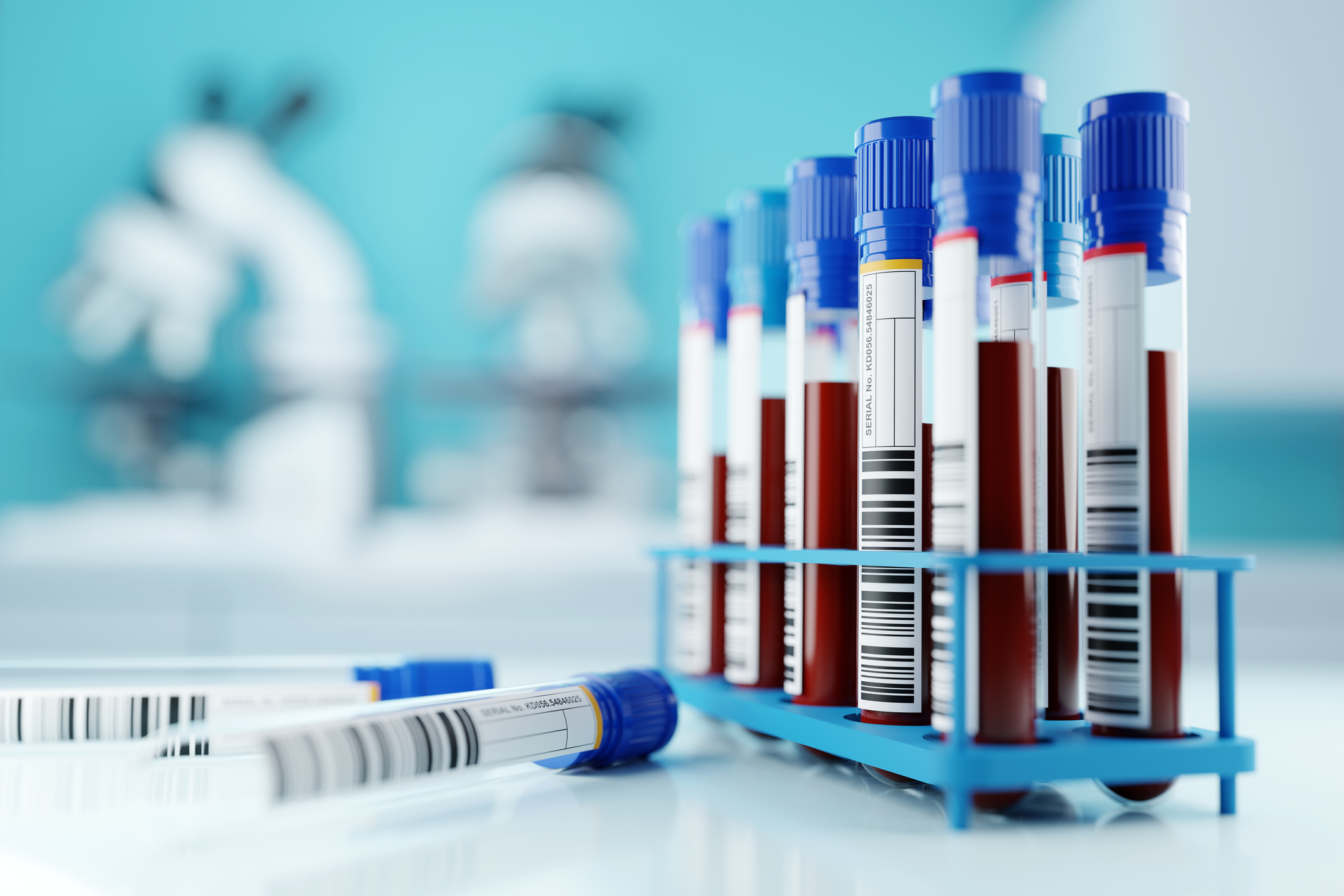
PrecivityAD2, Elecsys pTau217, and other Alzheimer’s blood tests offer a much simpler alternative: a blood draw that a doctor’s office can send out for analysis. While each works differently—Elecsys measures the level of pTau217 in the blood compared to a benchmark while PrecivityAD2 generates a probability score based on measurements of two types of amyloid and pTau217—both categorize results as positive, negative, or indeterminate for brain amyloid. Physicians can use these categories to decide on follow-up tests or next steps.on follow-up tests or next steps.
Importantly, a blood test alone cannot diagnose Alzheimer’s disease and should instead be considered as part of a comprehensive clinical evaluation of cognitive impairment.
What does FDA clearance mean?
Versions of both tests have been available through the manufacturers’ own laboratories and verified by Clinical Laboratory Improvement Amendments (CLIA) regulations. Under CLIA, a lab can validate and run its own test in-house without FDA review. This is how most blood-based Alzheimer’s tests are administered today: real tests being used in a clinical setting, with data and evidence on clinical efficacy typically reviewed internally by the company’s lab running the tests rather than oversight from a third party.
FDA clearance changes that. It means that an outside federal agency has reviewed the evidence of the tests’ efficacy directly. In this case, clinical studies involving thousands of people with cognitive symptoms showed that both tests performed as claimed against PET scans and spinal fluid results, the current reference standards.
Clearance also allows the test to be marketed and sold to other clinical labs and hospitals, making them more accessible. It could also help encourage Medicare and other insurers to cover the cost of the tests.
How accurate are the tests?
The FDA’s clearance decisions rested on rigorously tested clinical data from several thousand samples that were compared to reference standards such as amyloid PET scans and spinal fluid analysis. Both PrecivityAD2 and Elecsys pTau217 were highly accurate at predicting which individuals would be amyloid-positive or amyloid-negative.
However, not every result fell neatly into a positive or negative category. Some participants receiving either test were given an intermediate “likely positive/intermediate” categorization. For that group, additional clinical workup is recommended.
Overall, the tests performed consistently across different age groups and in people with common conditions like diabetes, chronic kidney disease, and atrial fibrilation, which can sometimes interfere with other blood-based tests.
A foundation supported by BrightFocus funding
PrecivityAD2 builds upon the same science that gave rise to the original PrecivityAD blood test, which in 2020 became the first Alzheimer’s blood test to reach the market. Early funding from BrightFocus’ Alzheimer’s Disease Research program supported the earliest chapters of that story.
Both recipients of several Alzheimer’s Disease Research grants early in their careers, Randall Bateman, MD, and David Holtzman, MD, both at Washington University in St. Louis and cofounders of C2N, made seminal discoveries studying how the APOE gene influences Alzheimer’s risk and developing methods to measure and track tau and amyloid buildup in the brain.
In 2016, C2N researchers Joel Braunstein, MD, MBA (now C2N’s CEO and president) and Philip Verghese, PhD (now C2N’s senior vice president of research and development), received a $750,000 Alzheimer’s Disease Research grant to commercially develop the PrecivityAD test. Dr. Verghese had also previously received an Alzheimer’s Disease Research postdoctoral fellowship award for a project studying the link between APOE variants and the production and aggregation of amyloid-beta.
Thanks to its generous donors, Alzheimer’s Disease Research is poised to fund scientific projects like these: high-risk, high-reward studies that ultimately lead to real-world benefit to people living with cognitive impairment and Alzheimer’s disease. The FDA clearance of PrecivityAD2 is only the latest return on these investments, and one that highlights the considerable impact individual donor support can have on the trajectory of Alzheimer’s disease.
Be part of the next breakthrough—learn how you can help support our work.