Transcript
Download PDF
Please note: This transcript has been edited for clarity and brevity.
NANCY KEACH: From BrightFocus Foundation’s Alzheimer’s Disease Research Program, I’m Nancy Keach. Welcome to the 43rd episode of Zoom In on Dementia & Alzheimer’s. This series is generously sponsored by Biogen, Genentech, and Lilly. And we are deeply grateful to these sponsors for making these free programs possible.
Today’s program is “Stroke, Vascular Dementia, and Alzheimer’s: What’s the Difference?” And I’m delighted to introduce today’s guest expert, Dr. Jason Hinman. Dr. Hinman serves as the director of the Mary S. Easton Center for Alzheimer’s Research and Care at UCLA. He is a physician-scientist, associate professor of neurology, director of the West Los Angeles VA Stroke Program, and a recognized expert in stroke and the vascular contributions to dementia. Welcome, Dr. Hinman.
DR. JASON HINMAN: Thank you, Nancy, and thank you to BrightFocus. I’m delighted to be here this morning.
NANCY KEACH: We’re very, very happy to have you, very grateful. So we received 180 advanced questions for this episode, and they focused generally in four categories, very broadly speaking, that I’m going to try to cover with Dr. Hinman today. What are stroke, vascular dementia, and Alzheimer’s? What are the differences? And where are the overlaps? Number two, how do you get the right diagnosis or diagnoses? Number three, treatment and management strategies for each of these, and number four, prevention strategies for each of these.
I want to start with the fact that May is Stroke Awareness Month. And that’s why we were really eager to have Dr. Hinman on for May. So I’m going to start very basic. And then we’ll get a lot more complex and in the weeds. But what is a stroke? And how do we know when a stroke has occurred?
DR. JASON HINMAN: Thank you, Nancy, and thank you for highlighting Stroke Awareness Month. It’s a critical issue as we see the rates of stroke continuing to increase across the country and the world. Stroke generally falls into two broad categories. The vast majority, about 85%, of strokes result from a lack of blood flow to the brain. This typically occurs acutely. And depending on where it occurs in the brain, that dictates what symptoms will result from it.
The second major type of stroke is what’s called a hemorrhagic stroke or involves bleeding into the brain or the space around the brain called the subarachnoid space. And these can be significantly disabling strokes. They fortunately make up a minority, but they also, depending on where that bleeding occurs, dictates what symptoms are predominant.
Generally, in the US, we use an acronym for stroke awareness. I’ll talk about it briefly. So we use the term BEFAST. And that refers to changes in balance. That can be a sign of stroke. Changes in eyesight or vision can be an indication that there’s a change in brain blood flow. FAST– F refers to asymmetry in one’s face. That can be an indicator of stroke. A is for arm. Arm weakness can be another classic indicator of stroke, usually one side, not the other. And then S stands for speech, so problems that develop acutely in speech, inability to speak or inability to articulate words. That can be another key warning sign of stroke. And the T stands for time. One of the key components of both types of stroke is the urgency for treatment. So recognizing those symptoms is key. Activating EMS or arriving to a local emergency room for timely treatment is the first and most important step in getting appropriate care.
NANCY KEACH: Can you go through those again one more time? Just the acronym for people who are writing it down so that they can get that down.
DR. JASON HINMAN: The acronym again is BEFAST. So the first symptom that can be a sign of acute stroke is a sudden change in balance. E stands for a sudden change in eyesight or vision. F is a facial asymmetry, one side of the face drooping. A is for arm weakness, so inability to use one’s arm or difficulty using the arm. S for speech, so acute changes in speech that occur. And the T is a warning that that’s the action plan, which is it’s time to get treatment right away. And so there are other symptoms of stroke that can occur, but these are some of the most common and a very useful acronym that the American Heart Association has adopted and tried to utilize around the country.
NANCY KEACH: Someone actually asked about something I had never heard of called alexia. I know aphasia, which is that inability to speak, but I had not heard of alexia, which I guess is an inability to read. Is that potentially a symptom? Or is that a result no relation?
DR. JASON HINMAN: No, it can be a symptom of stroke. It’s not a particularly common symptom. It’s often difficult for patients to recognize necessarily, not as common as the others that we talked about, although with increased mobile phone use, it has been noted as one of the things that people report when they come in that they’re having trouble using their cell phone, interpreting messages, or reading the news, or things of that nature. So yes, it can be a sign of acute stroke.
NANCY KEACH: Really interesting. And thank you to all the people who are putting in the YouTube comment their greetings from all over the country. It’s great to see it, and I appreciate it. Diane from Texas asked, “Is a brain bleed the same thing as a stroke? And is a brain aneurysm that bursts the same thing as a stroke?”
DR. JASON HINMAN: Yeah, it’s an excellent question. We use the terminology stroke to refer to the sudden onset of neurologic symptoms. When one experiences those, we don’t immediately know why that’s the case. And so it’s a clinical term that refers to the acute onset of neurologic deficits. A brain bleed is a form of stroke. Then as a result of that, both the two types that I talked about, bleeding that goes directly into the brain or bleeding that goes into the space around the brain called the subarachnoid space, which is often caused by a bleeding aneurysm. And so both of those are forms of stroke.
NANCY KEACH: Thank you. So now, I want to turn to, what are the differences between stroke, vascular dementia, and Alzheimer’s disease? So many questions about vascular disease and Alzheimer’s disease. Differences, similarities?
DR. JASON HINMAN: Sure. Yeah, it’s a really important point, and I’m glad we’re discussing it. So we just finished talking about acute stroke, which is when the first presentation of a neurologic deficit. But we understand now that a significant component of the population is at risk for damage to the smaller blood vessels. And sometimes they can become acutely blocked and cause a stroke. They usually have very limited symptoms in that scenario. They’re not always disabling. They’re one of the more common forms of stroke.
But the smaller blood vessels are throughout the brain. And so these can also become slowly occluded or damaged. And if they’re not in an area of the brain that we’re using regularly, let’s say, the neurons that control our ability to move, walk, speak, but perhaps remember a particular piece of information, then unless we’re trying to remember that piece of information, we don’t necessarily know that they’ve been damaged.
Some of the terminology that’s been used recently is the concept of a silent stroke, one that can occur in a portion of the brain that we’re not accessing regularly, and therefore, we don’t know that we have a problem there until these tend to accumulate over time. And this, where the smaller blood vessels of the brain have been damaged chronically over a long period of time in areas of the brain that were not necessarily accessing regularly, is the most common form and presentation of vascular dementia.
You can certainly get dementia after a large disabling stroke. And we have an active national study looking at what the risk factors of that are and how we might then tailor treatments for it. However, the more common form is this silent accumulation of vascular brain injury over time. This is different from Alzheimer’s disease in its purest form in that we don’t think it necessarily involves the accumulation of brain amyloid or tau, two of the hallmark features of Alzheimer’s disease.
However, we understand now that most patients– when we look at brains of patients who passed away, the vast majority have components of both cerebrovascular disease, those silent strokes that I mentioned, and the brain pathologies associated with Alzheimer’s disease. So it’s often very difficult to separate them. And we recognize this now as referring more classically to mixed dementia, that the most patients have a form of mixed dementia rather than a very specific diagnosis.
NANCY KEACH: Then that’s something you were telling me before we opened up the Zoom today, that the mixed dementias are more common than having one specific. And we’re going to get into that because there were a lot of questions about, how does one turn into another? Can you have both?
A couple of questions that have come in the interim. From YouTube, a question from Terry, “With a stroke, are there multiple system symptoms like you described in BEFAST, or can there be just one of those symptoms?” Or as you were just describing with vascular disease, it almost seems like there could be no symptoms, too.
DR. JASON HINMAN: Yeah. So strokes that require acute treatment generally have one or more of the symptoms that we describe with the BEFAST. As I indicated, those are not the only symptoms. But in the spirit of raising public awareness, we tried to think about what the most common symptoms were. So any change in acute neurologic function can be concerning for a stroke. There are very few other alternative diagnoses.
And so I think that if folks are experiencing those or recognizing them and others in family members or friends, it really is appropriate to bring that family member or friend to the emergency room for evaluation. If the brain has reduced blood flow or has a brain hemorrhage, it doesn’t tolerate that very long. So we really do have to take aggressive action and generally do that within the first few hours after the stroke to minimize the likelihood of a long-term damage.
NANCY KEACH: So if you think it may be happening, don’t wait.
DR. JASON HINMAN: That’s correct.
NANCY KEACH: Jen from Midlothian, Texas, asks, “Do strokes always result in vascular dementia?”
DR. JASON HINMAN: No. I mean, the hidden secret is that the vast majority of patients make a strong recovery after a first stroke. They don’t always return to their pre-stroke functionality, but most patients, on average, recover at least 65% of function. Some with smaller strokes can get back almost to normal or have very minimal symptoms that don’t really affect their day-to-day life. Larger strokes can be quite disabling. And we understand from population studies in the UK that first strokes do have a risk of developing dementia over a five-year period. It’s about 40%. And it does depend on the severity of the initial stroke.
As I mentioned, we have a large US study called DISCOVERY that’s being conducted across 30 different stroke centers in the US to understand, in the US population, what are the risk factors that beget that risk of developing cognitive impairment after stroke? Is it dependent on one’s brain health before the stroke? Is it dependent on specific features of the stroke, say, where in the brain it occurs? Is it due to underlying genetic differences or a variety of other features that we’re looking at? And that study is about half done and quite large scale, so it’s taking some time to execute.
NANCY KEACH: Is that study still recruiting, Dr. Hinman?
DR. JASON HINMAN: It is, at least 28 centers around the country. There is a website for the study. I don’t have it offhand, but if one searches for DISCOVERY study, you’ll find it. And you can see these centers that are participating in that. Unfortunately, one has to have an acute stroke at the moment in order to qualify. So if you’ve had a stroke in the past, that’s not exactly what we’re studying. We want to capture patients immediately after the stroke and then follow them.
NANCY KEACH: No. And that’s probably why it’s taking a bit longer. But that’s great. Everybody, spread that information around for people who have a stroke that there’s the opportunity to participate in that study. And before we leave stroke a little bit, Marlene wrote in, can you describe a watershed stroke, please?
DR. JASON HINMAN: Yeah, it’s a really insightful comment. The brain has robust blood supply. There are about 400 miles of brain blood vessels that supply the brain. That’s considerable. And while it does a great job, there are these areas that are deep in the brain that we refer to as watershed territories, meaning that they don’t have direct blood flow themselves. They share the end capillary flow from two different blood vessels where they meet in the middle. And as a result, they make those areas of the brain somewhat vulnerable when the body cannot supply adequate blood flow to the brain. And this can commonly occur if one’s heart stops or one has heart failure and you’re unable to pump blood all the way up to those tiny capillaries in those specific regions of the brain. And it makes that area somewhat vulnerable for a stroke or lack of blood flow injury.
The other thing I’d say is that this is– I mentioned two conditions where this can occur. The other thing that people should be aware of is if you have narrowings of your carotid arteries, the major arteries in the neck that bring a majority of blood supply to the brain, this can also result– if you have narrowing there, it can result in watershed strokes as a result of that. And it’s something that we now can be pretty aggressive about treatment with surgery or stenting for the carotid artery.
NANCY KEACH: Thank you. Now we’re going to move towards the question of diagnosing and knowing which one is which when you’re having symptoms. So Christopher from New York asked, “What is the biomarker or other measure or observation which can distinguish between vascular dementia and Alzheimer’s dementia?”
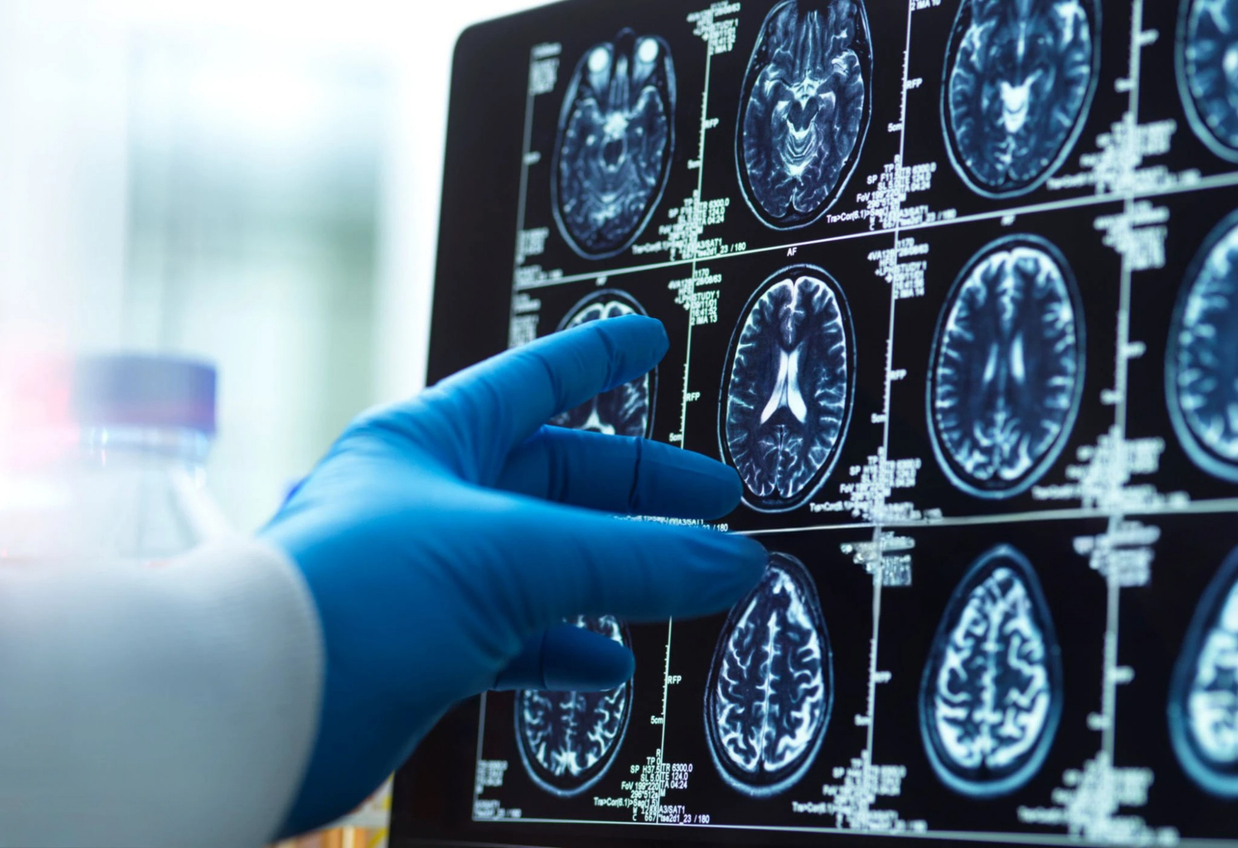
DR. JASON HINMAN: Yeah, it’s a really excellent and another insightful question from your audience. So right now, the tools that your doctor would use to make that distinction is a structural MRI scan of your brain. There are particular sequences that we acquire on that MRI scan that can inform us about something folks may have seen in their MRI scans, often referred to as white matter hyperintensities. And these are areas of abnormality that occur generally in the frontal lobes, also in the parietal lobes, and are an indication of vascular brain injury, the type of silent stroke that we were talking about earlier. This is the best current biomarker for evaluating whether there is any component of vascular injury to one’s cognitive impairment.
My lab and a national consortium are also working aggressively on identifying other biomarkers. We have a national consortium which we refer to as MarkVCID, which is designed to identify new biomarkers for vascular cognitive impairment. And we are in the midst of finalizing a validation of four different novel MRI markers that can be more informative, that include things like how the brain’s blood vessels react to stress, whether the MRI scan can show injury to those smaller blood vessels that are often difficult to see with routine imaging, and then some advanced measures that are precursors of those white matter hyperintensities that I was talking about.
My group has also worked on a variety of blood-based biomarkers. We know that that’s really transformed how we think about early detection and diagnosis of Alzheimer’s disease. We’re trying to apply those same principles to vascular dementia. And we’ve worked on a couple, specifically including a profile of neuroinflammation that can be indicative of one’s future stroke risk and associates well with those white matter hyperintensities that are on MRI. We’re working to advance that and make that available for patients soon.
And then the other thing that we’re working on is– one thing that happens when blood vessels are injured is they release some signals that say we should make new blood vessels. And so this process is called angiogenesis or the formation of new blood vessels. And there are some markers of that that we’re looking at as whether they’re indicators of the risk for vascular dementia.
NANCY KEACH: So here’s a completely unfair question. But it’s very exciting when you talk about for potentially new or additional biomarkers and all of these, and the blood tests, and so on. Do you have an idea of a timeline for when some of these things might be accepted or proven to be acceptable for use?
DR. JASON HINMAN: Yeah, I think it’s in the fairly soon future. I would think within three to five years, we will have convincing evidence of advanced biomarkers on the imaging side. They can be utilized by your doctor and employed around the country in the world to enable early advanced detection of vascular brain injury. On the blood biomarker side, I think it could be even sooner than that. And one of the challenges always in moving things from the research environment to full-scale patient access is the commercialization component. So that’s often the most challenging piece. But that is in progress.
NANCY KEACH: Thank you. And I’m going to ask you to not spend too much time on this perhaps, but it’s because it’s a technical question. But Damon from Japan asked, regarding how vascular dementia is diagnosed, do you believe arterial spin labeling techniques are an advantage over contrasting techniques? What are the downsides of using ASL, arterial spin labeling, for evaluation of vascular dementia?
DR. JASON HINMAN: Yeah, it’s a very technical question. There are several ways that we look at brain blood flow. And some of the techniques we’ve been talking about thus far measure the injury or the damage to the brain. And we make assumptions about what caused that. The better way to look at things is to actually look at what the physiology or the blood flow is and how it’s changing. And we’re able to do that with the kind of a gross level of how much blood flow is getting to the brain using contrast-based approaches. And those are fairly well established.
For folks that aren’t familiar, when you go and get an imaging scan, you have to also get an IV. And then a contrast agent is introduced into the venous and arterial blood system. And we can measure using techniques of how– but based on the timing of when we introduce the contrast to when it reaches the brain, we can make mathematical assumptions about what that means for delays in brain blood flow, which are important.
Arterial spin labeling is a technique that takes advantage of the magnet. And so you can activate all the protons in your blood to go one way and then look at how they relax. And we can use that as a feature of how long it takes for blood flow to reach the brain. It’s somewhat less precise. It has the disadvantage of not being able to be very precise about the smaller regions, say, the watershed areas to measure how brain blood flow is arriving. So we don’t really have good techniques for the place where we think most of the injuries happening, which is at that those very small blood vessels.
NANCY KEACH: Thank you. OK we’re going to now be less technical. And I’m going to read a few questions because there were a whole bunch along these lines. Nancy from Chicago wrote, “Is vascular dementia often misdiagnosed as Alzheimer’s?” Lisa from Loxahatchee, Florida, “Why do many doctors call all forms of dementia Alzheimer’s disease? Is it a lack of knowledge or something to do with insurance possibly?” And Suzanne from Avon, Ohio, “Can an initial diagnosis of vascular dementia turn into Alzheimer’s? Or can a person have both?” So there’s a lot of questions along these lines. So can you respond to that, the misdiagnoses, everything being referred to as Alzheimer’s. People are often given these diagnoses and not told how the doctor has arrived at them, so I think that’s really an issue.
DR. JASON HINMAN: Yeah, I think it’s critical. So I want to be clear. One place where we should start is being clear about the nomenclature, the naming conventions we use for these things. So dementia is an end state of not being able to utilize cognitive function in a way that it impairs the common activities of daily living– being able to get dressed, take care of oneself, manage finances, communicate, other things like that.
When one reaches that stage, it’s important to understand why, but we also understand that it’s often difficult to reverse at that point. So one advantage of the last few years has been that we’ve started to be a little more specific about the terminology we’re using, because we now have tools to inform the biology in living patients.
When I was training, just even 12, 15 years ago, true Alzheimer’s disease diagnosis was something that could only be made after one passed. And we looked at the brain for certain pathologies. And so we were guessing. The tools that we have now, such as amyloid PET scans, MRI, blood and CSF spinal fluid biomarkers have made it possible to be more specific about the biologies that are occurring while patients are alive. And so that enables us to be more specific about what we think is the predominant contribution to a particular patient’s cognitive impairment or dementia.
And so I think folks should be pushing their providers to try to be more specific. For example, in the question that was provided, if I have a diagnosis of Alzheimer’s disease, what is it that led my physician to make that assumption and diagnosis? And I think now we have some tools that can enable that. So whether it’s a primary care or geriatrician making the diagnosis, perhaps one needs a specialty consult to be sure about that. If that particular person has had a stroke or even stroke in the family or stroke in themselves or has some of the common risk factors like high blood pressure and diabetes, it might warrant a specialist evaluation to say, what is the main contribution? And am I doing everything I can to prevent it from getting worse?
And then I think finally, this, again, was not so important until the last few years because now we understand we have treatments. So being clear about whether one has a diagnosis of Alzheimer’s disease can impact whether a patient considers the new treatments for Alzheimer’s disease. Some of the main risk factors for those treatments have to do with whether you have vascular brain injury, like small brain bleeds, or uncontrolled hypertension, and things like that. So we really need to be very specific about the diagnosis.
NANCY KEACH: And I just want to say to people, you are not alone in the confusion. A lot of doctors do not understand how to make these distinctions. And it’s something that the field is trying very hard to address. And BrightFocus is, in fact, about to start a whole education series of five- to seven-minute videos for providers by doctors, regular doctors who really do specialize in dementia differential diagnoses to tell other providers to help them understand how they can do this in an efficient manner. So the confusion is understandable and considerable.
And I’m going to just do a couple more here. Kathy from Ithaca, New York, wrote, “I have been diagnosed with vascular dementia for the last eight years, and then I was diagnosed with Alzheimer’s four months ago when hospitalized for another stroke. Can you explain how the two overlap? I’m almost 72 this summer.” She says, “I now live in a great assisted living facility.” That is beautiful. It’s nice. But it does seem– I would be confused because she had another stroke, and then she gets an Alzheimer’s diagnosis. So is this a typical thing? Or is that Alzheimer’s just being used as a catchall term potentially for dementia?
DR. JASON HINMAN: Yeah, there’s always that risk that you just mentioned. I think one feature to keep in mind is that these are both diseases of aging. The smaller blood vessels of the brain don’t age well. They age in an accelerated way when we have risk factors that are uncontrolled like high blood pressure and diabetes, uncontrolled or unrecognized, I should say. And so is Alzheimer’s disease. The pathologies we associate with Alzheimer’s disease definitely increase as one gets older. And so I think there’s always the potential for just misuse of the nomenclature, the naming.
However, it is possible that, in this example, folks have had both the vascular brain injury or the strokes that have caused and set up some vascular dementia. And that may then be stable for some time. And then at a later age, the pathologist says with Alzheimer’s disease start to accumulate. We’re also very interested in exactly whether that fact is true, that they both just can occur as we get older or whether they synergize in an important way. And that’s an open area of study. We don’t have a clear answer yet.
NANCY KEACH: And we have someone with their hand up, Donna. Can you unmute Donna for a second and allow her to ask her question?
AUDIENCE: Thank you. So I’m calling for my mother. I have a gift of having a 105-year-old mother. She has no cardiac disease, no kidney disease. Her pathology is all normal. However, about a year ago, she had geographical atrophy. And from that, my mother’s cognition has become very unstable, paranoid. And I didn’t know if you could say anything about– is it Charles Bonnet? I know my mother, one moment, will be fine. Next minute, she’ll be confused. And I’ve had a very hard time finding out what’s wrong with my mother. She still walks two miles a day. She’s amazing, no other diseases.
NANCY KEACH: Thank you. Can you address that at all, Dr. Hinman?
DR. JASON HINMAN: Yeah, it’s difficult. It’s a very specific instance. I mean, it’s wonderful to hear that your mother has had such incredible longevity and is still physically active at that age. We do know that, of course, as the brain ages, one of the features is that it will lose brain volume. And we will get some atrophy associated with getting older. And particularly, when one reaches a centenarian age, that wouldn’t be uncommon. Nonetheless, I’m sure the audience will have other examples and we have other examples of folks that have done that and done that extremely well and are still very active and so forth, as it sounds like your mother is.
The particular symptoms are difficult to address without getting into the specifics, but the vast majority of patients who do live into this age will have some degree of vascular brain injury, and that may be predominantly affecting one area. And so it could be an opportunity to look at whether the brain blood flow is completely adequate, and whether the blood pressure and circulation are as robust as they could be, or whether there are other things that could be done to maximize that.
NANCY KEACH: Thanks for giving that a try. And I also think it’s really interesting because you’re bringing up something near and dear to BrightFocus Foundation’s heart, which is the connection with vision and brain, eye and brain, because BrightFocus Foundation funds also research for macular degeneration and glaucoma, along with Alzheimer’s and related dementias.
So there was one– also a technical question. And I just want to do it really quickly because it’s unusual to discuss things publicly that involve brain and eye. But Jan from Cary, North Carolina, asked, “Can carotid artery narrowing or anomalies contribute to vascular dementia? Are there any known associations between vascular dementia and ocular vascular conditions, such as central retinal vein occlusion or branch retinal vein occlusion?” And I’m sorry to get so technical. I usually try to keep this very lay language, but I think it’s demonstrative of what Donna was asking, this connection between vision and neuro symptoms. I think it would be interesting to address.
DR. JASON HINMAN: Yeah, absolutely. Thank you, Nancy. It’s a great question. So there are two parts to it. So the first part was carotid artery narrowing is definitely something that can lead to vascular dementia. The two carotid arteries in the right and left bring about 2/3 of the blood flow to the brain. And so if there’s a reduction in that due to narrowing or blockages, it can compromise how the brain is receiving blood flow. And the watershed areas, the smaller blood vessels feel that first and most impactful. It is an important public health issue because the country’s public health advocacy group, AHRQ, has not advocated for a routine carotid artery screening as a part of something that one does as one gets older.
And while we have that evidence, there are things your doctor can do. Use their stethoscope to listen to the carotid artery for evidence of narrowing it. As it does so, it makes a small sound in the stethoscope that can be picked up. That’s a simple tool that can be done without the more expensive diagnostic test. And then folks can consider doing this or even asking for it if they have a concern or they feel that they’re at some risk and then leave it up to their doctor to decide if it’s appropriate.
And so I think that it’s a critical issue, particularly because we now have evidence that even asymptomatic carotid arteries, meaning that one hasn’t had a stroke as a result of that narrowing, but the narrowing is present– intervening on that with a stent or surgery can reduce the risk of a future stroke. And so I think there’s some value in early recognition of that, particularly patients who are at risk.
The second question was about the interface which BrightFocus is so focused on. And you can get a stroke in the eye. You mentioned a couple of diagnoses that are relevant to that, central retinal artery occlusion or central retinal vein occlusion. These are a form of stroke that simply affect the retina and not the brain. They should be considered essentially equivalent to a stroke and prompt a workup of what one stroke risk factors are, because these can be warning signs that a brain stroke is pending. And so they should not be ignored even if they’re partial, which they could partially affect the vision without completely affecting the vision.
The other broader component, I think, is that the retina is full of small blood vessels, just like the brain is. And so as those get sick and injured, they can be associated with vascular dementia. So if you’re seeing your ophthalmologist because of a mild decline in vision and they say, oh, well, maybe there’s a central retinal vein occlusion that you didn’t notice, or there’s some abnormalities in the brain– in the eye blood vessels, and you may be having some neurologic symptoms, that would be an indication that you may need a more detailed workup for that because the brain is, as we say, the eye is a window into the brain.
NANCY KEACH: Thank you so much. We’re starting to get a lot of questions on treatment and prevention, which I really want to get to. I can’t believe how many questions there are today. So let me run through a couple of other things before we get to treatment. Is vascular dementia hereditary or genetic?
DR. JASON HINMAN: It can be. There are a few genetic syndromes that can lend themselves to a form of vascular dementia. The most notable and probably most recognized, even though it’s still rare– defined as a rare disease, is a condition called CADASIL, I won’t pretend to attempt the acronym right now, and your listeners won’t probably find value in that.
But there is a foundation called cureCADASIL that’s focused on patients who have this diagnosis. It is a genetic diagnosis, generally inherited in an autosomal dominant fashion, passed from one member to the next. But it has some features that are similar to inherited forms of Alzheimer’s disease, in which it only manifests in late life, generally in 50s and 60s, not as at younger ages. And so it can be difficult to diagnose. There is a national effort to understand the genetic variants here in the US. That’s underway and being funded by the National Institute on Aging. That study is open for enrollment at several studies at several locations around the country, specifically for underrepresented minorities at the moment. And so that’s an active area of research.
NANCY KEACH: Margie from Houston, “Can obstructive sleep apnea contribute to vascular dementia?” Had a few questions about sleep apnea.
DR. JASON HINMAN: Yeah, what an excellent question. Your audience is very insightful and educated. Yeah, as many know, obstructive sleep apnea is grossly underdiagnosed and even more so undertreated in part because some of the treatments are very difficult. But we’re anticipating a wave of new treatments. The new GLP-1 drugs have been FDA approved for treatment of obstructive sleep apnea. I’m told there’s to be a pill for apneas coming out in the next few years. And there are a variety of medical devices beyond the classic treatment of the CPAP, which many patients have difficulty tolerating. So I think we’re about to see a real revolution in treatment.
Getting back to diagnosis, it’s definitely underdiagnosed as a contributing factor to vascular dementia. We think that the nocturnal apneas that are associated with it tend to raise the nocturnal blood pressure. And that then directly impacts the brain, particularly at a time when we’re resting, when the brain blood flow should be fairly not reduced, but flat in terms of its oscillations that happen during the day. And so that can be particularly damaging to the brain. So I’m very aggressive in trying to identify it in my patients and urged them to get a sleep study and then treatment. And so I’m hopeful that we’ll see a lot of new advances there that will minimize that as a risk factor.
NANCY KEACH: I think we should have a whole separate episode on sleep apnea and dementias because there’s so much going on in this field. But let’s talk about now the treatments for stroke, vascular, and Alzheimer’s-related dementias, as well as other types of therapies besides medications. And I’m going to randomly just start with the several questions that came in. Nancy from East Jordan, Michigan, “Are the infusion drugs Leqembi and Kisunla effective for a combination of vascular and Alzheimer’s dementia?”
And before you answer, I’m going to say that we did recently, a few months ago, an episode specifically dedicated to or an update on both Leqembi and Kisunla. So if you want to go into detail on what we know about how these are being used today, go online to brightfocus.org/zoomin, and you’ll see a full-hour episode on that. But for now, so are either of those drugs or a combination of those drugs effective also for vascular dementia or just for Alzheimer’s dementia?
DR. JASON HINMAN: Yeah, I will talk a little bit about what we’ve been doing here at UCLA. And then I think that’ll inform the discussion. So we’ve been very careful with the new drugs. I think the safety profile of those drugs, while safe, did highlight that there are some significant risks in certain populations. And so we’ve been trying to use the drugs in the safest way possible.
I think as a result, we’ve been staying away from patients who have had a significant stroke in the past or who have the silent vascular injury that we were talking about before, either the small brain bleeds or the small injury to the blood vessels that we were discussing that’s notable on MRI. I think it’s been about two years. We’re getting a little more comfortable and understanding what patients are really at risk. And that’s just the nature of medicine, which is that when you do a clinical trial, you’re very careful about the patients you put in.
When you get to the real world, you have to address the fact, like we were talking about, that a vast majority of patients have mixed disease. And if you’re very stringent, you’re limiting access to medication. So we’re doing that on a case-by-case basis. There’s no clear evidence in one direction or the other that it’s risky or that it’s necessarily beneficial.
I think you’re going to see over the next three to five years a series of extended case reports from centers that are using the drugs, talking about their experience and what subgroups have benefited and what subgroups have either not benefited or seen increased risk. And so I think that’s what I would say about it. I think there’s definitely some risk associated with significant brain vascular injury and the drug. So we try to avoid its use in those patients.
NANCY KEACH: Thank you. Michelle from Hermosa Beach, California, “Are there treatment options for vascular dementia that recover function or that reroute neural pathways to inaccessible memories?” And another one from Lynn from San Leandro, California, “Is research being conducted to reverse vascular dementia caused by multiple strokes?” So there were a lot of questions about, is there anything that restores any types of function?
DR. JASON HINMAN: Yeah, it’s a complex question. I’m going to break it down into two components. So there have been some significant advances in stroke recovery over the last few years. I think it’s wrong to give the message that they repair the brain in terms of adding back neurons that are lost or things of that nature. But what they rather do is take advantage of the brain’s natural plasticity, which we know is essentially inhibited after stroke. And so folks have been working to identify ways we can just augment that, whether it be with drugs or with devices. And the most significant advances have been in device-based treatments. So the one I want to highlight briefly here is the use of a vagal nerve stimulator, which is a device we’ve used for treating patients with epilepsy for 30 or 40 years now.
If you change the way the device is triggering the brain and pairing it specifically with rehabilitation, you can get remarkable improvement in motor function after stroke, gains in arm use and range of motion and things like that. It is now FDA approved as a treatment for stroke recovery, specifically for upper limb use after strokes that affect that area and result in that disability.
How it pertains to our discussion today is that we haven’t really explored whether this type of thing can be used for the more complex circuits in the brain that regulate things like speech, cognition. We know that these are distributed in wide-ranging areas across the brain. But the general concept of the vagal nerve stimulator and the broader concept here is that it’s awakening a plasticity in the brain that is generally inhibited after stroke.
So I think it’s a Wild West in terms of what might come in the future, because as we explore this field, we can start to ask the questions of whether we can stimulate these networks that are definitely more challenging– vision, speech, cognition. But even if we can make a small dent in those, it may be impactful for patients. So that’s an area that’s under-explored, but I see as a wide open area.
NANCY KEACH: That’s fascinating. I’m so glad you brought that up because not a lot of people asked about it, which means that people don’t realize that that’s being explored in this way. A couple of questions on Xarelto. Jill put in the chat, “Should a person stop Xarelto? Is it bad for dementia? And should a person get a WATCHMAN?” And Roger from Morristown, New Jersey, wrote, “Is the worsening of vascular dementia more likely if taking Xarelto medication for AFib?” So I don’t want to talk specifically about a specific brand, but if you can respond.
DR. JASON HINMAN: Yeah, sure. I could take a stab at that. So blood thinners have an important role in stroke prevention, particularly for patients who have underlying atrial fibrillation, a heart rhythm condition that is associated with increased risk of stroke. The decision about whether to continue them or stop them as patients may be developing cognitive impairment is a complex one and has to be addressed really with the whole treatment team, so often with the primary care doctor, the cardiologist and neurologist.
NANCY KEACH: This is from Joon Min on online, “What types of behavioral interventions do you or other doctors recommend to help patients better recover from stroke and bring better medical treatment outcomes?” Behavioral interventions– are they helpful?
DR. JASON HINMAN: Yeah, I’m not sure exactly what the question refers to, but I would say that physical, occupational, and cognitive therapy have critical roles in recovering the brain after stroke and even in the context of vascular dementia, although it’s a little harder to get that approved in some instances. The issue is that often we think about stroke in particular being related to or causing a specific deficit, say, in motor function, inability to use the arm. And the way the brain recovers from that or augments it’s inhibited plasticity is through task-based practice. So just like exercising a muscle to get it stronger, one has to do repeated activities to get the circuit, to make it awake, to allow it to recruit other areas of the brain to calm and help that function that’s been lost.
And broadly, I see that principle applying to Alzheimer’s disease and cognitive impairment dementia. We often talk about mental activity and stimulation as a way to prevent dementia and to help it– keep it from getting worse in its early stages. And I think if one takes a kind of a specific test-based practice approach to that, it can be helpful. So what are the things that you’re having trouble remembering in the early stages? Practice them, work with them, try to identify what they are, and then specifically exercise them the way you might strengthen your knee after surgery or bicep curls if you wanted to get stronger and lift the groceries. Those are the things that have to be done to make the brain respond in the right way.
NANCY KEACH: John from Dallas, Texas, “Is there evidence that transcranial magnetic stimulation improves vascular dementia symptoms?”
DR. JASON HINMAN: At this moment, we don’t have strong evidence of that, although there are a couple of studies I’m aware of that are ongoing that are beginning to look at the concept of brain stimulation in a circuit-based way to try to promote recovery or slow down the decline associated with vascular dementia.
NANCY KEACH: And Eileen from Santa Monica, California, “What are the predominant methods to prevent vascular strokes?”
DR. JASON HINMAN: Yeah, we were talking about this at the top of the program. I think if you asked me to come up with one thing that folks could take away and do, it would be to measure and control your blood pressure. Worldwide, it’s the leading cause of stroke. In the US, it’s still– even though we have a lot of public health awareness about it, it’s still under-recognized and undertreated. And so being aware of what a normal blood pressure is, which I’ll just say is generally, for most people is under 120 over 80, and trying to get that and hit that is the most important thing folks can do to protect their brain, both from dementia as well as from stroke.
We talked also about some of the metabolic health factors that folks can think about, so diabetes, monitoring cholesterol, monitoring body weight, and then trying to adopt the proven things that can reduce the risk of those vascular risk factors like a Mediterranean-style diet, which, of course, there are good guidelines on that. There are a lot of adaptations of that. It doesn’t mean eating Mediterranean food. It means the balance of the nutrients that one’s taking in. Staying healthy, avoiding smoking, and exercise are some of the key components.
NANCY KEACH: I want to just address this quickly because a couple of questions have come in, one from Amy, one from Melissa. Amy said, “I have an aunt who was recently diagnosed with vascular dementia after a stroke. And prior to this health event, she was very independent and lived on her own. We had to move her into memory care. She has a mix of confusion and depression from the radical life change and the dementia. Is there a way to help with depression in someone who is cognitively impaired?” And then Melissa wrote, echoing this question, “Five years after stroke, mom, now unable to stand or walk past six months, feels like her life is over.”
So I want to ask you about addressing depression. But I also want to mention that there was a new medication just approved by the FDA this week for Alzheimer’s-related agitation. And we will have a program coming up, I believe, in June on medications and therapies for dementia-related agitation. But, Dr. Hinman, let me ask you to respond to that for now, specifically for depression, hopelessness.
DR. JASON HINMAN: Yeah, it’s a very common phenomenon after stroke. It affects up to 40% of individuals. And there are a couple reasons why folks can be depressed after a stroke. One is that they may have new disability, and that’s a life change that they have to deal with and work through. But the other is that there’s been a brain injury, and the balance of neurochemicals in the brain is fundamentally altered as a result of that. And so I often encourage patients to think about treatment.
There is evidence that the use of antidepressants after stroke can be very effective in reducing depressive symptoms. And I would encourage folks to get an immediate diagnosis of dementia after a stroke to address the mood component with their doctors, because as we know, depression can sometimes masquerade as dementia because folks feel less engaged. They may be thinking less clearly. And in older population, it’s one of the mimics of dementia that is important to recognize because it’s imminently treatable. And so making sure that that’s brought up at doctor’s visits following a stroke is a key component of making sure it can get recognized and treated early.
NANCY KEACH: I am so sorry that our time is up. I want to say that for myself, the main takeaways for me that I’ve learned from you are that dementias are usually mixed. Dr. Richard Isaacson said the same thing to me recently. We think of them as there’s this one and this one and this one, but it’s actually more the norm than the exception that there are these dementias are mixed. What that means for the future we’ll keep discussing.
The other thing is to monitor your blood pressure, and that this is the best way or the predominant way you can reduce risk of a stroke. And I forget what the third one I was going to say. But I hope you’ll come back and discuss vagal nerve stimulation and sleep apnea because there’s been a lot more questions in the chat than I’ve been able to address.
So as our time comes to a close today, I’m going to thank my wonderful colleagues at BrightFocus Foundation, Dr. Sharyn Rossi, who’s been answering a lot of your questions in the chat, our producers, Amanda Russell and Alexa Villarreal, the team at MSquared, who provides us with this Zoom platform, and especially Dr. Hinman. Thank you so much for sharing all of your information and your expertise with us today. We really appreciate your time, and we’ll definitely force you to come back.
And thank you for your thank yous. A really appreciate it. If Alzheimer’s has affected you and you’re willing to share your story with us, we would really appreciate the opportunity to highlight your real-world stories. People, you’re not alone. This is so common. These various dementias are so common. So you can share your story with us at brightfocus.org/alzstory. We would really appreciate that.
We have a lot of free resources available to you. If the subject matter you wanted to hear about today was not discussed, there are 42 prior episodes, so they probably were discussed. How do you get a diagnosis? What about the drugs? Is it genetic? All of those questions. You can see all of these 43 now episodes available for free at brightfocus.org/zoomin.
And I again want to thank our sponsors for making this available, Lilly, Eisai, Biogen, and Genentech. We also have a whole bunch of other publications that are free, including an infographic on all of the FDA-approved drugs for Alzheimer’s-related dementia.
If this program would be helpful to someone you know, please share this link with at least three friends. Please share it with more friends than that. Please go to YouTube and like and subscribe for us. Our link is brightfocus.org/zoomin.
I mentioned June 25, treatments for Alzheimer’s agitation. Thank you so much for all of the comments and the thanks in the chat. As you can see, I’m looking around at different screens. We’re really grateful that you’re here. All of the research scientists that come on this program are always writing and saying thank you for giving us the opportunity to talk to people. We really do get siloed between research, scientists, academia, and all of the millions of people who are going through this in our lives today. So you are not alone. We try to be here for you. At BrightFocus Foundation, we really care and want to be here for you. And so I will end today, as I always do. First of all, thank you again, Dr. Hinman.
DR. JASON HINMAN: Thank you, Nancy, so much for having me. And thank you to BrightFocus. It was really an engaging conversation with your audience.
NANCY KEACH: And thank you to UCLA for supporting you in doing this. Life is so, so short. So today, tell everyone you love, how much you love them, give them a hug, and keep them close. So thank you again to all of you who joined us. I look forward to seeing you again soon. And be well.
Resources: