Download PDF
Please note: This transcript has been edited for clarity and brevity.
NANCY KEACH: Welcome, everybody. From BrightFocus Foundation’s Alzheimer’s Disease Research program, I’m Nancy Keach. And welcome to the 40th episode of Zoom In on Dementia and Alzheimer’s. The Zoom In series is generously sponsored by Lilly, Biogen, and Genentech. And we are deeply grateful to these sponsors for making these free programs possible.
Before we get started, I just want to give a quick shout out to Guardian Angel Thrift in North Carolina. They are a group of nonprofit thrift shops that donate all of their proceeds, which are now over $3 million, to research and support services in the state of North Carolina. I’m doing this because there are so many people on today from North Carolina because Guardian Angel Thrift is promoting this program. So thank you for joining us from North Carolina. And thank you, Guardian Angel Thrift, for the incredible work that you’re doing.
Today’s program is, “Is It Alzheimer’s? Recognizing Early Signs and Symptoms.” And I am delighted to introduce today’s guest expert, who was our very first Zoom In expert in April of 2023, three years ago, Dr. Sharon Cohen. Dr. Cohen is a behavioral neurologist and the medical director of Toronto Memory Program, an independent medical facility which she founded in 1996 for the purpose of enhancing diagnosis, care, and therapeutic options for individuals with or at risk of Alzheimer’s disease. And she was just telling us that she has 60 staff there now. That’s how much it’s grown. Dr. Cohen has over 30 years experience in clinical research and has been a site principal investigator for over 180 pharmacological trials. Despite her academic and hospital appointments, Dr. Cohen has always chosen to practice in the community, in keeping with her belief that dementia care and clinical research are best offered in a real world setting. She is known for her advocacy of individuals with neurodegenerative diseases. And we can attest to that. We are so happy to have you with us today. Welcome back, Dr. Cohen.
DR. SHARON COHEN: Thank you. Nancy. It’s wonderful to be with you. Really great to be here.
NANCY KEACH: So happy to have you back. We received today about 218 advanced questions, excellent questions. And they focused generally in five categories that we’re going to try to cover today. How to recognize normal aging versus early Alzheimer’s or early cognitive impairment; a lot of questions about losing your words about memory and forgetfulness. Second was how to differentiate between Alzheimer’s and other conditions that might mimic Alzheimer’s. How to differentiate the signs and symptoms of different types of dementias. What the person with cognitive concerns is experiencing versus what the observer sees, what we see happening to them, what are they actually experiencing. And when and what to do to get tested and diagnosed. So we’re going to try to cover a lot of that today.
And so, Dr. Cohen, I want to start with questions from two people that represent about a hundred of the 200 questions submitted. So Michael from Boynton Beach, Florida, wrote, “I’m 76. I forget words. I forget names. I’m concerned. And my friends just laugh it off. We’re just getting old. Could they be right? Am I overreacting? My father died of Alzheimer’s at 93.” And the second one is from Christine, “It’s often difficult to differentiate between a senior moment and a sign of Alzheimer’s. Can you explain the difference?” So over to you.
DR. SHARON COHEN: Great questions from Michael and Christine. Thank you so much. And yes, as you say, these are questions on the minds of many people. Where does normal aging end and a sinister disease like Alzheimer’s begin? And the answer is it can be very difficult to tell in yourself. But what we’re looking for is a consistent change, not just a one off– I forgot a word or name, or, gee, I forgot my dental appointment. Not a one off, but it’s happening as a pattern more and more frequently. And also, that this is a change from your own baseline.
Some of us have excellent memories, others, average memories. Some of us have very good word finding and vocabulary skills. So you have to gauge from your own baseline– is this a significant change? It can be a small change, but significant and persistent. And if the answer is yes to either of those, significant or persistent, get it checked out. And there are many things that can cause those symptoms. It’s not all Alzheimer’s. But whatever it is, you’re not wasting your doctor’s time getting it checked out.
And of course, friends and family often say, oh, well, we’re just getting older. What do you expect for being 70, 76? It’s not normal to lose a lot of memory as you get older. We used to say, oh, senior moments. That’s normal. We all forget things, yes. But we now know that a lot of Alzheimer’s disease was underdiagnosed, or memory problems for other reasons, underdiagnosed because people kind of ignored it and thought, well, this is just aging. And then you lose an opportunity to do something about it if it’s not normal aging.
NANCY KEACH: Especially now, when there are therapeutics that are available, but only when you’re in the beginning or mild stages, correct?
DR. SHARON COHEN: Absolutely. So you don’t want to wait, let something smolder until– often, Nancy, there’s this tipping point where, I’m forgetful, or I’m having trouble coming up with words as easily as before. But maybe, it’s not until I get lost in my neighborhood, or I forget my granddaughter’s name. At that tipping point, uh-oh, better see the doctor. You don’t want to wait till that point. You want to catch the earlier phase. Because exactly as you say, there’s more that can be done early on.
NANCY KEACH: So could you give us, say, three or four of the most common signs that are not normal aging, but would cause someone to go see their doctor or neurologist?
DR. SHARON COHEN: Sure. So we think of cognition as breaking down into different cognitive domains. So memory is a very important one, but it’s not the only one. Language abilities, visual perceptual or visual spatial abilities are important, and something we call executive function, which allows us to weigh information and assign priorities to be organized, to follow through on tasks. Those are all fairly different tasks or domains, let’s say. And in Alzheimer’s disease, we think memory, memory, memory is the main problem. But all of those domains can be affected. And so if you are repeating yourself, you may not know that because you don’t remember what you’ve already said. But if your friends or family are saying, gee, you told me that, or you told me that a few times, dad, or yes, yes, we know that story, that’s a trigger to get this checked out. If you’re forgetting recent events, if you’re misplacing things, constantly searching for your purse or wallet, that is a sign– unless you are always like that.
Again, it’s coming from your own baseline. But most of us know what our baseline is. And we’ve been able to live with it with whatever compensatory strategies until something more happens. And then word finding is so common as an early sign. And it can take the form of searching for words– so there are pauses when you speak– or substituting words. So maybe, I want to say chair and I say table, or I say cable for table, or something like that. And then there’s talking around things. We call that circumlocutions. Neurologists have all these funny words. But I can’t think of the name of the thing that you sit down on, but you know it’s wooden and it’s got four legs. So that’s a circumlocution. So all of these different ways of showing signs that a person is having trouble coming up with the words. The words are in there. They’re in the memory bank, the vocabulary. But pulling them out when you need them is usually the problem.
NANCY KEACH: I remember hearing that one of the examples of referring to a watch as a hand clock or a wrist clock.
DR. SHARON COHEN: Yeah. It makes a lot of sense. We would call that a semantic paraphasia. Because the meaning is there, the idea of what it’s for or how it’s used or where it’s worn, but it’s not the right word.
NANCY KEACH: And you mentioned executive function. But what are some practical examples? Like I understand that sometimes, bank tellers are being trained to try to recognize signs when people’s ability to manage their checkbook or they’re paying their bills goes off the rails, like you said, but it hasn’t been before. What about recognizing those kinds of changes?
DR. SHARON COHEN: Right. So it’s interesting. When you talk about banking or any of these activities of daily living, they usually draw on multiple cognitive domains. So I have to remember what bank I go to and I have to remember the location of the bank or who I speak to. But when we think about executive function with banking, what are my goals? Are my actions consistent with my goals? I wanted to withdraw money and then I go there. And instead, I transfer money to an account I didn’t need to or I kind of– I’m not very organized in what I’m doing. Not remembering my online banking pin, that would be a memory problem. But actually knowing what to do with my money– and then, impaired insight and judgment can also very much affect banking. And other individuals who work at the bank may notice somebody constantly making withdrawals or giving money away, transferring to unknown entities, which is a real red flag that somebody is vulnerable and their decision making is off.
NANCY KEACH: And Marybeth from Raleigh, North Carolina, one of our North Carolina folks writes, “Please address behavioral and personality changes as well. And thank you for these amazingly informative webinars. Thank you, Dr. Cohen.” Personality, mood, behavior?
DR. SHARON COHEN: Yes. So a disease like Alzheimer’s disease is a disease of cognition, of day to day function, as we’ve talked about a little bit already, but also of behavior. And that’s a whole umbrella for things like early on apathy, social withdrawal. So I’m not so motivated. And maybe I’m not comfortable anymore joining a group because I can’t follow the conversation, so I tend to withdraw socially. Irritability is very common early on. And often, people are frustrated with themselves. But it comes across as I’m mad at my spouse or my children for asking me something that I can’t answer easily.
So irritability, apathy are early behavioral changes in Alzheimer’s. And sometimes, they can predate others noticing that there are cognitive problems. But as the disease progresses, there can be depression, more anxiety. And in moderate stages, you can get into very serious behavioral problems. Serious because they’re so disruptive for the person and their family– wandering, day-night confusion. Paranoid delusions are not uncommon, unfortunately, where I can’t find my purse so I jump to the conclusion that somebody has taken it. So delusions of theft, sometimes accusing loved ones of stealing from one, which is so disheartening for everybody involved. Hallucinations are not common in Alzheimer’s disease. They can occur. They’re more common in other causes of dementia, like Parkinson’s or Lewy body disease, which we may talk about later. But paranoid delusions– and then a really odd one– thinking my home is not my home; my wife is not my wife, this sort of imposter syndrome. Again, so trying for the person with the disease, who’s really upset, where’s their wife gone? Now, there’s an imposter in my home or in my bed, but also for the loved one. How do you deal with this? So a whole host of things. And unlike cognition that slowly, but progressively gets worse in Alzheimer’s disease over time and day to day function declines progressively, behaviors can wax and wane a little bit more. And someone can be agitated and depressed initially, and then be quite happy and content later on. It’s a little bit mystifying, but we shouldn’t ignore it.
NANCY KEACH: This is from Wendy in Australia. “Are the affected individuals usually able to sense when to reach out to a doctor, or is it usually family members and loved ones that notice the early signs?
DR. SHARON COHEN: I am so glad to hear this question. Because in my view, people don’t always get this balance right. And it’s a lot about what other people notice. But early in the disease– and that’s really where we want to put the emphasis, catching the disease early– most people are insightful about their own difficulties and maybe more aware than their spouses or their colleagues. And they’re compensating. They’re finding they’re writing things down more or they’re doing what they need to do. So they come across pretty capably. But they know something’s changing. And that’s scary. They might not want to admit it to themselves, or might not want to admit it to anybody else for fear of burdening someone else.
However, there is a smaller proportion of individuals with Alzheimer’s disease who lack insight. And this is part of the executive dysfunction. It’s not insight. It’s not denial of disease in a psychiatric sense. It’s more the part of the brain that allows me to reflect on how I’m doing is not working. And so even in the face of not knowing what year it is, I say I’m fine. There’s nothing wrong with me. The only thing wrong with me is that my husband keeps telling me I forget things. So that is a smaller proportion at the beginning of the disease.
Most people early on are insightful. As the disease progresses, insight can be variable. Some people remain insightful to the end. And they, believe me, suffer greatly because they are very aware of all the losses they’ve incurred of their own abilities. And others are quite content and seem to think they’re doing fairly well. And lack of insight, for better or worse, seems to protect them from a harsh reality.
NANCY KEACH: And can you pronounce the term that’s used for that lack of insight?
DR. SHARON COHEN: Sure. Anosognosia. Yes. All the fun words that neurologists use. Anosognosia.
NANCY KEACH: I’ve heard it pronounced different ways, so I threw that to you.
DR. SHARON COHEN: I’m pretty sure about my way.
NANCY KEACH: And I’m actually very fascinated by this, the lack of insight. And I remember we did this movie with Glen Campbell when he had Alzheimer’s. And my husband, who was one of the directors said, would say in front of other people, “Hey, Glen, how’s the Alzheimer’s?” And everyone around would go, “what are you saying? It was going to upset him.” And Glen, he knew he had Alzheimer’s, but he didn’t have that, I think, that insight into what the implications were for his future and his family. So he’d say, “Oh, I don’t got Alzheimer’s. I got part timers.” Or he would just joke around about it all the time. I mean, is that that? Or how– I guess the question is, how do you know if the person is just trying to deny that they have it or they really– like, they know they have it, but they just have lost the implications of it.
DR. SHARON COHEN: Yeah. It’s really interesting. I also marvel at the various levels of insight. So it’s not that you’re fully insightful or you have no insight. There’s lots of layers in between. And when we talk about a physician obtaining informed consent, let’s say, with the new anti-amyloid treatment, is somebody who has loss of insight able to consent to treatment? Well, you really need to take the time to see how their insight is. Is it fair? Is it not 100% but they understand, as Glen Campbell did, that he’s got a condition, and it can progress, and we might be able to keep him milder on treatment? If he can understand that much, he doesn’t have to understand every little bit.
But somebody who says, there’s nothing wrong with me. I don’t believe I have Alzheimer’s. My doctor says that, but I don’t believe it. That’s not somebody that we would subject to a treatment because they’re really not able to consent by virtue of lack of insight. So it’s quite variable. And it can be tricky. And it can be insightful enough to be capable for some things and not for others. You might be able to manage your medications well, but not do your banking. So it’s pretty interesting. It gets into the weeds.
NANCY KEACH: My grandmother had the disease. And she did not have much insight, but she would have periods of going in and out. I remember at one point, she was really not that present, but all of a sudden, sort of came to herself and turned to my mother and said, “Judy, will I ever be normal again?”
DR. SHARON COHEN: Aw.
NANCY KEACH: Yeah, it’s really sad.
DR. SHARON COHEN: Oh, poor grandmother.
NANCY KEACH: Yeah. But is that normal, too, that you have those moments? And how can you, as a caregiver, respond in that type of situation?
DR. SHARON COHEN: Yeah. So people can vary, even with time of day or how well rested or the stress of the situation, whether they’re in their own home and surrounded by people they know or out visiting someone else, their level of awareness and, sometimes, insight can be affected. But I think that when one, as a patient, expresses clarity, then those round should be supportive, empathetic. “Yes, mom. It’s difficult, I know. But we love you anyway.” I mean addressing, “Will I ever be normal?” Unfortunately, this is how it is, but you’re still here with us. Those kinds of things often comfort people. But yeah, there isn’t one easy answer. And of course, it’s helpful if you know that person, so you know what I mean. Sometimes, it’s just a hug.
But Nancy, it’s interesting what you describe in terms of the fluctuating reality. For a person with Alzheimer’s disease, yes, there can be situational variations. But with another disease, Lewy body disease, there’s much more fluctuation where people can seem almost normal at times and then very impaired at other times. So whenever I hear someone describing in themselves or in a loved one fluctuations, I usually drill down to see if there might be Lewy body disease, not Alzheimer’s. So just throwing that out there for interest.
NANCY KEACH: Yeah, that’s interesting. I hope we’re going to get to later. I do have questions about the differences between the signs and types of dementia. I’m going to ask a question from one of the YouTube listeners. And I was going to get to this later. But he or she writes, “Please advise as to how family members can handle these early changes in a loved one.” So we’re talking just early now, not the major agitation or delusional symptoms that come later. But what do you do when there are early changes, asking the same question over and over again, missing appointments? How do you approach the person? A lot of questions about this.
DR. SHARON COHEN: So as we discussed earlier, most people early on have insight and may not want to say I’m having memory problems. So it’s good to get it out in the open in a gentle way and say, “Carol, you just asked me that question. I’m a little worried about your memory. Are you feeling you’re forgetful? Maybe we should have this checked out?” What you don’t want to do is be harsh about it. Correct people. “You already told me that. Don’t ask me that again.” It’s very off putting because people are not deliberately trying to annoy you with their forgetfulness or repetitive questioning. They’re doing the best they can and not realizing how it’s coming across. But I would not avoid it. I think that that’s what traditionally a lot of people have done. “Yeah, grandma’s forgetful, but we don’t discuss it.”
I think it’s better to say, “Well, I’m a little bit worried about your memory. Do you think we could see the doctor about it?” And I think a lot of people will say yes more than you think. Some may say no. But the majority will say, “Yeah, I’ve been worried about it too. Yeah, let’s make an appointment.” So it’ll be a relief, I think, for everybody to get it out in the open.
NANCY KEACH: And there was one question from somebody who said that their loved one refuses to acknowledge. So I agree with you. From what I’ve seen, more people are willing and they do know something’s wrong. But what about if somebody absolutely refuses to go to the doctor and says, “There’s nothing wrong with me.”?
DR. SHARON COHEN: Yeah, that’s a challenge. I do see some people like that. And I’m a pretty honest person and doctor, so I don’t like to bring people in under false pretenses. And I do encourage, if they’re willing to come in. What I will say to somebody who’s struggling with a loved one who won’t come for a medical assessment is, would they come in if they felt the appointment was to help you know how to think about this or help you– not the patient– come with me so that I can understand better what’s going on? And a certain percentage of people will come for the sake of their spouse or their children who are worried, even if they feel they don’t need the appointment.
Sometimes, we need to resort to maybe a visiting nurse. It depends what the sense is. Are there safety issues? Do we need a home safety assessment by an occupational therapist? It’s hard when you don’t know the person, you haven’t done your own assessment. But you try and get a bit of a read from what the family is telling you. I’ve had many conversations in my clinic with people who have profound lack of insight. And they enjoy coming to see me. And I’m not saying that’s because I’m so great. But I do speak with them. I don’t just turn to their spouse or their daughter and have a conversation. And I think that’s what physicians need to understand. There’s a person there who has his or her own reality. And although I speak the truth, I’m very gentle and interested in how they see things. And I say, “I’m really glad you feel fine. You feel well. When I look at the memory testing, I see some things. But I appreciate that they’re not bothering you.” And so you try and help support that person’s own a sense of who they are. I think trying to force someone with a delusion or anosognosia to see something they can’t see, it’s only going to end up in a battle.
NANCY KEACH: And so important for people to realize that people with the condition are not doing these things on purpose, to bother you.
DR. SHARON COHEN: Yeah. Don’t blame someone. They didn’t lose their memory on purpose. They don’t want to have no memory. But being supportive is helpful. And often, people, even if their insight is limited, they’re very grateful for support. So again, it’s not all or nothing. They may realize– maybe not fully, but my daughter is doing a lot for me, or I wouldn’t have been able to come here if it weren’t for my daughter bringing me. And so I try and capitalize on these moments to help the care partner feel validated as well.
NANCY KEACH: Billie, in the chat, wrote– I think this is really interesting. “I have Alzheimer’s and know what issues/changes I have had. However, so many friends keep saying, oh, you don’t have Alzheimer’s. You seem just fine. What do I say?”
DR. SHARON COHEN: Yeah. Billie, thanks for sharing that. I mean, what a bind to be upfront, honest, recognize in yourself the situation and the diagnosis and then have other people push back. And I would just say to your friends or whoever’s giving you these responses that this is medically accurate. And we used to think of Alzheimer’s disease as only the disabling, demented stage of the disease. But now, we know this can occur in a very mild phase early on. And that’s what I’m going through. So I really appreciate if you could accept that because it’s hard for me to know what the future might hold. But right now, I’m glad I’m doing well.
So some way of helping them understand that this is a long disease, it’s not just about fragile people who don’t know which end is up. That’s not how we see the disease now. We have people with mild cognitive impairment who are still working. They are judges, lawyers, doctors, bankers, teachers. And yes, they may have Alzheimer’s disease, but they are still doing well.
NANCY KEACH: I have so much to cover, but I have such great questions coming in. I’m going to ask really quickly a question from Nick on YouTube. “When meeting someone who says they have Alzheimer’s, are there some good or not so good questions to get to know them, like open-ended questions versus binary questions?” That’s an interesting question.
DR. SHARON COHEN: Yeah. That’s so nice to be considerate of somebody who may struggle to keep up with the conversation. And I think that as you speak to somebody, you try and tap into their interests as you would with anyone. And then you pace the conversation depending on whether you think they’re following you, understanding you, getting frustrated or not.
People have variable cognitive skills. And most people with Alzheimer’s disease have some retained abilities. And it might be their sense of humor. It might be that they love art or music or animals. And so trying to focus the conversation on areas of strength and interest will always give you more mileage. But if you are thinking in terms of a dialogue with questions, I think open-ended is best. Unless somebody is really having trouble staying on topic, and they’re rambling, and then the conversation is very disjointed, then you might ask more straightforward binary questions. But you don’t want to grill someone with yes/no questions because they’ll feel they’re being tested. It’s tough. Someone with Alzheimer’s disease, even mild, goes through customs and immigration at the airport. They don’t like that. That’s not fun.
NANCY KEACH: So interesting. I’m going to move on, even though there’s a lot of good questions to go. But I want to get to the things that may mimic Alzheimer’s. So Patty from Tallahassee, Florida, “Are there personality changes that mimic dementia or Alzheimer’s?”
DR. SHARON COHEN: Yeah. There are lots of Alzheimer’s mimics. As we said before, not all memory loss is Alzheimer’s, and Alzheimer’s is much more than memory loss. So we can talk about several of those. But in terms of personality, there are some well-described personality disorders. But they are usually lifelong or at least take hold in young adult life. So obsessive compulsive disorder, or narcissistic personality, or confrontational personality. All these folks exist. And we’ve probably experienced some of them in our day to day life. And they don’t tend to progress over time. They stay fairly static. You kind of know what to expect when you go to that person’s house, what they’re going to talk about and how they’re going to think about things.
With Alzheimer’s disease, this sort of comes out of the blue, personality change. And it doesn’t happen in everybody, but it can go in many different directions. So somebody who tends to be rather gruff or strict can become very sweet and appreciative. And others who have been very loving and kind can become rather cool. And it’s quite surprising. And we don’t have a good explanation for why the disease affects some people’s personality in one way versus another. But yes, there can be personality changes, but they’re different from the lifelong personality disorders. I hope that helps a bit.
NANCY KEACH: And Susan from Tustin, California, “Does treated normal pressure hydrocephalus mimic Alzheimer’s?”
DR. SHARON COHEN: OK, so normal pressure hydrocephalus is a type of hydrocephalus where there’s chronic pressure within the brain from the fluid-filled spaces. And it presents first with an abnormality of gait. So the person has a very unsteady gait and maybe falling. And then you get urinary incontinence because of the fibers in the brain that are being stretched by the overfilled fluid cavities. And then as a later stage, you can get dementia or cognitive impairment. So we wouldn’t be too confused by normal pressure hydrocephalus and Alzheimer’s because of this triad of gait incontinence, cognitive impairment in an orderly progression with what we call MPH. However, if you shunt, somebody put in a shunt to relieve pressure from the fluid-filled spaces, you should be able to resolve all of those symptoms if you’ve caught it early enough. And then you shouldn’t be left with cognitive impairment. So I would say, no, they’re fairly distinct, both untreated and treated.
NANCY KEACH: But it’s another reason why it’s good to try to get an earlier diagnosis.
DR. SHARON COHEN: Absolutely.
NANCY KEACH: You might have something that’s treatable that isn’t Alzheimer’s.
DR. SHARON COHEN: Absolutely. And so many things, Nancy, I don’t know if we’re going to get to talk about them. But obstructive sleep apnea, that may be the cause of the cognitive impairment. That’s such a common problem. And so, yeah, if I think I’m developing Alzheimer’s, I’m so forgetful and I don’t want to see the doctor. And lo and behold, it was my sleep situation. I’ve missed valuable time where I could have been treated for sleep apnea. So many things like that.
NANCY KEACH: Shari from Bradenton, Florida wrote, “Is it Alzheimer’s or menopause?”
DR. SHARON COHEN: Ah. OK.
NANCY KEACH: Yeah. I think there’s a lot of women wondering and husbands wondering about that.
DR. SHARON COHEN: Right. So yeah, this is an intense area of study by some neurologists and OB/GYN individuals who now appreciate that during menopause, there are changes not just in sleep patterns that can make one more tired, irritable, but there can also be cognitive changes, and particularly, poor concentration, poor memory. And is this because of fluctuating hormone levels? And my memory is not good because I’m not sleeping well and hot flashes, distracting. Or is there something more primary going on with menopause? We know that there are estrogen receptors in the brain and brain cells. And we know that estrogen is one of the hormones that supports healthy brain function. And so during menopause, you are depriving the brain of something it actually needs.
And so the field has kind of swung more in favor of hormone replacement in menopause now, understanding that our previous fears of maybe causing ovarian cancer and breast cancer can be outweighed by the benefit to brain health. So it’s a bit of chicken and egg here. What’s causing what? Menopause itself has its own symptoms. But yes, can it affect the brain and can it trigger Alzheimer’s if you’re depleting brain reserve? Perhaps.
NANCY KEACH: I’m going to ask a question from Jamie. I know this is a really important question. And Jamie writes, “What happens at the neurologist? Does it really help? The friend I am trying to help really doesn’t want more appointments. So I am trying to understand how important the neurologist is. She is early in the dementia based on what I am learning, but it is noticeable.” So there are a lot of questions which I was going to get to later, but I think a lot of people want to know this about, who do I go to? Do I go to a primary care physician? Do I go to a memory center? Do I go right to a neurologist? Can you walk us through the ideal pathway and then the pathway, if you’re in an area or a state that only has two neurologists? Or can you give us the journey?
DR. SHARON COHEN: Yeah. So it’s a great question. And people often struggle to get the help they need in a timely manner. And some of the initial investigations into cognitive complaints can be handled by primary care, by a family doctor, or nurse practitioner. Are they always? No. And I think primary care practitioners would be the first to admit they don’t have a lot of time and they don’t have as much expertise as they would like for this complicated topic. However, they should be able to take a history, at least to understand what the symptoms are. They should be able to do some screening cognitive testing to get an objective measure of whether the cognitive test score matches the symptoms, and then to do routine blood work.
And what do I mean by that? I mean, a blood test that can then look at whether thyroid is working, whether your B12 level is OK, whether your kidneys are functioning– so the kinds of things family doctors look at all the time. Because, again, going back to our mantra, it’s not all Alzheimer’s. What if your B12 level was low and that was the cause of your memory problems? That’s an easy thing for the family doctor then to put you on B12 supplementation and follow along.
Having said that, if the family doctor has done the basics– and I should add, they could also order a brain scan, by that, I mean either a CAT scan or an MRI scan, to rule out strokes and tumors. That would be the main reason they would order it– that would be great. Some family docs will order those scans and others not. But the next step, unless something has become clarified by the test the family doctor has done, the next step, in my view, would be to see a neurologist who specializes in memory, or at least, to go to a memory clinic where you may have geriatricians or geriatric psychiatrists or neurologists. But their focus is memory. Because a general neurologist may not have a lot more expertise. I think this is changing in our field with the advent of new therapies for early stages of Alzheimer’s. But it will take a little more time.
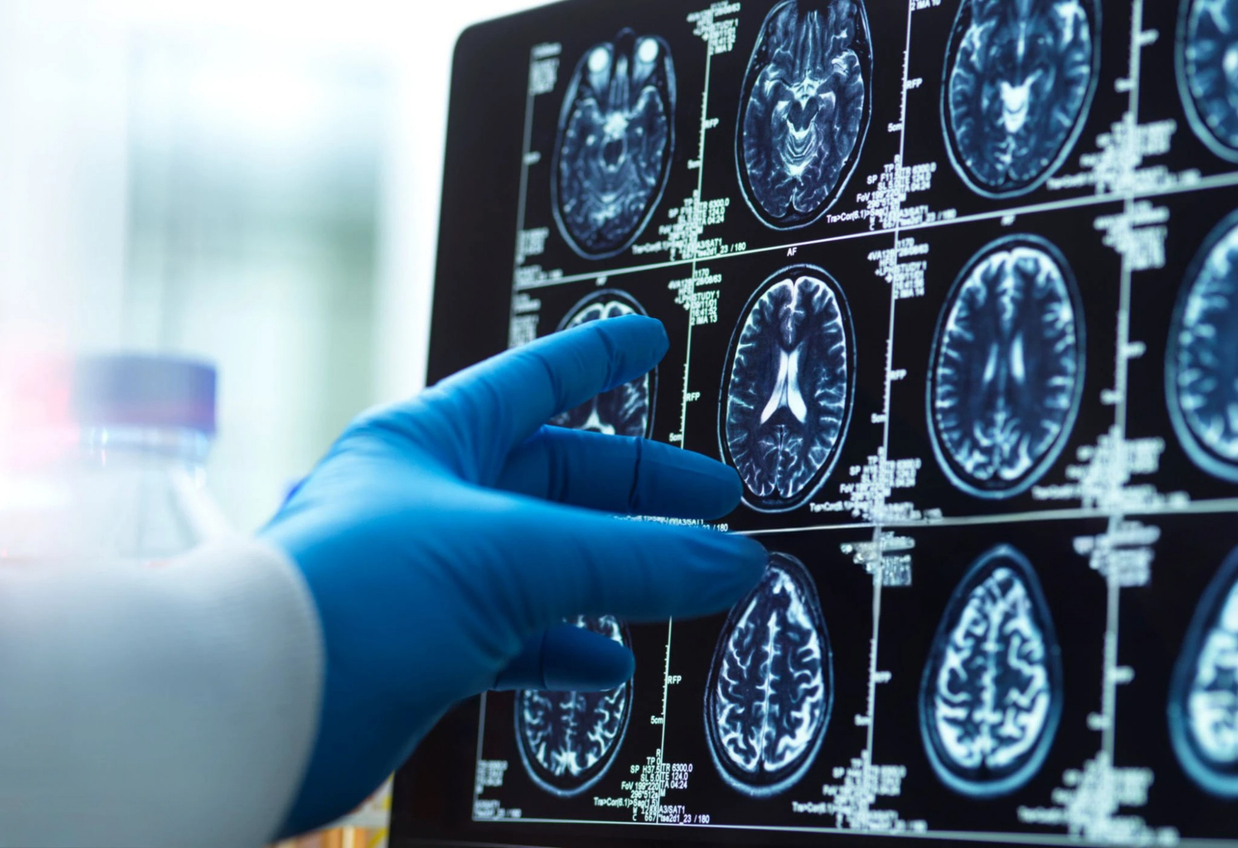
But what the neurologist will do– and I appreciate the question. We don’t want to just have endless number of appointments– trying to be efficient, we need an MRI scan of the brain ideally, if somebody can tolerate an MRI. Because not only will that rule out strokes and tumors, but that can give us suggestive signs of Alzheimer’s– shrinkage of the memory areas, the part of the brain we call the temporal lobe or medial temporal lobe, shrinkage there, and little spots of bleeding called microbleeds. That’s also a telltale sign that Alzheimer’s changes may be going on in the brain. So that’s helpful.
And then a blood test, something fancy called p-tau217 is the frontrunner right now to rule in or rule out Alzheimer’s brain changes. That is becoming so valuable in many practices– not all, but many– is replacing the need for PET scan, for spinal tap for some of these other things that are yet more visits to medical facilities. And so one can get a reasonably efficient workup. And I think we should all strive to be efficient with not just health care resources, but our patient’s time and energy. So I really appreciate the question. So ideally, primary care gets the ball started. And then in a memory clinic, you get the rest of the pieces done.
NANCY KEACH: It’s such an important question because one of the representatives from one of our pharmaceutical sponsors reached out recently and said, “We’ve done a lot of market research. And a lot of people are not getting treatment because they have this test fatigue.” Another test? And there’s anxiety about those tests. And so we’re trying to think about ways to help people understand why these tests are so important to get them over that. Oh, I’m not doing that.
DR. SHARON COHEN: Yeah, I think before we had more accurate biomarkers, we were doing more testing, longer neuropsychological test batteries, which we don’t feel we need anymore. I should speak for myself in my clinic. But you don’t need three or four hours with a neuropsychologist. Those were the days where we were trying to map out, OK, how much memory? How much language difficulty? Where in the brain? Could this be Alzheimer’s? We don’t need that.
You need a little bit of cognitive testing. And you don’t need a SPECT scan or an FDG-PET scan anymore, because we have a blood test that can tell us whether you have the brain changes of Alzheimer’s. So less tests. And with the blood test, one could have an APOE test. If one was thinking that one of the new treatments, either lecanemab or donanemab, might be of interest, because that would be efficient to do it in the same blood test if you wanted to know whether you might be a candidate for lecanemab or donanemab.
NANCY KEACH: I’m going to ask a kind of technical question. So please, everybody, bear with me. Because a lot of doctors write into these and ask questions. And I think this one covers– this is also for George from Nokomis, Florida. It’s a similar question to yours. But Clifford from Baltimore, “Is there any specific signs or symptoms to differentiate Alzheimer’s from other forms of dementia? Or is the current recommendation to do screening MRI, which you just talked about, and plasma p-tau217, which you just talked about, blood, and a-beta42. And if positive, follow up with beta-amyloid PET scan and APOE testing prior to decision with early monoclonal antibodies?”
DR. SHARON COHEN: OK, there’s a whole lot in that question OK. I love it.
NANCY KEACH: Doctor jargon, but it relates to what we’re talking about, the pathway. And also, your different signs for different types of dementias.
DR. SHARON COHEN: Exactly. So the most important piece in all of that is the initial piece, taking a history. And that will help sort out, could this be Alzheimer’s, or it’s not, or it could be something else? So if there is a gait problem, maybe this is stroke related. Maybe this is related to Parkinson’s disease or one of the Parkinson plus syndromes. Maybe it’s normal pressure hydrocephalus.
So again, it’s very important to take the history, not just of what cognitive problems, not just memory, language, visual, perception, executive function, but general neurologic problems. And do a neurologic exam. And primary care can do neurologic exams, yes. Neurologists are fussy and we do them in a very precise way. But if you have somebody who’s got left-sided weakness, that’s not Alzheimer’s disease. There’s some other cause giving them what we call hemiparesis. And maybe they’ve had a stroke. And that’s also affecting their cognition.
So very important to cast the net broad initially. When you take a history, you do the examination. And then you will be able to arrive at a tentative diagnosis that this is likely Alzheimer’s or what we used to call probable Alzheimer’s disease when we could only diagnose by clinical criteria. And if we think the history and the examination are adding up to probable Alzheimer’s, then we would go on to p-tau217. Unless that blood test result was borderline, I wouldn’t go on to a PET amyloid scan or spinal tap. So in other practices, they still feel they want a second confirmatory biomarker. But if it’s a clearly positive p-tau217, many of us feel that is accurate enough. An MRI scan though is optimal in anybody with cognitive complaints, because it’s not just to rule in Alzheimer’s. And it’s nonspecific for Alzheimer’s. It has suggestive features for Alzheimer’s, as we talked about before, but it will rule out structural brain abnormalities– tumors, strokes, scars in the brain from head injury, et cetera.
So history, examination, structural brain scan, blood tests. That’s kind of what I would do. And I think– was it– George mentioned a-beta 42? That’s falling out of favor. p-tau217 as a standalone, I know that’s not quite what the FDA granted approval for. So yeah, p-tau217 is the frontrunner. And then APOE genotyping if one is thinking anti-amyloid monoclonal antibodies.
NANCY KEACH: And so you’ve opened the door to a bunch of questions about getting blood tests. And so I’m going to read just Rachel’s and then go on. “When will the general public or people with a family history be able to get a blood test to test for any and all dementias, ah, before the age of 55, without symptoms?” But in either case, are these commercially available now?
DR. SHARON COHEN: They are commercially available. So the recommendation right now is that they are indicated, these blood tests like p-tau217, for people who have symptoms. So asymptomatic people hoping to understand their risk of Alzheimer’s– let’s say they’ve got a family member– right now, the recommendation is that asymptomatic people should not be tested. It’s different with genetic testing. So APOE testing, there isn’t such a recommendation. If you have a strong family history of Alzheimer’s disease, it might be reasonable to have blood tests for a causative gene mutation or for APOE genotyping. That would be reasonable.
NANCY KEACH: I’m going to go on, Petra wrote in, my friend from Alzheimer’s Los Angeles, “Are the signs and symptoms the same for all races and ethnicities?”
DR. SHARON COHEN: Yeah, what a great question. So interesting. I want to say in general, people are people. The brain is the brain. However, I have seen myself that in different countries, it’s not so much race or ethnic based. But the way education is divided up or jobs are assigned.
Let me give you an example. In Dubai, some of the wealthiest people, the women, it’s a point of pride that the wife doesn’t have to do any banking, driving. She is chauffeured. So it’s going to take a lot more cognitive impairment for us to see that person has something wrong, because she’s not actually in charge of her own high level activities of daily living, if I’m making myself clear. It’s a strange situation. There may or may not be anything wrong with her, but she’s not having the opportunity to do these things. And in cultures or situations where the woman very much works in the home as opposed to outside of the home, you may lose the opportunity to see whether social skills are declining or language abilities are declining. So I think those are the circumstances that might dictate different patterns, and when people present and how they present, rather than a truly racial-based differential. I hope that makes sense.
NANCY KEACH: Yeah. So almost more cultural and environmental than racial or ethnic.
DR. SHARON COHEN: Exactly. Depending what your role was and what was expected of you as well, that might determine how you present and when you present in a disease like Alzheimer’s.
NANCY KEACH: And Joe from Winterville, North Carolina, “Do the early symptoms of Alzheimer’s differ by age? For example, are the symptoms different in a 50-year-old, early onset, than an 80-year-old?”
DR. SHARON COHEN: Yeah. So that is a clear yes. People with young onset Alzheimer’s disease, and that is defined very specifically as under the age of 65. Symptoms beginning under the age of 65 is considered early onset or young onset Alzheimer’s. And often, these folks are in their 40s, 50s, early 60s. They tend to have a more rapid progression of their disease, which is tragic. Many of them are still working, raising kids. They’re at a different point in their life than somebody who’s maybe retired or a senior.
So more rapid progression. But they also have a greater likelihood of having an atypical presentation beyond the young age. And what I mean by that is, rather than memory being the predominant symptom or forgetfulness, they may have something called visual variant Alzheimer’s, where they really have trouble navigating, going up steps, recognizing something that’s right in front of them. So the visual perceptual problem is difficult. And that may lead to troubles dressing oneself, getting one’s clothes on backwards, although their memory might be quite good. Language variant Alzheimer’s, also more common in the young onset type of Alzheimer’s under the age of 65, and the same for what we call behavioral variant Alzheimer’s, where personality change is more prominent.
So those are several ways in which the younger presentation really have a different flavor. And it often works tragically against them because people don’t recognize what it is they have. They’re going through midlife crisis. Or– do you know how many times have I heard some crazy things? Depressed or things that just are not accurate. So we need to be mindful that Alzheimer’s can present differently in young people.
NANCY KEACH: And we’re getting close to time. But I think this is an important question from Jan in Elgin, Texas. “Are caregivers, especially spouses, particularly susceptible to the sense that they too are experiencing early symptoms? Granted, stress can cause cognitive issues. But do we just become hypersensitive to our own aging issues?”
DR. SHARON COHEN: Yeah, Jan, that can happen, that you put yourself under a microscope when you see in your loved one certain things and you start to look at yourself, and oh, am I going that way? But you point out very well that the stress of caregiving, sleep deprivation, the worry, having to be hypervigilant for someone’s safety can wear one down and one may become fatigued and less attentive based on stress, not because you’re developing Alzheimer’s.
So I would say the same principle applies if you feel there’s a change in yourself that you’re worried about, get it checked out. And hopefully, it’s not Alzheimer’s. But there’s nothing that compares with getting it checked out, having baseline cognitive testing. And if there’s something to dig deeper on, then that will happen. And if there’s nothing to find, wonderful. Then maybe, some caregiver support would be helpful.
NANCY KEACH: Kevin from St. Louis wrote in– and obviously, this is another doctor question, but I think important. “How can physicians distinguish neuropsych and mental health disturbances from dementia?
DR. SHARON COHEN: They often overlap and it can be a two-way street. So depression, for example, and anxiety can be part and parcel of Alzheimer’s disease. So the parts of the brain that regulate mood and emotion can be affected by the disease pathology. However, I can also be anxious and depressed because I’m aware that my memory is failing and it’s making me nervous, and I don’t feel I can do so well in my job. And so it’s this vicious circle that we can’t entirely untangle. But the good news is that we have lots of treatments for depression and anxiety. And even though most of them are not specifically approved for Alzheimer’s disease, we borrow these medicines from psychiatry, whether it’s escitalopram or mirtazapine or, again, I’m not trying to favor any drug over another. Or if sleep is a problem, I think we want to treat the neuropsychiatric symptoms and then see what’s left. And if the person’s depression, anxiety, sleep disorder resolves on treatment, great. And maybe, their cognitive problems will resolve as well. If not, then we see that there is more going on than just a psychiatric problem.
NANCY KEACH: I just attended last week a two-day conference at UCLA on brain health and brain capital, global brain investment. But I think it’s great that the field is moving towards looking at neurodegenerative diseases and mental illnesses and looking more broadly at brain health.
DR. SHARON COHEN: Yes. I like that. I like that.
NANCY KEACH: Do you have any comments on that?
DR. SHARON COHEN: I think so many diseases that were put in a bucket of psychiatric illnesses, they are diseases of the brain, whether it’s schizophrenia or autism or whatever it is. People are not insane. They have specific diseases of the brain. We just don’t understand all of these diseases in terms of their neurochemistry and neurobiology. But I think that the goal is that we will understand them or strive to understand them better and better. And we’ll change some of our labels and some of the stigma also that goes along with a mental illness. Because we label people and then they’re stuck with that label for a long time rather than dealing with a biologic illness. So I think there’s a lot of merit to talking about brain health.
NANCY KEACH: And there’s so much we don’t really understand yet about the brain. I quoted at this conference, because I used to work with Neil deGrasse Tyson and we interviewed him for a film. And we were asking him, “What’s more complicated, the brain or the universe?” And he said, “It’s not that the brain is so complicated, it’s just that we don’t understand it yet.” And he said, “We used to think it was incredibly difficult to find a needle in a haystack. And now we know you just need a really big magnet.” So I kind of like that it’s a hopeful, hopeful positioning to me.
Well, our time is coming to a close. And I want to thank my wonderful colleagues at BrightFocus Foundation. Our team Dr. Sharyn Rossi, thank you so much for answering questions in the chat, Amanda Russell and Alexa Villarreal and the team at M Squared, Roger, for hosting on this platform. And of course especially, Dr. Cohen, thank you so much for your incredible contribution to Alzheimer’s research treatment and for your incredible kindness and thoughtfulness for the community, for people who have it, and not just staying in your lab coat and—
DR. SHARON COHEN: Right back at you, Nancy. Thank you.
NANCY KEACH: I don’t have a lab coat but—
DR. SHARON COHEN: But you’ve got heart.
NANCY KEACH: Thank you. We started this last month. And a couple of people wrote in. Thank you so much for writing in. If you’ve been affected by Alzheimer’s, we would love for you to share your story with us confidentially at brightfocus.org/alzstory. We’re going to be starting a podcast in the upcoming few months. And we want to be able to start those podcasts with some personal stories and your experiences. So if you’re willing to share– and thank you for very much to the few people I know who are on this call that did share, and then we will be in touch with you. So again, that’s brightfocus.org/alzstory.
If you have questions that were not answered today– I know there were a lot of questions about what’s the difference between Alzheimer’s and dementia and MCI, a lot of those basic questions, and about blood tests, et cetera. Since this is the 40th episode, a lot of ground has been covered here. And you can go to brightfocus.org/zoomin to watch any of those episodes. They’re all free. They’re all available on our website and on our YouTube channel. And Dr. Suzanne Schindler will be coming back soon to talk more about the new blood tests and how the blood tests are evolving and how you can get them.
We have a lot of free resources, including this recent FDA-approved therapies infographic. This lists, front and back, all of the FDA-approved therapies for Alzheimer’s, whether it’s symptomatic agents or the monoclonal antibodies or medications for agitation. So this is available free. Please reach out to us. And we’ll be sending out a recording and transcript of this episode to all of you by email in about a week or so. And we’ll include the links to all of these resources that we’re discussing today.
Finally, if this program would be helpful to someone you know– it almost always is– please share this link with at least three friends, brightfocus.org/zoomin, and have them register so that they can participate as well.
On April 2, we’re going to be talking about a really interesting clinical trial that is recruiting now across the country. This is part of the clinical research series. This is called the SPRING trial. And it targets a gum bacteria, gingivalis, in Alzheimer’s, which is really interesting. And then later in April, we are going to have a company called Zinnia on who have created a special type of television that’s much more useful than regular television for people whose dementia is advancing. So that’s two really interesting off the beaten track topics coming up in April.
So finally, I just want to thank you all, as always, for joining us. You make us feel great when you join and listen and stay on and come back, as so many of you do. And as always, we want to tell you, you are not alone. Nearly 2,000 people registered for this. We’re here for you. We want to answer your questions. We want to share information from researchers.
And life is so, so short. Shout out to my mom, who’s 96 now and hopefully watching. Tell everyone you love how much you love them. Give them a hug and keep them close. Thank you again to all of you who’ve joined us. I look forward to seeing you on April 2. And be well.
Resources: