Transcript
Download PDF
Please note: This Chat has been edited for clarity and brevity.
DR. JIMMY LIU: Hello and welcome. My name is Dr. Jimmy Liu, and I am the Director of Vision Science Programs at BrightFocus Foundation. I am pleased to be your host for today’s Macular Chat, “A New Drug Delivery Approach for Wet AMD.” Macular Chats are a monthly program supported in part by sponsorship from Genentech, Regeneron, and Merck designed to provide people living with macular degeneration and the family and friends who support them with information straight from the experts.
The information provided in this program is for educational purposes only and should not be considered medical advice. Always consult a qualified health care professional regarding any medical concerns or conditions. Please note that BrightFocus does not endorse or promote any specific brand or product.
BrightFocus Foundation’s Macular Degeneration Research Program has supported more than $61 million in scientific grants exploring the root causes and potential prevention strategies and treatments to end this sight-stealing disease.
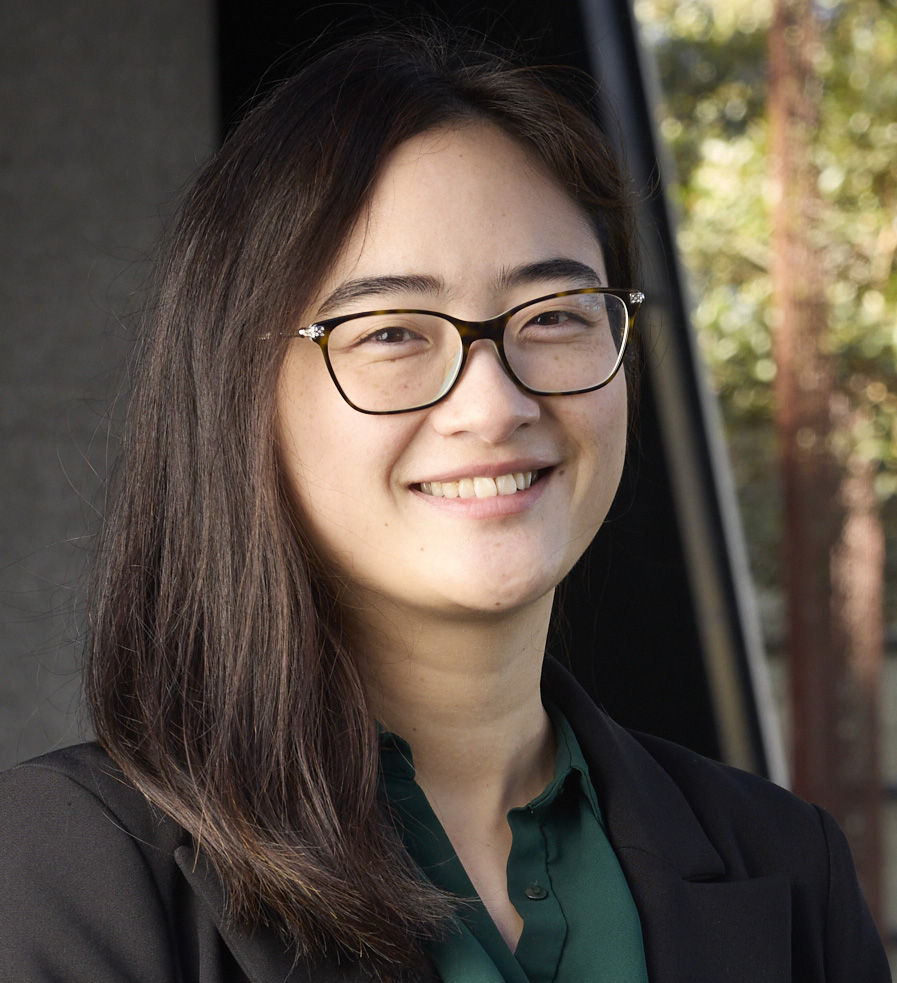
Now I would like to introduce today’s guest speaker. Dr. Daisy Shu is a Scientia Senior Lecturer at the University of New South Wales—all the way in Australia—and she’s an emerging leader in retinal disease research. With a clinical background in optometry and over a decade of research experience, her work focuses on age-related macular degeneration, retinal fibrosis, inflammation, angiogenesis, and mitochondrial dysfunction. She leads a multidisciplinary program that integrates retinal biology, chemical engineering, and drug delivery to develop innovative treatments for blinding retinal diseases. She’s also a current macular degeneration research grantee, and her work is titled “New Drug Delivery Approach to Transform Macular Degeneration Treatment,” which is what we’ll be discussing today. Welcome on the call, Dr. Shu.
DR. DAISY SHU: Thank you so much, Jimmy. It’s a pleasure to be here today.
DR. JIMMY LIU: Awesome. Thanks so much for joining us today. So, just kind of to start off, how did you get into eye research, and what inspired you to focus your research on helping people with macular degeneration?
DR. DAISY SHU: I actually came into eye research through seeing patients as an optometrist. I trained as an optometrist at the University of New South Wales, which is where I currently lead my research group. So, returning to UNSW has felt really full circle. As an optometrist, I saw how profoundly losing central vision can affect everyday life, as happens in macular degeneration. Our central vision is lost, and that impacts reading, driving, recognizing faces, and maintaining independence. I wanted to understand not only what we could see during an eye exam, but also what was happening inside the retinal cells and how we could intervene earlier. And that curiosity led me to do a Ph.D. at the University of Sydney, and then I hopped on a plane and moved to Boston for my postdoctoral training at Harvard Medical School, where I became much more deeply involved in macular degeneration research. And BrightFocus has been a big part of that journey, first supporting my postdoctoral work at Harvard and now helping me build my own independent research program back at home in Sydney.
DR. JIMMY LIU: Thanks so much for that explanation, Dr. Shu. And yes, we’re so proud to fund you across your scientific career. You’re doing such exciting work, and we’re really excited to hear about it today. And so, you talked a little bit about your lab at Sydney. So, what does your lab research focus on, and how does it relate to macular degeneration?
DR. DAISY SHU: Yeah, the lab is really interested in particularly why cells in the back of the eye, in the retina, start behaving badly in macular degeneration and how we can turn that understanding into better treatments. We look at things like inflammation, oxidative stress, metabolic stress, and abnormal blood vessel growth and fibrosis, which is scarring. And these processes are all interlinked, and they feed into one another. The retina is a really demanding tissue. It uses a huge amount of energy, and it’s constantly exposed to light and oxygen, and it has to keep functioning for decades. And as we age, some of these systems that the retina normally uses to cope with all that stress can become overwhelmed. And so, that’s what essentially happens in wet macular degeneration, is one consequence of all this overwhelm of the system causes these abnormal, fragile blood vessels to start growing underneath the retina. And they leak fluid and blood and that causes loss of vision. And that’s why treatments such as anti-VEGF injections are so important.
But we’re interested in what happens around and after that process. So, what’s driving that process to start in the first place? And we think a big part of that is inflammation, and also what happens after the bleeding, so the scar formation. So, even if you do stop a blood vessel from leaking, some people can go on to develop scar tissue in the macular region. And once scars form, it does cause permanent vision loss. There’s currently no treatment for getting rid of that scar. So, asking: How do we stop blood vessels from growing and leaking? But also, we’re asking: What made that environment happen in the first place to make the eye unhealthy enough for that blood vessel to grow? And how can we stop the damage that follows?
And one other thing we’re really interested in is the drug delivery side of our work. And I’m collaborating with chemical engineers and material scientists to unpack some of the medicines that we’re developing into tiny nanoparticles, which we’ll talk more about later. And you can think of them almost like little drug reservoirs. Instead of giving them all the medicine at once, we’re trying to release it slowly in a controlled way. And ultimately, this is going to enable us to find a better way to protect the retina and the blood vessels, prevent the scarring, and potentially make these therapies last longer.
DR. JIMMY LIU: Perfect. That’s so lovely to hear that you’re working between cross disciplines, Dr. Shu, not only within the vision field, but also with engineers, as well. So, that’s a really great thing to see, and that’s really awesome. So great. So, you talked a little bit about the current treatments, and you described a little bit about what wet AMD is. Can you explain to our audience the approved treatments for wet AMD currently out there?
DR. DAISY SHU: Yeah. The macula is the small part of our retina that does a big role. Even though it’s a small part of the retina, it has a huge role, and that is, it provides a sharp vision that is useful for reading, driving, recognizing faces. Pretty much we’re always using our macula region of the retina. And in wet macular degeneration, the abnormal blood vessels start to grow underneath the macula region. And these new blood vessels are really fragile and leaky, so the fluid and blood can seep into the retina, and that causes distortions of the organized structure of the retina, leading to symptoms of wavy lines or blurred central vision. And the main treatment currently is these anti-VEGF injections. VEGF is also known as vascular endothelial growth factor, and it’s a signal in the body that tells blood vessels to grow and become leaky. So, these medicines essentially block that signal and help dry the retina out. And there are quite a few common anti-VEGF treatments that you might have heard of, like Eylea®, Lucentis®. People can often start with quite frequent injections, and then the interval can be stretched out depending on how the eye is responding. And these treatments have actually completely changed the outlook for wet macular degeneration patients. So, it’s been fantastic to have these therapies, and especially if we catch it early, the better. So, you can start the injections earlier.
DR. JIMMY LIU: Great. Thanks so much for that explanation, Dr. Shu. And so, you talked a little bit about the currently approved treatments for wet AMD, these anti-VEGF injections and how they’ve transformed the treatment of wet AMD. You talked about the positives. Can you also talk about the challenges that remain for patients living with wet AMD, and why do some people continue to lose vision despite treatment using these anti-VEGF injections?
DR. DAISY SHU: Yeah, anti-VEGFs have been a huge success in wet macular degeneration treatment, but it hasn’t solved everything. One of the biggest challenges is the treatment burden. So, even when injections can be spaced further apart, people still need regular monitoring and treatment for years. So oftentimes it starts every 4 weeks an injection, and it can be spaced out up to around 8 weeks or so. But that’s still quite a regular treatment. And that means organizing transport, taking time off work, relying on family or carers, and, of course, dealing with the anxiety of having to have injections in your eye.
And the other challenge that we’re tackling is that VEGF is not the only one factor that’s driving the disease. So, some people do respond really well to the anti-VEGF injections, but other people don’t respond, and they’re called the non-responders. And they continue to have the fluid, and improve partially, or they can get treatment tolerance where the medicine works, and then it doesn’t work after a period of time.
And so, these are the clues to show us that there are other factors driving the disease other than VEGF. And sometimes the retina has already been damaged before the treatment starts. And so, these processes that I’m exploring, such as inflammation, oxidative stress, and fibrosis, are still going on even if we’re tackling VEGF. So, this is where my research comes into play, where we’re looking at other areas outside of VEGF that are important in driving the disease of macular degeneration. And, of course, really crucial to that is that fibrosis or scarring aspect, which is at the end stage. And once the scar tissue forms, as I mentioned, it’s really hard to recover that normal retinal architecture. And so, the vision is very difficult to recover, as well. So, for the next generation of treatments, we really need to tackle these two things, which is to make the treatments last longer, so they’re easier for patients to maintain, and target more than just VEGF. So, we’re protecting the retina and preventing permanent scarring.
DR. JIMMY LIU: Great. Thanks so much for that explanation, Dr. Shu. And so, that’s a great segue to our next question. Again, we are so proud to have funded your work tackling these treatments for wet AMD, which we funded in 2025. And so, for our listeners, and you kind of gave us an overview of it previously, but can you just give us in our audience a broad overview of your funded research and the progress thus far?
DR. DAISY SHU: Yeah, absolutely. I’m so incredibly grateful to BrightFocus and its donors for supporting this work. The project really has two parts to it. The first is finding drugs that target some of the biology beyond VEGF. And the second is figuring how to keep those drugs working in the eye for longer. One group of medicines we’re studying are called the fumaric acid esters, and one of them is dimethyl fumarate, which is already an approved drug for conditions such as multiple sclerosis and psoriasis. And we became really interested in this drug class because it can influence inflammation and oxidative stress and mitochondria and the way cells produce and use energy through those mitochondria. And another drug we’re studying that’s really exciting are the NOX enzymes and inhibiting those NOX enzymes. So, NOXs—or NADPH oxidases—they are a source of reactive oxygen molecules in cells that cause a lot of stress in the body and in our eyes, and in disease they become upregulated or there’s more of these molecules, and so they contribute to these abnormal vessel growth and the scarring formation. So far, the results have been really encouraging. In our laboratory models, these drugs can block the new blood vessel growth and also the new blood vessel sprouting, and it can stop the cells switching into the scar-like state. So, we’re really excited about these promising findings, and we’re continuing to test it in our laboratory models.
And the other half of the project is drug delivery. So, we’re packaging up these exciting drugs. So, the fumaric acid esters and the inhibitors of the NOX enzymes. We’re working with chemical engineers and material scientists to package these medicines into tiny biodegradable nanoparticle systems. So, they basically act like miniature drug reservoirs that slowly release the medicine over time. And we’re currently characterizing these nanoparticles that we’ve developed, and we’ll be moving into testing them into our preclinical laboratory models of macular degeneration to see how they work and if they can block macular degeneration in the eye for mouse eyes currently. So, we’re starting with these preclinical models. And, yeah, it’s looking really promising and exciting. I actually had the chance to present some of this work recently at the International Society for Eye Research Conference in Spain, which is also where Jimmy and I got to meet in person. So, that was really exciting, to be able to see and share how the project was progressing to the scientific audience and now to be able to share some of that progress with the BrightFocus community, as well.
DR. JIMMY LIU: Yes, absolutely it was so great to meet Dr. Shu in person for the first time, since she lives all the way in Australia and we live in the United States. So, Dr. Shu did an incredible job describing her research to the scientific community, and it’s just really exciting. And she received a lot of really great feedback there, as well, so people were really excited about the research. And she also did it while also managing her newborn as well in the audience. So, she’s such a superwoman.
Okay, so you kind of described a little bit about your work, and which, again, just to reiterate to our audience, it’s in its early research stages, preclinical. And so, I know you talked a little bit about the nanoparticle treatments and kind of what they are. Can you just kind of explain how your work differs from current AMD treatments, just a direct comparison between the two?
DR. DAISY SHU: Yeah, thanks, Jimmy. It was just touching on that, the Spain trip for the ISER conference was so, so wonderful. It was great to meet you. And, yeah, it was so lovely to bring my 6-month-old son Teddy along. So, yeah, it was quite the journey across to the Northern Hemisphere from Sydney. And I’m joining you today from Sydney, actually. So, yeah, it’s in another time zone in the wee hours of the morning. But it is lovely to be here and join on this call today.
Yeah, so a bit about how my work differs from the current macular degeneration treatments. There’s really two main differences. The first is what we’re targeting. So, the current anti-VEGF treatments are essentially only blocking one of the major signals that drives abnormal blood vessel growth and leakage. And what we’re trying to do now is look more broadly at that environment around the blood vessels. What’s driving this blood vessel dysfunction? So, there’s so many factors at play here: inflammation, oxidative stress, mitochondrial dysfunction. All of these factors come together to cause these blood vessels to start leaking, to start growing abnormally, and ultimately to form that scar-like state if it’s left unchecked for long enough. So, ideally, we’d like a treatment that does two things: slows abnormal blood vessel growth and also reduces that scarring formation. And the second difference is how we deliver the medicine. So, the conventional injection, you get a dose, and that drug gradually falls as it’s cleared from the eye. But the nanoparticles that we’re developing are going to act like tiny drug reservoirs that slowly release that medicine over time. And so, in theory, that could help the treatment last longer and potentially reduce some of the peaks and troughs that patients may experience between injections. And, of course, the work is still in preclinical stages, but it’s really promising.
DR. JIMMY LIU: Great. Thanks so much for the explanation, Dr. Shu. And so, you talked a little bit about this earlier: Your project targets an important structure in our body’s cells, called the mitochondria. Can you describe to our audience what the mitochondria is and why proper function of mitochondria is important in AMD?
DR. DAISY SHU: Yeah, so mitochondria are the tiny structures inside our cells that help us turn the food we eat and the oxygen we breathe into energy. And they’re often known as—and this may be something the listeners are aware of—as the powerhouses of the cell. But they also help the cells respond to stress and stay healthy. And they’re particularly important in the retina, which is one of the most energy-demanding tissues in the body. And that might be a surprising fact for people because people might think, “Oh, it’s the heart or the brain.” But amazingly, the retina is actually the most energy-demanding tissue in the body. And that’s because the retinal cells are constantly working, constantly firing, like, all the neurons there to enable the vision to enable us to see. They’re very busy little cells. And so, they rely heavily on the healthy retina.
And with aging and macular degeneration in age-related disease, mitochondrial function does become impaired as we get older. And the retinal cells become less resilient and less able to cope with the demands placed on them. And that’s one of the reasons we’re interested in some of the drugs we’re looking at, such as the fumaric acid esters. So, in our research, we found that these drugs can help support mitochondrial function, activate the cells’ own protective stress response pathways. So, rather than targeting abnormal blood vessels, we’re interested in how we can make the cells more resilient to disease by enhancing their mitochondria, making them able to tackle the, you know, the aging environment that is within the eye. And that can help them become more resilient to disease-related stress.
DR. JIMMY LIU: Great. Thanks so much for that explanation, Dr. Shu. You talked a little bit about developing a new nanoparticle therapy to deliver these repurposed drugs to treat AMD. So, could these advances in drug delivery using these nanoparticles also help people with other eye diseases, not just AMD, in the future?
DR. DAISY SHU: Yes, indeed. Yeah, that’s certainly the hope. And one of the exciting things about nanoparticle drugs delivery is it can potentially become a platform, rather than just be designed for one drug or one disease. So, we’re creating these materials that can encapsulate different drugs for various diseases. And in this case, we’re looking at how we can encapsulate these drugs for fumaric acid esters and NOX inhibitors and see how it kind of leaches out of the eye over time and how quickly the drug can be released and whether we can control that sustained release. It’s really important because many retinal diseases face the basic same challenges. And the eye’s very good at protecting itself, but there’s lots of barriers for the medicines to get through, too. So, with eye drops, injections, tablets, there’s all these different barriers for the drug to land in the right place. And so, the nanoparticles can help in achieving that mission and getting that drug to the right place.
And not only that, but also giving that sustained release over time so that the drug, instead of lasting for a couple months, can last for multiple months, up to 6 months, potentially, is something that we’re aiming for. Because we want it to be something that the injection can last into … just have two injections would be a dream. And if the nanoparticles can achieve that, that would be fantastic. And, of course, every disease, every drug, has a different dose and safety requirements, so we’re testing that with the particles. But what’s really exciting is that we can develop these nanoparticles and test how they behave in the retina, and that can help build treatments for a whole range of eye diseases in the future.
DR. JIMMY LIU: Great. Thanks so much, Dr. Shu, for that explanation. Okay, so in addition to developing new treatments, you have also studied how diet can support macular health. So, what does the current evidence tell us about diet and AMD, and how should people interpret these findings alongside established treatments?
DR. DAISY SHU: Yeah, thanks, Jimmy. This is an area I’ve become quite interested in, because people with AMD often want to know what other things they can do to support their eye health. And we recently performed a systematic review of 14 randomized clinical control trials looking at different foods and dietary approaches in people who have AMD or are at risk of AMD. And there were lots of encouraging findings with foods, such as kale, pistachios, grapes, and lutein-enriched eggs. And that was because these foods can actually enhance the protective pigments in the macular region made from lutein and zeaxanthin. So, these can enhance the macular function and protect the retinal tissue.
But it’s important not to go walking away thinking, “Great, I just need to eat more kale,” because some of these studies were quite short and small studies. So, they do need to have larger-scale studies of all these various foods. But the bigger picture that we took away with it is that supporting the health and resilience of the retina over time can be achieved through eating better foods that support the health of the macula. And that’s in addition to some of the established supplements—the AREDS2 supplements, for example—that are recommended for those who have intermediate to late stages of macular degeneration. And, of course, the anti-VEGF injections for wet macular degeneration is still important, but that is another piece of that overall puzzle in maintaining the health of the macula.
DR. JIMMY LIU: Awesome. Thanks so much, Dr. Shu, for that explanation. Okay, so back to your project. If your project is successful, how could it help protect vision for a longer time and improve daily life for people with AMD? And can you also tell our audience, since we’re getting so many questions about this, what are the next steps that are needed to get the treatment that you’re working on into patients?
DR. DAISY SHU: Yeah, sure. We hope that we can improve the durability and the quality of the treatment. A medicine that remains active for longer would mean fewer injections, fewer clinic visits, and reduce all those things associated with injections—like travel, cost, time, injection anxiety, reliance on family members and caregivers—and allow people to stay in the treatment for longer, as well, potentially, because you wouldn’t develop as much tolerance, potentially. So, the biological goal is equally important. We’re targeting the abnormal vessel growth. And that is a big part of it, with blocking vessel growth and fibrosis. So, we hope that we can do more than just dry the retina temporarily. We want to protect the structure of the retina, reduce the chance for further injury to the retina and that permanent scar tissue response that occurs in the late stages of AMD.
And a controlled release system using our nanoparticle technology can help to provide potentially steadier exposure to the drug, rather than a rising level of the drug immediately after the injection, but rather a sustained release. And so, these remain important goals for patients to enhance their visual outcomes. And our studies are underway, and we’re excited to create these nanoparticle-encapsulated drugs. And that can potentially help and motivate better-quality drugs that have sustained release and help retain the central vision for people with AMD.
DR. JIMMY LIU: Great. And then, kind of like your opinion: What are the next steps that you need to get the treatment that you’re working on into patients?
DR. DAISY SHU: Oh, yes, of course. So, the next steps are to test it in the preclinical animal models that we have. So, we have two models that we’re currently using. They’re mouse models that mimic the wet stages of macular degeneration and also the scarring response. And so, we’re testing the drugs in that capacity. That’s underway. And another part of it is to use larger-eye animal models, as well, to make sure that the drug that we’re encapsulating nanoparticles does respond in a way that is more akin to the human-size eye, for example, because mouse eyes are pretty tiny. And so, these are some of the tests that we’re doing. And there’s a lot of work in the process of creating these and a lot of tests that need to be done before you can see human clinical trials. But these are all the necessary stages of the preclinical testing to ensure that we do create these drugs that are safe and that are effective. So, yeah, it’s really exciting to be able to do these studies in these preclinical models and then hopefully move on to translating them in clinical trials in patients.
DR. JIMMY LIU: For sure. Thanks so much, Dr. Shu, for describing to our audience about the rigorous process that is needed from a very basic level in order to get these treatments to patients in clinical trials. We really appreciate that. So, the last question that we have here is: What gives you the most hope about the future of AMD treatments, and how close are we to seeing a treatment, such as yours, available for patients with AMD? I know you talked a little bit about that, but just, you know, general thoughts about treatments for AMD going forward.
DR. DAISY SHU: Yeah, of course. So, what gives me the biggest hope is that macular degeneration care has already changed dramatically with the introduction of anti-VEGF. Before anti-VEGF therapy, about a couple of decades ago, there was very limited options for wet AMD. And so, once someone was diagnosed with AMD, that was pretty much it. But now, with these injections, that has completely transformed the outlook. And so, moving forward, that kind of has given us and the field a lot of hope that we can develop even better therapies than what’s available right now: longer-lasting medicines, refillable delivery systems, combination therapies. So, the drugs that I’m developing, they could even be used adjunctively to the current anti-VEGF agents.
And so, there’s a lot of hope and a lot of research dedicated to creating these more advanced therapies, improving what we have available at this stage. So, since we’re still at the preclinical stage, there’s a lot of optimization involved, particularly with the nanoparticle formulation and confirming that the drug is getting released in a sustained and effective manner and establishing the safest effective dose and showing, of course, that it works in these animal models that we have established for wet macular degeneration and also that fibrosis that happens.
So, a successful candidate drug would then have to go through a lot of the regulatory pathways, manufacturing standards, and toxicology studies to then begin those early-phase clinical trials. So, there’s quite a few steps involved, but nevertheless every treatment that we use today actually begins with laboratory work, as Jimmy has mentioned, but foundational science work is what enables us to develop treatments that we can provide to patients. And I’m so grateful to the BrightFocus Foundation for funding this research at such an early stage. This bold idea that I had to create and encapsulate these nanoparticles using these drugs that target the disease outside of their gist. And that’s a really exciting thing. And I’m really grateful to be able to work on this project and to be able to develop these therapies that may enable us to have more protection for the retina and also more sustained drug delivery.
DR. JIMMY LIU: Of course. And yes, thanks so much, Dr. Shu. And we are also very grateful and proud to be funding your work. And I think a lot of people on this call are also very grateful that you’ve dedicated your career to finding new treatments, so patients can see longer throughout their lives. So, we really appreciate it. And I think this just goes to show how BrightFocus Foundation leaves no stone unturned to finding treatments for AMD dry and wet. You know, obviously you’re from Australia, but we fund all over the world, and we really try to do our best to find the best and the brightest. And we’re really grateful that you’re able to do this research, Dr. Shu. Okay. So, we have time for one more question. So, one listener asked—and you talked a little bit about how diet can support macular health—“Are there other ways for individuals to be proactive about not getting wet AMD?”
DR. DAISY SHU: Yeah, oh, that’s a great question. Thank you, Jimmy. And thank you to the listener for sharing that question. So, yeah, the diet is one aspect of it that we can do something about. One other thing is the UV protection. So, there have been a lot of reports of how UV can be quite damaging to the retina. And that is one aspect of how we can protect our eyes, especially in younger age and not getting exposed to harmful UV rays that can then cause damage to the back of the eye, particularly the macula, which is more sensitive. So, UV protection and better diets through eating those green, leafy vegetables, fish, and nuts can help to support the eye. And I guess just being quite, like, aware of your visual function, and so just getting regular eye tests so you can see the first traces of any early signs of macular degeneration before it progresses to the wet macular degeneration stage.
So, the early signs often don’t have any visual symptoms, but rather the optometrist, ophthalmologist, eye care professional will basically be able to pick up little yellow spots at the back of the eye called drusen. And that’s kind of the early warning sign that there is some sort of problem areas in the macular region. And that can be that alert that we need to be more vigilant about protecting the eyes through, you know, healthy diet, UV protection. There are those supplements, as well, the AREDS2 supplements that I had mentioned. The studies—the large clinical trial studies—looking at the supplements only found that it was effective for intermediate/late stages. Of course, it doesn’t hurt to enhance the beneficial nutrients to the macular region that the supplements provide. So, it could also be taken at the earlier phase. So, those are the things I would say to prevent that wet AMD state through actions that we can take.
DR. JIMMY LIU: All right, lovely. Thanks so much for that explanation, Dr. Shu. Okay, so I think that’s all the time we have questions for today. So, Dr. Shu, again thank you so much for sharing your research with us and for continuing to work towards researching a new treatment options for macular degeneration. To our listeners, thank you so much for joining our Macular Chat. We sincerely hope you found it helpful. I would also like to mention that our website, www.BrightFocus.org, has a wealth of information about macular degeneration. Okay, Dr. Shu, before we close, do you want to mention the survey you are running to explore how nutrition and technology can help support those with AMD?
DR. DAISY SHU: Yes, thank you, Jimmy. Yes, I’ve got this survey. So, alongside our laboratory work, we’re also looking at how we can support macular degeneration patients in their everyday lives through nutrition, and we’re conducting a survey to learn how people living with AMD approach food and dietary advice and whether technology, such as a diet tracking app, could make it easier to follow recommendations and share progress with an eye care professional. So, if you’re living with AMD or at risk of AMD, we would be really grateful for your perspective. The survey is completely voluntary, and BrightFocus has kindly enabled me to be able to share a link with you to be able to do this survey. And what we learn from this survey will help us design future nutrition resources and digital tools around the needs and preferences of people with AMD. So, thank you in advance to anyone who chooses to participate in this survey. I’m really grateful. And I’m so grateful to Jimmy and the BrightFocus Foundation for inviting me today to share about my research, talk about all things AMD. It’s been an absolute pleasure to be on this call with you.
DR. JIMMY LIU: And likewise, Dr. Shu, thank you so much for sharing that survey with us. We will include a link to the survey in the transcript. Okay, so our next Macular Chat will be on Wednesday, October 28. Thanks again for joining us and this concludes today’s Macular Chat.
Useful Resources and Key Terms
BrightFocus Foundation: (800) 437-2423 or visit us at www.BrightFocus.org. Available resources include—
Helpful resources and potential therapies and treatments mentioned during the Chat include—