Transcript
Download PDF
Please note: This Chat has been edited for clarity and brevity.
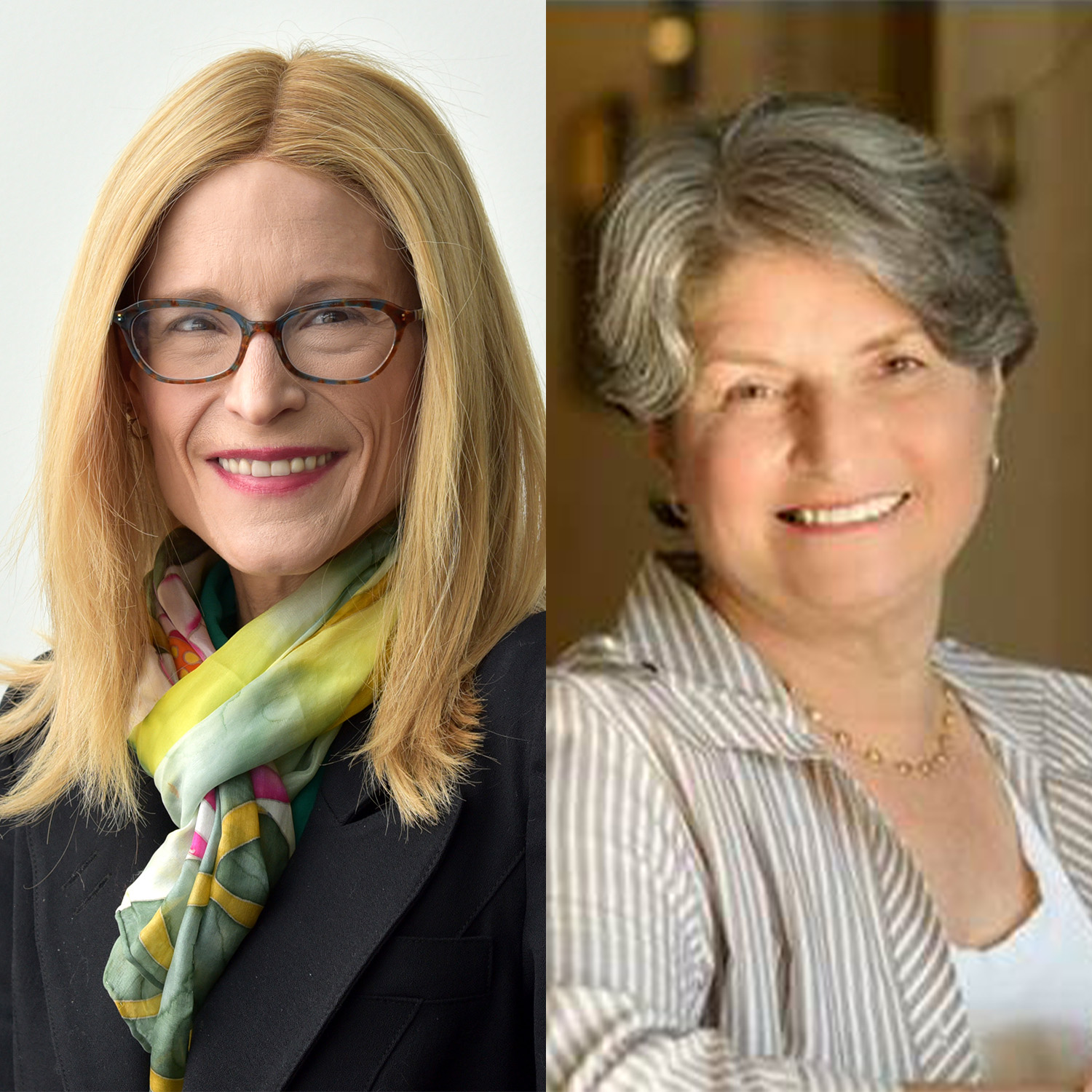
DR. DIANE BOVENKAMP: Hello and welcome. My name is Dr. Diane Bovenkamp, Vice President of Scientific Affairs at BrightFocus Foundation, and I am so pleased to be your host for today’s wonderful Macular Chat, “Eliminating Barriers to Care for People with Vision Loss.” Macular Chats are a monthly program—supported in part by sponsorship from Regeneron, Genentech, and Merck—designed to provide people living with macular degeneration and the family and friends who support them with information straight from the experts.
The information provided in this program is for educational purposes only and should not be considered medical advice. Always consult a qualified health care professional regarding any medical concerns or conditions. Please note that BrightFocus does not endorse or promote any specific brands or products.
BrightFocus Foundation’s Macular Degeneration Research Program has supported more than $61 million in scientific grants exploring the root causes and potential prevention strategies and treatments to end this sight-stealing disease.
I would like to introduce today’s first guest speaker. We have two excellent guest speakers today, and the first one is Dr. April McCullough. Dr. McCullough is a Senior Medical Director in Global Development at Regeneron, whose career is driven by a passion to advance sight-saving care and health equity for patients. She is a board-certified ophthalmologist—that’s an eye doctor—who practiced for 7 years in the New York/New Jersey metropolitan area years before joining Regeneron in 2021. Welcome, Dr. McCullough.
DR. APRIL MCCULLOUGH: Thanks, Diane. I’m so happy to be here.
DR. DIANE BOVENKAMP: Great.
DR. APRIL MCCULLOUGH: Very nice to meet you. Hello to everyone.
DR. DIANE BOVENKAMP: Absolutely. Can you start us off today by telling us a bit about your training and clinical experience in ophthalmology?
DR. APRIL MCCULLOUGH: Of course. After completing my medical school and my ophthalmology residency training in New York, I practiced in the New York/New Jersey metropolitan area as a comprehensive ophthalmologist, and I had the privilege of serving diverse patient populations, ranging from the very affluent to very underserved communities. And these were often within blocks from one another. And while I found immense gratification in patient care, my experiences exposed me to differences in outcomes and the tragedy of preventable vision loss in vulnerable communities.
DR. DIANE BOVENKAMP: Could you tell us a little bit more about what you mean by that, the vulnerable communities, and what you discovered about how outcomes for patients can differ among communities?
DR. APRIL MCCULLOUGH: Sure. So, let’s go to my ophthalmology training. I saw a clear difference rate from the start during my ophthalmology residency training in New York. And I worked at two hospitals, and these were only about 30 miles apart. So, one was in Westchester County, and it’s a generally more affluent suburban area just north of New York City. And the other was in an inner-city community in New York City, where over 30 percent of the residents live below the poverty line. And during my training, I saw a lot of patients with eye conditions. And, for example, a lot of them came for screening eye exams for diabetes. In Westchester, patients with diabetes generally had vision screenings early. While at the hospital in New York City, patients often arrived only when their vision was already gone. And these patients lost vision not because medical failed. They had the same doctors with the same training. It was because by the time they came for treatment, it was too late. The disease was the same, but the difference was access.
But what surprised me even more was that access wasn’t only a problem contributing to different outcomes for patients in underserved communities. In Westchester, I saw a lot of patients who couldn’t make it to their appointments. They had insurance, they had a treatment plan, but what they didn’t have was a ride. I remember one patient in particular, she was an absolutely lovely woman, and she had dry age-related macular degeneration and glaucoma in both eyes. She lived only about 10 minutes from our clinic. She’d recently stopped driving, her husband had passed away, and arthritis had left her needing a wheelchair. One day, her good eye, which was the one she’d always counted on, started losing vision. And she knew she needed to come into the clinic, but the friend who usually helped her into the car and drove her had gotten sick, and it took her almost a week to find a service that could get her to the clinic. Her dry macular degeneration had turned into wet macular degeneration, and wet macular degeneration doesn’t wait. If you miss that window, the loss can be permanent in your vision. She lost some vision in her better-seeing eye, and it wasn’t because she didn’t understand her disease, not because she couldn’t afford care, but because she simply didn’t know anyone who could bring her in.
And that’s when it really clicked for me. Vulnerability isn’t just a ZIP code. It’s a set of barriers—financial, logistical, physical—and it only takes one to stand between a patient and their eyesight. You can close the knowledge gap, you can close the insurance gap, and you can still lose someone’s vision due to something as simple as a ride.
DR. DIANE BOVENKAMP: Such a powerful story that you told there. I mean, that lack of access to care is so unfair. It’s not something that one thinks happens in the U.S., a very affluent country where there’s so much medical and technological know-how. What has research shown about health inequities for vision loss in general?
DR. APRIL MCCULLOUGH: Research indicates that the medical care itself may account for only about 20 percent of health outcomes. And then, the rest of those outcomes are shaped by things we call social determinants of health. These are housing, education, transportation, access to nutritious food, and access to care—the nonmedical things. There’s a study published in a journal, Clinical Ophthalmology, in 2024 that surveyed a little over 100 patients with diabetic macular edema or wet macular degeneration and found that over 82 percent said they needed a caregiver or public transportation just to get to and from their appointments. The differences in patient outcomes stemming from these social determinants really weighed heavily on me. And I realized that systemic issues like challenges in access rather than limitations in clinical care often prevented timely intervention. And I felt powerless to change that as a single physician in practice. And time and time again, patients would come in to see me already blind at their initial visit.
DR. DIANE BOVENKAMP: Wow. That’s a profound realization and kind of embodies the saying that I’ve heard. It’s like, “Time lost is vision lost,” right? You want to try and get in as early as possible. How did it impact you and your career decisions?
DR. APRIL MCCULLOUGH: Sure. It made me ask myself some hard questions and one in particular. I thought if I could help one patient at a time in the exam room, then how many patients could I be failing if I’m leaving systems broken and unchanged? So, I decided to take a leap so I could maybe work a little bit further upstream. And in 2021, it was during COVID that I moved into biotech and medical affairs at Regeneron. And on the medical team, what we do is try to bring in the voice of patients and physicians to help transform science into medicine and to help shape development of new drugs, as well. And what we try to do is connect data to clinical care in the real world so that we can help ensure that the right medicine gets to the right patient.
And it really wasn’t easy for me to step away from patient care, from what years of training it taught me to do and from which was very profoundly satisfying, to help patients to be able to see. But it really has meant gaining the ability for me to work at a level where systems are designed. Working in biotech is not just helping to develop new therapies, it’s also having the opportunity to identify where gaps in success exist so that not only are inequities invisible, but then what we do is bring together clinicians, researchers, policy makers, and innovators to help design solutions that can meet people where they are. So, in my role, I’m very passionate about helping to advance health equity in ophthalmology.
DR. DIANE BOVENKAMP: Wow, it sounds like it’s such an important role that you play trying to get the systems fixed upstream. Thank you so much for what you do every day to help us all. Can you tell us about how you do that?
DR. APRIL MCCULLOUGH: Sure, absolutely. So, what we do first is we try to find gaps in access and outcomes that patients have. And then what we do is try to spread the word about these insights to clinicians, advocates, and health systems. And then, leveraging these findings, it’s really great we can collaborate with patient advocacy groups and medical societies to help implement solutions so that we can maximize our collective impact. And a critical part of that work is collaborating with organizations that address those social determinants of health I was talking about. Factors outside the clinic that can have a profound impact on whether patients can actually access care. Transportation is one of the most significant barriers, particularly for people living with vision loss. And that’s why Regeneron has long supported organizations who are helping to remove those barriers, including Independent Transportation Network of America, also known as ITNAmerica.
DR. DIANE BOVENKAMP: Wow, I mean, we’re only 13 minutes in and I’ve just learned so much already, so thank you so much for taking us on the journey with you on that.
DR. APRIL MCCULLOUGH: My pleasure.
DR. DIANE BOVENKAMP: So, I understand that Regeneron has supported a program called Rides in Sight with ITNAmerica, which you just mentioned, for 12 years now. And I would like to introduce our wonderful second guest speaker, Katherine Freund. Katherine is a founder and CEO of ITNAmerica, a national nonprofit focused on community-based nonprofit transportation for older adults and people with mobility challenges. So, Katherine, welcome. And can you tell us a bit about yourself and about ITNAmerica and Rides in Sight?
MS. KATHERINE FREUND: Yes, I’m happy to. Thank you very much. And thanks to Regeneron for all that they’ve done for people with visual impairment. So, ITNAmerica is a national nonprofit organization. We have 250 and growing nonprofits in the national network. And we provide technology, training, and help recruiting volunteer drivers. And our signature program is called Rides in Sight. And we began building that around 2013. And it is now available to help people find transportation in their community.
DR. DIANE BOVENKAMP: I mean, you’ve been doing it for 12 years now—13 years now, I guess. Sounds really, really important, and especially in relation to what our last speaker was talking about, how transportation can mean the difference between getting care or not. So, could you give us more information on why supporting this transportation to the medical visits is so critical from your point of view?
MS. KATHERINE FREUND: Sure, well, transportation is a major barrier for access to eye health care and to health care in general. About 65 percent of people with vision loss describe the inability to drive as the major challenge that they face in maintaining their lives, and in particular, in accessing care. People outlive their decision to stop driving by more than a decade. It’s about 11 1/2 years for women and 6 1/2 years for men. And so, finding a transportation service that can meet your needs during that decade-plus time of your life is extremely important. So, we have a website for Rides in Sight that people can go to, and they can do two things: They can search that website, and all they need to know is their ZIP code, or they can also search by their state and their area code. And Rides in Sight, they can go to that website, and they can search for transportation in their community. And if people want to call instead of searching on their own, they can call a toll-free hotline. And can I say what that number is?
DR. DIANE BOVENKAMP: Absolutely.
MS. KATHERINE FREUND: Okay, the number is … there’s two ways to remember this number. I’ll just give you the number first, and then I’ll give you the convenient way to remember it. The number is (855) 607‑4337. Or the easy way to remember it is 855, the number 60, and RIDES. So, (855) 60‑RIDES will get you to the Rides In Sight hotline, which is available Monday through Friday, 8 a.m. to 5 p.m. And then if you call in the evening or on a weekend and you leave a message, we absolutely get back to people the next business day. And we provide very, very personalized care. To call the information service is free. And if they are interested in the subsidized rides for access to health care, and they call that number, we can tell them if there is a provider in their community that can help them with rides to their eye health care provider.
DR. DIANE BOVENKAMP: That’s great.
MS. KATHERINE FREUND: Does that help?
DR. DIANE BOVENKAMP: Oh, absolutely. And I understand that you actually … it’s not this AI press-a-button circle. You actually have humans answering the phone. And I know that’s also why BrightFocus has real people answering phone calls Monday through Friday. And we’ll have all this—phone number and the website that you mentioned, as well as BrightFocus’ phone number—listed in the transcript that’ll be sent out after this call, so people can make sure that you can connect with the services.
MS. KATHERINE FREUND: Yeah, great, you have real people. Imagine that—real people.
DR. DIANE BOVENKAMP: I know. Everyone probably has a wonderful story about going round and round with the AI “press the next number” for 20 minutes, so human contact is important. This is great. A wonderful, really important service that you’re doing, connecting people with subsidized eye health care rides is phenomenal. Can listeners use it for going to any kind of appointment to check out their eyes? For example, even if you’re going to the local Costco, Walmart, VisionWorks or any other commercial entity that has professionals to check their vision, or is it only to see ophthalmologists or medical doctors at hospitals or doctor’s offices?
MS. KATHERINE FREUND: No, it is the former. That’s a great question. Thank you for asking that. No, I mean, if they have an appointment with an eye care specialist in a strip mall or an eye care specialist in one of the big all-service stores like a Costco or a Walmart, they absolutely can book a ride there. We have about 100—we’re soon going to have 110—nonprofit services that can help people with free or subsidized rides to that health care appointment. And, you know, if they go to the health care appointment and they want to stop over for lettuce and a quart of milk, that’s their business. But as long as they’re going for health care, we will help them, sure.
DR. DIANE BOVENKAMP: Oh, phenomenal, thank you. Yeah, you just want to help people take good care of their eyes, right?
MS. KATHERINE FREUND: Absolutely. Glasses, right? Eye exams. Whatever it is they need. Yeah, we will do it, yeah.
DR. DIANE BOVENKAMP: Great. And also, could you speak to options for people who might live in rural areas or have few transportation options and might have a long way to get to their doctor?
MS. KATHERINE FREUND: Sure, that’s a very, very big issue. I mean, you said earlier, “This is such an advanced country. Who would imagine that people have barriers to health care when it’s only 10 blocks away?” or something like that. But in this country, approximately half the population of the country has no public transportation at all. So, it’s about 150 million people that don’t have access to public transportation. But in those really rural areas, it’s also very difficult to get a paid rideshare service, like Uber or Lyft. Something like that might be available, but often, it is not, or if it is available, very, very, very expensive. So, rural transportation is a very big issue. We have a number of programs. And one of them, which is called ITNCountry, actually helps people in communities where there isn’t any nonprofit service. We help people set it up with the resources in the community. So, that’s a major part of what we do to help rural communities figure out how to solve transportation problems.
DR. DIANE BOVENKAMP: Yeah, and I think when we were talking earlier, you were saying that Regeneron actually helped you to create a national nonprofit network to address that, too, right?
MS. KATHERINE FREUND: Yep, they helped us start 10 new communities. And we also work with other foundations to help us start those, but those are really important, and they’re going to become increasingly important in the future. Reality doesn’t go away. It’s an awful lot of unmet need out there. And we really believe in empowering people to do what they need to do to take care of themselves and to get where they need to go and to make the plans they need to make in order to be independent and live and lead full lives, whether or not they have vision loss or whether or not there’s transportation in their community. So, that’s what we do.
DR. DIANE BOVENKAMP: I think that’s really, really important. You use the word empowerment, right? And I think that everyone who’s listening should absolutely call for their own use. And I hope that if you haven’t called, that you immediately, later this afternoon, you call to try and arrange a ride service near you. But if you’re listening right now and you live in a community that doesn’t have very many options for transportation, then send the information to your mayor or your local nonprofits that can try and help to set up a more reliable long-term transportation, like what you said.
MS. KATHERINE FREUND: Yep. And solving these kinds of problems has a lot to do with the spirit in the community. Rural communities are very strong in neighborliness and understanding that, sort of like the barn-raising mentality, if we help each other, we help ourselves, and all boats rise. So, what we do is, through the program with Regeneron, help to pay for rides through about 100 nonprofit providers across the country. And if people want to know if one of those nonprofits is near them so that they can access these free rides for eye health care, they just have to call that toll-free number or contact us through that website, www.RidesInSight.org, and we’ll help them identify what’s available in their community and if there is a nonprofit provider who can provide those free eye health care rides. Or if there’s a nonprofit provider who wants to participate in that program, they can call us also, and we will do what we can to help them connect. So, empowering people is good stuff.
DR. DIANE BOVENKAMP: Phenomenal. Thank you so much for what you and your organization does. So, I guess I’ve talked a bit with both of you separately, and I’d love to transition talking with both of you right now. You’re both phenomenal advocates for individuals taking charge of their own health care. You used the word empowerment earlier, and I think that knowledge is power, right? Can you guys speak to that? April, you can start.
DR. APRIL MCCULLOUGH: Absolutely. I love that statement. So, speaking from perspective of ophthalmologists, I think that one of the most empowering things that patients can do is to speak up. So, letting their doctors know about changes, and talking about non-medical things, too, like transportation, cost, mobility, or whether they have a ride to get home after the appointment. Because these barriers, they often decide whether a treatment plan works or not, no matter how sound the medicine is. So, I would advocate for patients to tell their doctor the moment that getting care becomes hard and not after they’ve already missed visits. Usually, that can be a workaround, but only if we know what the problem is, and then we can talk about potential solutions. So, advocating for yourself means treating your life circumstances as part of the medical conversation and not just something separate from it.
DR. DIANE BOVENKAMP: Yeah. That’s a really good point. Katherine?
MS. KATHERINE FREUND: Well, I like the phrase that knowledge is power. What we also say here at ITNAmerica is that ignorance is never bliss. And I think the more people understand, you know, certain things are in our control and certain things that are not in our control. And what is in our control is how we deal with them. And dealing with them as well as you can, as effectively as you can is empowering. So, if transportation is a problem, you figure out how to solve that transportation problem one way or another, and the reality of that doesn’t go away. You just find a way to deal with it. We’re the first and the only national nonprofit that actually set as our mission to do this, to help people access transportation, build transportation, support transportation in their community, whether it’s volunteering to drive or making a donation. You know, just acting on the impulse that it isn’t okay to just deal with the consequences of a health issue or a transportation issue. Just figure out how to overcome them, whether it’s starting a nonprofit or calling the toll-free hotline and finding out what’s already there in your community that you didn’t know about. Those are empowering activities, and it feels good to feel that way. It feels good to feel empowered.
DR. DIANE BOVENKAMP: Yeah, you guys both make such wonderful points. In terms of time lost is vision lost, and you want to try and get there on time with the doctor-recommended visit intervals, what if people don’t have access to an ophthalmologist but could access their family doctor or optometrist, right, at VisionWorks or something like that? Are there different questions or different conversations to have with non-eye doctors, to ask them? I mean, our listeners might feel like, do you reveal that you have family history or concerns, and how do you try and make sure that you get these things checked out? Are there different conversations, or do you just have the same conversation no matter who’s looking at your eyes?
DR. APRIL MCCULLOUGH: I think I can speak to that. So, it’s incredibly important to get routine screening eye exams, especially if in your family someone has an eye disease like glaucoma or macular degeneration. But even without one, because many eye diseases can have symptoms or have absolutely no symptoms until it’s too late. Diabetes is one example. But the types of eye care professionals can be very confusing. So, in general, optometrists handle screening and routine eye exams. They can catch early warning signs, and they can treat patients to an extent. Ophthalmologists are medical doctors who diagnose and treat eye disease, and they’re also surgeons, so they can do things like cataract surgery, for instance. And then, there’s specialists, and they have extra training for more complex cases, and they may focus on one part of the eye, the front or the back. But the most important thing: If someone notices any change in their vision or has any eye-related symptoms, they shouldn’t wait it out, because that delay often turns something treatable into a problem that could potentially become permanent vision loss. And even if someone, a patient can’t get in to see the right doctor or the right health care professional right away, starting with one of them, even the PCP, the family doctor, that doctor could be able to refer them to someone who can help. So, it’s incredibly important to get those routine exams, especially with that family history, but absolutely urgent if you notice sudden vision changes or a change in your vision. That can help, potentially, to protect your vision.
DR. DIANE BOVENKAMP: So, reach out to whomever you have access to first, and then maybe they can facilitate a referral.
DR. APRIL MCCULLOUGH: Yeah.
DR. DIANE BOVENKAMP: That’s great. Katherine, do you have anything that you wanted to add?
MS. KATHERINE FREUND: I do, thank you. We have tested our website so that we can say to people that if you have software that can read the screen for you, if you’re using JAWS, it absolutely works on the Rides in Sight website. So, some people may have a friend who can make a call for them, or they have written down the toll-free number. But also, if they have JAWS software, the website is accessible for them to get information.
And I also wanted to, I guess, say again that the information service is absolutely free. The toll-free number is not to schedule your ride. The toll-free number is to get information about all the transportation services that are available in your community for people with visual impairment, for older adults, or for people with other mobility challenges. I think you mentioned someone was in a wheelchair, and they may need a wheelchair-accessible vehicle. So, they can search the website, or they can call the toll-free hotline. And when the list of providers comes up, all of the nonprofit providers are prioritized for you automatically at the top of the list.
DR. DIANE BOVENKAMP: Got it. I think that’s a really good point. And I think that when we were talking earlier, you also said that the really important thing is: Don’t call right before your meeting. Like, if there’s one thing you walk away with today, it’s don’t wait until right before your appointment to call. You want to call a week or two or whatever ahead so that you can find out what the options are so that then you can make an arrangement for the appointment. So, thank you. That’s a really good point there. And I think one of the things that you had mentioned when we had talked about this earlier is the person at the reception desk of the doctor’s office might actually have a lot of information, too, about transportation programs, right?
MS. KATHERINE FREUND: Absolutely. Yeah, doctors are busy people. They’re wonderful people, but they’re busy, and they don’t necessarily have top of mind information about transportation. But the office manager or the other staff in the office, they’re the people who know the day-to-day practical things about transportation that’s available in the community. But I would say to everyone who’s listening, if you have a health care provider you use and that health care provider doesn’t know about Rides in Sight, the website and the toll-free hotline, please share it with them. It costs them nothing, and imagine how many other people you will be able to help find transportation so that they can get where they need to go.
So, again, thanks to Regeneron for inspiring us to build this website and for supporting it, because I think we’ve done about 140,000 rides for eye health care, free rides for eye health care. But just the website itself and maintaining the toll-free number as a national resource for anybody with visual impairment or an older adult or someone with a mobility challenge, it’s a huge national service, and it’s a good website.
And I think there are appropriate uses for artificial intelligence and inappropriate uses where people need to speak with a human. I think there is no better service than a human can provide. But artificial intelligence can do certain things better and faster than humans. So, we have built artificial intelligence into the Rides in Sight website so that we can now keep it searched. It takes about 3 months—it used to take about 18 months—to update the entire website. So, we’ve got a little bot crawling around the website, updating everything constantly. So, I know I’m partial, but it’s a really good website, and it’s a really good national database, and it’s a really good service. And that’s a really good use for artificial intelligence.
DR. DIANE BOVENKAMP: Great, and so, I think the best thing would be just for people to, you know, if they want to give the information to others in the reception desk, the mayor, is to print out the transcript that we’re going to provide in a week and just give that to them. I think that’ll have all the information they need. So, one other question. I mean, insurance in the U.S. is pretty … our listeners who are not in the U.S., you know, if you have public health care, you might not have these same issues, but if people don’t have sufficient insurance, do both of your organizations or others have programs that can assist people if they call or email? Maybe April, you might be the best person to answer that.
DR. APRIL MCCULLOUGH: Sure, so, thanks, Diane. That’s a really important question. And a valuable step is often reaching out to patient advocacy groups like BrightFocus. And that’s why I’m honored to be here today with BrightFocus and ITNAmerica, because not only are you giving patients the knowledge but also information and resources to act on it, because decisions only matter if patients are able to act on them. And organizations like yours and patient advocacy groups have valuable information that can help you walk through your specific situation. And they know the full landscape of resources available, not just from one company. But on the company side, a lot of companies do offer some form of patient assistance program, especially for those who are underinsured or uninsured. And that information, you can usually find that on the company’s website. But I wanted to thank BrightFocus and ITNAmerica for all that you’re doing on that front.
DR. DIANE BOVENKAMP: Great. Thank you so much. And of course, thanks to the two of you. Before we get to the last question that I’m going to have the both of you address, there was one question that came in, and I think I’ll direct that towards Katherine. It says, “Does Rides in Sight also offer services for cancer patients for chemo appointments?”
MS. KATHERINE FREUND: Yes, of course we do. There are between 10,000 and 11,000 transportation providers in that Rides in Sight database, and approximately 1,000 of them are nonprofit organizations. And many of those nonprofits offer rides for free. And most of those nonprofits will offer rides for access to health care appointments for other health needs, cancer. I mean, I can’t go through the whole list. We have 38 different medical specialties that we take people to. So, the answer is yes, of course. Yes, of course. It can be a little confusing, because there’s the sponsored eye care rides, which are often called Rides in Sight. But there’s the whole website, which is called Rides in Sight, and access to all of those transportation programs. Some are free, some are not free; some are for veterans only, some are not. So, there’s a lot of different categories of how the 10,000-plus transportation providers around the country will help people get where they need to go. But you can get all of that information about who they serve, how much they cost—it’s all on the website.
DR. DIANE BOVENKAMP: Great. And that website is www.RideInSight.org. So, I guess my final question to you before we do a wrap up, is: Are there any other barriers to access to health care that we haven’t talked about yet that you think might be helpful for our listeners? April?
DR. APRIL MCCULLOUGH: Sure. I’m happy to answer that, Diane. So beyond the usual barriers, a lot goes on under the surface in eye care. And a lot of diseases, like glaucoma or diabetic retinopathy or macular degeneration, they often don’t cause symptoms until damage is done, so patients don’t know when to come in. And the system itself is fragmented, and patients can bounce between optometry and ophthalmology and primary care. And sometimes, they can fall through the cracks. And specialists are most often clustered in cities, so rural patients can face very long trips, as Katherine talked about, just to get seen. And even once someone’s in the door, sticking with treatment can be tough because of costs or confusing regimens or even trouble physically administering them. And then, procedures. They can be intimidating, especially without the right language support, without the right cultural support. And clinics don’t always have the equipment to properly diagnose and stage disease. So, it’s really easy to see how people can get lost along the way. And that’s why it matters to get educated, like everybody participating on this Chat today, and empowered and lean on groups like BrightFocus Foundation and ITNAmerica. To patients, I would say: Know your own barriers and advocate for yourself.
DR. DIANE BOVENKAMP: Those are pretty profound words, yes. We have to empower ourselves to take care of ourselves, and by doing that, we help others as well. Katherine, do you have anything to add?
MS. KATHERINE FREUND: You mean closing advice for people?
DR. DIANE BOVENKAMP: Yes.
MS. KATHERINE FREUND: I would say advocate for yourself, take care of yourself. And whatever your issues are, whatever your needs are, do your best to deal with them and find your own way forward. Because there usually is a way forward. But what did I say before, “Ignorance is never bliss”? Denial is never bliss either. So if you think you might be having a problem, get to the doctor and find out as much as you can, and then do what you need to do to get the care you need to get. And if you need a ride, contact us and we’ll help you.
DR. DIANE BOVENKAMP: Great. Oh my gosh. Thank you so much to the two of you. I also wanted to mention that our website, www.BrightFocus.org, has a wealth of information about macular degeneration. BrightFocus also has a brochure you can contact us for called Safety and the Older Driver. We’ll put a link for that there, too. There’s a lot of great resources. As you know—April, as you were saying—Katherine’s organization and BrightFocus, please use us as a resource. And I’m sure Regeneron has a website with lots of great information, as well. Information is power. So, anyways, thank you. That’s all the time we have for questions today. Thank you to Dr. McCullough and Katherine for answering so many of our questions and all the information you shared with us. To our listeners, thank you so much for joining our Macular Chat. Many of you come in every month, and we really, really appreciate you. I sincerely hope that you find the information helpful and empowering.
Thank you so much to you, April, and to you, Katherine, for a wonderful conversation today.
DR. APRIL MCCULLOUGH: Thank you for hosting us.
MS. KATHERINE FREUND: Thank you so much, Diane. Yes, absolute pleasure to be here. Thank you so much, and thank you to our listeners for joining, too.
DR. DIANE BOVENKAMP: Great. Our next Macular Chat will be on Wednesday, September 30. Thanks again for joining us, and this concludes today’s Macular Chat.
Useful Resources and Key Terms
BrightFocus Foundation: (800) 437-2423 or visit us at www.BrightFocus.org. Available resources include—
Helpful low vision tools or resources mentioned during the Chat include—
- ITNAmerica, a nonprofit transportation network for older adults and people with mobility challenges, including vision impairments. Website: https://www.itnamerica.org.
- RidesInSight, a national information service provided by ITNAmerica to help people access reliable transportation. Website: https://ridesinsight.org. Telephone number: (855) 60‑RIDES or (855) 607‑4337. Email: info@itnamerica.org.