At many scientific conferences, early-career researchers may hesitate to approach leading researchers. At BrightFocus Foundation’s Alzheimer’s Fast Track, that barrier is intentionally removed from the start.
“For the next three days, no questions are off the table. You are invited—and encouraged—to come up and introduce yourself to any of the speakers at any point,” said co-chair Frank LaFerla, PhD, in his opening remarks.
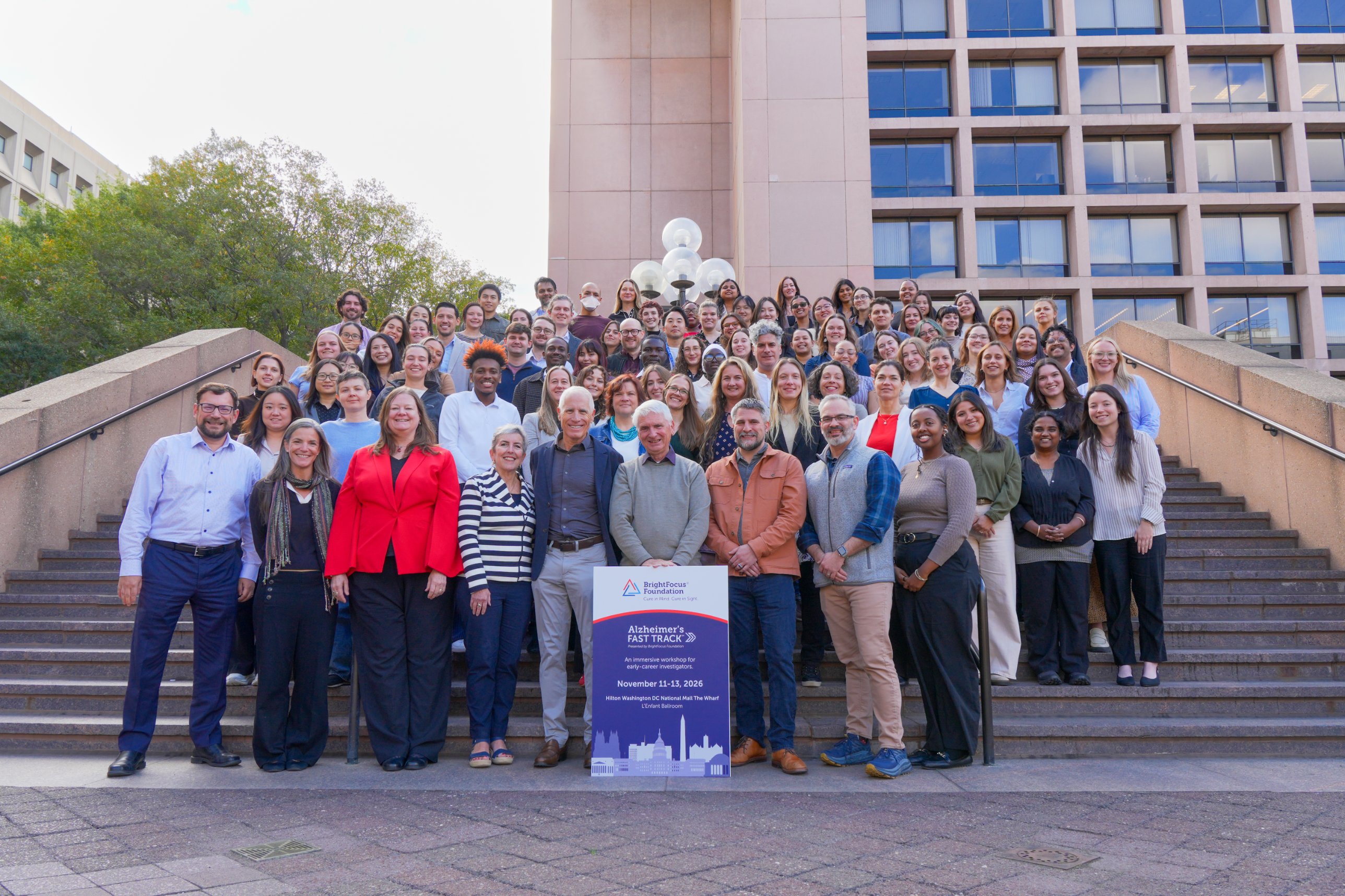
Held November 11-13, 2026, in Washington, D.C., the 18th annual Alzheimer’s Fast Track welcomed a record number of attendees, empowering them with the skills and connections needed to advance bold research. The workshop, an official pre-event of the Society for Neuroscience annual meeting, brought together more than 80 early-career researchers from seven countries and 19 U.S. states.
Powered by donor support, Alzheimer’s Fast Track offers scientists who are entering the field or early in their careers an opportunity to learn about the latest research, connect with preeminent experts, and hone fundamental grant writing and presentation skills to share their research with the world.
When scientists learn early on that every question has value, they become more confident pursuing bold ideas and challenging assumptions, both of which are essential to defeating Alzheimer’s disease, said Sharyn Rossi, PhD, senior director of neuroscience programs at BrightFocus Foundation and Alzheimer’s Fast Track co-chair.
“Scientific breakthroughs often begin with a simple question. By creating an environment where early-career researchers feel comfortable asking those questions, we’re helping build the confidence, curiosity, and connections that can shape the future of Alzheimer’s research.”
From subjects to partners
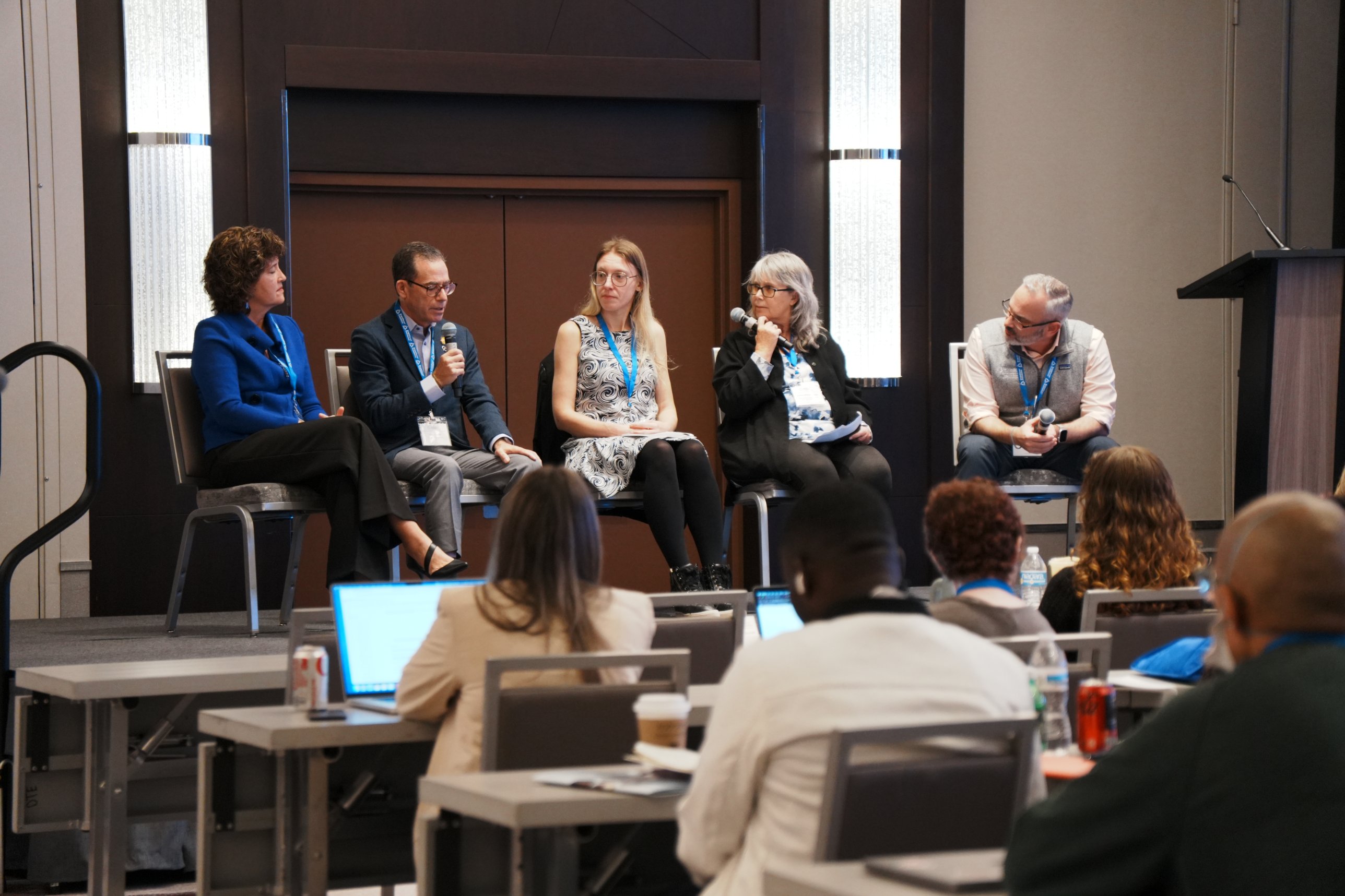
From left: Lisa Dezzutti, Aaron Daniels, Emily Kawasaki, and the Rev. Dr. Cynthia Huling Hummel share their experiences with Alzheimer’s disease, with moderator Dr. Justin Miller.
One of the workshop’s most memorable sessions was a lived experience panel featuring two people living with Alzheimer’s disease and their care partners. Moderated by the University of Washington’s Justin Miller, PhD, the Rev. Dr. Cynthia Huling Hummel and her daughter, Emily Kawasaki, and Aaron Daniels and his wife, Lisa Dezzutti, shared their journeys receiving an Alzheimer’s diagnosis and participating in clinical trials.
Cynthia was only 49 years old when she started experiencing cognitive problems; she could not remember the names and faces of her parishioners and what they had shared with her. She now channels her ministry practice into bringing hope to people who have been recently diagnosed.
“I talk with them about not looking at what they can’t do any longer, but how they can make a difference. Participating in research is one way, and I encourage others to do so,” said Cynthia, who has participated in several clinical trials.
She also challenged attendees to think of research participants not as subjects, but as collaborators in discovery.
“We are not your subjects. We are your partners,” Cynthia said.
Aaron Daniels was diagnosed with younger onset Alzheimer’s disease at age 61. Determined not to let the diagnosis define him, he drew on his executive experience to approach the disease strategically.
“Within two weeks, I made major lifestyle changes—diet, exercise, sleep, stress management, brain stimulation, and social engagement. I also began speech therapy to address my aphasia,” he said.
Today, Aaron continues to fight. He takes lecanemab to slow disease progression and is enrolled in the START Study clinical trial. He and his wife have channeled their energy into slowing the progression of his disease, advocacy, awareness, and the fight for a cure.
“Our coping strategy is to turn pain into purpose,” Lisa said.
A career catalyst
For two-time Alzheimer’s Fast Track participant Cellas Hayes, PhD, attending the program gave him the skills, tools, and confidence to grow his research focused on improving brain health and reducing health disparities.
When Dr. Hayes first attended in 2023, he was a first-year postdoctoral fellow navigating challenges and uncertainty about where he saw himself in the field.
“Like many early-career researchers, I was learning how to navigate the next steps in my career while also trying to find my place in the scientific community,” he said. “At Fast Track, I met some amazing scientists doing incredible work in Alzheimer’s disease and related dementias. But most importantly, I met some amazing people who also happen to be scientists. People who were willing to share their experiences, provide guidance, have honest conversations about the challenges of academia, and genuinely invest in the next generation of researchers.”
Three years later, Dr. Hayes returned to Fast Track, this time as a tenure-track assistant professor at the University of Kentucky, where he is building his independent research program within the Sanders-Brown Center on Aging and the Department of Neuroscience. He also earned his first BrightFocus Alzheimer’s Disease Research grant to study long-term changes in blood biomarkers associated with brain white matter injury.
He credits Fast Track with helping him build meaningful relationships, develop confidence in his scientific ideas, and recognize that he belonged in the field.
“Now, I have the opportunity to build my own laboratory, pursue the research questions that I am passionate about, and hopefully provide the same type of support and encouragement to the next generation of scientists that so many people have provided to me,” he said.
“Sometimes, the most important thing someone can do for a young investigator is simply believe in their potential, create opportunities for them, and remind them that they belong. I am incredibly grateful to everyone at BrightFocus for the relationships that have developed over the years, and for continuing to invest in the future of Alzheimer’s disease research. I am happy to forever be part of the BrightFocus family and, more importantly, to have them as part of mine.”
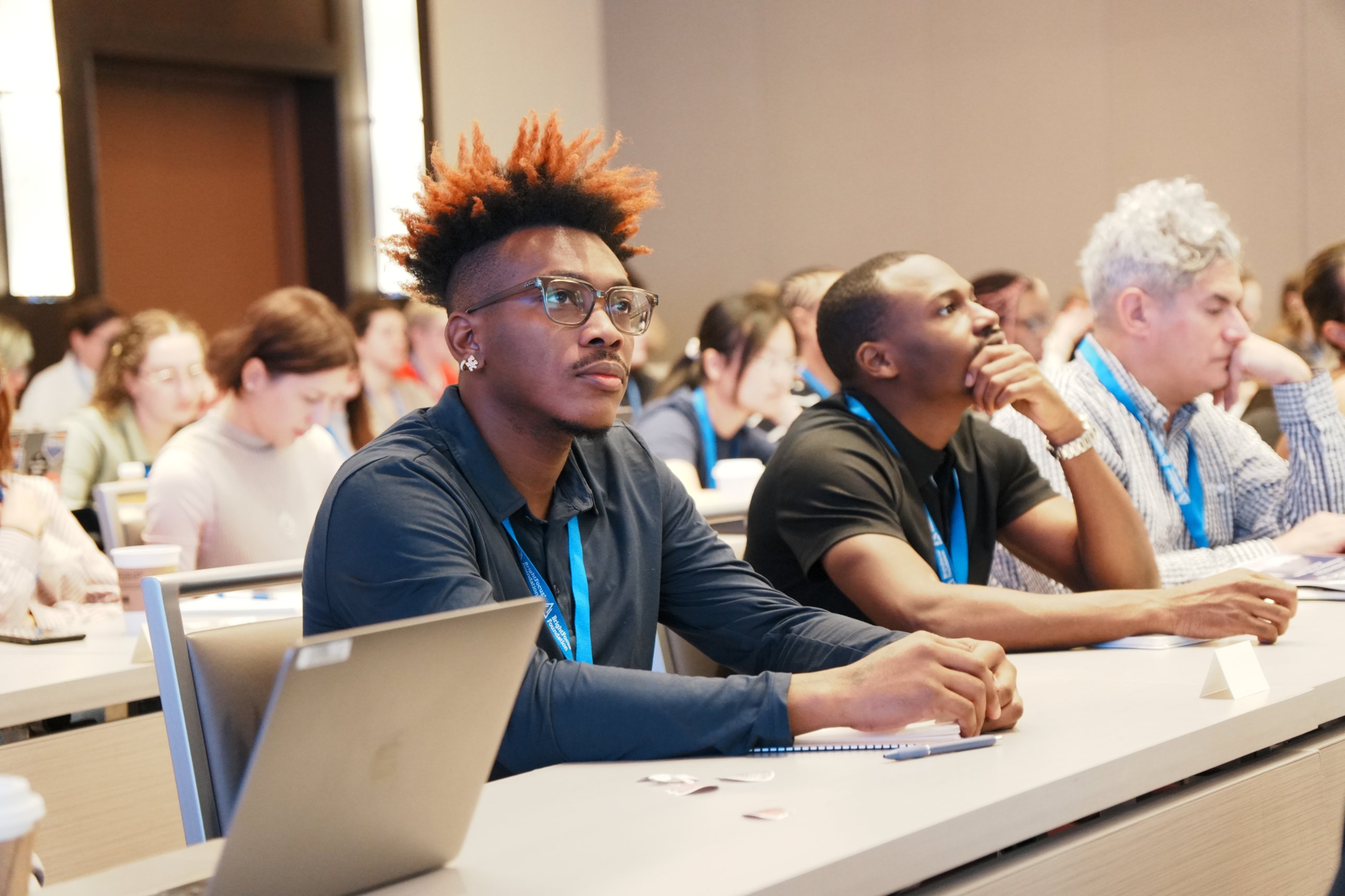
Cellas Hayes, PhD, listens to a session at Alzheimer’s Fast Track.
Paying it forward for future generations
Many Fast Track faculty members are current or former BrightFocus grantees who return to mentor the next generation of researchers.
University of California, San Francisco professor Saul Villeda, PhD, delivered the closing keynote address about his BrightFocus-funded work investigating whether the effects of aging on the brain can be reversed. For him, attending Alzheimer’s Fast Track is an opportunity to encourage the next generation of scientists to push boundaries and think creatively about their research—letting them know it’s allowed, and celebrated, to ask the tough questions no one else is asking.
Another BrightFocus grantee, Henne Holstege, PhD, from the VU University Medical Center in Amsterdam, presented her work studying resilience to Alzheimer’s disease in centenarians. She sees her role at Alzheimer’s Fast Track as serving as a mentor and coach to early-career scientists—paying forward to others the kind of support she received early in her own career.
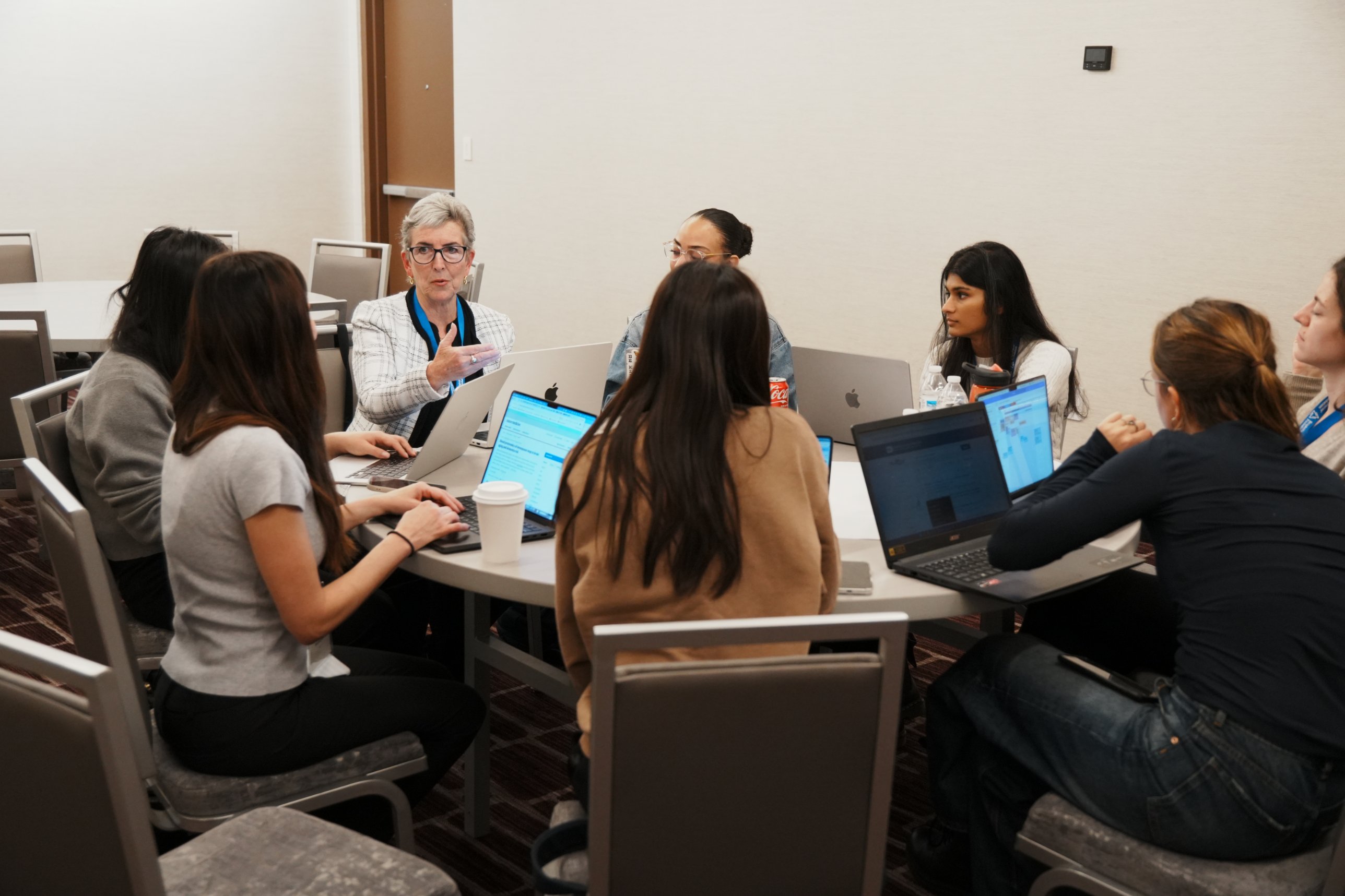
“For people who are just beginning in the field, they look at us established PIs [principal investigators] as people who are not approachable. We really are. We are just people and are happy to talk to everybody. By making that space a lot smaller, students see how approachable we are,” she said.
Co-chair Cynthia Lemere, PhD, coaches students at Alzheimer’s Fast Track.
Finding a scientific community
If there was a theme woven throughout the three days, it was community. Over sessions covering the latest in Alzheimer’s research, shared meals, and individual mentorship, students and expert faculty from different disciplines, countries, and career stages challenged the status quo, debating tough scientific questions and ideas to bring us closer to a cure.
“BrightFocus not only provided research support, but also gave us a warm community, mentors, peers, and friends,” said Yuanyuan Wei, PhD, a postdoctoral scholar at UCLA. “I came here to learn about Alzheimer’s disease, but I also learned something about the scientist I am becoming. I found people who challenged my assumptions, expanded my perspective, and reminded me why I love science.”
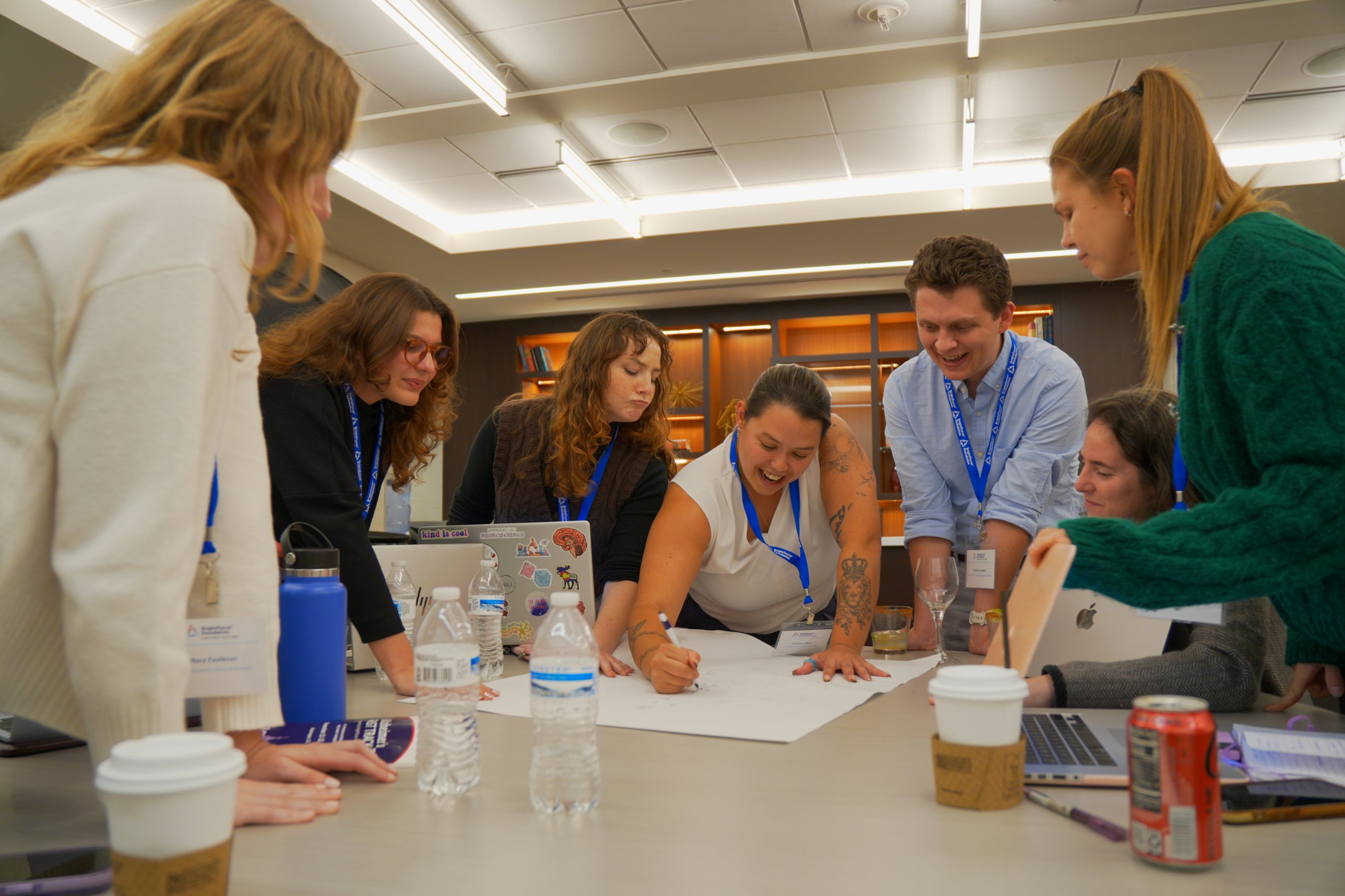
Alzheimer’s Fast Track students work on their mock grant proposal.
2026 Alzheimer’s Fast Track Expert Faculty
Timothy Hohman, PhD, Vanderbilt University Medical Center (Incoming Co-Chair)
Frank LaFerla, PhD, University of California, Irvine (Co-Chair)*
Sharyn Rossi, PhD, BrightFocus Foundation (Co-Chair)
Cynthia Lemere, PhD, Brigham and Women’s Hospital, Harvard Medical School (Co-Chair)
Harry W.M. Steinbusch, PhD, Maastricht University (the Netherlands) (Co-Chair)
Tallie Z. Baram, MD, PhD, University of California, Irvine
Diane Bovenkamp, PhD, BrightFocus Foundation
Adam Brickman, PhD, Columbia University
Laura Cox, PhD, Brigham & Women’s Hospital*
Aaron Daniels
Lisa Dezzutti
Rebekah Feng, PhD, National Institute on Aging
Erin Gibson, PhD, Stanford University School of Medicine
Henne Holstege, PhD, Amsterdam UMC and VIB/KU Leuven (the Netherlands)*
Rev. Dr. Cynthia Huling Hummel
Emily Kawasaki, MSEd
Melissa Lamar, PhD, Rush Alzheimer’s Disease Center, Rush University Medical Center
Shannon Macauley, University of Kentucky*
Diego Mastroeni, PhD, Arizona State University
Bri McWhorter, MFA, Activate to Captivate
Justin B. Miller, PhD, University of Washington School of Medicine*
Melissa Murray, PhD, Mayo Clinic Jacksonville
Andrew Saykin, PsyD, Indiana University School of Medicine
Malú Tansey, PhD, Indiana University*
Saul Villeda, PhD, University of California, San Francisco*
Donna Wilcock, PhD, Indiana University School of Medicine
Christiane Wrann, DVM, PhD, Mass General Brigham and Harvard Medical School
Tracy Young-Pearse, PhD, Mass General Brigham and Harvard Medical School*
BrightFocus Foundation is a premier global nonprofit funder of research to defeat Alzheimer’s, macular degeneration, and glaucoma. Since its inception more than 50 years ago, BrightFocus and its flagship research programs—Alzheimer’s Disease Research, Macular Degeneration Research, and National Glaucoma Research—has awarded more than $330 million in research grants to scientists around the world, catalyzing thousands of scientific breakthroughs, life-enhancing treatments, and diagnostic tools. We also share the latest research findings, expert information, and resources to empower the millions impacted by these devastating diseases. Learn more at brightfocus.org.
Disclaimer: The information provided here is a public service of BrightFocus Foundation and is not intended to constitute medical advice. Please consult your physician for personalized medical, dietary, and/or exercise advice. Any medications or supplements should only be taken under medical supervision. BrightFocus Foundation does not endorse any medical products or therapies.
Share this post
News
Related Articles and Information
Article
Breaking News Dispatch: New Treatment Approaches Targeting Early Alzheimer’s Disease
Read the latest research news and findings from the 2026 Clinical Trials on Alzheimer's Disease conference.
Article
Light and Sound Therapy Slows Cognitive Decline in People with Mild Alzheimer’s Disease
The HOPE Study, a pivotal clinical trial testing an at-home light and sound stimulation for Alzheimer’s disease, showed promise for this type of treatment.
Article
FDA Clears Two Alzheimer's Blood Tests to Support More Accurate, Earlier Diagnoses
Two blood tests—PrecivityAD2 (C2N Diagnostics) and Elecsys pTau217 (Roche and Lilly)—have been cleared for use in clinical laboratory settings. Learn more about how the tests work and what FDA clearance means for people with cognitive impairment.
Article
Alzheimer’s Science News: Summer 2026
In this issue: Can the Immune System Hold the Key to Slowing Alzheimer’s? Lifestyle Choices and Alzheimer’s Risk: What You Can Do Today, and more!
Article
Building a Better Model of Alzheimer’s By Studying Brain Tissue in a Dish
Dr. Dominik Paquet's lab is growing human brain tissue in the lab to uncover what mouse models can’t show.
Article
Breaking News Dispatch: Diversifying the Alzheimer’s Disease Treatment Portfolio
Read the latest research news and findings from the latest international Alzheimer’s conference.
Every Donation is a Step Forward in the Fight Against Alzheimer’s
Your donation powers cutting-edge research and helps scientists explore new treatments. Help bring us closer to a cure and provide valuable information to the public.