A buildup of lipids in the eye can lead to inflammation that can drive age-related macular degeneration (AMD).
BrightFocus-funded researcher Neetu Kushwah, PhD, is studying a new receptor target, RORa, that could be an important player in this process.
This work could identify new potential targets for slowing or preventing AMD, including uncovering biomarkers to help detect AMD early or identify people who face a high risk of developing the disease.
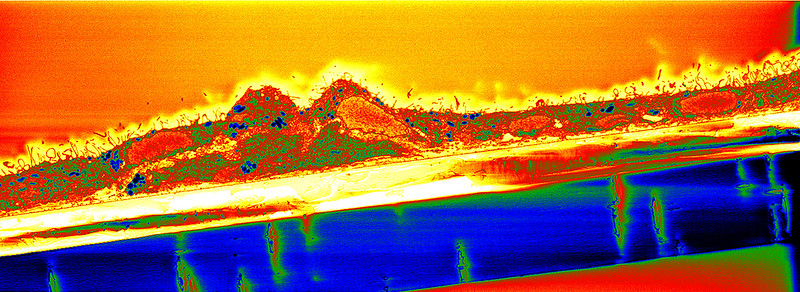
The buildup of waste products—called drusen—in the eye is an early sign of age-related macular degeneration (AMD). Drusen often contain lipids, or fats, causing inflammation and ultimately vision loss. Improving our understanding of how the eye processes lipids—and what happens when those processes malfunction—could uncover new treatment targets and prevention methods in AMD.
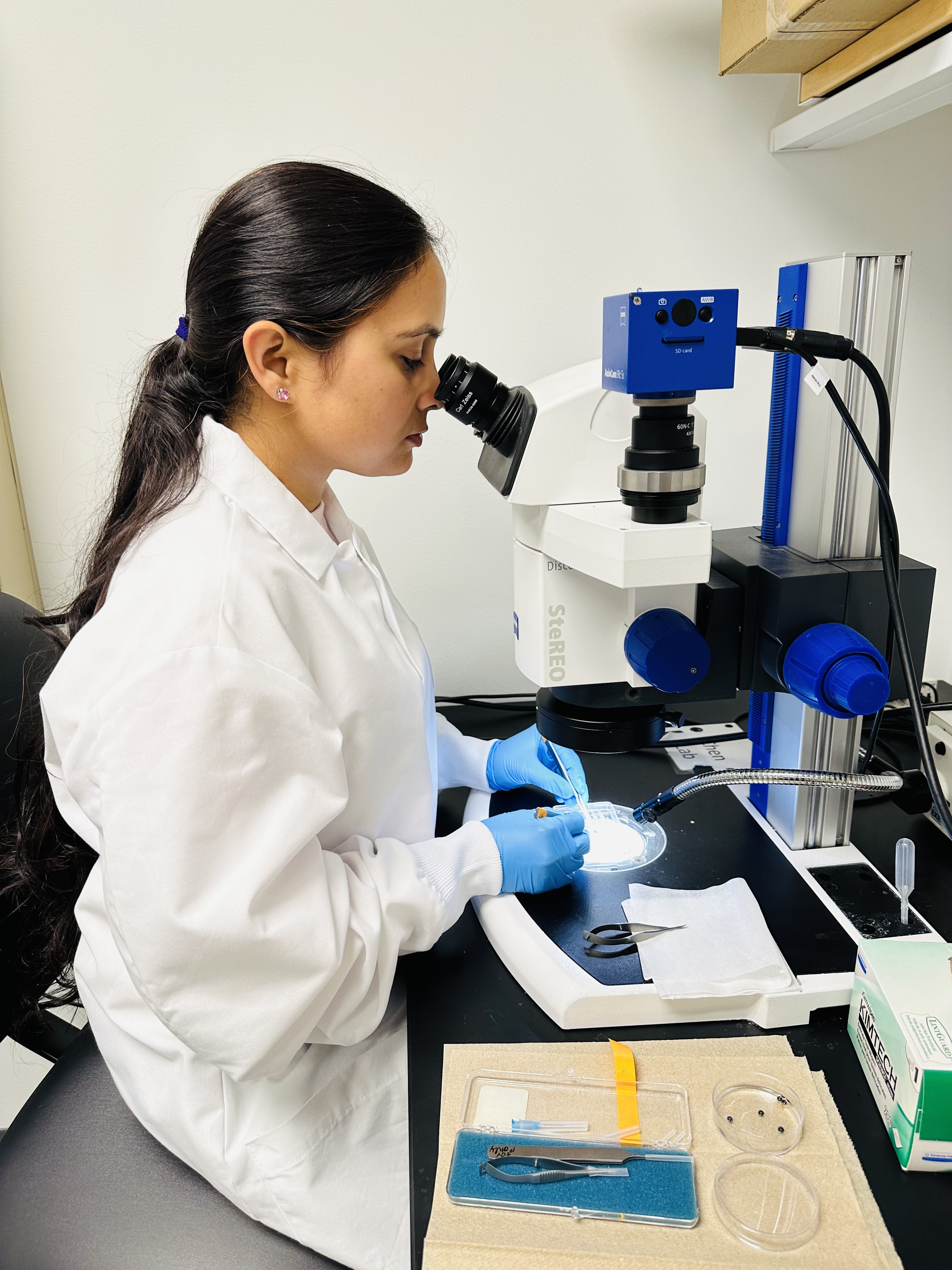
Macular Degeneration Research grantee Neetu Kushwah, PhD, working in the lab.
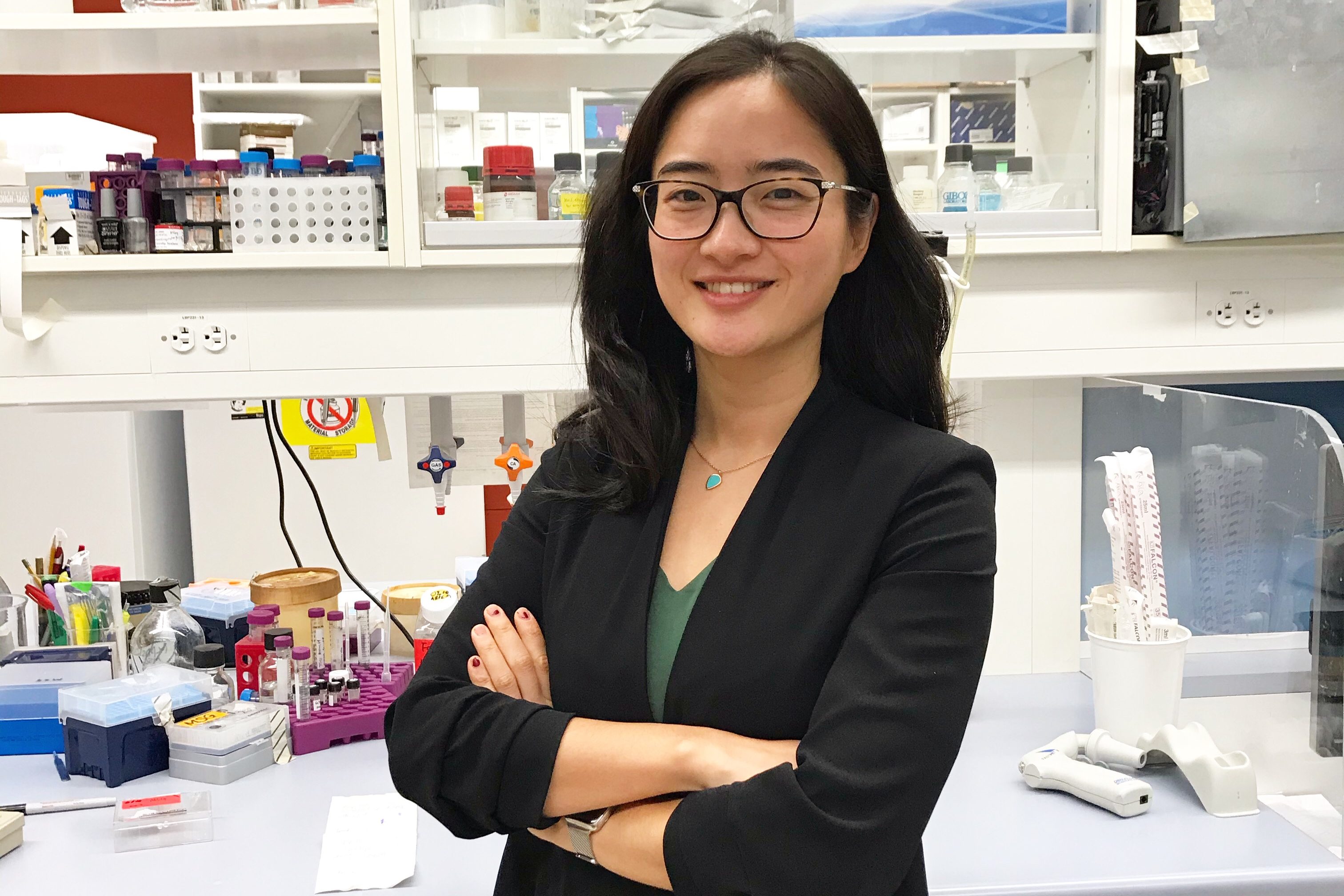
That’s the goal of Neetu Kushwah, PhD, a BrightFocus Foundation Macular Degeneration Research grant recipient. Dr. Kushwah is a postdoctoral research fellow in the Department of Ophthalmology at Boston Children’s Hospital and Harvard Medical School who is pursuing a potentially important player in regulating fat processing inside eye cells. Her project focuses on a receptor called retinoic acid-related orphan receptor alpha (RORa).
“RORa is interesting because it senses cholesterol-related molecules and helps regulate genes involved in both lipid metabolism and inflammation, a key feature in AMD,” Dr. Kushwah said. “This project will provide a potential new druggable target, RORa, in resolving chronic inflammation in AMD.”
Targeting Lipid Imbalance in the Eye
Dr. Kushwah’s main goal is to fill a critical knowledge gap in AMD research: the improper regulation of lipids in the eye is known to drive inflammation and the progression of AMD, but exactly how this happens is unclear. She believes RORa could be the link between malfunctioning lipid regulation and chronic inflammation in the eye. Her plan is to investigate whether removing RORa from specific inflammatory cells leads to a breakdown in lipid regulation and chronic inflammation.
The project was inspired by a 2025 study where Dr. Kushwah and others demonstrated that mice lacking RORa develop AMD-like changes with age, including a buildup of lipid-filled immune cells under the retina and increased inflammationi This motivated her to dig deeper into RORa, with the goal of pinpointing which specific cells drive the process by which lipid imbalance causes chronic inflammation.
Dr. Kushwah hopes that a better understanding of RORa’s role in AMD will help guide the development of drugs that help RORa work better and restore normal lipid regulation. This research could also uncover biomarkers to help detect AMD early or identify people who face a high risk of developing the disease.
Dr. Kushwah’s study reflects Macular Degeneration Research’s mission to fund a broad range of approaches aimed at finding better treatments and ultimately a cure. This 360-degree perspective supports innovative projects that explore the full spectrum of potential drivers of the disease, including better understanding drusen formation and how it affects the immune response in the eye.
Drawing Inspiration From the Brain-Eye Connection
Dr. Kushwah became interested in eye diseases while earning her PhD in life sciences with a specialization in neuroscience from the Defense Research and Development Organization in New Delhi, India. During her studies, she became fascinated by the connection between the eye and the brain-and passionate about researching the many factors that contribute to AMD.
“Because AMD affects millions of people worldwide, making progress in understanding its underlying biology can have a major impact on future diagnostics and therapies,” Dr. Kushwah said.
If her research confirms a link between RORa and lipid regulation in retinal cells, Dr. Kushwah plans to test investigational treatments designed to activate the receptor in animal models and human retinal cells. Her goal is to improve understanding of how RORa influences lipid handling and inflammation in the eye. She also aims to investigate the interaction between RORa and genetic and environmental influences that may play a role in AMD.
Dr. Kushwah credits BrightFocus Foundation’s Macular Degeneration Research program and its donors for supporting research into innovative ideas that traditional funding sources might overlook
“Early-stage research like ours is critical because it explores why disease processes occur, not just what they look like. Without dedicated funding for curiosity-driven, high-risk/high-reward projects, we could miss important biological mechanisms that are essential for real breakthroughs.”
BrightFocus Foundation is a premier global nonprofit funder of research to defeat Alzheimer’s, macular degeneration, and glaucoma. Since its inception more than 50 years ago, BrightFocus and its flagship research programs—Alzheimer’s Disease Research, Macular Degeneration Research, and National Glaucoma Research—has awarded more than $300 million in research grants to scientists around the world, catalyzing thousands of scientific breakthroughs, life-enhancing treatments, and diagnostic tools. We also share the latest research findings, expert information, and resources to empower the millions impacted by these devastating diseases. Learn more at brightfocus.org.
Disclaimer: The information provided here is a public service of BrightFocus Foundation and is not intended to constitute medical advice. Please consult your physician for personalized medical, dietary, and/or exercise advice. Any medications or supplements should only be taken under medical supervision. BrightFocus Foundation does not endorse any medical products or therapies.
New Supplement to Prevent Macular Degeneration Inspires Deeper Search for Cures
A Macular Degeneration Research-funded scientist launched a supplement based on a link he discovered between the eye disease and Parkinson’s disease. Now he’s continuing research in the hopes of finding novel cures.
Article
Transforming Macular Degeneration Care With Long-Acting Treatment
With funding from Macular Degeneration Research, Dr. Daisy Shu is exploring advanced drug delivery systems that release medicine slowly over time. This innovative approach could reduce the number of injections needed for macular degeneration while maintaining vision-saving results.
Article
How Targeting a Molecular 'Switch' Could Inspire New Macular Degeneration Treatments
A researcher funded by BrightFocus’ Macular Degeneration Research is zeroing in on a protein that damages eye cells in the early stages of dry age-related macular degeneration, offering insights that could lead to new treatments.
Article
How Better Models of Macular Degeneration Could Help Prevent Vision Loss
Most experimental models that researchers use to study macular degeneration fall short. BrightFocus Macular Degeneration Research grant recipient Dr. Brittany Carr aims to change that.
Article
Is This the Next Best Thing to Regrowing a New Retina?
A BrightFocus Macular Degeneration Research-funded scientist is investigating a new regeneration technique to restore key cells that are wiped out in late-stage age-related macular degeneration.
Article
Turning Back the Biological Clock on Aged and Injured Eye Cells
A de-aging technique offers hope for halting damage in early macular degeneration.