Could people who take a commonly used treatment for Parkinson’s disease also gain protection against age-related macular degeneration (AMD)? The effort to answer that question was part of more than three decades of research that uncovered a link between the Parkinson’s drug, called L-DOPA, and a reduced or delayed risk of developing AMD.
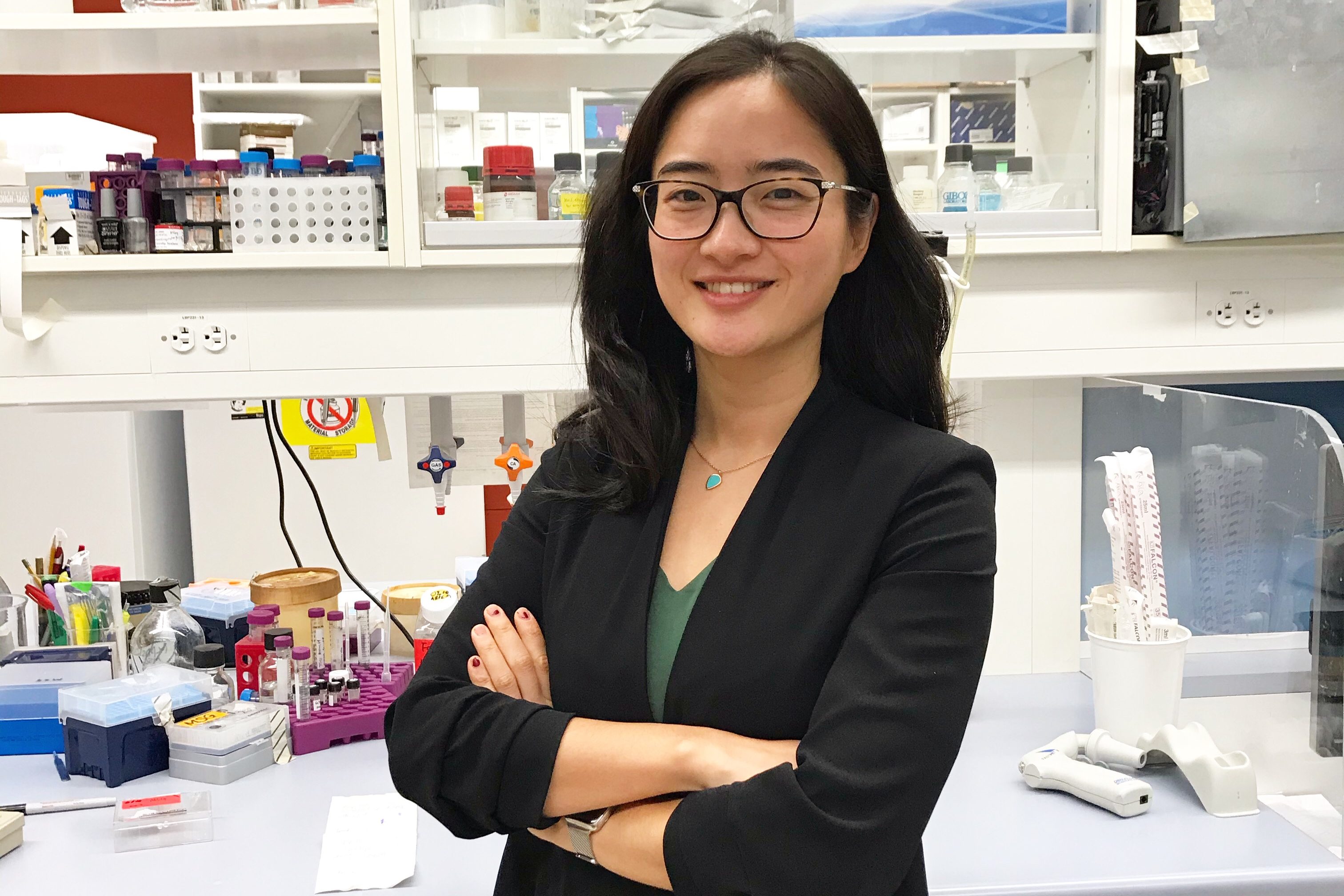
The research was led by Brian McKay, PhD, a BrightFocus Foundation Macular Degeneration Research grant recipient and professor at the University of Arizona’s College of Medicine. Dr. McKay’s research resulted in the August 2025 launch of MaculaPM, a dietary supplement that contains L-DOPA, a naturally occurring compound extracted from velvet beans (Mucuna pruriens), and several other ingredients that have been demonstrated to protect against AMD. MaculaPM is available for purchase online without a prescription from Aging Health Sciences, a company Dr. McKay launched in collaboration with his colleague Dr. Murray Brilliant, a professor of ophthalmology and vision science at the University of Arizona’s College of Medicine, and the University of Arizona’s commercialization arm, Tech Launch Arizona.
Dr. McKay continues to study the molecular pathway that inspired the supplement. He is focused on a protein that could be key in preserving retinal pigment epithelial cells, which are critical to maintaining healthy sight. Dr. McKay hopes his research will result in new, more potent treatments for AMD.
Linking eye pigmentation with AMD risk
In addition to L-DOPA, MaculaPM includes other ingredients that have been linked to eye health—vitamin C, vitamin E, lutein and zeaxanthin—as well as melatonin, which the researchers believe could further protect against AMD by modulating circadian rhythms.
While the popular AREDS2 supplement also contains vitamins C and E, lutein and zeaxanthin, Dr. McKay believes MaculaPM could better reduce AMD risk with the addition of L-DOPA and melatonin. Taking one capsule one hour before bedtime each night “gives us the resetting of the circadian rhythm, which is critical to the health of the retina,” he said in a July 2025 episode of Macular Chats.
Dr. McKay’s research was inspired by a puzzling fact: Caucasians are eight times more likely to develop AMD than other demographic groups. To understand the reasons behind that disparity, his team started to study pigmentation. Their research led them to a protein on the surface of all pigmented cells that’s made by a gene called GPR143. Mutations in GPR143 cause ocular albinism 1 (OA1), a rare inherited eye disease that causes vision loss and abnormalities. With further research, Dr. McKay and his colleagues discovered that L-DOPA, which is an amino acid, sends signals to GPR143 that are important to retinal development.
Armed with that finding, Dr. McKay studied national health data and discovered that people taking L-DOPA for Parkinson’s had a reduced risk of AMD, or they developed the disease later than people who were not taking the compound. That led them to develop MaculaPM.
While Drs. McKay and Brilliant are happy to be offering MaculaPM as a readily available option to people who want to protect against AMD, they’re motivated to continue studying the GPR143 pathway in AMD. “I know that L-DOPA helps half of the people with AMD. Why only half, and can I do something?” Dr. McKay said during the Macular Chat. “I don’t want to only help half the people. I want to help everyone.”
Drawing inspiration from people with AMD
Dr. McKay’s work is an example of BrightFocus Foundation’s 360-degree approach to macular degeneration research, which supports innovative studies that explore different scientific paths to better treatments. This includes investigating new ways to prevent or delay the development of AMD by targeting early influences that can lead to the disease.
His current research is focused on investigating a molecular pathway in the retinal pigmented epithelium that governs the production of neurotrophic factors, which are proteins that help neurons survive harsh conditions. “In the eye, this is especially critical because we are born with all of the photoreceptors we will ever have,” Dr. McKay said. “As they die off with age, vision is lost, and we get diseases like AMD. The hope with neurotrophic factors is to use them to stop degenerative diseases like AMD.”
Dr. McKay’s lab has identified a novel protein pathway in the eye that drives the production of critical neurotrophic factors. Their plan is to test whether turning this pathway either up or down protects the retina from damage. They hope the information they gain can be used to develop new drugs to treat or prevent AMD.
Preventing blindness has long been a passion for Dr. McKay. While earning his PhD at the Medical College of Wisconsin, he worked in the lab of Janice M. Burke, PhD, a professor who specialized in AMD and cell biology. In addition to mentoring him in his studies of retinal pigment epithelial cells, she introduced him to members of the AMD community.
“I met people and their families as AMD impacted their lives. The patient’s stories inspire me to fix AMD so they don’t go blind,” Dr. McKay said. He now trains the students who work in his lab to present their research in public a couple of times a year, he added. “Training students to explain their research goals and results to the general public reminds them and me why we are doing this.”
Dr. McKay added that he’s grateful for the early support from BrightFocus Foundation’s Macular Degeneration Research program, which allowed him to establish the research path that led to the development of MaculaPM and his ongoing research into GPR143. “That freedom to sink or swim gave me the time and space to investigate the protective role of pigmentation and GPR143 signaling on AMD pathology,” he said.
“MaculaPM takes our research and improves the treatment and broadens availability to anyone at risk of AMD. There is nothing we can do to restore lost neurons, but with MaculaPM, we will hopefully prevent this early loss. My hope is this affordable and available option will vastly increase the number of people treated and globally prevent the disease.”
Want to learn more about vitamins and supplements for retinal health? Listen to a discussion with Drs. McKay and Brilliant, part of our Macular Chats series.