Transcript
Download PDF
Please note: This transcript has been edited for clarity and brevity.
NANCY KEACH: Good morning, good afternoon, good evening. Welcome from BrightFocus Foundation’s Alzheimer’s Disease Research Program. I’m Nancy Keach, and welcome to the 38th episode of Zoom In on Dementia & Alzheimer’s. This Zoom In series is generously sponsored by Lilly, Biogen, and Genentech, and we are very grateful to these sponsors for making these free programs possible.
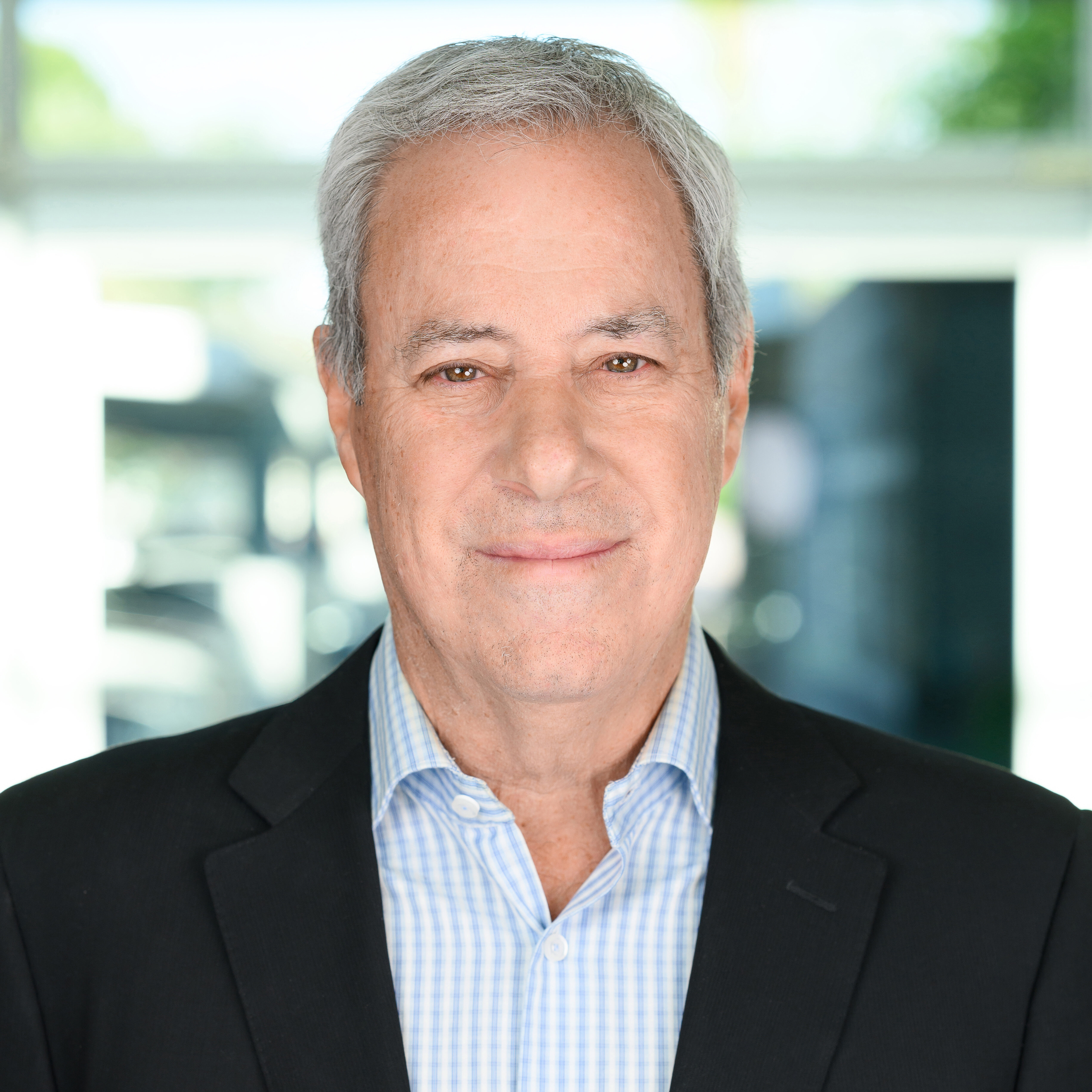
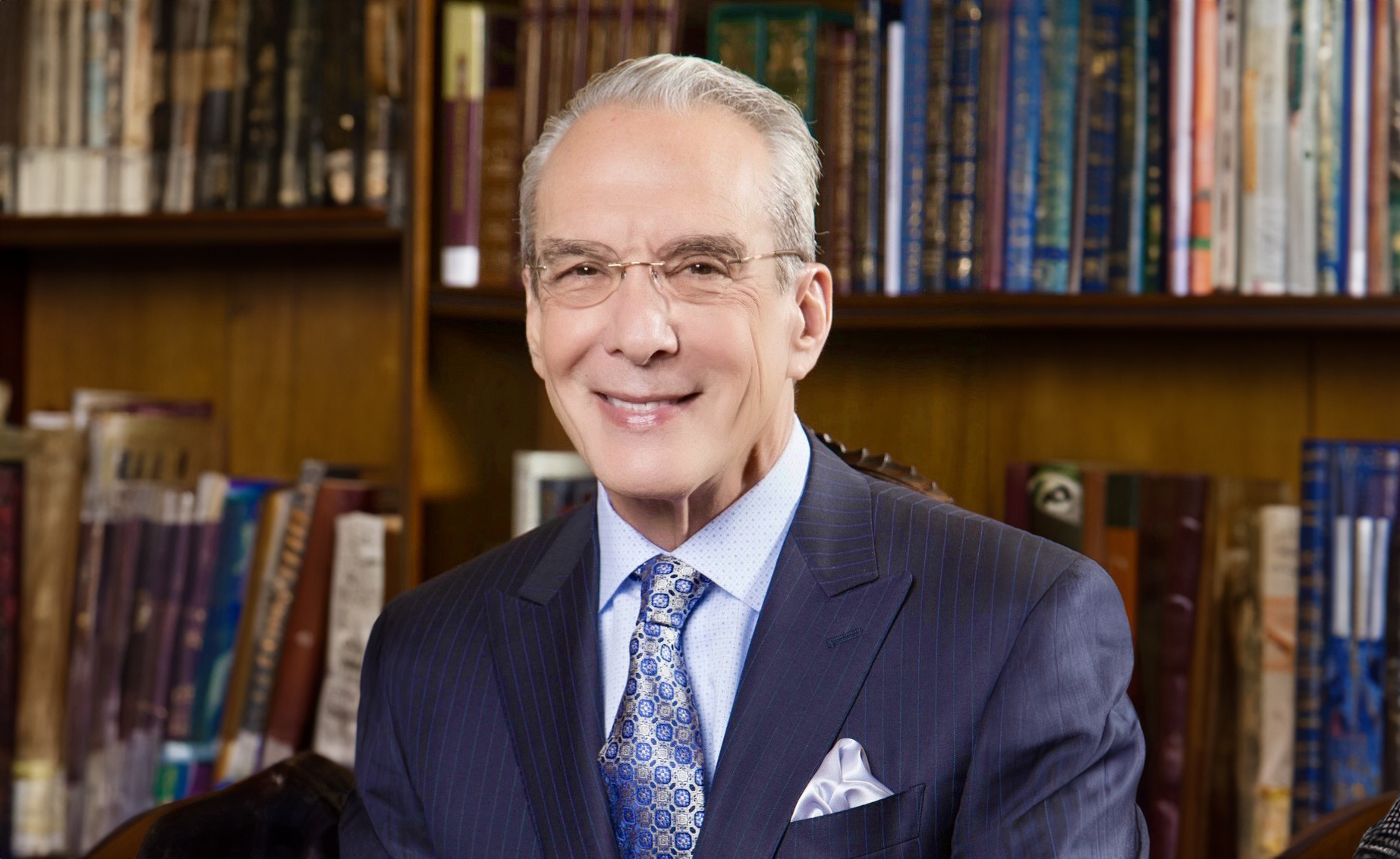
So today’s program is “Understanding Your APOE Status: Genetics and Alzheimer’s Risk.” And I am delighted to introduce my guest expert today. Dr. Eric Reiman is the CEO of Banner Alzheimer’s Institutes. He is also a professor of psychiatry at the University of Arizona, University Professor of Neuroscience at Arizona State University, senior scientist at the Translational Genomics Research Institute, and a co-founder and advisor of ALZpath, which developed a p-tau217 antibody that is being used by several diagnostics companies for their Alzheimer’s disease blood tests.
Of relevance to today’s episode, he is well known for advancing the study and prevention of Alzheimer’s disease in people at the highest genetic risk for Alzheimer’s disease, including people with two copies of the APOE4 gene and members of the world’s largest autosomal dominant Alzheimer’s disease kindred in Colombia. His overarching goal is to find and support access to the first Alzheimer’s prevention therapies sooner than you think. Welcome, Dr. Reiman, and thank you so much for being here.
DR. ERIC REIMAN: Well, thanks to you and your colleagues for having me.
NANCY KEACH: A pleasure. So as I always begin, we received about 170 pre-submitted questions. So we had AI sort them into categories. So today, we’re going to try to cover these broad categories. And again, we can’t answer the personal questions. But we’re going to go over what is APOE4, why does it matter, how much does APOE4 increase my risk. And I’m saying APOE4, but we’re also talking about APOE2 and APOE3. Should I get tested? Can I prevent Alzheimer’s if I have APOE4? Do supplements or hormone replacement therapy help APOE4 carriers? Are the new Alzheimer’s drugs safe for APOE4 carriers? And what about clinical trials?
I hope we’re going to try to get to as much of this as we can. But I want to step back, Dr. Reiman, and just start with what is APOE4 and why does it matter? Some basics.
DR. ERIC REIMAN: Well, APOE is the major genetic risk factor for Alzheimer’s in older adults. There are three common forms of the gene. Just like forms of the gene we have for eye color, we have different forms of the gene for this protein found in the blood and brain called apolipoprotein E, and they are known as APOE 2, 3, and 4.
You can inherit any combination of APOE 2, 3, and 4 from each of your parents, which leads to six different combinations. You could have the 2/2, 2/3, 3/3, 2/4, 3/4, and 4/4 genotype. In comparison to the most common combination, which is two copies of APOE3, each additional copy of APOE4 is associated with a higher risk of developing Alzheimer’s disease, and a younger age at having the first onset. By comparison, each additional copy of APOE2 is associated with a lower risk and a later age at onset. And individuals with two copies of APOE2, which is quite uncommon, have a higher chance of living into their hundreds.
NANCY KEACH: A question from YouTube says, exactly what effect do the various alleles of the APOE gene have? Do they affect amyloid, tau, or something else? Do we kind of know the mechanism of what they’re affecting?
DR. ERIC REIMAN: That’s a great question. So before I answer that, let me give you a little bit of context about the biological changes that occur in Alzheimer’s disease. We have a growing evidence that the development of Alzheimer’s disease, at least partly related to the initial development of amyloid plaques that is made up of an aggregated clumping form of a protein called amyloid, and that may trigger a cascade of events that include protective and harmful inflammatory changes in the brain, the propagation of another microscopic abnormality called tau tangles in the brain, and the loss of brain cells in their connections.
APOE has an effect on each of those elements. It’s best known for its effects on promoting the aggregation of amyloid into these clumps that are found in plaques, but it also turns out that it has very specific effects on inflammatory changes, tau tangles, and neurodegeneration.
It also has other biological effects. For instance, before we knew about its relationship to Alzheimer’s disease, it was known as the major cholesterol transporter in the body. And the APOE4 gene is a risk factor for having higher cholesterol levels. So it is a bit of a challenge for those individuals who want to develop an APOE-modifying treatment to know which of these elements to target. But we’re getting a number of clues along the way. And one of the things that I am excited about is the opportunity to develop in the future APOE modifying drug therapies.
NANCY KEACH: What if I have a 3 and 4, and what if I have a 4? Is there still sort of a percentage that you feel has held up in terms if you have this combination, you’re at X increased risk, or do you not like to approach it that way?
DR. ERIC REIMAN: We wrote an editorial in JAMA Neurology just last year. There was an article by some wonderful researchers who I adore, who had argued that people with two copies of APOE4 had a different kind of Alzheimer’s disease, more like the Alzheimer’s causing autosomal dominant Alzheimer’s disease genes. And we’ve made the case that we thought that it didn’t differ that dramatically from the other forms, just in the magnitude of overall risk. And there were better ways to consider it. It’s very common in the field to look at these, and you’ll forgive me for being a little technical at the moment, but looking at these backwards looking, cross-sectional studies of people just on the presence or absence of amyloid plaques and cognitive impairment. And using that data in ways that provide estimates of risk that frighten people.
Additional study done by friends from Duke University in 1993, they found that if looking at people who came to autopsy and either had Alzheimer’s dementia or did not, the people with two copies of the APOE4 gene, 94% of them were APOE4 homozygous—people with two copies of the APOE4 gene had Alzheimer’s dementia. About 45% of people with one copy, and 20% of people with no copies. But backwards-looking studies like that are biased, and they overestimate the risk.
So the way to estimate a person’s risk is to look at representative populations of healthy people and follow them over time. And when we did the first prevention trial, we started a prevention trial, which ended up needing to stop. And people with two copies of the APOE4 gene, we felt we needed to give people information about their risk. So we did this estimate more than 10,000 people. And when you do that estimate, one gets a different risk estimate. So this is the estimate of a risk of becoming a developing mild cognitive impairment or disabling cognitive impairment by age 85. If one had no copies of APOE4, there was a 10% to 15% chance of becoming impaired due to Alzheimer’s disease. If one had one copy, it was 20% to 25% chance, and with two copies of 30% to 55% chance. Now, that’s still a significant risk, but maybe a little less alarming than people are familiar with.
What I think is going to happen, and what we’re using is now with blood tests is to look at much larger populations. And within the next year, we will have a way, I believe, to estimate a person’s short term, long term, and lifetime risk of cognitive impairment. Those forms of cognitive impairment related to Alzheimer’s biomarker changes, and those forms that are not, based on a person’s age, the number of APOE4 genes that they have, and blood test results. We hope that additional information could be informative. But imagine you had a way to estimate your risk in the next 1, 2, 3, 4, or 5, or 10 years. That information could then be used when we have an effective prevention therapy to understand what your risk would be on treatment so that you can make informed decisions about benefits, risks, and use. That will not be far away.
NANCY KEACH: And that is a great segue to the question, should I get tested? And Charlotte, from Lakewood, Ohio, wrote, are there benefits to knowing your APOE gene status profile early? And if so, what are those benefits?
DR. ERIC REIMAN: If you don’t mind, I think I’ll take a little time to consider the benefits and risks depending on where person is in their journey. And let me start— not early, but let me start with individuals with mild cognitive impairment and mild dementia due to Alzheimer’s disease. The value of learning about one’s APOE status is if they were considering, say, an amyloid plaque clearing antibody therapy. The reason that’s important is that individuals who receive this treatment with one or two copies of the gene have a higher risk of developing a side effect. And that side effect is known as Amyloid-Related Imaging Abnormalities (ARIA).
When this side effect occurs due to leaky blood vessels, when you attack amyloid on blood vessels, what happens is that if the side effect occurs normally, you can see it on an MRI, withhold the dose, and there are no symptoms. There are a number of people who develop mild to moderate symptoms, such as blurry vision, confusion, less commonly a seizure. And there were rare cases about a 3 and 1,000 people in the original studies who would develop a brain hemorrhage with permanent disability and death. That risk is higher in one copy of the APOE4 gene and higher still in two copies.
There are still strategies one could use even with two copies of the gene to use it. But it would help the physician and families make an informed choice together and consider ways to mitigate that risk by going more slowly with the dose of treatment, managing their blood pressure, making sure they’re not on blood thinners. So it’s relevant to that. What if they are not eligible for this treatment? I was just referring earlier to an older study of a drug that’s been available for a long time, a cholinesterase inhibitor, donepezil, or Aricept. And that study of individuals with mild cognitive impairment, it turned out there was a preferential benefit, people who carried the APOE4 gene.
So if it hasn’t been considered there anyone has the APOE4 gene, you might want to consider it. Now, what about unimpaired individuals, in the current era when we don’t have established drug prevention therapy? There’s not a compelling reason to learn about one’s APOE status, but people may be curious and facts are friends.
What are the benefits and risks? If it was a patient of mine, or a family member, or a friend, I’d want to know why they’re interested so I can put this information about benefits and risks in that context. I’d want them to know about the potential benefits and risks of getting their test results, what it may mean in terms of their risk of becoming cognitively impaired, as I’ve just described, although I hope we’ll have more granular information annual risk over the next few years soon.
We want them to know what it means in terms of current lifestyle interventions. It turns out that these lifestyle interventions that have been shown, for instance, in the U.S. POINTER study to improve memory and thinking problems. It actually is associated with an improvement. Things like the Mediterranean diet, cognitive exercises, physical activity, social activities, and health-promoting medical interventions for your diabetes, cholesterol, and blood pressure are associated with an improvement in memory and thinking that is present whether or not you have the APOE4 gene and whether or not you have biomarker evidence of amyloid plaques.
Learning about your risk might increase your motivation to adhere to those interventions. We do not have drug treatments to reduce the risk of progressing to cognitive impairment right now, but this is what I do for a living. And while there is no guarantee in these trials, we have a hope of finding and supporting approval of the first drug therapies to clear amyloid plaques and reduce the risk of becoming cognitively impaired within the next one or two years.
The thinking has been the reason that there is hope is that these treatments have already been used in impaired patients when the underlying disease is extensive. When you not only have a lot of amyloid plaques in the brain, but these potentially self-perpetuating tangles, kind of like metastatic cancer. The idea is if you could treat the plaques before you have the other elements of pathology, you may have greater benefits. And if you can intervene when those amyloid plaques on blood vessels are less extensive, you may have less severe side effects as well. And if that turns out to be the case, we will have a new era in the fight against Alzheimer’s.
We’ll start seeing in these first two trials, which is the Trailblazer ALZ III study of donanemab, which was likely to be the first to readout in which we collaborate with Lilly on that study. And another study called AHEAD, a study of lecanemab. The hope is that we’ll actually be able to show the ability to slow the progression to cognitive impairment. And if those treatments work and we not only have access to treatment, we’re hoping that will speed up the evaluation of the second generation plaque-reducing treatments, including those that can be administered in a more accessible way by self-administered subcutaneous injection and a drug like trontinemab, a form of plaque-reducing treatment that gets shuttled into the brain in a way that has a much lower risk of ARIA, whether or not one carries the APOE4 gene. If we could speed up access to those safer and potentially more effective treatments, that would be great.
So when you think about learning about your risk of APOE, I think it’s very important to learn about the risk in the context of these more realistic estimates of what your likelihood is of progressing to impairment and understanding that we maybe have an opportunity, in the near future, to have treatments that could be beneficial.
In the meantime, it would be helpful for people to know about advances in the effort to find these prevention therapies, and also know what trials they could participate in. If I could come back to this very important issue of whether to receive this information and how to receive it, how to receive it is as important as whether you receive it. I think it’s important for people to be prepared to learn about APOE information, and what it’s going to tell them about their risk, what it’s going to tell them about their future treatment options and clinical trial opportunities, but also to place it in the context of their potential risks.
There are now ways to disclose this information that have been shown to be quite tolerable to individuals, regardless of their APOE genes, and it makes a big difference. Learning about this without anticipating the results and being counseled about what they’ve learned can sometimes cause significant alarm. I think it’s important to place this information in the context of one’s risk and the future for prevention.
It’s also important for people to know about the potential for employment and insurance discrimination, and the protections that do and do not exist. At the moment, we have the genetics information non-disclosure act, which provides protection against health insurance discrimination if you’re working for an employer with more than 15 employees. And it protects against employment discrimination for larger companies, but it does not protect against discrimination for disability insurance, life insurance, or long-term care. So some would suggest, if you’re thinking about insurance in that regard, to get it before you get this information, because you could be asked, and it could be a reason not to be able to do that. The hope is that we will eventually see more protections in this regard, but those are the benefits and the risks.
And the other issue that I think is important to consider in advance is what you might tell your immediate family members, siblings, or children about their biological risk. If you inherit two copies of APOE4, your children have a 1 in 2 chance of having the gene. If you inherit one, they have a 50% chance. I speak to a lot of people who worry about their children.
And I just want to put it in the context of there are never any guarantees in clinical trials, but I am extremely optimistic that we are going to have the first treatments to reduce the risk of memory and thinking problems due to Alzheimer’s disease in unimpaired individuals with biomarker evidence of Alzheimer’s in the next couple of years, and that we have a realistic chance for potentially within the next five years to have a treatment that can be used as infrequently as once per year in unimpaired individuals who may be at risk before they have any biomarker evidence of Alzheimer’s disease to dramatically, if not completely, avert the onset of plaques in this ensuing biological and clinical manifestations of the disease.
We have to see those treatments through, and then we have to figure out ways in which once the treatments are shown to work. They’re approved, they’re cost effective, they’re covered by payers, and they are used widely, equitably and the most informed ways. We’ve just had an article that came out in Lancet Neurology today in which Nancy is one of the co-authors, actually, a policy paper on recommendations of steps that it would take to help advance the development and accessibility of these treatments in people with positive Alzheimer’s blood tests and eventually in people with a negative test.
NANCY KEACH: Well, thank you. That’s so much fantastic information. And there’s a lot of comments in the chat, for those who are interested, especially on people who learned their status and found it very helpful. And here, Neva, “I used the info to decide when to retire or how much stress I wanted to have in my job. It was very helpful.” Deb, “I found there was a huge compelling reason to find out. It’s helped me to prioritize lifestyle interventions, like in Lancet list, such as sleep, exercise, food choices, supplements, cutting alcohol, and more.”
I just want to mention that in the fall, we did a full episode on the results of the U.S. POINTER study with Dr. Laura Baker. And you can find that on our website, brightfocus.org. So she really goes into detail on what the data shows about lifestyle interventions, especially if there’s someone coaching or monitoring as you undertake lifestyle interventions.
And all of this, Dr. Reiman is to me is so positive and so hopeful, but also so rational. And you used the word alarm. And I think we’re talking about both if you learn your APOE4 positive or alarm about if you’re considering Leqembi or Kisunla about ARIA. And I think there’s a bigger point here to be made that sometimes in the media, there is a benefit to scary headlines. I’m not blaming media, but oftentimes information is taken out of context and not fully validated by science. And so, Dr. Reiman, hearing you speak about this so rationally is like a warm bath to me. Because it’s so hard to just get the clear understanding without pushing the panic buttons. And I guess my point is that sometimes people are intentionally pushing panic buttons. I don’t know if you want to comment on that at all.
DR. ERIC REIMAN: Yeah. I do, and I really appreciate that, Nancy. Let me begin by responding to the two comments that you referred to, which were terrific comments, actually, where I think we will be soon is in an era in which we will not only know information about one’s prognosis, and treatment options. But we will be able to leverage the combination of scalable blood tests and genetic information together to not only make those decisions, but to inform important personal decisions. Those personal decisions may be lifestyle interventions, they may be issues about priorities. And I think when I turned 60, it took me a while to incorporate this lesson. But it was an age in which you begin to think about the things you don’t want to do anymore. And I think that prioritization can end up being very helpful. And I think that combination of information from one’s biomarker status and genetic information is going to be particularly powerful at that time.
There are some people who worry that when we refer to the possibility of having a prevention therapy, that we will be creating a sense of false hope. And I do want to point out that there is no guarantee that these treatments will work, and that we have had a number of unpleasant surprises in clinical trials particularly between 2000 and 2019 before we had before we had the first established treatments.
But there were good reasons to think that these treatments have a realistic chance for the reasons that I’ve mentioned. Again, imagine you were treating using a statin that had a benefit, a cholesterol lowering treatment in somebody who already had heart damage, you would think there was a pretty good chance it would have an even greater benefit before you had atherosclerosis, or you had a treatment that had a benefit in metastatic cancer, and now you’re using it earlier.
So there’s reason to think that these treatments at least postulate that these treatments will have a more profound impact earlier and fewer side effects. But we have to be able to show that. And I don’t subscribe to the view that we should just not raise hope. Because what keeps me up at night is the worry that we will have a prevention therapy out there and the health care profession, policymakers will not be prepared to provide the access to these treatments before they’re too late.
I think of my wife, Lori, who 12.5 years ago, had the diagnosis of breast cancer. And I remember how anxious we were to make sure that we got treatment before a positive lymph node biopsy, before it was metastatic. It would break my heart to have people identified who would be candidates for treatment and have to wait many months or longer to have access to a treatment that might not be as effective at a later stage of the disease. That’s where we’re aiming for now. So the reason that we want to talk about, this possibility of having treatments sooner than one thinks, it’s sooner than one thinks in terms of beginning the preparation for this possibility.
You’re familiar with the term “hope for the best, prepare for the worst.” Here, we want to hope for the best and prepare for the best. The idea that we’ll have a treatment that works, and then how do we make it available, and how do we inform its use in the most appropriate way. So what among the things we’ve proposed are strategies to not only learn from the results of trials, but continue to be informed after drugs are approved about how well they work in different populations and over longer periods of time.
My prediction is that whatever readout we have in this prevention trial of what percentage reduction we have in the onset of cognitive impairment, the longer people are free of memory and thinking problems, the greater that benefit’s going to become. And the only way to learn that will be after these trials are over and the drugs are approved. But there’s going to have to be a paradigm change to do that.
We have a paucity of subspecialists to provide care. We need to figure out how to be able to introduce this in the primary care setting, have dedicated service teams to be able to provide this in a thoughtful and scalable way, and leverage the subspecialists for more complicated and uncertain cases and supervision of the plan. That’s a paradigm change. And that paradigm change, in my opinion, is not only going to be helpful for unimpaired individuals, including people I have been working with in my studies since 1993 with two and one copies of the APOE4 gene.
But it’s going to be important for impaired patients. Because physicians are going to start asking everybody about memory and thinking problems. Screening them with a blood test, capturing them. Including people who think they may be unimpaired, and capturing impaired people even earlier to give them access to care. And doing so in a way that I think will lead to a destigmatization of this illness. There was a time in the 1960s when people were hesitant to give people their diagnosis of cancer because they thought there was nothing you could do about it. What if we have a time in the future where we can begin to talk about the first generation of Alzheimer’s survivors? Wouldn’t that be a great thing?
NANCY KEACH: It most certainly would. Actually, I think I’ll go here now because we’ve had a lot of questions about how to get tested? Will insurance pay for it? I think it varies so much from location to location, and state to state, and that probably the best thing is to go to your doctor and ask your doctor. And if your doctor is not informed to look up a memory center or an Alzheimer’s Disease Research Center, there are many across the country to get initial information about where to go and what kind of coverage will work for you. Dr. Reiman, do you have anything you want to add to that, as satisfactory as it is?
DR. ERIC REIMAN: Yes. So for cognitively impaired patients, one would think that insurance would cover that. And they can order that from a number of labs working with their doctor. The challenge is how to make sure people get the proper information in preparation for getting this information disclosed. And we have a new challenge in this regard. We have a challenge with the 21st Century Act, in which you get to see in your portal these test results before the doctor has talked to you about what it means. So where I think we’re going to eventually get is a much more scalable way to share information about a person’s risk, and what it means, and what you can do about it, and able to answer your questions.
I have a colleague at a Banner Alzheimer’s Institute, Jessica Langbaum, and collaborators at the University of Pennsylvania, who’ve been working on more scalable ways online to learn about your tests. What I anticipate will be available at some point in the next couple of years are AI agents with avatars who can share this information in a thoughtful, consistent, and informed way, and address your questions along the way. And you’re going to want to know about that information and know that that opportunity is available at the same time as you know that finding is going to pop up in your patient portal.
NANCY KEACH: There’s so many questions about clinical trials, and I want to make sure to cover that. Because I know our participants, our audiences here often are very eager to participate in research, which is a fantastic thing. So could you talk about maybe trials that are currently recruiting and/or results from any that are quite relevant to talk about here?
DR. ERIC REIMAN: Well, let me begin by giving a plug. I mentioned Jessica Langbaum to our Alzheimer’s Prevention Registry. I think it’s EndAlzNow.org and it takes a minute to sign up. You don’t have to share your name. We have about 400,000 people who are signed up and about 125,000 people who had their APOE test done for this. This was before this era of return of information in which they’ve agreed that we could share that information with trials if you opt in. If you say, I’m interested, here’s the trial I’m interested in, we would connect you to that trial.
So that’s one way to keep up with latest developments in the field and what’s happening with trials. Let me mention a couple of trials in particular. And by the way, I’m not mentioning trials based on any particular relationship, just what I think you might be interested in, given that we’re talking about APOE. In impaired individuals, there is the TRONTIER study from Roche of trontinemab. And so trontinemab is that amyloid, it’s what we call a bivalent antibody therapy. They’re one part of the antibody, like other plaque reducing antibodies can bind to and remove amyloid plaques when they get in the brain. But it also has a part of it that binds to the blood brain barrier that separates antibodies and blood from the brain and shuttles the antibody into the brain. Normally, only one output of 1,000 antibodies get into the brain, and this allows you to use a much lower dose.
And one has a lower risk of the ARIA, including in APOE4 carriers. I think it’s an exciting option for people who are impaired, patients who are worried about the risks of the current treatments right now, and people with one or two copies of the APOE4 gene are eligible for that study. And that’s open. There is a prevention trial that is expected to occur in the third quarter of the year with Roche called PrevenTRON, I think. And that’s the same drug in unimpaired people with a blood test evidence of amyloid plaques and has the same potential benefits. And there are other prevention trials that are happening. But I think those are the ones that I thought would be worth mentioning now.
NANCY KEACH: Before you go on, I just want to mention that for TRONTIER 1 and 2, TRONTIER 1 has about 108 sites, and 2 has 122 sites. And they’re continuing to stand up sites where you can go. So you can look and see if that’s available to you locally. And I’m not sure if PrevenTRON for people who are asymptomatic, it has not started yet.
DR. ERIC REIMAN: It’s supposed to start in the fall, and we just have to wait and see if they are able to stay on that timeline.
NANCY KEACH: Sure. And I also wanted to mention, because I spoke to a contact from Lilly, that donanemab and remternetug, and possibly another experimental treatment, will be starting trials in March or April. On March 5, we have Dr. Jeffrey Cummings on this program to talk about all of the state of clinical trials for Alzheimer’s. We can have him talk more deeply about those on March 5.
DR. ERIC REIMAN: If I suggest you will not find a more articulate and informed spokesperson about where trials that are out there. That’s terrific. And there are other options as well. Since we’ve mentioned clinical trials, let me just tell you where my hope is with APOE modifying treatments. When we discovered this rare person with two copies of this APOE Christchurch mutation, this rare protective mutation, we developed an antibody to mimic its effects. And in experimental studies, that looked very good. So if you think about antibody therapies that essentially can help with APOE, the challenge with them is that antibodies typically for APOE will bind to all the APOE in your blood and liver and never get into the brain. So one of the challenges we’re having to figure out is how to get these antibody treatments in the brain. Not easy.
Treatments that I’m really interested in at the moment are these APOE gene silencing therapies that are being developed. I can’t wait to test them. These are treatments that turn off APOE. We call them small interfering RNA therapies and ASO therapies. And there’s a big debate. There’s a debate about whether the different forms of APOE vary to the extent to which they’re harmful. 4 worse than 3, worse than 2, worse than Christchurch, worse than nothing. In which case you want to turn it off, the gene off. Or do they vary to the extent to which they’re protective 2, more protective than 3, more protective than 4. And you want to turn it on. More of us, I think— there’s been a debate, but more of us, I think, believe that it is they differ to the extent to which they’re harmful, and you want to turn it off.
And with the first gene therapy, you want to use a gene therapy that’s reversible in case you get it wrong. So we will have a gene therapy, I think we will have a gene silencing therapy, I’m hoping, sometime in the next two years to start initial studies. And in those initial studies, if we study people with let’s say blood test or a PET evidence of amyloid, and we find out very quickly whether the biomarker goes down, we know that it was gene silencing is the way to go. And we will not only begin to think about ways to advance those treatments, but maybe even have gene editing therapies in the future. And then there are other strategies that are being looked at for APOE now. I personally think that beyond the plaque reducing treatments and the tau modifying treatments, APOE is the next best target. Others, I think maybe target inflammation, but I think APOE is an opportunity, and I’m hoping we’ll see more opportunities in the future.
NANCY KEACH: I have a question from Heather in Ellicott City, Maryland. Can you please discuss the current recommendations for individuals who are APOE4 for HRT, DHA, and then you also already talked about the therapeutics. A lot of questions about DHA.
DR. ERIC REIMAN: I wish I could say anything with confidence about the role of dietary supplements in the treatment or prevention of Alzheimer’s disease, not to mention its interaction with APOE. Some of this the original studies that we saw of supplement drugs were disappointing findings, as opposed to, let’s say, getting some of your supplements, say, through fish. But the hard to know. I still am in the school, the hormone replacement therapy used at an earlier age than was in the original study. The WIM study may have more benefits, and I think the field is kind of coming around to that. But it’s the challenge in those cases.
I mean, this is a perfect illustration of the challenge with prevention. To have any chance of seeing an effect, They had to wait until somebody was at least 65 years of age to try it. So my interest in Alzheimer’s research began with the discovery of the APOE4 gene and wondering what it would take to be able to speed up the evaluation of prevention therapy starting in late middle age. Ultimately, seeing whether you could get approval of a treatment based on slowing down its biological effects without having to wait to develop symptoms. And I think that’s where we’re going to end up seeing accelerated evaluation of these prevention therapies based on biomarker endpoints, but we will not get there until we show in these very first studies that we actually have a benefit on the clinical outcome.
Patients, providers, policymakers, and payers are going to want to know how much benefit you’re going to see. When you see that clinical benefit, we will be able to show, in my hypothesis, is that the drugs’ amyloid plaque clearing effects were strongly associated with the clinical benefit more strongly than in impaired patients because you don’t have the confounding effects of self-propagating tau tangles. And if that’s the case, you can imagine the potential to have a year to enroll patients in a study, a year to remove plaques, and get safety, and aim for approval then, and people with blood test evidence of the disease, and rather than doing a 10-year primary prevention trial and people who are blood test negative, do a study that, say, takes 3 and 1/2 or four years after they’re enrolled to look at its ability to avert the onset of plaques.
That’s the hope. But there’s a lot of work that has to happen and a lot of considerations that thoughtful people, including FDA, will need to consider if we get there. That all begins with the first established prevention therapies. If these first established prevention therapies don’t have the effect we want, we have these ongoing other studies. And we may adjust the duration of the trial to give more people a chance to work, et cetera. But I think it’s just a question of sooner versus later. And I think it’s incumbent upon all of us to prepare for that prevention era now. And if I had children, who I was worried about, one or two copies of disease, I’d feel a sense of comfort knowing that we’re going to have treatments for them, and hopefully their parents.
NANCY KEACH: I’m going to ask on behalf of Mary Moreland. And I’m bringing this up because I think this is a common question that people like to avoid. Could you comment on the impact of alcohol on APOE4 carriers? Is moderate use OK, or should APOE4 carriers simply not drink alcohol?
DR. ERIC REIMAN: No, I’m just not familiar with the specific interactions between alcohol and APOE, but it’s a complicated story about alcohol in general. For many years, we’ve come to believe that alcohol, in moderation, the definition of moderation seems to be whatever is less the amount that the investigator drinks. One to two glasses of wine, typically, might have been helpful. But there have been concerns raised about some biases in who participates in those studies that those individuals may have some other protective factors not related to alcohol. There’s been more recently some concern about alcohol at all. The data is just not clear. We’re not confident one way or the other about whether alcohol has an effect. But I wouldn’t be drinking just to reduce my risk at this current time. The things that I would be doing, I’d be lowering my blood pressure, treating my cholesterol, managing my diabetes, being physically active, having a heart healthy diet, and being socially engaged and intellectually engaged.
NANCY KEACH: And good sleep hygiene.
DR. ERIC REIMAN: And gosh, I wish I could apply that. But a good night’s sleep is very important. It’s been shown directly to lack of sleep, promote the secretion of amyloid, and the development of plaques.
NANCY KEACH: I want to mention, because you spoke a few times about people’s concern for their children, which I find we get a lot of questions and comments about that. Kelly, in the chat, said, I asked my children before I got the results if they wanted to know. Siblings too. All said yes. None have yet been tested themselves. I think that’s fascinating.
DR. ERIC REIMAN: Yeah, I think that’s good to know. I think I follow more people with two copies of APOE4 gene in our research studies than anybody in the world. And we have our 100, roughly 100 people with two copies of the APOE4 gene in our Arizona cohort studies that have followed since 1994. And we’ve had 700 people with two copies of the APOE4 gene, we enrolled in the world’s second prevention trial, which was a study of my Alzheimer’s Prevention Initiative colleagues. And I tried to do an oral medication called the base inhibitor that reduces the production of amyloid in the formation of plaques. We looked at that, and we looked at initial evidence of a vaccine therapy. And that seems to reduce the aggregation of plaques, but doesn’t really have a strong effect in clearing them.
That study was unfortunately stopped because a side effect with that class of treatments, the several studies were stopped that had a very modest worsening in memory in some weight loss associated with it. It’s too modest for people to observe. And the fear was that it would be a persistent effect. And there was a big debate about whether to stop it or not. And the fortunate thing is, when we stop it, we showed that the side effect was reversible, but it was an interesting experience to figure out ways to be able to reach out to– if people with two copies of the APOE4 gene or 2% to 3% of the population, or 5% of people with a parent, how do you enroll enough of those individuals?
If you don’t mind, let me say something about my heroic research participants. I love our research participants, who were engaged in this fight for their own families and other families around the world. I got into this business in part because of the people with two copies of the APOE4 gene. And it got extended by the work we were doing in Colombia when we decided to reach out to that population. It’s a remarkable population, as I mentioned. So imagine your largest family reunion of distant relatives. And my wonderful late colleague Francisco Lopera, partnering with him and helping them to identify 6,000 of these extended relatives, mainly through baptismal records and all descended from a common ancestor, 1,200 of whom are virtually certain to develop Alzheimer’s disease and become impaired at the average age of 44. There was something about empowering people in the fight against Alzheimer’s. It was really meaningful. And to participate in the study with an experimental treatment, or to participate in studies where there’s no treatment and where you’re followed over time and don’t have to take memory and thinking tests that everybody hates, it’s amazing to me. And I’m just– when we have a way to prevent Alzheimer’s disease, it will become some of our volunteers.
NANCY KEACH: It’s funny that you say that. I hear all the time, some people have to take a lumbar puncture and they think that that’s going to be the worst thing that they have to do when they’re going for a diagnosis or to participate in a trial, and they end up saying, that was nothing. But those cognitive tests, I hated those. So, yeah, it’s funny that you mentioned that, the dreaded apple table penny tests. I have another wonderful question. Karen, “Are there specific APOE4 genes alleles associated with younger onset to look for?”
DR. ERIC REIMAN: With regard to the age at onset, the age at onset of developing the forms that are not autosomal dominant Alzheimer’s disease are driven, in part, by the number of APOE4 genes that one have. So the people with two copies of APOE4 develop amyloid plaques and become cognitively impaired at a younger age than those with the 3, 4 gene. They are getting it at a younger age than those with the 2, 4 gene, which has relatively protective and relatively harmful effects. They have a greater effect in later age onset than 3, 3, 2, 3, and 2, 2.
We did a study, by the way. This just show you the impact that APOE can have on a person’s risk. We did a study in 5,000 people who came to– be followed over time and came to autopsy. Most of them followed over time, but some others came to autopsy to understand what impact the relative risk of these different genes. And when you compare people with the 2, 2 gene, which is very understudied to people with the 4, 4 gene, this is just for research purposes, not to predict your actual risk. The risk of developing Alzheimer’s, dementia with 2, 2 was 99.6% lower than 4, 4. It doesn’t have any impact on predicting your risk. But what it tells us is if we can find the right treatments to modify APOE, we could have a profound effect. And Christchurch is more protective than 2, 2 So just it’s kind of an opportunity that we’ve got to figure out.
NANCY KEACH: I want to throw in from Kelly For those of us in Arizona, how could they get involved with the research your team is doing? And I think that’s not only for people in Arizona. So how can everybody get engaged and be a heroic participant?
DR. ERIC REIMAN: Well, I think I would start with the Alzheimer’s Prevention Registry. And then I also have the privilege of overseeing something called the Arizona Alzheimer’s Consortium. And that website, there’s a way to contact us there. And I would also suggest you could reach us directly at Banner Alzheimer’s Institute. And I think there’s a general contact number for that number. (520) 694-7021
NANCY KEACH: We’ll find a number. And we will be sending everybody copies of the transcript of this program, a video of the program. In April, we’re launching a podcast version similar to this program, which will be called Let’s Talk Alzheimer’s. We’ll talk more about that as we go forward.
But as our time today comes to a close, I want to first thank the great BrightFocus team, the foundation team, Dr. Sharyn Rossi, who’s been helping to answer questions in the chat, producers Amanda Russell and Alexa Villarreal, and the team at M Squared, who set up this platform. But most of all, Dr. Reiman, thank you so much for sharing all this information with us. For all the work that you’ve done in your career. You’ve been a pioneer in so many ways and continue to be a pioneer in many ways.
And I’ll take a moment. Since you talked a lot about the work in Colombia, to also give a little honor to Dr. Francisco Lopera, who I know you worked with on a lot of that work and who passed unexpectedly a couple of years ago, and the film crews that have been working down there on those cohorts. It’s incredibly inspiring work.
If you have questions that were not answered today, on screen is now a list of previous episodes. These episodes that all the greatest experts in the world, and they have so much information. They’re available for free. Please enjoy them at brightfocus.org/zoomin or on YouTube.
BrightFocus has a lot of free resources available online and in print. We have this new infographic that we’ve put out, which I’ve mentioned a couple of times, which is all of the FDA approved medications related to Alzheimer’s. We will be sending out a recording and transcript of the episode to all of you by email, which will include links to the resources we’ve discussed today.
If this program would be helpful to someone you know, please share this link with three friends. You’re not limited to three. You can share with more. But please share the program with friends because so many people are struggling with these. I’m going to give a quick shout out to my mom, Judy, who just turned 96 this week. Happy birthday, mom.
I mentioned that on Thursday, March 5. Dr. Jeffrey Cummings will be with us to talk about “Clinical Trials 2026.” And on March 26, we have a wonderful clinician and researcher, Dr. Sharon Cohen from Toronto, to talk about “Is It Alzheimer’s? Recognizing Early Signs and Symptoms.” And also, she will be talking about conditions that mimic Alzheimer’s.
I just want to say, as I always do, I’m so grateful to all of you who come to these programs and participate. It makes us feel good too. You’re not alone. We’re here for you. Also, get your hearing checked and your eyes checked. Hearing loss is a big risk factor for Alzheimer’s disease. So I’m grateful to all of you who put your comments and share your stories in the chat.
And I’m going to conclude by, again, saying thank you, Dr. Reiman. You are very special. And to all of you, life is so, so short. Tell everyone that you love how much you love them. Give them a hug, keep them close, and thank you again for being here. We look forward to seeing you on March 5. Be well.
Resources: