Home-Based Alzheimer's Treatment Brings Care Closer to Families
A team of BrightFocus Alzheimer’s Disease Research-funded scientists is exploring how home-based brain stimulation could improve memory, mood, and daily life for people living with Alzheimer’s disease.
Alzheimer’s Disease Research-funded scientists are studying a home-based brain stimulation treatment that may improve memory, mood, and daily functioning in people with Alzheimer’s disease.
The treatment targets multiple symptoms at once—such as depression and cognitive decline—by stimulating different brain networks through gentle electrical currents delivered at home.
This innovative approach, led by Drs. Alvaro Pascual-Leone, Davide Cappon, and Brad Manor, could help reduce caregiver burden and make Alzheimer’s care more accessible for families.
Davide Cappon, PhD, remembers how his great aunt was the heart of their Italian family gatherings—calling friends for hours, teasing relatives at dinner, filling rooms with laughter. Then Alzheimer’s arrived, and everything changed.
The memory loss came first, but what devastated the family wasn’t what she forgot, it was how she began pulling away from everyone she loved.
“She stopped joining our family events, our family dinners, and she used to be the life of the party,” Dr. Cappon recalled.
The team is studying brain stimulation treatments that can take place at home, targeting multiple symptoms of Alzheimer’s disease simultaneously. Dr. Cappon’s grant investigates depression and memory in people with Alzheimer’s, while Dr. Manor and Dr. Pascual-Leone’s grant examines memory and executive function—mental skills that help people stay organized, focused, and in control of their actions.
Their timing couldn’t be more critical. “Cognitive decline due to neurodegenerative diseases is the biggest cause of disability for humans nowadays, more than cancer or cardiovascular disease together,” said Dr. Pascual-Leone. This approach to Alzheimer’s treatment could help overcome barriers that older adults and their families face after diagnosis and offer hope for a better quality of life.
Two Problems, One Bold Solution
Brain stimulation for Alzheimer’s isn’t new, but it has always worked like trying to fix a broken orchestra by tuning just one instrument at a time. Researchers might use transcranial electrical stimulation—gentle currents applied through electrodes on the scalp—to target memory circuits. Or executive function circuits that control planning and decision-making. Or circuits involved in depression. But never more than one at once.
Dr. Manor and Dr. Pascual-Leone’s research asks a deceptively simple question: Can we address more than one symptom at a time?
Their approach combines two different types of transcranial current stimulation simultaneously. Think of it as conducting multiple sections of that broken orchestra at once, memory networks and executive function networks working in harmony rather than isolation.
“It was kind of a no brainer to say, ‘Well, if a patient is really being affected by both things at once, why not deliver stimulation to both circuits at once?'” Dr. Manor explained. “Hopefully [that will] improve both of those symptoms, and as a result, have a much larger, more than additive effect on function and daily life activity.”
Using magnetic resonance imaging (MRI) scans, the team maps each participant’s individual brain anatomy, then collaborates with other research groups who model exactly where the electrical fields will travel. This precision allows them to reliably target the specific brain networks that control memory formation and executive function, networks that operate differently in people with Alzheimer’s.
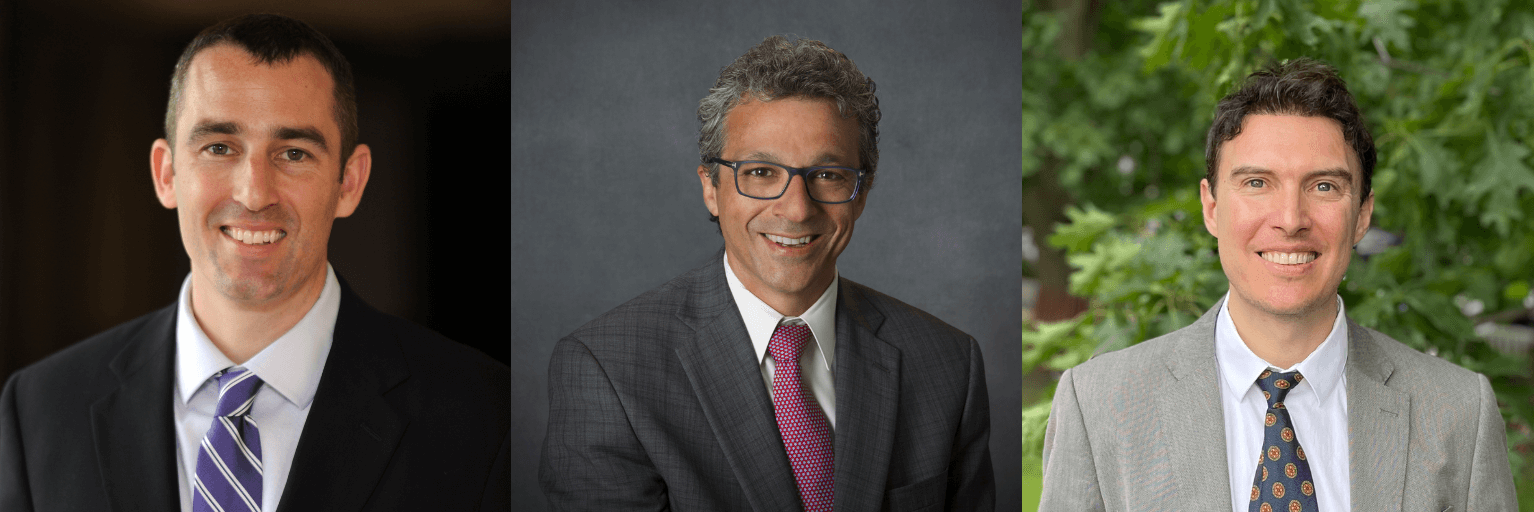
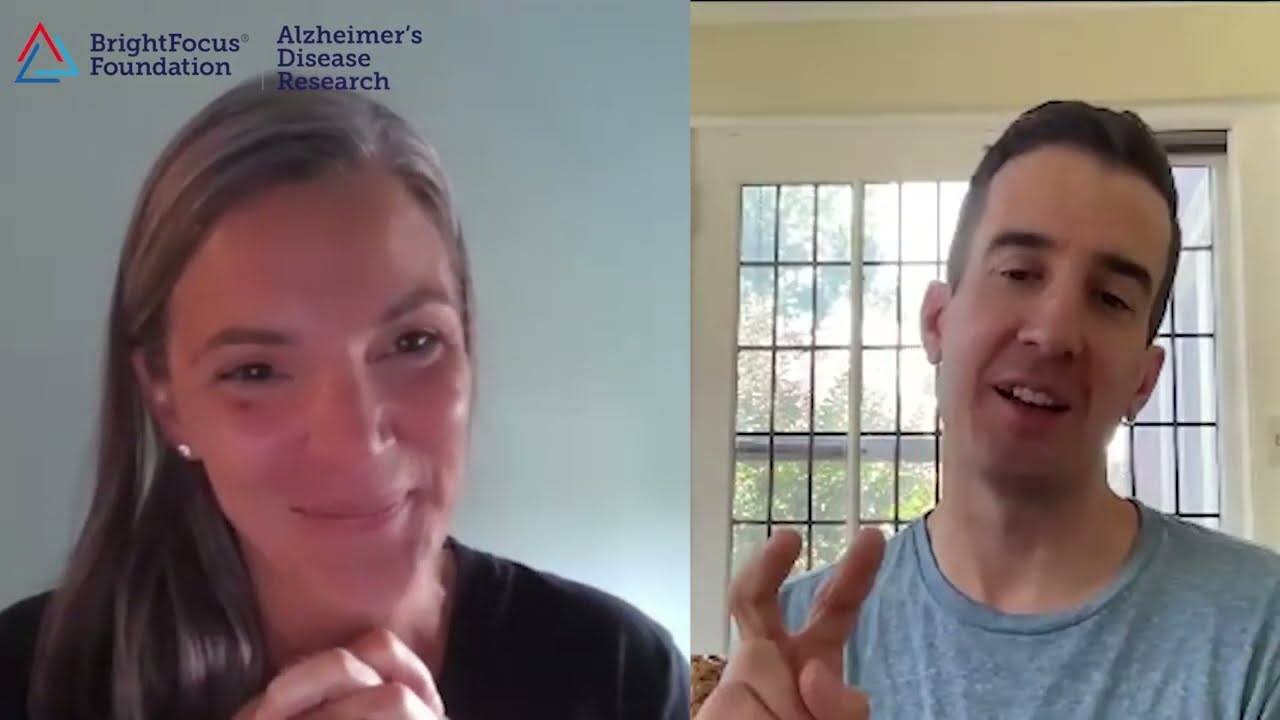
Alzheimer’s Disease Research grant recipients (from left) Brad Manor, PhD, Alvaro Pascual-Leone, MD, PhD, and Davide Cappon, PhD
Meanwhile, Dr. Cappon is applying this multi-network approach to people like his great aunt who developed both Alzheimer’s and depression. Depression is sometimes the very first symptom of Alzheimer’s, as Dr. Pascual-Leone pointed out, often presenting as apathy or lack of motivation in someone in their 60s or 70s who maybe never had depression before.
“When Alzheimer’s and depression occur together, which they often do, the challenges are many,” Dr. Cappon explained. “Generally speaking, people with both conditions decline more quickly (cognitively), experience greater disability, and they have a greater burden for families and caregivers.”
Older adults typically do not respond as well to traditional anti-depressants, according to Dr. Cappon, as later life depression often presents with more complexities and co-occurring conditions, limiting treatment options. His research uses brain stimulation to address both depression and cognitive decline simultaneously without the use of medications.
“If we are successful, the ultimate goal is to offer a more effective alternative that truly meets the needs of older adults and help them maintaining higher quality of life,” he said.
Brain Treatment From the Comfort of Home
The team aims to move Alzheimer’s treatment out of sterile medical centers and into the home.
The logistics seemed impossible at first. Brain stimulation typically requires specialized equipment and trained technicians. How could family members possibly learn to deliver precise electrical currents to specific brain regions?
And yet, they’ve done it. The very first person Dr. Manor trained to do this was an 86-year-old woman treating her husband’s Parkinson’s disease at home. “Within three days they were able to deliver the stimulation and that really opened my eyes to the possibility.”
The process isn’t as intimidating as it sounds. After the training, several participants told Dr. Pascual-Leone that they felt empowered and the 30-40 minutes of treatment a day became an important anchor in their experience. For many families, having something to do, some way to fight back against a disease that usually leaves them feeling helpless, means everything.
Enabling at-home Alzheimer’s treatment solves multiple problems. Many people with Alzheimer’s face “mobility limitations, caregiver responsibilities, and transportation difficulties, including the distance [to] specialized clinic[s],” Dr. Cappon noted. But more importantly, effective brain stimulation requires consistency.
“We envision that brain stimulation is not going to be a short-term intervention,” Dr. Manor explained. “For it to have lasting effect, there’s going to need to be regular exposure. For example, in our current work we are exposing people to stimulation every day. Or maybe five times a week for many weeks.”
Expecting someone with Alzheimer’s to travel across Boston for daily treatments? “It’s just completely not feasible,” he added.
Progress Built on Collaboration
The research team has already shown that brain stimulation targeting both depression and memory networks can improve not just mood and cognition, but daily functioning overall.
They are also investigating how to optimize stimulation dosage for individual participants. By analyzing blood markers of neurodegeneration and studying how electrical fields interact with each person’s unique brain anatomy, they’re laying groundwork for personalized treatment.
“The goal is to develop, ultimately, a real precision medicine approach where one can take specific patients and say, ‘Okay, what is it that would be the best intervention for this person given the biology on the one hand and on the other hand, given their self-report of what is bothering her or him the most,'” said Dr. Pascual-Leone.
What makes this research possible is the kind of collaboration that’s increasingly rare in academic science. Dr. Cappon was previously a postdoctoral researcher for Dr. Pascual-Leone when he was at Berenson Allen Center. Dr. Manor already worked at Hebrew SeniorLife and connected with Dr. Pascual-Leone as they had similar research interests. Dr. Cappon and Dr. Pascual-Leone then moved to Hebrew SeniorLife, and the group was able to work closer together.
“By having this kind of an interdisciplinary, team-based approach, it allows us to answer questions that we would not be able to otherwise,” said Dr. Manor.
Connection Restored
Dr. Cappon still thinks about his great aunt, about how depression robbed her of the desire to connect with people who loved her. Funding from Alzheimer’s Disease Research has been pivotal in supporting his journey to provide better treatments for people with depression and Alzheimer’s.
“I think especially for younger investigators and faculty at the beginning of your career, it’s really hard to get funded by federal funding now, and I think foundation grants [have] become even more important,” he said.
The team feels immense gratitude for the donors that have championed their work. For families currently navigating an Alzheimer’s diagnosis, this research offers genuine hope grounded in scientific innovation. “We’re very honored to have received this funding and we 100% agree with the mission of BrightFocus and hope that the work that we’re doing can be beneficial to all,” said Dr. Manor.
Together, their work represents a fundamental shift from asking families to adapt to medical limitations to adapting medical treatment to serve families’ real needs—bringing healing into the comfort of home, where connection and care have always belonged together.
Palmisano A, Pezanko L, Cappon D. Preliminary Evidence for Perturbation-Based tACS-EEG Biomarkers of Gamma Activity in Alzheimer’s Disease. Geriatric Psychiatry. 2025 40(1):e70025. doi.org/10.1002/gps.70025
About BrightFocus Foundation
BrightFocus Foundation is a premier global nonprofit funder of research to defeat Alzheimer’s, macular degeneration, and glaucoma. Since its inception more than 50 years ago, BrightFocus and its flagship research programs—Alzheimer’s Disease Research, Macular Degeneration Research, and National Glaucoma Research—has awarded more than $300 million in research grants to scientists around the world, catalyzing thousands of scientific breakthroughs, life-enhancing treatments, and diagnostic tools. We also share the latest research findings, expert information, and resources to empower the millions impacted by these devastating diseases. Learn more at brightfocus.org.
Disclaimer: The information provided here is a public service of BrightFocus Foundation and is not intended to constitute medical advice. Please consult your physician for personalized medical, dietary, and/or exercise advice. Any medications or supplements should only be taken under medical supervision. BrightFocus Foundation does not endorse any medical products or therapies.
New Clues in the Fight Against Alzheimer's: Q&A with Dr. Keith Hengen
During World Alzheimer’s Month, Alzheimer’s Disease Research grantee Dr. Keith Hengen joined BrightFocus’ Dr. Sharyn Rossi on Instagram Live to talk brain health—how the brain functions, why quality sleep matters, and tips to keep your brain healthy.
Article
Targeting Genetic Triggers of Inflammation in Alzheimer's Disease
A BrightFocus Alzheimer’s Disease Research-funded scientist is investigating how “jumping genes” may fuel brain inflammation in Alzheimer’s—and whether blocking them could prevent or slow dementia.
Article
The Early Alzheimer's Signals We've Been Missing (Until Now)
Using advanced genetic sequencing, BrightFocus Alzheimer’s Disease Research-funded scientist Dr. Mark Ebbert is identifying overlooked changes in the brain that could finally unlock a way to diagnose Alzheimer’s before it begins.
Article
New Blood Test Could Personalize Alzheimer's Treatment Like Never Before
A new Alzheimer’s blood test may reveal how far the disease has progressed and identify who’s most likely to benefit from anti-amyloid therapies.
Article
What Early-Life Brain Activity May Reveal About Alzheimer's Risk
BrightFocus Alzheimer’s Disease Research grant recipient Keith Hengen, PhD, is pioneering a novel approach to identifying Alzheimer’s risk in early life, which could enable earlier diagnosis, risk reduction, and treatment.
Article
Does Disrupting the Brain's Clock Influence Alzheimer's?
An Alzheimer’s Disease Research-funded researcher is investigating the link between circadian rhythm disruption by jet lag and Alzheimer’s in the hopes of finding new treatment targets.
Every Donation is a Step Forward in the Fight Against Alzheimer’s
Your donation powers cutting-edge research and helps scientists explore new treatments. Help bring us closer to a cure and provide valuable information to the public.