


Sterically Hindered Phenol, PMC, as a Potential Novel Therapeutic for Geographic Atrophy
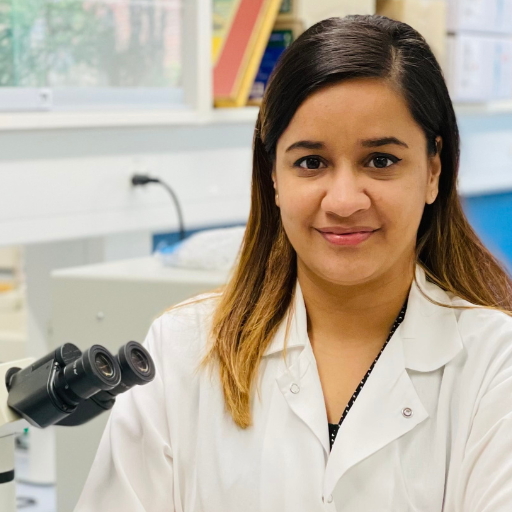
Principal Investigator
Suman Chaudhary, PhD
Schepens Eye Research Institute of Mass. Eye and Ear
Boston, MA, United States
About the Research Project
Program
Award Type
Standard
Award Amount
$200,000
Active Dates
July 01, 2026 - June 30, 2028
Grant ID
M2026003F
Acknowledgement
Mentor(s)
Patricia D'Amore, PhD, Massachusetts Eye and Ear Infirmary
Goals
This project investigates PMC, a novel sterically hindered phenol antioxidant compound, to characterize its protective effects on RPE cells against oxidative damage and to validate its therapeutic efficacy in clinically relevant AMD models.
Summary
Late-stage dry age-related macular degeneration (AMD) affects the center of the visual field in the elderly population. Lipid accumulation during AMD promotes oxidative stress that accelerates cellular damage in retinal pigment epithelium (RPE). Our study explores a novel sterically hindered phenol, 2,2,5,7,8-pentamethyl-6- chromanol (PMC), with potent antioxidant properties and ability to reduce RPE degeneration. Our aim is to identify and validate the key mechanisms involved in the therapeutic efficacy of PMC using cell and animal-based models.
Unique and Innovative
This study is the first to systematically evaluate the molecular mechanisms underlying PMC’s (2,2,5,7,8-pentamethyl-6-chromanol) cytoprotective effects across multiple molecular pathways. PMC’s protective mechanisms will be validated in human RPE and patient-derived iPSC-RPE cells carrying clinically relevant AMD-associated risk alleles, bridging bench research and personalized therapeutic development. The CFH H402 transgenic mouse model, closely mirroring the genetic and pathological hallmarks of human AMD, provides a highly translatable platform to assess PMC’s therapeutic efficacy in vivo.
Foreseeable Benefits
Upon completion, this study will establish PMC (2,2,5,7,8-pentamethyl-6-chromanol) as a promising therapeutic candidate for AMD, a leading cause of irreversible vision loss in the elderly, offering a novel treatment option for millions with limited therapeutic alternatives for dry AMD. Identifying and validating the molecular mechanisms underlying PMC’s protective effects will advance our understanding of oxidative stress induced RPE degeneration, opening new avenues for targeted therapeutic development. These findings from clinically relevant cell and animal models will accelerate pre-clinical and clinical development of PMC based therapeutics.
Related Grants
Macular Degeneration Research
Development of an Oral Treatment for Dry AMD Using Everyday Anti-Inflammatory Drugs
Active Dates
July 01, 2026 - June 30, 2028

Principal Investigator
Marco Bassetto, PhD
Current Organization
University of California, Irvine
Development of an Oral Treatment for Dry AMD Using Everyday Anti-Inflammatory Drugs
Active Dates
July 01, 2026 - June 30, 2028
Principal Investigator
Marco Bassetto, PhD
Current Organization
University of California, Irvine
Macular Degeneration Research
Developing a New Treatment for Wet AMD: Targeted Removal of a Disease-Causing Protein
Active Dates
July 01, 2026 - June 30, 2028
Principal Investigator
Celia Bisbach, PhD
Current Organization
University of Wisconsin-Madison
Developing a New Treatment for Wet AMD: Targeted Removal of a Disease-Causing Protein
Active Dates
July 01, 2026 - June 30, 2028
Principal Investigator
Celia Bisbach, PhD
Current Organization
University of Wisconsin-Madison
Macular Degeneration Research
Studying Eye Blood Flow During Exercise to Understand the Origins of AMD
Active Dates
July 01, 2026 - June 30, 2029

Principal Investigator
Mark Draelos, MD, PhD
Current Organization
University of Michigan
Studying Eye Blood Flow During Exercise to Understand the Origins of AMD
Active Dates
July 01, 2026 - June 30, 2029
Principal Investigator
Mark Draelos, MD, PhD
Current Organization
University of Michigan