Transcript
Download PDF
Please note: This transcript has been edited for clarity and brevity.
NANCY KEACH: Welcome, everybody! From BrightFocus Foundation’s Alzheimer’s Disease Research Program, I’m Nancy Keach, and welcome to the 41st episode of Zoom In on Dementia and Alzheimer’s. The Zoom In series is generously sponsored by Lilly, Biogen, and Genentech. And today, we also have support from Lighthouse Pharmaceuticals. We are deeply grateful to these sponsors for making these free programs possible.
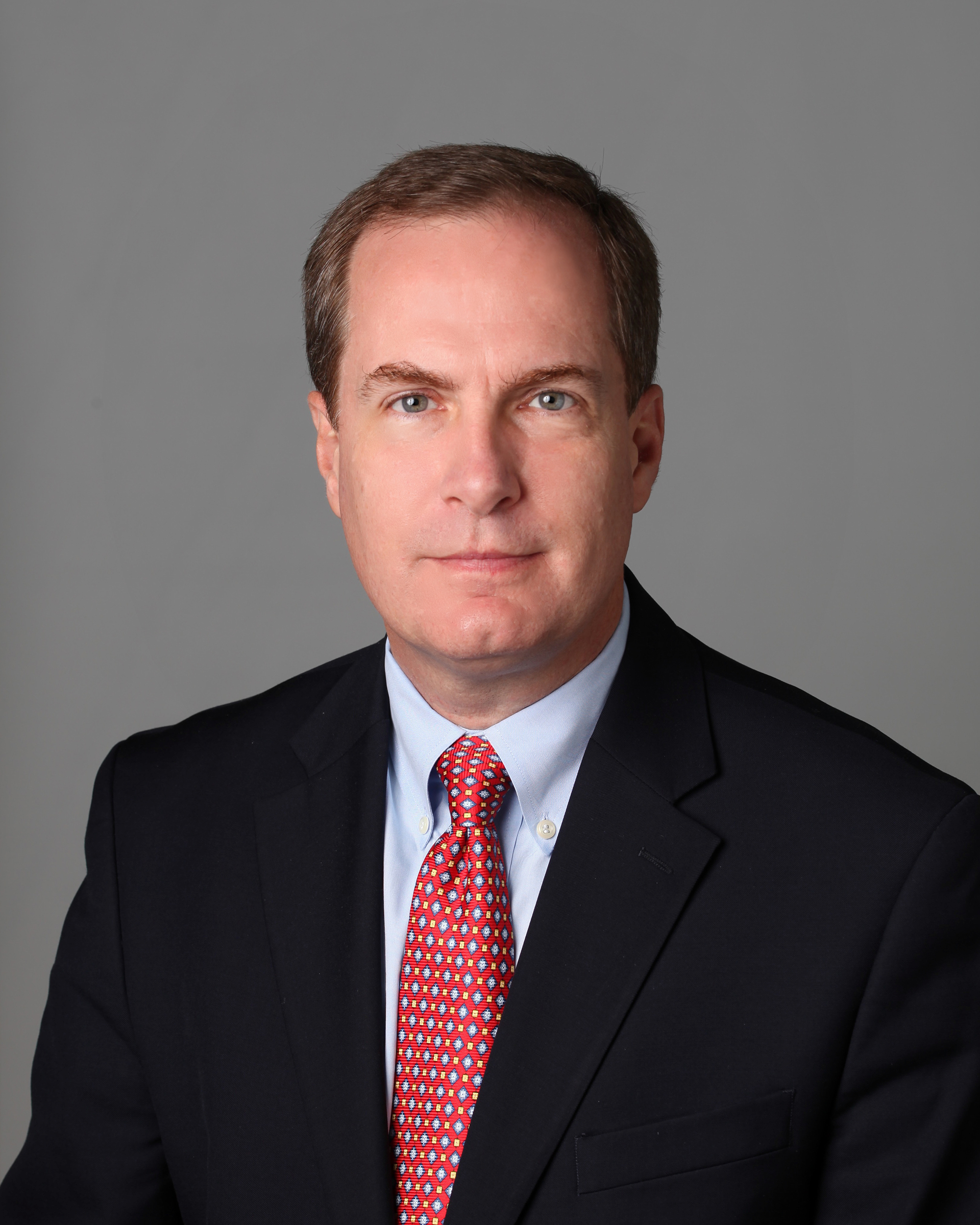
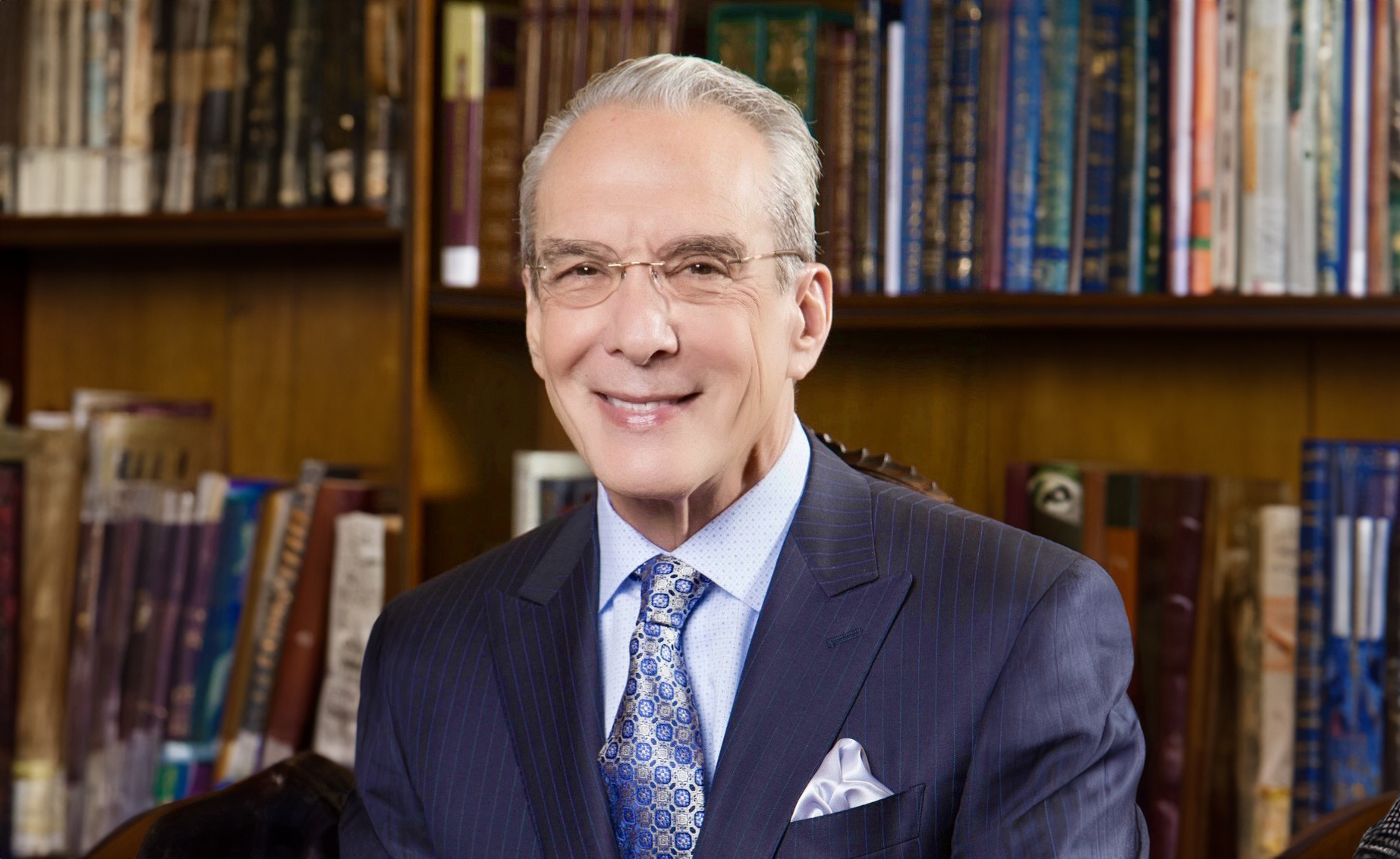
Today’s program is about the SPRING trial, targeting gum bacteria in Alzheimer’s. And I am absolutely delighted to introduce today’s guest expert, Dr. Michael Detke. He is a clinical drug development scientist and executive with 27 years of research in biotech and pharma. He worked extensively on Cymbalta for depression and pain at Eli Lilly early in his career. His work in Alzheimer’s started at Lilly with an experimental treatment for agitation and aggression in Alzheimer’s, and later included work on other experimental drugs for cognition in Alzheimer’s, ADHD, and schizophrenia at CoMentis. Dr. Detke is a board-certified psychiatrist and adjunct clinical full professor of psychiatry at Indiana University School of Medicine since 2000. And throughout his career, he has received over $60 million in NIH grants. He is also currently the chief medical officer and co-founder of Lighthouse Pharmaceuticals. Welcome, Dr. Detke. We’re so grateful to have you today.
DR. MICHAEL DETKE: Thank you, Nancy. It’s a pleasure and an honor to be on Zoom In on Dementia and Alzheimer’s. So thank you for having me.
NANCY KEACH: It’s great. So many people responded– what an interesting subject we have today. We received about 100 questions in advance, and they focused broadly on four categories that we’re going to try to cover. What is P. gingivalis, this oral bacteria that we’re looking at here? What mechanisms caused the connection between this bacteria, P. gingivalis and Alzheimer’s? What is the SPRING trial, and how can people participate? And then there were a lot of questions about dental and gum health overall. Dr. Detke, I know you’re not a dentist, but we’ll see which of those you feel comfortable with.
So I want to start just with two quick questions. Donna from San Jose, “Has clinical research shown evidence of certain gut bacteria or disease as a possible cause of brain disease related to Alzheimer’s?” And Katie from Brunswick, Georgia, “How does bacteria in your mouth affect your body and the potential for Alzheimer’s disease?” So first, can you just explain for us what is P. gingivalis?
DR. MICHAEL DETKE: Sure. Porphyromonas gingivalis is the full name, and I’ll usually refer to it as P. gingivalis or just PG. And it’s a bacteria. It’s a bacteria like those that you’ve heard of: streptococcus bacteria, pneumococcus, and other bacteria like that. It’s a bacterium that gets into your body. It is best known for being found in the mouth and for being associated with gum disease– not the teeth, but the gums and the mild form of that is called gingivitis. And when it gets more severe, it’s called periodontal disease or periodontitis.
Periodontitis in the scientific literature on periodontal disease, many bacteria in the mouth are considered to be involved with it, but they commonly refer to P. gingivalis as the keystone bacterium. One of the key ones in that is causing gum disease in the mouth, and that’s been known for a lot of years. In the last couple of decades have come many papers that show that– well, you swallow your saliva, so PG goes through your entire gastrointestinal tract, and it has been associated with diseases in the mouth such as oral and esophageal cancer, but it also goes throughout the entire body.
One other way that it spreads through the body is it’s a very harmful bacteria, in that it goes inside of other cells. Most bacteria are on our skin, in our bloodstream, in our mouth, but they don’t go inside the cells. And it can go inside of your white blood cells and then those go throughout the entire body because of the circulatory system. So we’ve found its effects involved in several things such as atherosclerosis, plaques in your arteries that can be associated with heart attacks, but they can also be associated with ischemic dementia, if you will– another form of dementia.
So that’s the bacteria. As I said, it’s very unusual actually in two ways. One is that it gets inside of cells, and the other is that most bacteria live off of some carbohydrate– a sugar. And these live off of proteins. These bacteria, that is their food source. So it has evolved to release these molecules that are like little scissors. They’re called proteases which specialize in chopping up other molecules inside of the cell.
So one of the ways you can think about this is it’s like having termites on the inside of your brain cells, your neurons and some of the other helper cells in the brain, they’ve been found in those cells as well as many others throughout the body. So that’s the bacterium, and that’s how it gets throughout the body and has been associated with Alzheimer’s in the brain.
This is a complicated slide. But let me just point you to a couple things. As you can see at the very bottom, it says intracellular, that’s inside the cells. And at the top of the figure it says extracellular, that’s outside the cells. And look at the pink pill shaped objects for a minute. That’s how we depicted the bacteria P. gingivalis. And then it releases proteases. They are also called gingipains from the gingivitis literature. And we depicted them here as these little orange pac-man because they’re like Pac-Man. They go around chewing up things. And so on the left is the infection. And then on right we’ve made a number of drugs that are depicted here, like little diamonds or gemstones. And they bind to the Pac-Man. They bind to the proteases and bind permanently and deactivate them. So then they’re just cleared out of your cells. And by doing that, it stops chewing up all these things on the inside of your cells. Chewing up the things on the inside of the cells. Well, first of all, it can kill the cell. So we know in Alzheimer’s disease, you lose neurons. And actually, there’s some brain shrinkage. And this may be part of why that’s happening. And then when we stop it again, depicted on the right with the gemstones that stops all the pathophysiology– the disordered stuff, the damaged and destroyed cells. So that’s how the drug works. And that’s how we think P. gingivalis works.
NANCY KEACH: Sarah, great question, “Is PG found in the brains of healthy people as well as those that may have AD?”
DR. MICHAEL DETKE: That’s a great question. And that’s one of the many pieces of science that supports this hypothesis. So one study that we did with a brain bank in New Zealand actually, Neuro Valletta is the name of the group. And we published this. People upon death can donate their brains to have research done on them. And this group had a large number of brains– brains of patients who had Alzheimer’s disease, but also people who died at the same age. And it’s important to age-matched because some natural aging does things to the brain. And they were age-matched patients who died of something else. They died of a heart attack or a stroke or a car accident. And we found that the evidence for PG and these gingipains– these scissors, inside the cells of it was about 90% to 95% of the patients with Alzheimer’s disease. But interestingly and importantly, it was about a third of the other patients, too.
Now, this difference was highly, highly statistically significant for those of you who follow that stuff. Meaning, it’s a really meaningful difference that it was 95% versus 33% approximately but consistent with our hypothesis that this infection happens. And then it takes a while to start damaging cells and building up clinical outcomes like memory loss. You would have expected not to see 0 patients that died in a car accident, because you’d expect that some of those patients had this infection. Maybe they’d had it only for a year, and it takes 10 years to work. That was exactly what we would have expected as an outcome for that.
And going back to the earlier question, again, there’s all these the earlier question about how is this related to Alzheimer’s disease. Another study was by a colleague in the United Kingdom. And what they did simply was follow patients with gum disease, with periodontitis who also had Alzheimer’s. And they followed another group that didn’t have periodontitis but had Alzheimer’s. The one with periodontitis declined by about six ADAS-cog points. That’s a standard scale that’s used to measure cognition. So their cognition got six points worse during the year. And the group that had no periodontitis, they got one point worse. That’s a bigger difference than most of all the drugs on the market. So just having periodontitis versus not in this study showed that you are much more likely to have your Alzheimer’s progress and worsen during a six month interval.
Evidence like that, just the evidence that many people with tooth loss or periodontal disease are at higher risk for Alzheimer’s. You may all know that a couple of the leading risk factors for having Alzheimer’s. One of them is level of education. So the higher level of education presumably spent more time reading. And mental exercising is a defense against Alzheimer’s. And lower level of Education is a risk factor. The second biggest risk factor, and this is in about 15 academic papers that have been published is periodontal disease. So if you have gum disease in your mouth, you are at higher risk for developing Alzheimer’s and progressing more rapidly with Alzheimer’s.
NANCY KEACH: And there were a lot of questions submitted relating to that and how to try to avoid having your mouth affecting your brain that way, which we’re going to get to. Deborah from Santa Barbara, California, asked, “How does the bacteria in your mouth get past the blood brain barrier?”
DR. MICHAEL DETKE: That’s a great question and good use of the right medical term– blood brain barrier. A lot of things can’t get into the blood in the brain because of that. It’s a challenge for us drug developers to design targets that do get into the brain. Our drug does get into the brain– as Prozac and all the brain drugs, do have to get in the brain to work there. So it’s not an insurmountable challenge. But there’s a couple of ways that we hypothesize that. Again, the brain, we know they get in the brain because we’ve demonstrated this many different ways.
One is a simple route which is in the– just above the surface of the roof of your mouth and just below your frontal cortex in the brain, there’s a bone there. It’s part of your skull. And there are holes in there that have nerves from your nose called the cribriform plate. And when people have studied this, once the PG is in the mouth within a day or two, it can go into the brain. And in fact, in that frontal area of the brain is also the olfactory lobe. And it’s been seen in there. And that, we think, is one of the reasons why people have a loss of smell when they have Alzheimer’s. That’s very common. It’s not 100% of people, but it’s much more common to have anosmia, which is the loss of sense of smell in Alzheimer’s than in the general population. So that’s more evidence.
There’s another way they can get in the brain too, though. It’s a really sneaky little bacteria. It has developed a number of things that we call immune evasion strategies to get away from your body’s immune system. And one of these is that it can go inside of other cells, as I mentioned. And again, that’s very unusual. But we’ve demonstrated that it goes inside of some of your white blood cells. And then those go out around your entire body because everywhere that your bloodstream goes it can take these.
So we know it goes into the brain. And it’s been associated with Alzheimer’s and some other brain diseases like Parkinson’s. We know it goes through the GI tract, and it’s been associated with oral and esophageal cancers and in liver disease and ulcerative colitis and things like that. But it also gets into the bloodstream, and it’s associated with atherosclerosis and other diseases. Atherosclerosis can be as a risk factor for ischemic dementia and many dementias clinically present as mixed dementias. The dementias memory loss, the most common form of it is Alzheimer’s– about 60%-70%.
The next most common is what I call ischemia. It used to be called multi-infarct. And way to think of it is like it’s like having a heart attack but in your brain. There’s usually a clot. Sometimes it can be a bleed, but there’s a problem with a blood vessel. And then the blood vessel is supplying those brain cells with oxygen. So if there’s a problem with the blood vessels, some of those brain cells die off. So an infarct is tissue dying. So if it’s in your heart, it’s a myocardial infarct. And if it’s your brain, it’s a brain infarct. And sometimes there can that will not present like a stroke. Especially if there are many tiny small ones. So that was the old term multi-infarct dementia. So it’s basically small strokes in the brain that impair memory.
NANCY KEACH: And is that commonly referred to also as vascular dementia?
DR. MICHAEL DETKE: Vascular dementia, ischemic dementia, yes, exactly the same thing.
NANCY KEACH: OK. Richard from Belleville, Illinois, asks, “What gum symptoms would indicate such gingivalis? I am in early stage of Alzheimer’s” and John from Brick, New Jersey, “How do we look for early symptoms?” So how do you recognize that you have something wrong?
DR. MICHAEL DETKE: The clinical symptoms are that your gums can become more tender and swollen and bleed easily. Oftentimes people notice they’re bleeding when they floss and/or brush. The best things you can do to prevent it are good oral hygiene– brush twice a day, floss every day. You can use an antimicrobial– antibacterial mouthwash. And of course, see your dentist regularly.
In addition to those symptoms, what your dentist should do, probably starting at the age of 50 or so, is if you’ve ever been to the dentist and they have that little thing where they poke down between your tooth and your gum, and they go around and poke down like three times on each side of each tooth. The left side and the right side in the middle, they’re actually measuring the pocket depth, which is here’s a tooth, and here’s your gum next to it. And there’s a little pocket in between. And at three or four millimeters deep, that’s OK. Once it gets more than five or six millimeters deep, that’s a sign of periodontal disease or gingivitis. And then you might be referred to a periodontist or someone who specializes in gum disease. And they can do more significant treatments, but they basically scrape some gum tissue off. It’s called root scaling and planing. And that’s the only real treatment now. They also can use some local antibiotics which can help a little bit, but do not really get rid of the P. gingivalis. So those are some of the things you can look for. Those are some of the things that you should talk to your dentist about.
NANCY KEACH: So Kirsten, from Delmar, New York, sent in a question. “How does one find out if they have this particular bacteria? Is it a given when one has gingivitis or periodontal disease?” And I know you just answered part of this. But if the dentist pokes in there and realizes that something is wrong, or if you’re sensitive and bleeding, does that definitely mean it’s a PG or could it be something else?
DR. MICHAEL DETKE: It could be other things. PG isn’t the one and only cause of gingivitis and periodontitis. There is a test for PG that your dentist can order or a doctor can order. We’re using an assay. You do a mouth rinse and spit into a tube, basically. And that can tell you if there’s PG.
Unfortunately, there’s no treatment for it right now other than our experimental treatment– which we’ll get to. And I left out something really important about P. gingivalis– the bacteria too, which is that you can’t treat it with the current antibiotics that are on the market. And the really important point because, obviously, if we could we’d cure some cases of Alzheimer’s with a week of penicillin. And people have shown that repeatedly. It is especially the periodontists who’ve known it’s a part of gingivitis for a long time. They’ve been trying to kill it with antibiotics and they don’t.
Again, I refer to immune evasion. This bacteria has evolved over many years. And it can hide in what are called biofilms in the mouth where antibiotics can’t get to them. They can also become dormant, and they can become antibiotic resistant. And finally, again, they go inside of cells. So it’s one cell inside of another cell. And a lot of drugs don’t penetrate inside of cells.
So there’s no treatment for P. gingivalis today with the possible exception of our experimental one. But there is a test by OralDNA Labs that your doctor can order. We’re using OralDNA Labs to run our test in our study.
NANCY KEACH: So one question just submitted by email, “Is testing saliva for early detection conducted in a neuro visit?” And we had another question from Darlene in Bolingbrook, Illinois. “Which professional would initiate the testing? Is it your dentist, your neurologist, your internist?” So how does that usually happen or can you ask for it?
DR. MICHAEL DETKE: Historically, because there’s not a treatment for PG, it’s not a test that a lot of people have ordered. It is best known in the periodontal literature. So a dentist or a periodontist would be most likely to order it. It’s still in the investigational era for Alzheimer’s. So, I don’t think most neurologists would even know what this is. It’s just not quite ready for that prime time yet.
NANCY KEACH: Yeah. And somebody asked, “Are you sharing this with the dental associations?” And I think that’s going to come in time as we know more about how this can be treated and what the mechanisms that’s actually happening.
DR. MICHAEL DETKE: We are reaching out to the dental community. In a prior trial, we did a periodontal sub trial with a subset of patients who also could access a periodontal clinical research site, and as well as the Alzheimer’s site. One of our scientific advisory board members is Mark Ryder, who is not an Alzheimer’s expert, but he is the former chair of Periodontology at UCSF. And so he’s taught us a lot about that. I certainly am speaking to my regular dentist, whom I see every six months about this, and she’s fascinated by it. And I’ll say one other thing too, that she would be mad at me for forgetting, which is that dental hygiene has been connected to so many other diseases. That good flossing and brushing and mouth washing and regular dental visits are very important to your health, period.
NANCY KEACH: Fantastic. We’re going to get into that a little bit more but the last question before we start to talk about the trial that is active now is Lainie from Louisville, Kentucky. “Any correlation with Lewy body dementia?” And Charles from Massachusetts, “Does gingivalis also impact or cause primary tauopathy?” Now, I know a lot of people won’t know exactly what that is, but can it cause these other types of dementias?
DR. MICHAEL DETKE: We don’t know yet. The short answer is we don’t know that it would be relevant in frontotemporal dementia or any of the others. Those would be things we’d try. As we covered earlier, Alzheimer’s is the most common. The most evidence for this being involved is in Alzheimer’s. So that’s where we want to test it first so we can help the most people.
To get into mechanisms for just a half a minute the amyloid molecule has been shown in a series of papers by Dr. Moyer from Harvard that they are what are called antimicrobial peptides. So they’re peptides, proteins, but they attack microbes like bacteria. So we think that some of the people who have PG associated Alzheimer’s, that the a-beta may be partly part of the immune system fighting that infection. And there’s some evidence that phosphorylated tau can do that too. So that’s as much as we know about how those two mechanisms might relate.
NANCY KEACH: I know our audience is pretty sophisticated after all these episodes. But for those that don’t know the amyloid and the tau that Dr. Detke’s referring to are two proteins that are found in the brain that are associated with Alzheimer’s disease. We have a lot of other episodes about this, so I won’t go into more detail on that.
DR. MICHAEL DETKE: That’s fine.
NANCY KEACH: And so I want to now go to the SPRING trial, which you’re currently recruiting for. Before the SPRING trial, there was another trial, an earlier trial called the GAIN trial. Gingipain inhibitor clinical trial. Can you first tell us a little bit about GAIN and what you learned from it, and what its results were? And then, we’ll go right into SPRING trial.
DR. MICHAEL DETKE: Yeah, it’s the perfect lead into the SPRING trial. So as I said, there are these proteases, these little scissors that are going around destroying inside your nerve cells. And our drug targeted that. The little scissors are called proteases and our drug is called a protease inhibitor. It inhibits them. And in the first generation trial, we really didn’t know who would work. And we didn’t know if it would work in anybody and as I told you earlier, about 95% of patients with Alzheimer’s had these in their brains after death. We knew that. So we decided to test a broad population of Alzheimer’s patients.
And the short story is that it didn’t work in everybody. But we also knew that we had some biomarkers that could tell us that these patients had higher PG infection than others. We had actually three different biomarkers. One was the saliva test, but we also tested the blood and the cerebrospinal fluid. We did lumbar punctures in that study. And by all three of those measures, the patients who had higher levels of PG infection did better. They in the subset of patients, it was about 40% of the patients in the trial. The ones that had PG positive, they showed a little over, I think it was 57% slowing on the cognitive decline measured by the standard scale called the ADAS-cog. It’s a good amount of slowing. Of course, we’d like to see it stop or even reverse. We don’t think it would reverse, but in theory, with this mechanism, you could slow it down more or stop it. Different analyzes showed different amounts of slowing up to 70% but as low as more like 46%. But the primary analysis we did showed 57% slowing.
A really short version is we’re doing the GAIN that first trial over again, but we’re only doing it in people with that showed have higher levels of PG infection as measured by the saliva test. And we think it will work in this population. But we have to prove that. And I think that’s a good high level transition from the first generation to the second generation. There’s one other major difference. There was one safety issue with the first generation drug in the first study. And we have a second generation drug that is better in a number of different ways. And it doesn’t look like it should cause any of those the same safety issues. We have to prove that again.
But for example, in the first trial, we did a drug that was a pill that you had to take twice a day. And in this trial it’s just a once a day pill. So we’ve improved it in several ways. And the key thing will be testing it in those patients that have positive P. gingivalis.
NANCY KEACH: And what types of side effects did you experience with GAIN that you’re hoping that you ruled out for SPRING?
DR. MICHAEL DETKE: The main one was a liver side effect. First confined liver problems early on by measuring certain blood tests. But then people can become sick if they get worse. We monitor the blood tests. A lot of people dropped out of the trial because these blood tests got up into a potentially dangerous range, but everybody recovered fully from it. But definitely something we don’t want in the future going forward.
NANCY KEACH: Obviously you will monitor very closely.
DR. MICHAEL DETKE: We’ll monitor very closely. There are two goals in almost any trial like this efficacy and safety. But patient safety is always priority number one. And we showed in that first trial that the primary drug didn’t cause any liver problems. It was a metabolite. The drug is broken down into another drug that caused it.
Our new drug is a different structure from the old drug and does not make that metabolite. So that’s why we’re cautiously optimistic. But we will monitor very, very, very closely. We’re cautiously optimistic. And other than that, the first generation drug didn’t have many a little bit of upset stomach, dizziness. But they were it was actually very, very well tolerated.
The monoclonal antibodies that lower amyloid have a very serious side effect called ARIA. And I’m sure you’ve talked about this in other sessions. On MRI you can see lesions that are indicative of brain swelling or bleeding. And because we’re not attacking amyloid, our drug has a completely different mechanism of action. The first trial, we saw 0 evidence that it caused ARIA.
NANCY KEACH: In ARIA I will mention an ARIA can be monitored now very closely as well.
DR. MICHAEL DETKE: Right, with repeated MRIs.
NANCY KEACH: Right. So moving to the SPRING trial and I’m going to let you introduce it before I bring up a slide. So I’m going to bring up a slide that has information and a link to the website where you can go to see if you want to enroll. So what results are you hoping for from this treatment with the drug is LHP588. Do you want to maybe just start by describing the trial, and then we’re going to get to who qualifies and how you can participate.
DR. MICHAEL DETKE: So participants in the clinical trial will be randomized into one of three arms– placebo, 25 once a day and 50 milligrams once a day. So the new drug is a once a day instead of twice a day. It’s more potent. You can take a lower dose. And based on what we model, what the efficacy we saw in the first trial and the modeling of how this drug works and how well it gets into the bloodstream and the brain, we believe that the low dose in this trial should be approximately equal to the high dose in the other trial that gave 57% slowing. And the high dose in this trial should be, if anything, even better.
In a small safety study we did in humans previously, we saw no signs of any safety signals. I think there were more side effects in the placebo group than in the drug groups. And in that small safety trial, we went up to 200 milligrams a day. So four times the dose we’re using in the ongoing SPRING trial.
So those are a few things that are different about the drug. And participants in this trial have a two out of three chance to get an active drug. And otherwise it’s what we call mild to moderate Alzheimer’s disease. So the scale that we typically use the Mini-Mental State Examination– the MMSE, scores have to be between 12 and 24. Patients have to be between 55 and 80. On their first visit, they will get an oral test for P. gingivalis and if they don’t already have a biomarker confirmed Alzheimer’s disease diagnosis– if they don’t already have that by some other biomarker, we can give them the p-tau217 test, which is now a validated biomarker for diagnosis. And it’s just a blood test.
NANCY KEACH: I think we should bring up the next slide. I think it’ll be just helpful for people to have a visual on some of the eligibility criteria. So on the screen right now is a slide about the trial. It is called the SPRING clinical trial. And the website to learn more about how to participate in this trial is www.springclinicaltrial.com. You can go there. But this is a lot of information on the screen about it.
So you were going through the eligibility criteria. And I just want to mention there are several great questions that have come into the chat. And I’m going to get to that after we introduce the SPRING trial. But one thing that I know is not on here that I’m going to just jump in and ask from Patricia. Are APOE4 carriers eligible for this trial?
DR. MICHAEL DETKE: Yes. And I think APOE4 have a higher rate of ARIA, which is why that is I think a contraindication to the amyloid lowering drugs. As I said, we have no reason to think. And we actually have good data to think that we have no reason to think this will cause ARIA. We have good data from the prior study to show that this mechanism did not cause ARIA.
So we will again monitor carefully, but that doesn’t appear to be an issue at this point. And yeah, I was going through the key eligibility criteria– PG positive saliva, biomarker confirmation, mild to moderate AD, age is there. If you’re on a disease modifying drug, you have to be off of that for 90 days like Kisunla or Leqembi before being in the trial. But if you’re on symptomatic therapies, the acetylcholinesterase inhibitors and memantine at a stable dose, that’s OK for you to be in the trial. And previous anti-amyloid theory is OK, but has to be washed out for 90 days.
NANCY KEACH: And so you cannot participate if you are currently taking Leqembi or Kisunla.
DR. MICHAEL DETKE: Correct. But as you were pointing out, there are several contraindications. APOE4, blood thinners– people can’t qualify for the anti-amyloid drugs because of blood thinners. That’s not a contraindication in the SPRING trial. The trial is up and running. The sites are starting to screen and enroll patients.
In speaking to the site investigators, the doctors at the sites, they said, oh, I have so many patients that I can’t offer them anything because they’re on blood thinners or APOE4, or they’ve already been through a treatment and they didn’t qualify for another one. And so we’re hopeful that this will be potentially helpful to a lot of patients.
NANCY KEACH: And I know the answer to this but it is really, really difficult and something we see over and over and over again. So Payel wrote, “Are there any plans to expand participation to patients above the age of 80 if they are medically stable and qualify otherwise?” And Tavia wrote “Will the 80-year-old upper age limit be used in the trial also possibly or probably be an age limit for receiving the drug if it is approved?” So we get questions all the time people over 80 really want to participate in these trials. Drugs are being developed to help people earlier and earlier and earlier before you have symptoms, that type of thing. But it’s this over 80 population is neglected. So can you explain why that is the case in some of these trials, specifically.
DR. MICHAEL DETKE: Yeah. Well, you remind me to go back to one of our ground truths, which is and we use the term participants in clinical trials now instead of patients. And I think that’s an important distinction. I’m a doctor and I’m a clinician too. And when you come to see me in my clinic, you’re my patient. And I want to do everything that’s best for you that we can possibly afford. And just for you, if it’s not good for the next guy it doesn’t matter. In a clinical trial, our primary goals are to understand if this drug is effective and safe, and it is not to make every patient better. We’d love to see that happen. But if every patient got better, then there’d be no difference between placebo and drug, and we wouldn’t have a drug that works too.
And to that point, we want to test the population that we think are most likely to see efficacy. And you do tend to see different rates of decline in older populations. But then we also want to test it for safety. And as the age range goes up on average not everybody but on average more people have more comorbid medical problems, tend to be on more medications. And all of these additional variables make it harder and harder to come to the scientific conclusion.
So I really doubt that we’ll be expanding the age range on this anytime soon. But if this trial is positive and if the drug works the way we think it works, you step back and think about the fact that this might be very effective, treating even earlier or even in prevention for patients with PG positive Alzheimer’s. And it can be I haven’t seen things that have had a strict age label on them, and even so they can be prescribed off label. So I don’t think it would necessarily hinder it that much in clinical usage if it became approved. But again, hopefully we’d like to see this if it works in Alzheimer’s, to try it earlier, to try prevention trials. Those are bigger, longer, more expensive, harder to do trials, which is why you don’t do them first, typically because it would take longer to get to patients that are waiting on the market.
And finally, the last bullet point I’ll add is I mentioned earlier that P. gingivalis has been involved in a bunch of other diseases, like oral and esophageal cancers and so forth, that we would love to see it be helpful in to if it could.
NANCY KEACH: So you talked about the eligibility criteria. You do need a study partner, right? You need somebody who can come with you.
DR. MICHAEL DETKE: You do need a caregiver.
NANCY KEACH: This trial is currently recruiting.
DR. MICHAEL DETKE: Yes.
NANCY KEACH: And actually let’s move to the next slide, just to look at the locations that are active. Here are locations that are active but more locations are being added, especially this month. So if you are not close to a city that’s indicated here, keep checking back on the website because they’ll be adding I think you’ll be up to around 40 sites as by maybe by the end of the next month or two.
DR. MICHAEL DETKE: That’s the goal to have 40 sites. I think I count 17 here, and that’s about right. And we will be updating this. If you go to the springclinicaltrials.com website, you can find the site that’s closest to you. It’s user friendly.
NANCY KEACH: And I’m going to again refer people it’s www.springclinicaltrial.com. And then if you want to look to see if there’s a site close enough to you, you do /clinical-trial-sites-1. But if you just go to the basic site, you can click through to see where the sites are. So you would call the number or you would go in and try to volunteer.
And again, the saliva test to see if you have the bacteria will take place when you go if you are brought into the trial, or it is part of the test to see if you are eligible for the trial. And I’m just going to go to a couple questions in the chat right now. From Catherine, “Did you see any differences in subgroup analyzes, example in ages or gender or race in the GAIN trial? And if so, how will those learnings be applied or evaluated in the SPRING trial?”
DR. MICHAEL DETKE: That’s a really interesting question. And for the most part, we looked at people who were APOE4 carriers versus not if they had at least one or two alleles and saw– I think that group– that group tends to decline a little faster. And therefore, if your placebo group is getting worse at a faster rate, you can sometimes see a better distinction between drug and placebo. And we did see a little bit of that and a little bit with the more severe patients, the moderate versus the mild. But we saw effects in both. Patients on symptomatic drugs versus not, we didn’t see any real differences there. That first study looked at six countries. About 2/3 of the enrollees were from the US. But we had some countries in Europe and we didn’t see big differences there.
We didn’t see big differences in race but they’re relatively small. The whole study was 643 patients. And the group that had higher levels of P. gingivalis infection was about 244 patients. So then you start divide that by 3 for the three different doses, and then divide it by 10% of whatever subgroup you’ve got. And at that point, the numbers start getting real small.
So we didn’t see drastic differences between men and women. As you probably almost all know that women are about twice as likely to have Alzheimer’s as men, in part because women live longer on average than men. So we did see more women in the study, as you would expect, than men. But similar responses.
NANCY KEACH: And how many participants are you looking to recruit for the trial?
DR. MICHAEL DETKE: We’re looking to recruit 300. In that previous trial, in the group of 244 patients who had higher PG. We showed clear signs of efficacy in that group on a number of measures– the ADAS-cog. One of the other things that was really compelling to us was that we saw positive correlations between the clinical outcomes on cognition and function and some other things. It was positively correlated with how much their PG went down. People whose PG levels went down more had greater slowing of clinical progression. So that correlation was really compelling to us, as was we did see a small effect in the direction of supporting– as we age, our brains, we lose cells and our brains shrink a little bit. With Alzheimer’s, as you all know that atrophy or brain shrinkage tends to speed up in Alzheimer’s. And we saw some slowing of that with our drug treatment. So there were several outcomes that led us to be, very, very cautiously optimistic about the efficacy. We just submitted the paper for review recently.
NANCY KEACH: And Sarah asks, “How often do you have to visit the site? I will travel as needed, but I’d like to know the frequency.”
DR. MICHAEL DETKE: Generally, it’s a month or two apart, but for the first couple of months out to first two or three months. The FDA wanted us to see people every two weeks to test for that liver safety. So it’s a little bit more frequent. It’s every two weeks for the first few months, and then it stretches out to more like four or six or eight weeks between visits. And that’s typically how you treat patients and typically how clinical trials are designed.
NANCY KEACH: And how long does the trial go?
DR. MICHAEL DETKE: The short answer is a year. It’s 48 weeks of treatment. And the screening period at the beginning can take up to a few more several more weeks, 10 or 12 weeks. We have to come to the site and get the test done and all that. But then the p-tau test has to be performed and the PG saliva test has to be performed. And an MRI. One of the other things, we have an MRI at the beginning and the end, because no risk of ARIA that we’re aware of. We don’t have to do them more often. But also the drug is a once a day pill so that you don’t have to do infusions or go to a different infusion center. There’s no need for PET scans of any kind and no lumbar puncture or spinal tap in the study. So we’ve tried to make it– our first trial, we were doing a lot of stuff that was very experimental. And we learned a lot from that. And we’ve pared it down to make it more participant friendly.
NANCY KEACH: Yes. In very non-technical terms, I would say for Alzheimer’s, this is a very dreamy trial because you don’t have invasive testing ahead of time. It’s a pill instead of an infusion. It doesn’t seem to have– and you will be monitoring very carefully serious side effects. You can participate if you’re on blood thinners or APOE4 positive. So this is one of the reasons why we really wanted to feature this trial on the program because it is more inclusive and less invasive than a lot of the other types of trials.
Mark and Kay want to know if someone is on a course of antibiotics for some infection, is there a waiting period post the antibiotic use before becoming eligible for this trial?
DR. MICHAEL DETKE: Yes, we do, because there’s a theoretical effect of antibiotics on P. gingivalis. We do want people to be off of them. So we see which drug is doing what. I think you need to be off of them and stable for 30 days. And that’s only systemic antibiotics. If you’re using eye drops or topical lotion or creams or something that for antibiotics that doesn’t significantly get into your bloodstream. It’s not going to affect PG in your mouth or your brain or anything like that. And if you are in a course of something and you complete the course and then wait, then you can come back and be rescreened. And of course, again, in the middle of the trial, someone has an infection and needs antibiotics. You have to take them. Patient safety is primary.
NANCY KEACH: We’re getting great questions. From Peter, “Does the PG level bounce back once the drug is discontinued or can it be considered a cure?” I know we don’t like to call things cures, but– or is it a cure for PG infection? Oh good. That’s a good qualifier.
DR. MICHAEL DETKE: That’s a really great question. And one of the things I like to share with people is typically we think of bacterial infections as being what doctors call fulminant like, but really bad really fast. You get pneumococcus in your lung and pretty soon you are barely breathing and you’ve got a fever of 104 and you need to go to the hospital for some IV antibiotics. But there are a couple examples of slow moldering infections.
One of them is tuberculosis– if you know that one. That one just is low grade and can last for years and takes like six months of taking antibiotics to eradicate it. Another one is HIV. Before we had treatments for many, many years, we had treatments that could knock down the HIV load very, very low. But not really eradicated, not really cure it.
At present, our drug is probably take for the rest of your life, and in fact, it’s actually like the HIV drugs. The HIV drugs are protease inhibitors. They block those little scissors that cut up things. They just are different proteases and different parts of the body. So at present we do not have a way to completely eradicate PG and the assumption is that it comes back if you stop it. But that’s something we’re working on. When drug companies make a drug to target a specific target, they make zillions of them because most won’t work for one reason or another. We have a couple of backup protease inhibitors– LHP 852 instead of LHP 588. And in theory, you might be able to layer on different protease inhibitors just like they do in HIV to get better effects. So all of that is probably down the road a few years. But those are some of the things that have potential for really improving therapies.
NANCY KEACH: From Larry in the chat here, “Does the participant take a mini mental exam or an ADAS-cog during the course of the trial?” And these are cognitive tests.
DR. MICHAEL DETKE: Several of them. Our trial is designed like a lot of other ones are. The MMSE is usually done to see if you’re in the right range to get into the trial, and then the ADAS-cog is the primary outcome. If it gets worse in the placebo patients and less worse in the treated patients, you’d expect that ADAS-cog that’s the sign of a positive trial that shows efficacy. And we monitor the MMSE over time too. It’s a secondary cognitive scale. So yes.
NANCY KEACH: We’re going to shoot a couple quick ones at you because we’re almost out of time. This trial is about a year long. And so if all goes according to schedule, when will you be expecting to announce results?
DR. MICHAEL DETKE: Late ’28 or early ’29. We are projecting that it will take us about a year and a half to enroll all the patients, and then the last patient has to be treated for another year than that. So it’s about 2 and 1/2 or so years. And there’s a little bit of extra here and there.
NANCY KEACH: Will you promise to come back on and give us updates?
DR. MICHAEL DETKE: I would be delighted to come back.
NANCY KEACH: It’s really interesting.
DR. MICHAEL DETKE: Absolutely.
NANCY KEACH: And again, I know you’re not a dentist but we had so many questions about good oral care, which, as you emphasized, is so important. So I’m just going to ask one and if you dont know, you don’t know. But our friend Clifford from Baltimore, who is clearly a doctor and writes in for a brilliant question for every episode. Thank you, Clifford. “What kind or combination of twice daily dental care in order of importance is good, better, and best– manual rectangular brush, waxed dental floss, and/or electric mechanical rotating circular brush? What time before or after meals or at bedtime?” Again, I don’t know Dr. Detke, if you know the answer to these. And people ask what’s the best flossing tools or the best electric toothbrush. Do you have anything to add on these?
DR. MICHAEL DETKE: I don’t know the double blind, placebo controlled trials or oral-b versus manual brush trials. But I’ll give you some clinical advice that a dermatologist has given me many times, which is use the sunscreen that you’ll use. So if you won’t use it because it feels slimy or it smells funny or whatever. So if you do a great job of brushing your teeth with a standard old rectangular toothbrush, I use an oral-b; it works well with for me.
Your dentist should be able to tell you if your daily, at home, dental hygiene is good, bad, or other. So yeah, I don’t know the detailed data on that, but as a clinician, I would say, if you find a toothpaste that you like and you use it twice a day, every day and you find a floss that you like– I use the stringy floss. My wife likes the dental picks. If it works for you, it’s better.
NANCY KEACH: I think that’s a great answer. And I’m going to close us with it’s more of a statement than a question from Alan in Decatur, Georgia, but it says thank you for your research. We Alz folks appreciate work like yours, which may shield other folks from being stricken with our disease. And so I just want to say, you’ve had quite a career, Dr. Detke, and it’s not nearly over yet. And so thank you for the work that you do.
DR. MICHAEL DETKE: Well, it’s great to be doing this fun work. And like all of you, I mean, we know how common it is of the three living parents of my wife and mine, two have mild cognitive impairment, I think. And so we’re all living with this. If you haven’t been touched by this, it’s just a question of time. So we’re all rowing in the same direction on this one.
NANCY KEACH: Absolutely. And so as we’re coming to a close today, I want to thank my wonderful colleagues on the BrightFocus Foundation team that you don’t always see. Thank you all. Dr. Sharyn Rossi, our producers, Amanda Russell and Alexa Villarreal, the team M-Squared that hosts this platform and especially Dr. Detke for sharing information with us and getting held to coming back along the way.
As we’ve said the last two times, we would really love if you are willing to share your story with us if Alzheimer’s has affected you. We’re launching a podcast soon and we in the podcast, we will be having these scientific experts speak, but we will also want to relate them to real world stories and real life stories. So if you are willing to share your story, please contact us at brightfocus.org/alzstory or you can just email us at reply@brightfocus.org and thank you to Tim and Anka and Kathy and several who we’ve already spoken to. These just make this real for people that will be on the podcast.
If you have questions that were not answered today on Alzheimer’s and related conditions, cognitive conditions, as I mentioned, this is our 41st episode. So it is likely that your questions have been covered on a previous episode. If you go to brightfocus.org/zoomin or to the BrightFocus YouTube channel, you’ll find so much information. It’s all free, and we’d be thrilled if you use those episodes and contact us if you have any other questions.
We have a tremendous number of free resources, including this infographic that explains all of the FDA approved therapeutics for Alzheimer’s disease as of today. And you can request copies of these the numbers in the chat and on the screen. And the next slide, please. If this program will be helpful to someone please share it with them. Share this link with at least three friends. We love to have new people joining us.
On April 23, we’re going to be featuring a company called Zinnia TV. And that is a special TV that’s research has shown is therapeutic for Alzheimer’s disease. So this is for people that are a little more advanced. And if your loved one or yourself really can’t watch regular TV anymore and it’s agitating or distracting, this company has created a form of television that helps more progressed Alzheimer’s family members. And so it really helps with the caregiver situation.
Thank you all so much. We’re so grateful that you’re participating. We’re so grateful to all of you who keep coming back. As I like to say when we close, know that you are not alone and know that the research scientists like Dr. Detke– see this over and over again, they all have the disease somewhere in their family. So it is not the evil pharma or the evil biotech. There’s a lot of these researchers are affected and do this their whole life without ever getting recognition or praise. So this is why we like to feature the incredible work they’re doing. So know, you are not alone, and we’re here for you if you have questions. Life is so, so short. Tell everyone you love how much you love them. Give them a hug and keep them close.
So thanks again to everyone who’s joined us and who have been joining us. I look forward to seeing you again very soon. Be well. Thanks, Dr. Detke, appreciate your time.
DR. MICHAEL DETKE: Thank you, Nancy. Thank you to everyone at BrightFocus. You did a great job, made my job easy. Thank you.
NANCY KEACH: That’s what we like to do. Take care.
Resources: