Transcript
Download PDF
NANCY KEACH: Hello, everybody. Good morning, afternoon, and evening, so welcome. I’m Nancy Keach, and welcome to the 35th episode of BrightFocus Foundation’s Zoom In on Dementia and Alzheimer’s. BrightFocus Foundation is a US-based nonprofit that funds exceptional scientific research worldwide to understand and treat Alzheimer’s disease, macular degeneration, and glaucoma. The Zoom In series is generously sponsored by Lilly, Biogen, Genentech, and Anavex Life Sciences. And I send our sincere thanks to our sponsors for making these free programs possible.
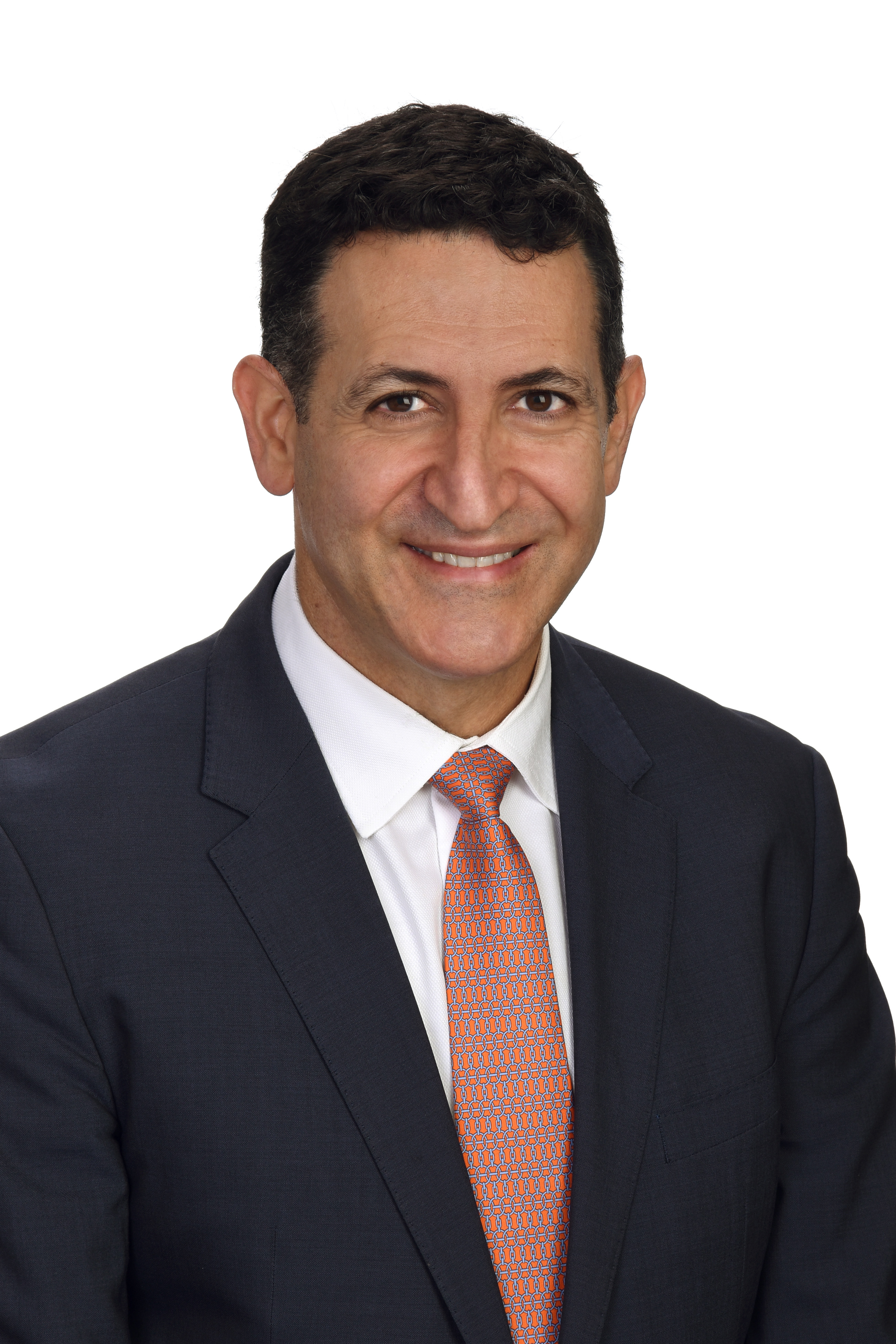
I’m going to jump in because we bit off a bit more than we might be able to chew today. We have a huge subject and a really exciting subject and an amazing speaker. Today’s program is “The Next Generation of Alzheimer’s Treatments.” And I am delighted, really delighted today to introduce our guest expert Dr. Marwan Sabbagh. He’s a board-certified neurologist, a behavioral and geriatric neurologist, and the Moreno Family Chair for Alzheimer’s research in the Alzheimer’s and Memory Disorders Program at Barrow Neurological Institute. He is also a professor and vice chair of research in the Institute’s department of neurology.
MARWAN SABBAGH: Thank you for having me, Nancy. It’s good to see you.
NANCY KEACH: Good to see you. Mason, can you bring up the next slide, please? What you’re looking at, if you can see it, is a chart. Dr. Jeff Cummings’ Alzheimer’s drug development pipeline chart from January of 2025. This shows all of the drugs that are in clinical trials and research studies at the beginning of 2025. And at the beginning of the year, there were 182 clinical trials assessing 138 drugs in the pipeline. And this included 48 trials assessing 31 drugs in Phase 3, which is the later stage of a trial where you usually get either a thumbs up or a thumbs down in terms of whether or not a treatment shows enough effect to be approved.
So I’m going to start– before we jump into the group of medicines we’re going to be talking about today– Let me ask Dr. Sabbagh, how optimistic are you that there will be new medicines on the market for Alzheimer’s, say, within the next three years?
MARWAN SABBAGH: Nancy, I’m very optimistic that we’ll have multiple drugs finishing their approval pathway, getting approved. We know that Alzheimer’s is complex, and we’ve dominated the whole field for the last several years under the amyloid hypothesis. But there are many other drugs, many other targets. I think that when you look at the three-year horizon, in the next few weeks, we’re going to get a readout on the semaglutide story, which we’ll read out in less than a month. So that will be very important because that’ll allow us to see if the GLP-1s actually have an approach. I think you’re seeing now opportunities around the possibility of the autophagy story, which we’re going to talk about. I think that has a three-year horizon, and then a lot of other things that are still making their way through it. We do see a lot of symptomatic drugs– nobody always talks about it, but targets for behavioral issues, challenges, sleep, agitation, tons of drugs coming through the pipeline and looking like at least one of those Axsome’s drug will be approved within the next six months. So we have a lot– the three-year horizon’s looking pretty good.
NANCY KEACH: That’s so awesome. And yes, to the person in the chat who asked if the slides are going to be distributed. The whole program will be edited, and anyone who registered will receive a copy of the program and the slides and resources, so absolutely. It’s really exciting. And I know we’re going to describe autophagy as best we can and some of these approaches. But people have been asking, are there other approaches then to removing amyloid from the brain. So we’re going to hear a bit about that today. And we actually first wanted to talk about this specific treatment blarcamesine because it’s an oral pill. And that’s everybody’s dream. I can sit on the couch, and I don’t have to eat well and exercise, and I’ll just throw a pill in my mouth. So that’s where I want to focus today on this exciting potential new drug, blarcamesine, which we’re going to talk about. We’re also going to try to talk about remternetug, trontinemab, AXS-05, which you mentioned. And hopefully, we can get also to ALZ-801 and some others. But we’re going to get an overview today.
So let’s start, though, with blarcamesine because I want to just be able to take that pill. So Chris from Tampa asks, can you define the mechanism of blarcamesine and role with sigma-1? Is it autophagy or mitochondrial-driven clearance of toxic proteins? So I’m going to now ask you to answer this in human being terms. What is blarcamesine? How do we think it works?
MARWAN SABBAGH: So you’re saying, don’t geek out on the science is what you’re saying. Got it.
NANCY KEACH: Don’t geek out on the science. And I have to say, you have a lot of scientific research friends who secretly are joining this and asking all of their scientific questions. But we’re going to put them in lay language. Go ahead.
MARWAN SABBAGH: So I like to look at autophagy as the cellular reset button. So every time your computer doesn’t work or your Wi-Fi doesn’t work, and you call the cable company and they say, go and reset everything– I don’t know if that happens to you guys, but it happens to me, or your phone, and they tell you to reset things, think of autophagy as the cellular reset button. In other words, when you have a pathway that’s going down the wrong route, things don’t work. And that’s what the neurodegenerative pathway is, particularly that you get neurotoxicity because a process called a lysosome is not working properly. And then you get accumulation or aggregation of proteins that causes toxicity. What we see is that if you gave an oral drug like blarcamesine, which triggers a pathway called the sigma-1 receptor pathway, to make the internal cells work better by making the lysosomes work better and therefore causing neuroprotection in homeostasis. And in so doing, you get less toxicity. So basically, it’s the cellular reset button. Sigma-1 is an internal receptor. And when you trigger the sigma-1 receptor, you then get autophagy essentially resetting the cellular process to work in a normal way. So it’s very exciting. The huge advantage that blarcamesine faces is one, it’s a pill, as you already said, Nancy. I have prescribed a lot of the monoclonal antibodies. It’s a very involved process. It’s no small thing. Two, safety has been excellent with the blarcamesine program, a little nausea, but no swelling of the brain, no MRI monitoring, no frequent things that are involved. And the data is pretty good. And we’ll talk about that in a minute. But my point is that this is a new approach, a new process, a new target, and nothing to do with amyloid, might be even upstream of amyloid. Some discussions that autophagy is broken down, and that’s why amyloid and tau accumulate to begin with.
NANCY KEACH: So what have the trials told us so far in terms of daily behavior and cognitive function and lifestyle function. What do we know so far?
MARWAN SABBAGH: I have to tell you, I gave a talk at the AAIC in Toronto a few months ago, Nancy. And I actually presented their four-year data. And what they’re showing is that they did actually slow decline significantly on an instrument called the CDR, which is the approvable instrument for the FDA would want. But they also showed the slowing of decline on activities of daily living scale, on cognitive scales. So my point is that their long-term data shows that it’s a sustained and robust effects over time and that effect continues. And it has excellent safety. That’s the other thing about it. And so the reason this is important is people are trying to decide how you would– beyond safety and efficacy, would there be a biomarker? And that’s another discussion we can have.
NANCY KEACH: Can you describe what that means, would there be a biomarker?
MARWAN SABBAGH: So the biomarkers is when we talk about amyloid PET, that’s a biomarker. And you see the lecanemab and donanemab clearing the amyloid on an amyloid PET. Other markers might include tau PET or MRI volume.
NANCY KEACH: So what you’re saying is that these would be detectable things that could be measured to know how well the drug or how the drug is working hand in hand.
MARWAN SABBAGH: That’s correct. And one of the things that blarcamesine has been able to show pretty robustly is that it reduces degeneration of the brain. The MRI does not shrink as much in people taking blarcamesine and then people who don’t. And so that we have a way forward to not reverse but reduce the neurodegenerative process.
NANCY KEACH: It’s very exciting, actually. You talked already about side effects. And Susan asks, what phase of Alzheimer’s is this drug good for?
MARWAN SABBAGH: So the data would be for mild cognitive impairment and mild dementia due to Alzheimer’s, as most trials are. But I don’t know that it would be absolutely restricted to mild cognitive impairment and mild dementia. I’m just telling you what the design of the study has been so far. I tell you that because most studies have been frontloading their patients in the milder phases and ignoring the moderate stage. But the fact is that this drug is safe enough that we could even try it in– I don’t think we have a lot of data in moderate stage, but it’s certainly safe enough to try.
NANCY KEACH: A lot of people are going to ask this for anything we discuss today. A lot of the people watching either on the Leqembi or donanemab or have been in that trial or another trial, is this something that can be considered that will be able to be taken if you have been or are being treated with one of those monoclonal antibody drugs?
MARWAN SABBAGH: I think the advantage of blarcamesine is it’s a treatment agnostic drug. In other words, whether you’re on lecanemab, donanemab, or not, you can take the drug. Because it’s an oral medication with a different target, different mechanism of action, it’s not competing against donanemab or lecanemab mechanistically. And so there’s a logic that you could do both.
NANCY KEACH: Thank you. Kerry said, what percent of a slowdown compared to placebo was seen? And was the result more impressive than lecanemab or donanemab? There’s a lot of questions like this. Like, is it better? And let me ask along with this, because as we know, it’s not on the market yet, what’s next? In the best of all possible worlds and in the medium of all possible worlds, when could it actually be in people’s hand?
MARWAN SABBAGH: Actually, I’m very optimistic. By disclosure, I am also the chairman of the Scientific Advisory Board for Anavex. So I get a sneak peek of a lot of things that most people will not see. But the reason I’m bringing that up, Nancy, is that their Phase 2b/3 trial was in 48 weeks, so a year. It was in 540 patients, give or take, 510, 520 something like that. 2 to 1 randomization, so one group of 170 got 30 milligrams a day. One group of 170 got 50 milligrams a day. And one group got placebo. And it showed both in the 30 milligram and the 50 milligram that they had met the pre-specified endpoint on the cognitive measures, what’s called the ADAS, and the global measure, which is called the CER, but not on the activities of daily living. So they showed as good an effect in a quarter of the patients getting a lecanemab or donanemab. So when you compare it, the effect that was seen with lecanemab and donanemab was almost 800, 900 people in the lecanemab and donanemab group at 18 months. The blarcamesine was a much smaller study, so basically 340 people at 48 weeks or about a year. So as good an effect is seen in 18 months with a monoclonal but seen at a year in a much smaller sample.
NANCY KEACH: Surprisingly, and I think this is because you do have a lot of your academic followers on here, and not just the public—
MARWAN SABBAGH: Hi, colleagues.
NANCY KEACH: And so let’s not spend too much time on this because this really is for families who are looking for what they can do today. And I want to get to the other drugs. But several people have written, tell us more about the EMA process. I saw that the EMA was trending negatively. What are your hopes? What’s realistic? Could you just set the record straight on what has or hasn’t happened with EMA and just high level, because as I say, I don’t want to spend too much time just because I want to get to a lot of the optimism of the various drugs.
MARWAN SABBAGH: So I want to tell you that a lot of these discussions are closed doors, so we can speculate as much as we want. I think the EMA, European Medicines Agency, put themselves in a–they got a lot of grief for their review of the monoclonal antibodies. In fact, they had to backtrack—
NANCY KEACH: Reversed it, right?
MARWAN SABBAGH: They sure did. And so the reason I say this to you is that agencies like EMA have been looking for alternative solutions to the monoclonals, which they were pretty much against. They went on the record and said they were against. I cannot tell you absolutely all of the proceedings of the EMA around blarcamesine. But I wouldn’t say it’s been entirely negative, either, because the discussions are ongoing.
NANCY KEACH: So to be continued.
MARWAN SABBAGH: To be continued.
NANCY KEACH: And somebody’s written and then I’m going to move on, although we’ll have to maybe have a whole– when maybe whenever the next milestone is, we’ll have a whole episode about this therapeutic because it’s so exciting. Do we have any sense what would this cost if it came to market? Do we have any idea? Would it be covered by insurance?
MARWAN SABBAGH: There’s no way to speculate on that number.
NANCY KEACH: At this time.
MARWAN SABBAGH: I would bet a dollar that it would be cheaper than an infusion-based monoclonal antibody, which is quite pricey. And it would be much, much less complicated and much cheaper in total cost, because you don’t need MRIs, you don’t need infusions, et cetera. So that is another TBD. I don’t have a specific number to give to you.
NANCY KEACH: I’m going to get to the question later of combination therapy. Right now, I’m going to switch to another drug, remternetug. Remternetug is a drug Lilly is testing. It’s described as a monoclonal antibody– this is what I read, similar to donanemab, but potentially with more practical administration, such as injection instead of intravenous infusion. Can you describe remternetug and we know so far about it?
MARWAN SABBAGH: I am also very excited about remternetug. I call it the son of donanemab. I think it is what I call a third-generation monoclonal antibody. So I think of lecanemab and donanemab, and even aducanumab as second-generation monoclonal antibodies. People don’t understand this has been going– this field has been in development for well over 20 years. There was a first generation of monoclonal antibodies, solanezumab, crenezumab, ponanamab bapineuzumab. And then the second ones, which are the lecanemab and donanemab of the world. And so I look at remternetug as third-generation monoclonals. And there are two exciting things about remternetug that’s catching everybody’s attention. One is it’s a subcutaneous injection. From day one, you would just take a shot in your arm without having to go to get an infusion. And two, as it removes amyloid, like your brain’s cleared of amyloid in less than six months. 90 to 180 days, your brain just flat cleared of amyloid. So I really am excited about that as well.
NANCY KEACH: And where does it stand in terms of it being tested. Is this in trials that people can participate in now?
MARWAN SABBAGH: Yes. So they just started the study called the TRAILRUNNER studies. That’s the name of the study, the TRAILRUNNER studies. And I think they’re enrolling. So I would encourage people to look up the TRAILRUNNER study.
NANCY KEACH: I believe that is a multi-site– because we have people from the world.
MARWAN SABBAGH: Oh, yeah. That’s a multi-site yes. Is it international? I don’t know, but it is certainly going on in the US.
NANCY KEACH: Roche’s drug trontinemab, which is an investigational monoclonal antibody designed to rapidly clear amyloid plaques from the brain using a specialized brain shuttle technology to enhance drug delivery across the blood-brain barrier. What is brain shuttle technology?
MARWAN SABBAGH: I think this is cool. This is science fiction stuff. So the problem has been with monoclonal antibodies that they’re giant proteins, and they just don’t get into the brain, as simple as that. So what the brain shuttle does is it hooks the protein onto another protein called a transferrin. And it literally takes that protein, the monoclonal antibody, and dumps it into the brain. And that’s why it’s called a brain shuttle. It was theoretical until quite recently. But it shows it can get large proteins in the brain very efficiently. And like remternetug, trontinemab’s early data suggests that they want to use this technology. It can remove amyloid like gangbusters, like brain cleared of amyloid in 90 to 180 days. So, we know it’s an option. Again, trontinemab is the successor molecule to its parent, which is gantenerumab. But then they hooked it onto a protein.
NANCY KEACH: It’s fascinating.
MARWAN SABBAGH: That is cool.
NANCY KEACH: I know there are a couple of trials that they’re just starting to recruit. So this is something people can join. The TRONTIER 1 and TRONTIER 2 studies have just started recruiting. There are sites up around the country, but there are going to be a lot more. Can you describe maybe who– if you know offhand, I’m putting you on the spot here, but who would qualify roughly for trontinemab?
MARWAN SABBAGH: So the TRONTIER studies, I want to disclose, I’m not an investigator for that study. It would be patient with mild cognitive impairment or mild dementia due to Alzheimer’s disease. There would be biomarkers confirmed to have amyloid in their brain, either– usually, we’re using these screening blood tests and then confirming it with either spinal taps or PET scans. And so that would be patients that have that. They would probably have criteria around how many microhemorrhages on MRI. But it would be mild cognitive impairment and mild dementia and amyloid confirmed.
NANCY KEACH: So if you’re in the very early stages, then you can go get some of those tests done.
MARWAN SABBAGH: That’s correct.
NANCY KEACH: There’s also a study with trontinemab that, I believe, has started recruiting called TRAVELLER, which, if I’m correct– well, you go ahead and tell us about TRAVELLER.
MARWAN SABBAGH: That’s a biomarker screening mechanism. Basically, they’re doing large population ways to capture people. We know that the blood tests changed before onset of symptoms. So this is an opportunity for people to get their blood tested to see if they’re changing biologically.
NANCY KEACH: So I’m reading so many questions that are just coming. And I apologize to the people I’m not going to get to, and a lot of scientific questions. And I’m sorry, I’m not going to take those because I want, again, the public to benefit the most from this. I think this is an interesting question because one of the drugs you talked about had trials predominantly in Australia, that a question from a Bardo on YouTube, why aren’t the trials being done in the US? And I think many of us here would like to participate. So again, I want to talk about how many trials there are in the US. And we’re trying to hit some of those that are recruiting. But your comments on that?
MARWAN SABBAGH: I’m embarrassed to say, the reason a lot of studies are not done in the US is simply cost. The US is the most expensive place to do trials in the world. Usually, you can do the same trial with the same population somewhere ex-US for about half. So that’s why a lot of trials are done ex-US because of cost. But I will tell you, trontinemab and remternetug are certainly being tested in the US. And if blarcamesine ends up doing another trial, it will be a US-based trial.
NANCY KEACH: I’m going to ask very quickly because so many people are asking about it, and a couple did in the pre-questions about lithium supplements. Can you give a comment on that?
MARWAN SABBAGH: It’s funny. I get a lot of these questions in my clinic lately, this lithium orotate discussion. So I have a lot to say here. So first thing I’m going to tell you is, been there and done that. Most people do not realize that this is a revisit of the lithium story. We tried 20 years ago to look at lithium. Why lithium? Because lithium turns out to be a really good treatment for tau in the brain. Not just amyloid, but tau. But remember that lithium carbonate is used to treat bipolar disease, and it has a lot of toxicity. And you have to do a lot of monitoring if you’re going to get lithium. So what happened is that 20 years ago, we tried it. Toxicity, didn’t work, put it on the shelf. And then now a scientist has been looking at a derivative of lithium carbonate called lithium orotate and showed it worked in amyloid in animal models. And now everybody wants to do lithium again. I will tell you, been there, done that. It’s probably going to come back into a human trial. But I want to say to you, this is a revisiting of an old story.
NANCY KEACH: And I just have to say, we see this a lot, and I see this a lot. I’m going to say this as a non-scientist, who, for 16 years, have been immersed in funding Alzheimer’s research, every time a mouse is “cured” of Alzheimer’s, some of these headlines are really just to get attention or to get funding or to get—
MARWAN SABBAGH: Correct.
NANCY KEACH: So it’s really– thank you, Dr. Sabbagh, because we have a very educated voice here to talk with us about that. I think this is interesting to ask quickly before we move on to some of the other therapeutics. So there’s a lot– these questions and you answered it already about if you’re on Leqembi or Kisunla. Holly asks, are there any trials for people who have had microbleeds on Leqembi and had to stop? So any trials that people can go into if they either don’t qualify for a monoclonal antibody?
MARWAN SABBAGH: That’s a very tricky situation. We do see that microhemorrhages is a proxy marker of cerebral amyloid angiopathy. And the rule of thumb is you should not start infusions if you’re above 5 microhemorrhages. But we also know that over time, you can get more microhemorrhages. So that question is a very important one because it is a marker of cerebral amyloid angiopathy. And as far as I know, we have no definitive treatments for CAA yet.
NANCY KEACH: Just out of respect for time, I’m going to switch over to drugs for agitation. And I do want to mention, there was a drug approved, and BrightFocus has just produced, with the help of our sponsors, an infographic of all the drugs that have been FDA-approved for Alzheimer’s disease. I think we’re going to put up a link or an email to request that at the end of the show. So it shows all the drugs that have been approved and what they’re for, whether they’re just for symptoms or whether they actually modify the disease, slow down the progression, or whether it’s a drug for symptoms. But I know we’ve been talking to Axsome for a long time about their drug, AXS-05, which is currently being developed for the treatment of agitation, and, as it happens, smoking cessation. And they’ve received breakthrough therapy designation from the FDA. Can you give us an update on where that stands?
MARWAN SABBAGH: So AXS-05 scientifically is derived from previous research. But they showed pretty well that they have a good therapeutic effect in the treatment of agitation in Alzheimer’s, which becomes a bigger and bigger problem, Nancy. As patients get worse in their disease, they can get a lot of change in temperament, particularly agitation. And I will tell you, as a neurologist that takes care of a lot of people with Alzheimer’s, the behavioral issues start to dominate. Particularly in the moderate stage, the behavioral issues start to dominate your treatment management, your discussions, et cetera. So good treatments for agitation are going to be important. And I think this will be the second drug approved to treat agitation in Alzheimer’s.
NANCY KEACH: I’m going to just jump in here because so many people ask this because agitation is mid-stage and late stage, and it can take a lot of really devastating forms. And because Alzheimer’s and dementias can run out over 10, 15 years, it’s so brutal. And I know the answer to this question, but I’m going to ask it anyway. Are there any trials for people who are in moderate and late stage? And because there are millions of people in moderate and late stage who are suffering, their families are suffering, why is there not more?
MARWAN SABBAGH: It’s a true statement and reflects the reality is that most research studies are done frontloaded on to the mild cognitive impairment or mild dementia. And it almost seems like we’re ignoring the moderate stage. Moderate and severe is the conventional wisdom is that it’s too late, which is not true, and it’s not fair because these patients are still alive, still suffering, the family’s still suffering. I will tell you there are some behavioral related studies in moderate stage. And I will tell you that there’s a drug called Lighthouse Pharmaceuticals’ LHP-588, which will be doing a moderate stage Alzheimer’s study in 2026, probably the mid-year 2026. So that group is not being ignored completely. But you are right. Most of the work is done in the mild.
NANCY KEACH: Well, this came up last year because so many people write in and say, my loved one is in the moderate or later. What can I do? And I called Jeff Cummings, Dr. Jeff Cummings, the guru, and I said, how many trials are there for moderate? And he said, that’s a great question, I don’t know. And he called me back, and he’s, at the time, this is maybe a year ago, he said five, out of all these trials. So it’s just painful for people.
MARWAN SABBAGH: It is painful.
NANCY KEACH: I want to acknowledge it. And Darlene– hi, Darlene. Just what was the name of the first drug that was approved for agitation?
MARWAN SABBAGH: Rexulti, brexpiprazole.
NANCY KEACH: Rexulti, brexpiprazole. And I see that, I think, Amanda put the link for the infographic on approved medications in the chat. So it’s in the chat, but we’ll also be sending that out to everybody. Let’s see. Oh, Cynthia, can you post how to get into a trial and where they are in the US? Dr. Sabbagh, I know you’re not going to answer that. We are doing a second series on these Zoom Ins, where each month or every other month, I believe, we take a specific trial, and we walk through how you can find the trial, where the locations are and how to find those. So those episodes on different trials are up on our resource page. So look for Zoom In on Dementia and Alzheimer’s Clinical Research episodes. And I think we may be looking at the AHEAD 3-45 study next month, and soon also, do a specific hour on the TRONTIER 1 and 2 studies and TRAVELLER and on any trials that are currently recruiting. We’re trying to give each one of them some time for people to really learn how to navigate the clinical trial process because if, Cynthia, you are having trouble, so is almost everybody. And even doctors really are not that conversant in how to refer people to the appropriate trials. So this is just a real problem in our field because dementias are so complex, trials are so complex. So we’re working on getting you better information on that. And Amanda put in the chat, we do have a trial finder on the brightfocus.org website. There are others out there, including nih.gov, but that one is hard to navigate. So you can go on the brightfocus.org website and look up trials by the name of the condition and what stage you may be concerned about.
And because there were so many questions about APOE4 status, and it’s really exciting because I didn’t know until today that blarcamesine can be taken by people with any APOE4 status. But Heather from Elliott City, Maryland, what are the emerging therapeutics that are best for patients who are APOE4/4? We did have a lot of questions also about APOE4/3. And how many years, decades do you think we are away from the preventative rather than the therapeutic? That’s a huge question. And there were questions about APOLLO E4, Alzheon’s ALZ-801.
MARWAN SABBAGH: A lot of questions there all packaged into one. So let me just tell this audience about the APOE4. So APOE4 was originally described as a genetic risk for heart disease and cholesterol. 30 years ago, our colleague Allen Roses and his team at Duke found that it was also a genetically linked risk to Alzheimer’s as well. And that your risk was 3/3 is general, 3/4 doubles or triples your risk, and two copies or 4/4 increase your risk 12x over your lifetime of developing Alzheimer’s disease.
So we know that as a group, the 4/4s are the most enriched group in the world at risk for Alzheimer’s disease. And 60% of them will develop Alzheimer’s in their lifetime. This is not a small group. It’s actually when you look at the general population, 20% of people have a APOE4. And of that, 2% have 4/4, 2% of the general population. In Alzheimer’s disease, 60% are carriers of the E4, and 20% of that 100% is 4/4s. So they represent roughly 20% of all patients with Alzheimer’s are 4/4s. My point is that these are not a couple of people. We’re talking about, when you do all the numbers, almost a million people are 4/4s. When we do the numbers by 2% of the population, 7 million people are 4/4 in the United States, and a million people with Alzheimer’s is a 4/4.
NANCY KEACH: Wow.
MARWAN SABBAGH: The reason I’m bringing this up, Nancy, is that we’ve known for 30 plus years about the genetic risk. We’d never drew their APOE genotype because there was this medical myth that if you find out you’re an APOE4 carrier, you’re going to go home and kill yourself. That has been embedded in the mindset of people for– incorrectly. My colleague, Dr. Bob Greene, at Harvard in 2009, published a study called the REVEAL study, showing that you could safely and responsibly disclose APOE4 information and that people would take the news and not cause themselves harm. And yet, till 2022, it was still considered to be taboo to get your APOE genotype. Except people like me, I was ordering genotypes for 15 years.
And the reason I bring this up is that overnight, it went from being taboo to being you now need it for risk stratification. So risk stratification in the era of monoclonal antibodies, we’re using APOE4 to determine if you have a risk of an ARIA event, amyloid-related imaging abnormalities, swelling or microhemorrhages. So we are now went from overnight not doing genotyping. Now we’re doing genotypes. And your audience is asking great questions because they’re a group of people who are at the biggest risk for developing Alzheimer’s are the 4/4s. The biggest risk of having complications from the monoclonals are 4/4s. Where does that leave them? They have a higher chance of getting it, high chance of getting worse, high chance of getting complications. And they’re stuck. And the 4/4s in this audience know exactly– they’re all nodding their head, yes, we’re stuck. And I know this because actually, I was the one who led the conversation with the FDA a few months ago. And so I know what they’re thinking. I love the Alzheon story. I love the valiltamiprosate. And I was disappointed that they showed it was a negative study in their top line data from 2025. Earlier this year, they showed that they did not meet their primary endpoint because a year ago, I would have said, that’s our solution, but I can’t say that now. I also know that they’re scratching their head and thinking, what’s their next step. So my point is that monoclonals haven’t been an easy solution for 4/4s. And valiltamiprosate did not fill it– did not step up completely to fill in the gap. I think they’re contemplating another study. I don’t know the answer to that. To answer your question, the APOLLO study was negative. Although in a substudy of a certain population in that group, it was resoundingly positive, worked great in a small group. So I don’t know what’s going to happen next, if they’re going to go back to the drawing board and do another study. But it does leave a gap for a group of people who are vulnerable.
NANCY KEACH: And I do want to mention, because I don’t know if you remember Tony who used to work at Lilly and he worked on Alzheimer’s drugs for many, many, many years. And then when we were filming a movie called Turning Point, he got a diagnosis that he was APOE4-positive. He would not mind my saying this. And I remember we said, could we interview you on camera about being APOE4-positive? And the thing that has stuck with me for 10 years now is that he said was, this is not a death sentence. Of course, there’s concern, and there should be concern. And knowing your status is important and so on. But I think some people, like you said, it always has been perceived as, oh, my gosh, it’s a death sentence. And I want to clarify that professionals in the field will differ with that.
MARWAN SABBAGH: I agree. And people need to be realistic on what it means and what it doesn’t mean.
NANCY KEACH: And by the way, he’s doing great 10 years later. And he’s fine. So I’m going to quickly ask you about monoclonal antibodies focused on tau. I’m sure that could be an hour in itself. But there were a lot of people who asked about targets for targeting tau rather than amyloid with monoclonal antibodies. And I have a whole list of therapeutics. So can you talk just about that class?
MARWAN SABBAGH: The story on tau has been much more complex than we had thought it would be. Tau, you have to understand what tau is at the end of the day. You have these large proteins in your cells called microtubules. Think of microtubules as railroad tracks in your brain cells, neurons, that are responsible for letting things go up and down the brain cells. And then you have the crosshatches of those microtubules. Those are tau. So the tau is the crosshatches that keep the– they’re called microtubule stabilizing proteins. They keep the microtubules all lined up. And then they undergo a chemical alteration called hyperphosphorylation. And when they do, they stop binding to the microtubules. And then once the microtubules aren’t bound, they literally fly apart. And that’s what happens is that they fly apart. And then microtubules are– then the tau is released.
And the reason I say this to you is that the thought was maybe if these free forms of tau that are released, if we grab them and prevent them from going from neuron to neuron in a process called prionosis, we could reduce the spread of tau. And by so doing it, we would stop the progression because it turns out that the spread of tau is the most reliable prediction of progression in people with Alzheimer’s, not amyloid. People think about amyloid. It’s actually the spread of tau that reliably predicts progression. So the idea is, if you give a monoclonal antibody to find these little free forms of tau and grab them, you would prevent its spread. And in so doing it, it would be useful. We’re seven, eight drugs into that discussion. And so far, not so good. No worries about safety. It just hasn’t worked as well as we had thought. But the theory is good. It’s just in practice it hasn’t worked as well. So the newest discussion on the tau antibodies is whether we’re targeting the right species of tau. So you can look at the one end of the tau or the other end of the tower, or the middle of the tau or another. So my point is that we’re still looking at it.
NANCY KEACH: Not giving up on it.
MARWAN SABBAGH: Not giving up.
NANCY KEACH: But we’ll look at some different approaches. That’s an interesting question. I’m going to go to something else, but a YouTube question just came in from someone watching on YouTube from Bardo. What early symptoms do families often miss that you wish more people recognized?
MARWAN SABBAGH: Interesting question because we’re rethinking the whole approach. I think people will acknowledge that when somebody is forgetful, repeating themselves, the forgetful component, I think people are now keyed into. But what you need to know is in that in that time of forgetfulness, temperament changes, anxious, irritable, depressed. And we now think of anxiety, irritability, and depression as an antecedent symptom of the cognitive. And there’s a new construct called MBI, mild behavioral impairment, which is the parallel construct of MCI. And so I would tell you, the neuropsychiatric symptoms are often ignored or missed. The other thing I would say to you is that they can sometimes get a change in their sense of taste and smell. And that’s another thing we often ignore. So my point to that, it’s a very nuanced question, but I love it. There are things we would want to ask about that we don’t see.
NANCY KEACH: I think it’s a great question. And I also love your answer because my husband says all the time, oh, I’m getting Alzheimer’s because I can’t remember. That person’s name is not coming to me. And I say, no, no, no. Because I’ve seen that change of personality, those subtle changes, if you know what to look for.
From the discussion today, I think it would be really interesting to do a program, one, on symptoms to recognize the difference– this is an old thing. We’ve done it before, but I think there are new nuances, how to detect and how to recognize symptoms and start the discussion with your doctor. And also several people are asking, and we don’t have time today, about prevention studies. So I’d love for people to throw into the chat either symptoms or– yeah, I know anosognosia is a good one, Donna. I think we should do a whole session on whether you’d like to hear about either or both prevention and symptoms.
And since I mentioned my husband, who’s watching today, James Keach, who is a filmmaker, I’m going to throw you a curveball and ask you a question that James just sent to me about you, Dr. Sabbagh. Why is he so passionate about his work and the difference he might make in the world? You are one of the top people in the field, and yet you’re giving us an hour here to talk to our donors and public and support, and make sure we’re trying to bring along the public with some of this information. What makes you tick about this?
MARWAN SABBAGH: Thank you, James, for that very kind question. I did my undergrad at Berkeley, and I started doing Alzheimer’s research at Berkeley because I had a fear of getting old. And I thought about Alzheimer’s as the embodiment of everything sad and destructive about getting old. And I said very early on in my career, that’s what I’m going to do for my career. I’m going to devote myself to finding solutions that would improve quality of life. I’m actually turning 60 in a month, Nancy, I am not as young as I used to be. But my point here is that I am not as afraid as I was. I think maybe you do it to exercise your own fears, but that’s what drives me. I want to see a solution. I want to be the conduit that allows people to have a better quality of life. I want to be that vector that brings the science and the discoveries to people. And that’s what drives me. And so thank you for the question. But that’s a very personal thing. It doesn’t run in my family. I’m not running against some biological clock. It’s not like it. My dad passed away two years ago at age 90. I mean, so my mother is super sharp, super, super sharp. Nothing gets past her. It is not a fear of getting it myself, but it is a fear of getting old.
NANCY KEACH: Well, James wants me to say you’re making a huge difference.
MARWAN SABBAGH: Thank you.
NANCY KEACH: And I agree with him.
MARWAN SABBAGH: Thank you for that. Thank you.
NANCY KEACH: We’re not done yet. And Donna says, 60 is not old. And I agree with her.
MARWAN SABBAGH: Thank you.
NANCY KEACH: We have a YouTube question from Colleen. What can we do to educate primary care physicians? My partner’s missed these symptoms. We had a lot of questions from physicians. And I want to tell the audience and any healthcare professionals that are watching us that we have received funding to do a version of this program for primary care healthcare professionals. And because I couldn’t agree more that the primary care, as well as the public, are being left behind in terms of all the complexities and all that’s being discovered. I can tell you I wrote in my notes here-people are confused, and doctors are confused. This is one of the things I wrote. So from your perspective, what are some practical ways to educate primary care physicians? And I’m also going to throw in with that, if somebody goes to their primary care physician, and they’re not being responsive, how do they talk to them about this?
MARWAN SABBAGH: I have a lot to say here because it’s funny, before this program, I was in clinic. In fact, I’m going right back to clinic, and I had a primary care physician resident in my clinic with me today. The fact is that primary care physicians get 36 months of training. They get one month of neurology, if they get that. And they get one day in the cognitive clinic. And yet, 20% of all primary care is neurologically-based. People, when they have a cognitive issues, they’re not coming to the super specialists like me. They’re going to the primary care physician first. And doctors are still taught or still believe that they’re taught that you can only diagnose Alzheimer’s disease with an autopsy, which is still the curriculum. Nancy knows that. She shook her head. So that is a medical mythology that has not been changed. And yet, all the specialists like me and all my colleagues are using the new blood tests and PET scans and spinal taps. We can diagnose Alzheimer’s 90%, 95% accuracy. But most people realize they can’t. So the consequence in primary care is, they’re dismissing the symptoms. They’re delaying the diagnosis. They’re passing it off. Like, don’t worry about it. There’s nothing wrong with you.
And so all these things– I’m talking about the biomarkers, Nancy. There’s actually initiatives now to get primary care physicians to start drawing these new blood tests and things like that.
NANCY KEACH: And also, since Donna’s writing, there’s not enough doctors specializing in geriatrics, which is also true.
MARWAN SABBAGH: True.
NANCY KEACH: I always want to say to all of us– my daughter is 21. Tell your kids to become geriatricians because there’s such a need for more geriatricians. The aging population is growing much more quickly than the young population. And that’s why we also have to take the stigma out of aging. To your point, Dr. Sabbagh, this aging can be fantastic. And we had Dr. Laura Baker on a couple of weeks ago talking about ways you can have better aging, just even by lifestyle interventions. But if we can have some of these other therapeutics in there, too.
Since we’re almost out of time, I’m going to say that a lot of people have written in and said they’d like to learn more about prevention. So I’m just going to ask, if any of these drugs– and I’m going to say blarcamesine, in particular, is it possible that they will work for– prevention is a tough word, but risk reduction or not getting onset as quickly?
MARWAN SABBAGH: I actually, again, disclosing them, the chairman of their Scientific Advisory Board, have discussed with the company the idea of a prevention trial because if you believe the cellular mechanisms that autophagy breakdown or the impairment of autophagy could be a trigger of an amyloid or a tau event, an antecedent event, as it were, and that restoring autophagy could restore cellular homeostasis, then a prevention trial would make complete sense. Do it in patients who are barely biomarker abnormal, and then give them oral medication for years. In fact, we put together a skeleton idea of that. We’re years away– of course, that boils down to funding. And a clinical trial of that scale would involve a huge amount of money. So I think the idea is theoretically possible. We just haven’t seen that study come to life quite yet.
NANCY KEACH: And with that lead in, I’ll say quickly to tell your legislators to please continue to fund scientific research.
MARWAN SABBAGH: Amen. Amen.
NANCY KEACH: Very, very critical and important. I haven’t gotten to half of the questions, but I know you’ll come back because this is your second appearance.
MARWAN SABBAGH: I’d love to be back on this program.
NANCY KEACH: And gosh, thank you so much. I’m going to bring up a couple of slides here to close us out. I’m going to thank Dr. Sabbagh and Dr. Sharyn Rossi, who’s been answering questions in the chat, and Amanda Russell and Alexa Villarreal from BrightFocus Foundation, our producers, and the team at M Squared, who gave us this wonderful platform. Especially, thank you, Marwan, Dr. Sabbagh, for sharing your time and information with us.
If you have questions– just to the audience, if you have questions that were not answered today, which I know there are a lot of, this is a list of previous episodes. They’re all available for free online at brightfocus.org/zoomin or on YouTube. There’s transcripts available. There’s unbelievably great information in here. So please go look at those.
Oh, here’s the new infographic. You can get this resource. This is showing all the FDA-approved therapeutics for each aspect of Alzheimer’s disease. And you’ll see at the bottom, to request free copies, call 855-345-6237 or email reply@brightfocus.org.
If this program would be helpful to someone you know, to your friends, to your kids, to your neighbors, to your parents, please share the link with them. Tell them about this program. Share it with three friends, I’m told to say, brightfocus.org/zoomin.
Our next episode, as I said, it may be on the AHEAD 3-45 study, not quite sure yet. It’s going to be Thursday, December 18. I want to let everybody know, as I’ve mentioned a couple of times, we’ll be sending out a recording and a transcript of this episode.
I just want to say to everybody, as I do at the close of each of these shows, besides my heartfelt thanks to Marwan, life is so short– I say this each time, tell everyone you love how much you love them. Give them a hug. It’s Thanksgiving time. Keep them close. See them if you can. Call them if you can’t. And thank you so much for the respect and appreciation that you all show in the chats and in the questions you submit and for your interest in these shows. These are really complicated conditions, and we’re just so grateful to you, Dr. Sabbagh, and for all the professionals that shared their time with us. And we’re also grateful to you, the public, for listening enough for us to keep these going. And actually, we’re about to have our first meeting turning these into podcasts. So for those of you that like the podcasts, we’ll soon have them in podcast form. So thank you. I’m going to close out now and wish you all a wonderful Thanksgiving. Thank you so much.
MARWAN SABBAGH: Thank you. Thank you for having me. Thank you for including me.
NANCY KEACH: Thank you. It’s so great to see you.
MARWAN SABBAGH: Good to see you. Happy holidays.
NANCY KEACH: Happy holidays.
Resources: