Transcript
Download PDF
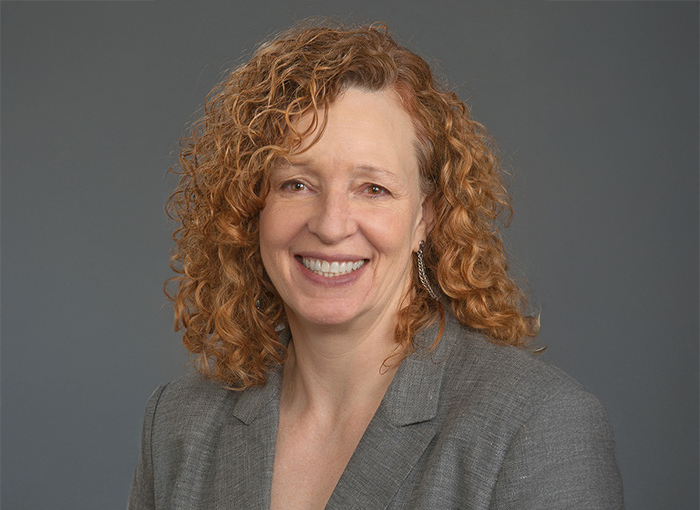
NANCY KEACH: Welcome, everybody. It is great to see you all. Thank you for joining us today. I’m Nancy Keach, and welcome to the 36th episode of BrightFocus Foundation’s Zoom In on Dementia and Alzheimer’s.
BrightFocus Foundation funds exceptional scientific research worldwide to understand and treat Alzheimer’s disease, macular degeneration, and glaucoma. This BrightFocus Zoom In series is generously sponsored by Lilly, Biogen, and Genentech, and we sincerely thank our sponsors for making these programs free and open to the public through BrightFocus’ Alzheimer’s Disease Research program.
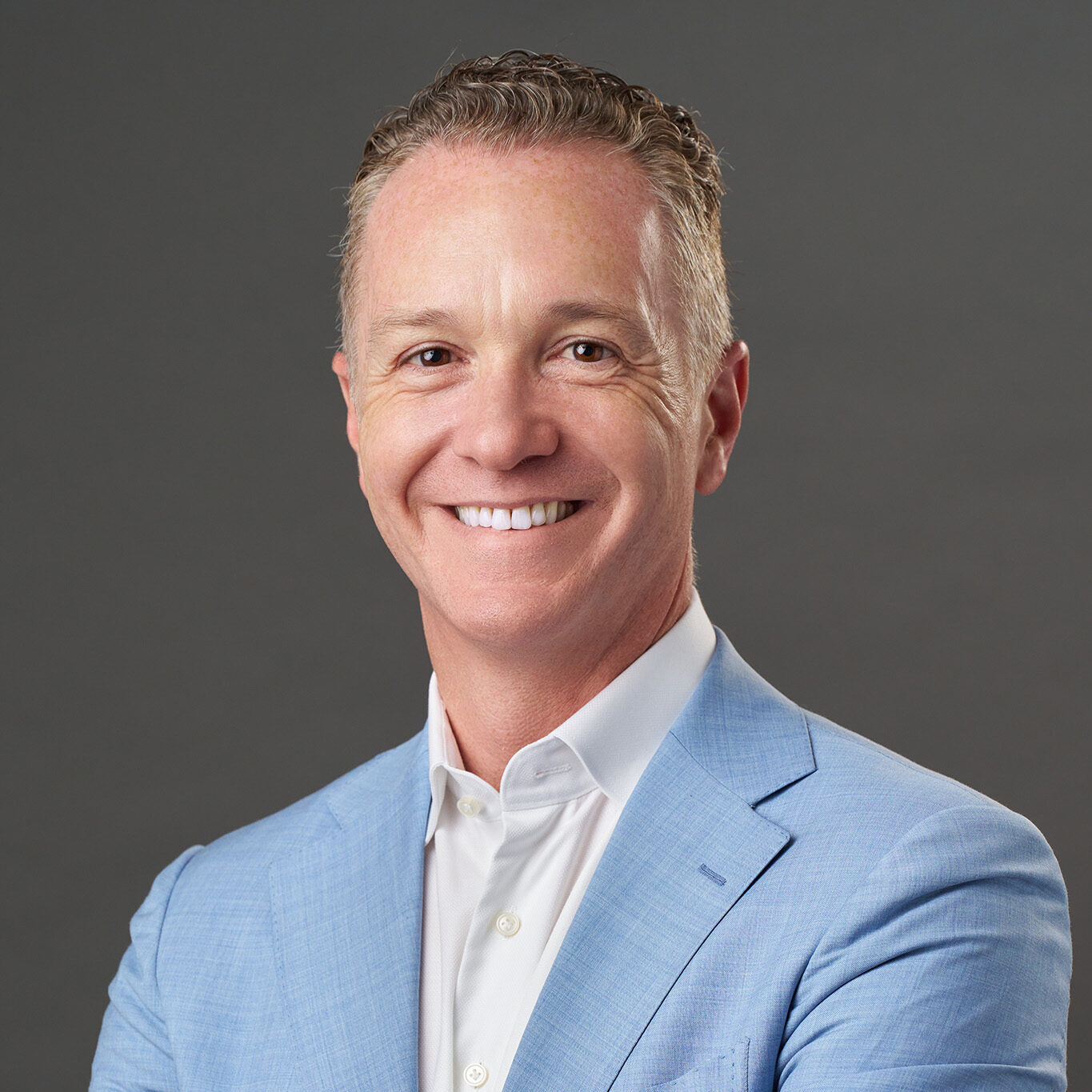
Today’s program is “The AHEAD Study: Can Alzheimer’s Be Prevented or Slowed Before Symptoms Begin?” And I’m delighted to introduce today’s fantastic guest expert, Dr. Josh Grill, who is a professor of psychiatry and human behavior and neurobiology and behavior at the University of California, Irvine. He is co-director and leader of the Outreach, Recruitment, and Engagement Core for the University of California, Irvine’s, Alzheimer’s Disease Research Center. Since 2016, he has served as Director of UCI Institute for Memory Impairments and Neurological Disorders, UCI MIND. Dr. Grill is an Alzheimer’s disease researcher focused on the efficiency and ethics of clinical trials across the spectrum of Alzheimer’s disease, particularly in the areas of recruitment, retention, and biomarker disclosure. Among many other positions, he is co-chair of the Internal Ethics Committee for the NIA-funded Alzheimer’s Clinical Trial Consortium. I left out about 7/8 of his resume because we just don’t have time. Welcome, Dr. Grill. It’s great to have you.
JOSHUA GRILL:Great. Thank you, Nancy.It’s great to be here. Thanks to BrightFocus for allowing me to be a part of this important series.
NANCY KEACH: We appreciate it very much. And I told Stacy Haller, our CEO, yesterday you were on, and she said, oh, I love listening to him speak. So we’re really happy to have you.
Here’s where I want to start. So, we have evidence from FINGER and POINTER studies and many other studies showing that we can, to some extent, slow down or delay the onset of Alzheimer’s by using lifestyle interventions. For example, eating healthier foods. A lot of you have heard me go through this one before. And we have three episodes online if you want to learn more about these lifestyle interventions and the studies, the science that we have so far about these interventions. Eating healthier foods, getting reasonable exercise, managing blood pressure, reducing stress, getting sleep, staying socially active and engaged with other people, monitoring hearing and vision loss, not smoking and drinking excessively, and learning new things, to list some of the basics. Get that out of the way. But the idea of preventing Alzheimer’s through medications has honestly seemed very distant. And here we are, suddenly, it seems, already talking about a study about prevention that has finished recruiting. So why do scientists think now that it may be possible to prevent Alzheimer’s before symptoms begin?
JOSHUA GRILL:Yeah. I think there’s tremendous enthusiasm about the potential to prevent Alzheimer’s disease. To be moreaccurate, though, I would say there’s tremendous potential and enthusiasm about preventing dementia caused by Alzheimer’s disease. I think it’s important to say that today, in 2025, there’s no way to prevent Alzheimer’s disease or any other cause of dementia. And we routinely, regularly, happily make a lot of recommendations to folks about lowering your risk. So all the things you talked about are great to do. And as you pointed out, there are a lot of things that we can recommend to people now that have been shown in quite rigorous studies to help people’s memories perform better. And we hope, and many believe, that doing those things could ultimately let some people live out their lives without developing dementia.
But I think, too, for a lot of us, we’ve known patients who had Alzheimer’s dementia or other causes of dementia who would have seemed to have done everything right. They exercised through their whole lives. They ate a healthy diet. Maybe they adhered to the Mediterranean diet or the MIND diet or the DASH diet. They stayed physically active as well as cognitively and socially active later into life. The other things we recommend to people, you hit on many, good sleep, taking care of any sleep habits, managing medical factors that may increase risk for dementia like high cholesterol or high blood pressure. Keeping those things under control. So we’ve known people who did all these things right and they still got Alzheimer’s dementia. And so I think, for many of us, we do believe that the real key to curbing the public health of Alzheimer’s dementia will require medications on top of all these very important lifestyle recommendations that we can make right now.
The AHEAD study is one medication study, a clinical trial, that I’m really honored to be a part of. It’s led by Reisa Sperling from Harvard and Brigham and Women’s Hospital in Boston, Massachusetts. And it’s being conducted by the Alzheimer’s Clinical Trial Consortium that you mentioned, which is an NIA-funded clinical trial consortium, in partnership with Eisai, the maker of the drug that’s being tested in the AHEAD study. The AHEAD study is a clinical trial testing a medication specifically in a population that we call, quote unquote, “preclinical Alzheimer’s disease.” And what that means is that the people who are eligible and have been enrolled in the AHEAD study don’t have Alzheimer’s dementia. In fact, they don’t even have memory problems. Many of them are worried about their memory, but on cognitive tests, they test normally. And to be in the AHEAD study, older adults, 55 to 80, who were interested in being in the study had to not only test normally on cognitive tests, they had to have biological evidence that the disease that puts them at risk for developing cognitive problems and dementia was present. And ultimately, they had to have a brain scan that said amyloid plaques were accumulating in their brain. And for many of us, we believe that the presence of amyloid plaques in the brain of a person who’s older but has normal cognitive function puts them at significantly increased risk to, someday, develop dementia.
Now, we’re testing lecanemab in the AHEAD study. Lecanemab is a drug that has already been approved by the FDA and several regulatory agencies around the world for the treatment of people who have memory problems and dementia due to Alzheimer’s disease. So that’s very exciting. We’re testing an FDA-approved drug in an indication for which it is not FDA-approved. So there’s no approved drug for the treatment of preclinical Alzheimer’s disease, again, that cognitively normal population. Lecanemab was approved because it was tested in rigorous clinical trials that demonstrated that in people with mild cognitive impairment or mild dementia due to Alzheimer’s disease, it slowed the course of the disease by about 30% over 18 months. That is presumed to be directly related to the biological activity of lecanemab, which is, lecanemab can, essentially, clear the plaques from the brain, at least, in some patients. So over the course of 18 months, most of the patients who are in the Phase III clinical trial of lecanemab, this, again, is people with symptoms, most of them had their amyloid PET scan go from elevated, which we think of as synonymous with Alzheimer’s disease, to not elevated. That is almost a normal scan result. And so the idea in the AHEAD study is to test whether in people who we know have plaques accumulating in the brain, if we can try to remove them, do we stave off the memory problems and dementia from even beginning. And that is truly exciting.
Now, the risks for the lifestyle interventions you mentioned are pretty low. If we go out and exercise, we’re at risk for tripping off the sidewalk and maybe spraining our ankle, things like that, but they’re pretty low risk. Now, every medication, of course, carries other risks. Even the medications in our medicine cabinet at home, the ibuprofens, the Tylenols, there are some risks that come with every single drug. And in clinical trials, we’re not only testing whether drugs are efficacious, whether they offer benefit to patients, we’re also testing safety. And that’s part of every clinical trial. We’re always considering safety. And the safety profile for lecanemab and other drugs like it is certainly also important to consider. Clearing the brain of plaques does bring a risk that the process by which the drug seems to do that can leave the blood vessels in the brain a little leaky, and that can cause what we might call swelling or accumulation of fluid near the vessels in the brain, or even a bit of bleeding in the brain. So in the Clarity Phase III trial of lecanemab, about 12% of patients experience what we call ARIA, which stands for amyloid-related imaging abnormalities. That’s a mouthful, I know.
NANCY KEACH: That’s why you call it ARIA.
JOSHUA GRILL:That’swhy we call it ARIA. It’s much easier to say. And we also call it that because for most patients who experienced ARIA, there were no symptoms associated with it. And the only reason we knew it was happening is that it can be picked up on an MRI scan. So that’s the imaging part. So these are important side effects. But for most people who experience them, they actually don’t experience symptoms associated with it whatsoever, and they resolve on their own. If the treatment is stopped, or even in some cases, if the treatment is not stopped, they may resolve on their own. And there are some worst-case scenarios that should be considered. Bleeding in the brain is not something anyone wants to have happen. And when people experience symptoms, mostly they experience things like balance loss, confusion, and headaches. But there were some worst-case scenarios where the bleeding was significant in the brain, that’s considered a lobar hemorrhage. And that can be very serious, disabling, or even deadly.
So the AHEAD study is taking safety as seriously as we are taking efficacy. But we are still learning about these things. And, for most of us, I think certainly for those of us involved in the study, the potential benefits warrant the risks. And we do a thorough, informed consent for everyone who’s in the study. They understand the risks associated with lecanemab and the risk of being in the study. And, again, for the folks that I’ve known who are in these studies, it’s a risk they’re very happy to undertake for the possibility of, one, gaining access to a drug that may actually stave off dementia for some time, and two, helping us figure this out. Not just for them, but for their families, for future generations, for humanity. The people who participate in these studies are my absolute heroes. They are certainly hoping to benefit, but they are driven by helping scientists and doctors make progress in something that they know to be an extremely important topic.
So the last introductory part I’ll say is that you already mentioned the AHEAD study has now completed its recruitment or enrollment. We finished enrolling in the study in October of 2024. It’s a four-year clinical trial. So that means that the study will end four years after the last person enrolled in the study, and we enrolled in the study for about four years. So we actually have some people who are already finishing the double-blind portion of that placebo-controlled trial. But we’re still a few years away. It’ll probably be late ’28 or early ’29 before the last person enrolled in the study finishes their four-year participation in the study. So, again, there’s light at the end of that tunnel. We’re incredibly excited to answer the important questions that are being tackled by the AHEAD study. We are testing the infused form of lecanemab. So this is a drug that’s delivered into the vein in the arm by infusion. So it’s injected into the bloodstream.
And in the AHEAD study, there are actually two sub-studies. One, for people who have elevated amyloid, meaning that we can measure that they have what would be associated with the amount of amyloid in a person with mild cognitive impairment in many cases, and those folks are getting the prescribed approach to lecanemab. So they get twice-a-month infusions of lecanemab for the bulk of the study. They get ramped up a little bit and then they stay at twice a month. There’s also a second study called A3 for people who have a lower amyloid that wouldn’t quite reach the threshold we call elevated, but what we would call intermediate. And there’s some indication that being at intermediate levels of amyloid puts us at increased risk to develop elevated amyloid, and therefore, later on, increased risk for cognitive problems. And so the A3 portion of the study is testing a different dose of lecanemab given only once a month after a brief ramping. But just as important and really exciting element of the whole AHEAD program.
So we’re on our way. We screened about 20,000 people around the country and around the world, to some extent, to get about 1,500 folks into the AHEAD program. In both trials, there is a placebo arm, so we will compare people who get treated with lecanemab to people who are treated with placebo. And we couldn’t be more excited about finishing the study and answering these really important questions in the most rigorous possible way.
NANCY KEACH: Well, that’s a great introduction, and thank you. And our chat box has lit up like a holiday tree here.
JOSHUA GRILL:‘Tis the season.
NANCY KEACH: ‘Tis the season. So first of all, you already said, this trial is no longer recruiting. This trial is filled. So a lot of our people are also interested in, is there a study that they can go into? So maybe we’ll start there. Are there similar studies that will be coming up or maybe active now for people who are cognitively not yet affected, but have these, what we call, biomarkers of amyloid or tau?
JOSHUA GRILL:Yeah. Again, there are multiple studies underway or planned that will include this preclinical stage of disease. The ACTC is about ready to launch its next study, which will test unique combinations of anti-amyloid and anti-tau therapies.That’ll be called the Tau Platform study, and we’re hoping it will launch very soon. It hasn’t yet, but the planning is more than well underway. It’s near completion.
NANCY KEACH: Dr. Grill, do you have a rough estimation of when that might launch?
JOSHUA GRILL:First quarter of 2026.
NANCY KEACH: Oh, that’s great. That’s soon. OK. And so I’m going to promise the audience we will have Dr. Grill or someone from his team back when that launches and people can enter it. Go ahead.
JOSHUA GRILL:Andthat’ll be a wonderful milestone for ACTC, the network. And that’s a very exciting trial because in that study, some people will be treated with both an anti-amyloid and an anti-tau therapy. I’m definitely not involved in all of the preclinical trials that are ongoing. And I try to keep up, but I’m not 100% sure where all of them are in recruitment. But there are, at least, eight ongoing preclinical AD trials and more that I’m aware of starting soon, including of some really exciting anti-amyloid therapies. There’s a Brainshuttle drug called trontinemab, and they are planning a prevention trial as well.
So going to the ACTC website. Going to websites like the organization I lead, UCI MIND, has a very active website where we try to keep people abreast of changes in the field. The NIA has a website for Alzheimer’s.gov. The BrightFocus website is fantastic. There’s a lot of resources available to folks to try to keep up to speed. Here at UC Irvine, we’re one of about 35 Alzheimer’s Disease Research Centers funded by the National Institute on Aging. And so other centers around the country, I know, put the same amount of energy into keeping their websites up to speed so that people can learn about the trials happening around them as well. But I’d be remiss if I didn’t say, folks interested in trials, we couldn’t be more grateful. That is the only way we’re going to answer these questions and move the field forward is if more people want to participate in trials like AHEAD and these other trials that are coming soon.
NANCY KEACH: So you mentioned amyloid and tau, and I’m getting a number of comments about p-tau217. So let’s start there and then I’m going to go to the APOE4 series of questions everybody is asking.
I just wanted to establish that this trial is no longer recruiting. We will bring you in these Zoom Ins and the Zoom Ins on Clinical Research, we will continue to bring you lists of trials that are currently recruiting, especially those that have multi sites across the country, so that there’s an opportunity for you to participate.
So let’s start with this one. Steven from YouTube says, “The biomarker issue is interesting. I’m so happy to have gotten the p-tau217 before a diagnosis. I’m in the Kisunla trial for pre-MCI, pre-mild cognitive impairment, and I think there’s a real chance of delaying Alzheimer’s indefinitely.” Several people are writing and asking about– I have both– this is Beth. She says she wants to be in a trial like that. “My most recent cognitive test went from MCI to normal, but I have both elevated p-tau217 and amyloid. I’m in the ADNI4 study.” I’m not going to continue with her personal story, but can you get a little more in the weeds on p-tau217?
JOSHUA GRILL:Absolutely. Let me explain a couple of things that were in some of those questions. So first, p-tau217, when most people say p-tau217, they’re referring to a blood biomarker. We can measure plasma p-tau217, and it’s incredibly informative. It really seems toassociate with brain amyloid and brain tau levels. And a lot of work to try to understand why it seems to associate with both. It goes down when people are treated with these amyloid-lowering drugs, but it doesn’t go down as much as the amyloid PET scan goes down. And so it’s a really valuable tool in research. It’s now a valuable tool in clinical care as well.
But, for me, I’ve been pretty strong in my suggestions that it’s a valuable tool in the clinical care of people who have memory problems or dementia. It can be great to rule out Alzheimer’s disease as a cause of memory problems. At least, some groups are using very strong data, meaning a high level of p-tau217 to rule in Alzheimer’s disease and even move into treatment with these amyloid-lowering drugs. But I personally think we should not yet be using p-tau217 in older adults who simply want to know their risk. I’m not paternalistic about that. I understand why people want that information. But I think that it’s really important that people understand there are some risks around having this test while cognitively unimpaired.
The label of Alzheimer’s disease, unfortunately, is still associated with a stigma in our society. There are not great legal protections from discrimination if that label has been applied to someone. If they’re thinking about long-term care insurance, it may get more difficult or impossible to get long-term care insurance if you’ve had the p-tau217 test and that becomes known to insurers. And I think that it’s really important that people have education and counseling before they get this test. And a good doctor would offer that education and counseling, but there aren’t guidelines yet for doing this and to ensure that people are being as protected as possible and really helping them make that decision first. Once the toothpaste is out of the tube, it’s very hard to put it back in.
It’s also true that p-tau217 at very low levels and very high levels seems quite informative, but there’s an intermediate zone that has a lot of uncertainty associated with it. And so how to treat those intermediate levels and whether people need an additional biomarker test, that’s an important clinical element that should really come hand in hand with expert clinical care. Long term, these tests are going to revolutionize the care available to people. They’re going to shorten the time it takes to get a diagnosis. They’re going to shorten the time it takes to get treated. And ultimately, they’re going to be valuable to identifying people who should go on preventative therapies with things like routine screening at specific ages. There’s work left to do to get there.
And so, for now, I think they’re wonderful tests to increase access to diagnosis for people who have cognitive problems, and I want to see more and more practices using them to rule out Alzheimer’s disease, or identify people who might need a PET scan or could be treated. So just to restate, I think they’re extremely valuable now for people who have cognitive problems and are being evaluated for those cognitive problems. I’m just not yet ready to say that they have value for people who want to learn their risk.
NANCY KEACH: Yeah. I feel that there’s a big divide between people who are informed about these new blood-based biomarker tests, as we call them, that can identify these different proteins that are in the brain through your blood. And this is a fantastic revelation and innovation for people recruiting for clinical trials, and as Dr. Grill said, will ultimately change clinical care or what happens at your primary care doctor. But for now, you have this big divide between people who are talking very sophisticated about their tau and their amyloid and their this and that, and then there’s people who are lost in it.
And so I’m going to bring it back to the AHEAD study because, really, since you started recruiting, blood biomarkers have been a huge innovation since that time. And also, we had a couple of questions, Clifford from Baltimore who snuck in a bunch of questions. Since this study is projected to last for decades– and I think that’s if there’s an open label extension, what we call our– and that may be– will some participants be allowed to switch from IV to subcutaneous injections? So I want to talk about both– during the time that you’re doing this trial, we’ve had two new things happen. One is the ability to screen people using their blood test to some extent, and I’ll let you talk about that. And the other is that Leqembi is not only available by infusion, but after you take it for a certain amount of time by infusion, it’s now been approved for subcutaneous injection. Over to you.
JOSHUA GRILL:OK. Great.Yeah. So it’s important to say, we actually did use the blood biomarkers in the AHEAD study, and, yes, they were coming along as we were doing the study. But we used them to try to identify people who should move on to PET scanning, and some people who we could rule out as a very low probability of qualifying for this study. And so that actually helped the study be more efficient. It saved money because we did less PET scans over time to identify people who were ideal for the study. And one of the earlier questions was about Kisunla, which is donanemab. And I use lecanemab, but it’s also known as Leqembi. That’s its brand name. And Kisunla is a brand name for donanemab, another monoclonal antibody that’s made by Eli Lilly. They were doing a parallel preclinical AD trial of donanemab, where they use p-tau217 as the primary way to enroll people, and only a sub-study of folks got PET scans in that study. So they really utilized the blood biomarker as an exclusive biomarker criteria to enroll people in their study, which was, I think, called TRAILBLAZER-ALZ 3. I’m not a part of that study.
And yeah, Leqembi, lecanemab, has now been approved by the FDA for maintenance dosing. So once people do 18 months of infusions, they can switch over to a subcutaneous injection that’s given once a week. And Eisai, the maker of lecanemab, has been pretty public that they have submitted to the FDA to even potentially start people with the subcutaneous form of that drug. In the double-blind portion of the AHEAD study, we are not using the subcutaneous form, and the conversations are ongoing about whether people could switch over to the subcutaneous in the open label extension.
The other thing I have to say is that we’re not really thinking about decades right now. We’re thinking about answering questions in the next three or four years, and then we would sort out how long people could or would stay on open label treatment. There is an open label extension study in the AHEAD study. So people who finished the four years without knowing if they were getting active lecanemab or a placebo that looks and seems identical, then they could switch over. They still don’t learn what they were getting for the first four years. They just know moving forward that they’re getting active medication. And those studies are extremely valuable as well. People like them because, for many people, they want to enroll to gain access to a treatment that’s not yet available. And so this is a way for folks to know that they are getting the active medication. And we learn more and more about safety. But not just about safety. We get information about efficacy and other things as well from open label extensions.
NANCY KEACH: OK. I think I’m going to get in a lot of trouble if I don’t start talking about APOE4.
JOSHUA GRILL:Sure.
NANCY KEACH: So let me start with MK’s question. “I believe you have APOE4s in the study. And if so, what are your thoughts on the future early use with 3/4’s and 4’s?” And I know somebody else asked what percentage of people with APOE4 are in the study. So let’s start there.
JOSHUA GRILL:So APOE stands for apolipoprotein. And this is a protein made by the body, andthere’s a gene for the protein, the apolipoprotein E gene. And everybody has two copies of every gene, including APOE. And the APOE gene comes in three flavors. So we can have flavors of APOE known as epsilon 2, epsilon 3, or epsilon 4, E2, E3, or E4, and we get one copy from mom of one of those three flavors of APOE, and we get one copy from dad of one of those three flavors. And so everyone has an APOE genotype that might be E2-E2, E2-E3, E4-E4, et cetera. And it’s pretty well-described. It’s one of the more well-described things in our literature, that carrying one or two copies of the E4 allele of APOE puts a person at increased risk to develop Alzheimer’s disease someday.
In the Clarity Phase III trial of lecanemab, and in many clinical trials of monoclonal antibodies that lower amyloid proteins in the brain, E4 carriers were at increased risk to develop the side effects we talked about earlier what we call ARIA. Now, I’m going to give some opinion here in addition to some facts. There were also suggestions in the lecanemab Phase III trial that maybe people who carried an E4 copy, and especially people who carry two copies of E4, might not be benefiting from the drug the way noncarriers were benefiting from the drug. I think that’s a premature conclusion. In particular, I’m worried that other things might explain what were perceived as observations about E4 carriers, in particular, homozygotes. For example, if those E4 carriers in the study had more amyloid at the beginning of the study, which seems a strong possibility, or if they had more tau at the beginning of the study, that that might explain a perceived reduced efficacy.
Now, the increased risk is clear. Again, other things may better explain that, but it’s clear that E4 carriers and homozygotes are at increased risk for ARIA, and maybe even some of the worst-case scenarios that can accompany ARIA. But I’m not thoroughly convinced that the efficacy is not necessarily explained by something else. And some groups have used this risk-benefit ratio as a justification to not treat E4 homozygotes, and in some cases, even carriers. And I think that, too, is premature. And I’m really not comfortable with E4 carriers not having the same opportunity to discuss and get treatment when people have MCI or dementia.
In the AHEAD study, we have a lot of people who are E4 carriers and even E4 homozygotes. So the AHEAD study is going to add to the literature and understanding about both safety and efficacy of lecanemab in the preclinical stages of disease. And I believe that is critically important that we do that and we will.
NANCY KEACH: Yeah. I think I saw somewhere in the study you did have a high percentage. I’m looking for it in my notes here. But do you know what percentage? Sorry to put you on the spot there.
JOSHUA GRILL:Yeah.No. I actually did look this up. And I believe it is 72% in A3, and 73% in A45. So A3 is the intermediate amyloid trial, and A45 is the elevated amyloid trial.
NANCY KEACH: And I see Jane and Beth are having a wonderful discussion in the chat box about APOE4. And I just want to tell the audience that we’ve been receiving so many of your questions about APOE, and what it means in different scenarios, and what it means for side effects, and what it means for treatments. And so in the first quarter of next year, we’re going to do, at least, one program just devoted to that. Because there just seems to be a lot of confusion and enough– well, I should say it this way, enough knowledge to confuse people.
JOSHUA GRILL:Well,it’s a very important topic on many levels. I should say that my wonderful colleagues from the Banner Alzheimer’s Institute, Eric Reiman, Jessica Langbaum, Pierre Tariot, they led a trial in E4 homozygotes specifically because of the increased risk associated with that genotype.
I should share with folks, there have been direct-to-consumer companies offering APOE testing for decades now. And, again, it’s a similar but different story. Again, I’m not paternalistic about these things. I understand why people would want to pursue APOE testing, but I really strongly urge people to try to meet with a genetic counselor or another expert before they undergo that testing, and just make sure they understand what the meaning of the result is. It’s not a diagnosis, similar to p-tau217. It’s not a diagnosis. It’s a risk gene. It’s not a guarantee that you’ll someday get dementia. It just says that a person who carries an E4 is at greater risk to someday get dementia. And lots of people who don’t carry one or two copies of E4 do get Alzheimer’s and dementia. So if you’re found to be a noncarrier, it’s not a get out of jail free card. And so we’d really like people to understand all of these things and more. Whenever you undergo a genetic test, you are getting information about your parents. It’s information that could affect your siblings and your offspring. So we just really strongly urge people to talk to a well-qualified professional before they undertake any of these tests.
NANCY KEACH: Catherine asks, can you clarify once more– we didn’t clarify it, Catherine, that’s why you’re confused– the study that is available to those with biomarkers and amyloid, but are asymptomatic? I think one that, I believe, has started recruiting is called PrevenTRON, and that was what Dr. Grill mentioned, a drug by Roche called trontinemab. And I know there are several others. Are there any you’re ready to mention right now? But we will keep you, Catherine and everybody else, we will keep you informed as those open up.
JOSHUA GRILL:Yeah. The two that I know best arePrevenTRON, which is the drug of trontinemab, as you said. That’s a Brainshuttle that increases– it’s estimated that less than 5% of these antibodies actually get into the brain. And so that drug, which is being developed by Roche, is attached to what we call a Brainshuttle. It’s a Trojan horse or a trick to get the antibody across the blood brain barrier, something that protects our brains from having things we don’t want getting into the brain from doing so. And so much more of the antibody gains access to the brain and the central nervous system, and that may actually help it lower amyloid even more or even more rapidly, and that may have value. We don’t have a lot of publications for trontinemab as yet, but we’ve seen a variety of reports at meetings and they’re very exciting. What we’ve seen so far, though, it’s still preliminary and they are planning, if not already launching, a prevention-type trial for people who are biomarker-positive but still asymptomatic.
And then I mentioned the ACTC’s next venture that will include preclinical disease, and that’s called the Tau Platform Trial or ACTC Tau Platform ATP. And we do anticipate that that will start early in 2026.
NANCY KEACH: And I promise we’re going to keep covering these. You mentioned that you’ve been recruiting for several years now, and so some people have been in the trial for a while. I had, at least, three questions come in before saying are there any results yet– this is from Julie, “Are there any results yet of those going through this study that received infusions of the real drug versus the placebo in removing amyloid protein for this with APOE4?” But I did have several questions basically just, will you start revealing information as you know it. So I’m going to let you explain this because it’s a very tricky situation.
JOSHUA GRILL:Yeah.So we will reveal information as we know it, but we will not know it until the study is over. And we’re very careful, in clinical trials, to not bias results. Sometimes clinical trials are designed to try to answer the question more rapidly. And actually, the Kisunla preclinical trial has got a different design than the AHEAD study. So once enough people develop memory problems, that will act as a signal that it’s time to analyze the data. It’s called a time-to-event model. And so it’s possible that that could happen earlier than anticipated and the results could be shared whenever that occurs.
For the AHEAD study, it’s a more traditional design, so we’ll wait until folks have finished the four years, then we will quote unquote, “break the blind” to analyze the data. And I’m really proud of the efforts of Reisa Sperling, Paul Aisen, Ron Petersen. They’re the leaders of ACTC, and I’m honored to, as you said, co-chair of the ethics committee and co-lead the recruitment engagement retention unit for ACTC. But among the things that we’ve lead is some of the approaches to how we do things like share results. And so in a study that I was a part of that was also led by Reisa Sperling, the A4 Study, the anti-amyloid treatment in asymptomatic Alzheimer’s disease, every participant had the option to opt in, sign up for getting emails or text messages so that when the blind was broken and the results were first revealed publicly, they were informed at the first possible moment. And that was really important because prior to that, and in many studies, folks might learn the results on the news from a study they were enrolled in. And we’ve done some work to know that that’s not people’s preferences. People really want to be first in line to learn the results of the study they were part of. And, of course, they deserve to be first in line for those results. So we continue to make sure that we’re doing everything in our power to ensure and respect the contributions that people enrolled in these studies made by giving them a result as soon as we are able.
In fact, here at UC Irvine, we take this very seriously, twice a year we bring people together to share what we’re learning in all of our research studies. So the moment our webinar ends, I will walk down to a room of a couple hundred participants in clinical trials and observational studies, where we’ll honor and celebrate their contributions to our research and tell them what we’ve been learning because of them.
NANCY KEACH: That’s a wonderful and hopeful scenario in my brain. I’m going to ask one more here on trontinemab. Catherine asked, “Does trontinemab have the risk of ARIA?” So I think I’ll let that lead into these certain drugs so far that are targeting amyloid in the brain that you are referring to as monoclonal antibodies, I believe, all had a risk of ARIA right now. Are there other drugs being tested in this population that will potentially not have those side effects?
JOSHUA GRILL:Yeah. I mean, the short answer is we’re still learning. There haven’t been a lot of publications for trontinemab. We’ve mostly seen data presented at meetings. I think there is still a risk of ARIA for trontinemab, and whether because, for example, you need less antibody infused into the bloodstream because more of it gets into the brain, and whether that could lower the risk for ARIA, that’s an open question that I think a lot of people are eager to know the answer to. We just saw really impressive presentations at the Clinical Trials in Alzheimer’s Disease meeting, CTAD meeting, that just happened a few weeks ago in San Diego, including, for me, an eye-opening talk that showed just how many moreBrainshuttle antibodies are coming in the pipeline. And so I think there’s a lot of different approaches that will be taken, a lot of efforts to understand what really puts someone at risk for experiencing ARIA.
Is it as simple as whether amyloid might also be in the blood vessel walls in addition to the brain parenchyma, that is, the brain tissue, the neurons and other cells versus in the blood vessels themselves, the walls of the blood vessels themselves? If the amyloid is in the walls of the blood vessels themselves, that seems to bring an added risk for ARIA when treating with these amyloid-lowering drugs. But the active process of trying to pull plaques out of the brain parenchyma certainly could produce ARIA as well. So a lot of really exciting and important work to understand these things. And, ultimately, we’re going to need more and more clinical trials to understand which drugs are best at avoiding ARIA. There’s some hints that having ARIA may actually be, I don’t want to say a good thing, but that people still benefit from treatment when they experience ARIA and maybe even benefit a little more. And so a lot of really important work that’s still left to be done.
NANCY KEACH: I’m going to ask a question that I don’t think you have the answer to but I think it’s really interesting that Bob is asking again. Is there anything we can do– he asked about physical activities, but is there anything one can do to reduce the risk of ARIA?
JOSHUA GRILL:Yeah.There’s really some interesting hints that maybe antihypertensive drugs could play a role in lowering risk for ARIA, and, again, work really needed.
NANCY KEACH: So we’re learning.
JOSHUA GRILL:Yeah.We’re absolutely still learning. And we’re really actually in the early days, right? I mean, I’m always quick to remind people, we’re in the early days as a field, Alzheimer’s disease. The disease was named over a hundred years ago, but compared to cancer or heart disease, we’re younger as a field. And the modern age of Alzheimer’s research is really only a couple of decades old, and the trajectory of learning and progress is so steep that many of us believe that if we continue to invest in this as a research space, the progress is going to come only faster and faster. And that’s really what’s most exciting.
NANCY KEACH: It’s so wonderful. And I often– having been in this field for 16 years or so, when I first came in and the federal government was funding Alzheimer’s research at the $400-million level, and now they’re over the $4-billion level, at least up until now, and it’s very exciting. But I also receive hundreds of questions from people. And even in the chat here, somebody said, I’m 80. If I can’t do this, I’m leaving the show. Or, I’m under 40. I can’t get into a trial. But sometimes I read the questions, and honestly, I just cry. Because on the research side, we’re very excited because it’s the first time we’re learning all this information, but for people who are struggling today, it’s incredibly frustrating and infuriating in some cases to not be able to get clear information. And part of what we’re trying to do with this show is provide information and studies that you can participate in so that you can hopefully get the benefits of some of these new innovations in the field. But also, I think I always want to say, I don’t want to understate the compassion that we feel and the empathy that we feel for the millions of people in the country. And we are talking on other programs about, what can we do for people who already have symptoms or are in the moderate or the later stage?
And so I want to go back, Toby asked, “What about devices such as the headset previously presented and focused ultrasound?” And thank you, Toby, for remembering that. We did a whole program on Cognito’s Spectris device, which is a non-invasive intervention, and their results will read out in August of ’26. And several people are asking about focused ultrasound. So do you have any comment on that?
JOSHUA GRILL:Well, I do. Let me first echo what you just said.First of all, for 40- and 80-year-olds, both statements are true, that it’s never too early nor too late to start doing things about your brain health. And I’m referring mostly to the lifestyle interventions that we can all try to adopt that we talked about at the beginning. Again, I hope I’ve made clear how much we appreciate the folks who make our research possible by participating. But we do research because we want to help everyone one who’s faced with these diseases, and many of us in the field have had our own lives touched by these diseases and are all the more passionate about finding solutions as quickly as possible. But we certainly keep the experience of the journey of dementia front and center in everything we do, in every study we conduct. The ultimate goal is to change people’s lives for the better through research. And one of the worst parts of my job is when I have to tell someone they’re not eligible to be in a trial who wants to be in a trial. And we want to do more studies. We can’t do enough studies fast enough. But unfortunately, there’s not always a trial for everyone at any given moment. So please stick with us. Please join a registry. Check these websites. Enroll in an observational study. Do what you can. If you really want to support the research mission, just know how grateful all of us are.
Focused ultrasound is very interesting. The study I know best was a very intriguing study of three people that was published in the New England Journal of Medicine. A very clever and elegant design, where people had treatment with aducanumab, a monoclonal antibody that was approved by the FDA but is no longer being used clinically, did seem to lower amyloid, not as efficiently or consistently as the ones that are now being used clinically, lecanemab and donanemab. But the focused ultrasound was done to one half of the brain, and they looked at amyloid lowering in that half of the brain compared to the other half of the brain. One really important caveat is that all these folks were E4 noncarriers, and so the risk of ARIA was lower. The duration of follow up was not super long. And so I think there’s a reason to continue to follow this story. There are folks who believe in ultrasound not just for improving access to the brain of these monoclonal antibodies, but maybe trying to help the brain get rid of amyloid on its own. So I’ll continue to follow the story. Right now, the field is willing to consider a great many therapeutic hypotheses. And what I’ll promise is that we’re just going to keep working until we sort it out. And everything’s fair game. But everything requires rigorous testing in clinical trials.
And if I’m so bold as to have concluding remarks, I would say that there are folks out there who are trying to sell treatments, sometimes at great cost, that really lack evidence. And so the great thing about clinical trials is that they are studies that are designed and have a gold standard approach to removing bias and giving us answers that literally are the highest level of evidence possible in medical research. And unfortunately, we see a lot of things advertised on television and newspapers, on radio ads for which that gold standard level of evidence simply does not exist. And so if folks are considering some of these low- or high-cost interventions, and it could be as simple as a supplement, dietary supplements are good for people who have deficiencies, but there’s really no evidence to support any dietary supplement in a person who’s not deficient for a treatment or prevention of Alzheimer’s disease or any other cause of dementia. And now we’re seeing extremely higher cost, things like stem cell clinics, or subscription programs. And I just would really caution the audience, talk to someone at an Alzheimer’s Disease Research Center. Talk to a neurologist, an expert. Get second opinions, if needed, before you spend your hard-earned money, let alone start a GoFundMe account, which I’m aware of people who’ve gone to those lengths to cover the exorbitant costs associated with some of these things that are unproven.
NANCY KEACH: Yeah. And we do get several questions, and we do every month, about these things that are being advertised on TV. And, again, we’ll just say that there is no scientific evidence that shows they are effective. The only thing that I have heard, and this is from Dr. Laura Baker, who was involved in the POINTER study and other studies, is that Centrum Silver had made a slight improvement in one of her clinical trials. And so I have said that I would not expect Dr. Grill to say that since he’s a scientist and I’m not, so I’ll get away with that. But it does not come from me. It comes from Dr. Laura Baker’s study on actually on cacao. Which the cocoa didn’t help, but the Centrum Silver helped very slightly in cognition.
I was going to have my own closer for you. And it’s actually a question that came in last month. But I’m going to ask you to give, if possible, like a 30- to 60-second answer to this only because we’re running out of time. But it was last month from Christine in Raleigh, New Jersey, or I think that should be North Carolina, but anyway, “Knowing what you do, if your brain had the beginnings of Alzheimer’s pathology, amyloid and tau, but memory issues had not yet started, what protocol would you put yourself on to delay onset as much as possible? What diet? What exercise? What pharmaceutical trial? What additional therapy, gamma wave, supplement– what would you personally throw at it?”
JOSHUA GRILL:Sowhat I do, actually do all those things that we recommended at the beginning. I wish I could exercise a little more. Maybe if I knew that it would motivate me to find more time to exercise. I do try to eat a very healthy diet. I do try to regularly consume fish and other healthy fats from mixed nuts and olive oil. I eat a lot of dark green leafy vegetables. I eat a lot of vegetables and fruits in general. I do actually try really hard to avoid excess complex carbohydrates, even harder this time of year. But I don’t eat a lot of sweets. I don’t eat fast food. I eat a lot of fruits and vegetables. And I do eat a lot of fish. I would really try to get in a trial. I’m really very excited about these drugs. I’m excited about lecanemab. I’m excited about trials of drugs that I have nothing to do with like donanemab. I hope we’ll be part of the PrevenTRON trial. We’re not yet. I hope we will be. I would absolutely recommend people participate in trials like that.
In a clinical trial, informed consent is essential. You should get all your questions answered by a site principal investigator before you sign on the dotted line and commit to doing this. One of the worst things people can do is sign up to be in a trial and then change their mind and drop out. That’s one of the only ways trials don’t answer questions. So I urge people to be very serious about getting their answers to their questions. And being committed to helping us by not only enrolling in a study, but finishing the study. If someone experiences an untoward event, we don’t want them to stay on the drug. But in many trials, you can finish the trial without being on the therapy, and so I’d like to make sure people understand that. But that’s what I would do. And otherwise, I would keep doing all the things I’m already doing, and I hope everyone in your audience is doing them too.
NANCY KEACH: And we hope you live cognitively well for a very long time so that you can bring us more trials and more innovations. And thank you so much for being here today. We really, really appreciate your time and hope you’ll come back and talk about the next studies that are open for enrollment. And as our time comes to a close today, I want to thank our fantastic team, the team at BrightFocus Foundation, Dr. Sharyn Rossi, who’s here and has been answering your questions in the chat, our producers, Amanda Russell and Alexa Villarreal, the team at Msquared, which is the platform that’s allowing me to actually see you guys, which I really like, and especially, thank you, Dr. Grill for sharing your expertise and your information and your time with us.
If you have questions that were not answered today, on the screen now is a list of previous episodes. They have so much information from the greatest experts in the world. And they’re available for free. Enjoy them at brightfocus.org/ZoomIn, or on BrightFocus’ channel on YouTube. And I did highlight in yellow some of the– because so many people are asking about lifestyle interventions, what can they do if they’re not in a trial, and also one on blood tests in the stages of Alzheimer’s, I just want to give you a sense of what’s available to you for free here. We also can send you transcripts of them.
BrightFocus has a lot of resources available online and in print. And we have a new infographic that sort of describes all of the FDA-approved treatments so far for Alzheimer’s, whether it’s for symptoms or it’s disease modifying or if it’s for agitation and so on. We will be sending out a recording and a transcript of this episode to all of you by email in about a week or so. That will include links to these resources that we’ve discussed today. Again, if you want to catch up on prior episodes, go to brightfocus.org/ZoomIn.
If this program would be helpful to somebody that you know, and unfortunately, we all know people going through this, please share the link to the show with three friends or more. We have the next Zoom coming in January 22. I think we will try to make that on APOE4 status.
And I will wrap up by saying, as I do each episode, life is so short. Tell everyone you love how much you love them. Give them a hug. Keep them close. I hope everybody has a fantastic holiday season, and we will see you in the new year. Thank you again, Dr. Grill. Really appreciate your being here.
JOSHUA GRILL:It was my honor. Thanks for letting me be a part of it. Happy holidays to everyone.
NANCY KEACH: Happy holidays, everybody.
Resources: