NANCY KEACH: Hello, and welcome to the 30th episode of Zoom In on Dementia and Alzheimer’s from BrightFocus Foundation. I am Nancy Keach and I am so happy to see you all here today. Thank you for coming and thank you for the 150 questions that you all submitted in advance. And I’m going to talk about that in a second.
So this program is brought to you by BrightFocus Foundation, which is a nonprofit supported by donors like you. And we have invested over $300 million in scientific research globally over the past 52 years, 28 countries catalyzing thousands of scientific breakthroughs, life-enhancing treatments, and diagnostic tools for Alzheimer’s disease, macular degeneration, and glaucoma. Today’s program, which we are very excited about, is, “Can Brain Tissue Be Regenerated Inside the ReGen-Brain Trial.” And this series is supported, in part, by funding from Lilly, Biogen, and Genentech. And we are very grateful to these sponsors for making this free program possible for over two years now.
With all of those questions, some of them are on topic, and many that you’ve submitted were not on today’s topic. So if you asked a question like, “What is the difference between Alzheimer’s and dementia?”, or questions about Leqembi or Kisunla or any other drugs or lifestyle, such as, “What can I do with my lifestyle?”; we’ve done programs on all of those subjects previously, and they are all free and they are all available at brightfocus.org/ZoomIn and on YouTube. So please take advantage of these. These are the world’s greatest experts talking in plain language, as plain as we can get them to anyway, about the latest breaking information. So please take advantage of them, as I mentioned.
I would like to introduce today’s guest. We are really fortunate today to have Dr. Roberta Diaz Brinton. Dr. Brinton leads the Center for Innovation in Brain Science at the University of Arizona, where she is Regents Professor of Pharmacology, Neuroscience, and Neurology. She is internationally recognized for her research in Alzheimer’s disease, and has authored over 290 scientific publications, spanning discovery, translation, and clinical science relevant to Alzheimer’s. She holds multiple patents, and has founded two biotech startups, most recently new therapeutics. Through her clinical trials, Dr. Brinton is pioneering the first regenerative therapeutic for Alzheimer’s and Parkinson’s diseases, and an estrogen receptor beta targeted formulation to sustain brain and breast health during menopause. And that just scratches the surface. Welcome to our program, Dr. Brinton.
DR. ROBERTA DIAZ BRINTON: Thank you, Nancy. Delighted to be with you, and all of you.
NANCY KEACH: Yeah. And we’re so delighted to have you. This is a get, I’ll say. So I’m going to kick us off on the ReGen-Brain trial, because I actually have to say, I’ve been in this field for 16 years, and I did not know about regenerating brain tissue and this trial. So I’m going to kick us off with this question. What is allopregnanolone, ALLO for short, and why do you believe it might help treat Alzheimer’s disease?
DR. ROBERTA DIAZ BRINTON: Well, thank you, Nancy, and thanks to BrightFocus for the opportunity to share our research that has been supported by you, the American taxpayer, for many, many years, along with the Alzheimer’s Drug Discovery Foundation and the Alzheimer’s Association.
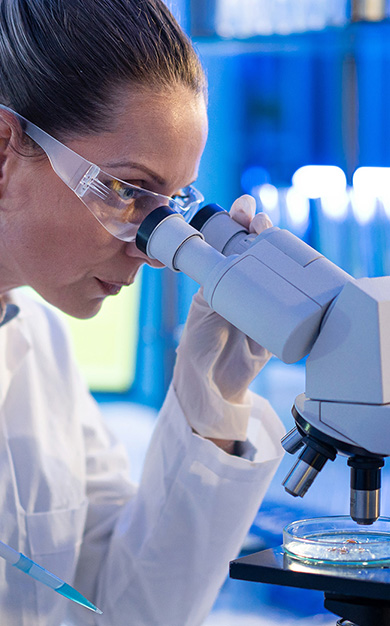
So we came upon the potential of ALLO to regenerate the brain quite by surprise. I’ll take you back decades now into the lab, and I was working on allopregnanolone or ALLO for a different purpose and treated nerve cells that were in a Petri dish with ALLO, put them in the incubator for the night, and came back in the morning and discovered that there were more neurons, nerve cells, in the dish. So it started out a scientist at the microscope to now a phase II clinical trial, the ReGen-Brain clinical trial. So it takes a very long time. But we’re very excited to be here now for persons with Alzheimer’s disease to regenerate their brain.
Now, how can that happen? Well, let’s back up a little bit. And there are many women on the Zoom here. And for those of you who have given birth, during the third trimester of pregnancy, you made the greatest concentration of ALLO that is produced in the human. And during that third trimester of pregnancy, the brain undergoes a four-fold increase in size. And so we’re leveraging what mother nature has created. It’s created a factor, a molecule that can generate the brain. And it’s safe under the most challenging circumstances there are. It’s safe in women of reproductive age with fetus, whether that fetus is a girl or a boy. It’s safe under those challenging circumstances.
And so now what we have initially determined in a phase 1b, what’s called a phase 1b/2a clinical trial, where we determined whether in persons diagnosed with Alzheimer’s disease, is it safe? We also determined the optimal dose. And you’ll never guess what dose was optimal. The same concentration that women generate during the third trimester of pregnancy. So we’re very excited because we had a great– this is a science story.
So we were about to start the trial and we had to submit to the FDA for approval. And they gave us approval with one hitch. We had to do MRI imaging, because we had shown in our translational science that ALLO is promoting regeneration of the brain and reducing the generation of beta amyloid in the brain. It’s also reducing the tau pathology in the brain. It also improves energy function in the brain. Nevertheless, the FDA said, you’re reducing beta amyloid, and we really don’t care how you’re doing it. You have to do MRIs to make sure that there are no microhemorrhages, as had been seen with the antibodies that remove beta amyloid. ALLO doesn’t remove it. It prevents its generation in the brain. So we did the MRI. And it was very challenging because we hadn’t budgeted for MRIs. And after we were able to secure the funding, palm to the forehead, it’s like, hold on. We’re imaging the brain. And now I can actually look at whether we’re seeing evidence for regeneration. And indeed, in one of the areas of the brain that does undergo atrophy, it’s called the hippocampus, that area of the brain that is involved in required for both learning new information and remembering that information.
So after we finished the trial, we determined whether we could see any change after three months of treatment. And indeed, we could. And we were able to see a signal of regeneration and an improvement in the connections of the brain, both those white matter connections that are required for fast synaptic transmission, fast communication in the brain, as well as the number of circuits that were functional in the brain. So we’re quite excited by all of that. And actually, I want to go back to, it’s no accident that the FDA gave us approval to treat for three months, because that’s equivalent to the third trimester of pregnancy. So we were allowed to go forward with what you know women had already tested for safety. And it turns out, as I mentioned earlier, that the optimal dose is the same concentration that is generated during the third trimester of pregnancy. So now, we’re in that phase 2 clinical trial. And I think that there is information that BrightFocus has on where we’re conducting the trial and the requirements for enrolling in the trial.
NANCY KEACH: Yep. And we’re going to walk through all that. And I think, Amanda, why don’t you throw the ReGen-Brain trial website into the chat box? Amanda is going to put a link into the chat box in case anyone wants to go to the site while we’re talking, or just save it for later. You can go look at it later. But first, I wanted to ask in your phase 1a/2b, which is really for safety, clinical trials we know are usually, generally speaking, in three phases, and the first is for safety, how many people did you have in that study?
DR. ROBERTA DIAZ BRINTON: We had 24 people enrolled, and it was a double-blind placebo-controlled trial. And we had a placebo group. And then we tested three doses of ALLO.
NANCY KEACH: Three different doses. OK. And some people asked how did you monitor results, and I think you explained with MRI.
DR. ROBERTA DIAZ BRINTON: Yeah.
NANCY KEACH: So how many people are you hoping to recruit into this phase 2 trial, which we’ll be looking more say at safety still but also efficacy?
DR. ROBERTA DIAZ BRINTON: So we’re really looking to enroll about 120 individuals in the trial. And we have multiple sites that you can find there on the website. I’m really excited. We’re about to open up a clinical trial site here. Right out the window over there is our clinical trial site here at the University of Arizona in Tucson.
NANCY KEACH: That’s wonderful because the more the better for research. Vickie from Oak Lawn, Illinois wrote in, “What are the requirements to join this study?” So for every trial, there’s what’s called inclusion criteria and exclusion criteria. So what excludes you, and what do you need to have to be considered for the trial? So I thought we would just quickly walk through it. Why don’t you walk through it for us, Dr. Brinton, and in particular, we have first a question because it says, “meets NIA-AA criteria for probable AD dementia.” A lot of people asked similar questions to this. From Celeste in Madison, Wisconsin, “How is mild Alzheimer’s disease defined and measured?” So how do if you meet the NIA-AA criteria for early stage, let’s say, Alzheimer’s? Can you talk about that a little bit?
DR. ROBERTA DIAZ BRINTON: Yeah. So oftentimes– so let’s just go back to normal aging. I for one, am not very good at remembering names. I never have been. So it’s always helpful. So for example, our names are on the screen, which is really helpful Nancy, Sharyn, Amanda, and Ashley. So that’s kind of normal. What is outside the normal range is, if you’ve met someone multiple times and you don’t remember that.
Now, I come back to how I began in the field of Alzheimer’s. I started out as a neuroscientist that was focused on how does the brain learn and how does it remember? And I had the very good fortune, when I was a postdoctoral fellow at Rockefeller, I had the very good fortune to be invited to observe a clinical trial that was being conducted by Dr. Howard Fillit, who now leads the Alzheimer’s Drug Discovery Foundation. And there was a woman who was in the trial, who was staying at the Rockefeller hospital. And I would go there early in the evening and take walks with her. And she would regale me with stories of her life as an Adlerian psychologist in the feuds between Jung and Freud and Freud and Adler. And she remembered a great deal and was quite fluent in that. And one evening I took her back to her room, hospital room, and I bid her good night. And I closed the door and I waited 30 seconds. I knocked and entered and asked Dr. Ansbacher, “Do you remember me?” And she was so lovely. She said, “I’m so sorry. Should I?” And I’ve remembered her for over 30 years. And she could not remember me for 30 seconds.
And that gives you a sense of the big difference between normal kind of learning and memory, kind of challenges, we all have them, versus what is abnormal. And so I also want to go back to something that I know oftentimes people experience, especially loved ones living with a person with Alzheimer’s disease, is that they ask the same thing over and over again. And that’s because they haven’t encoded what you’ve actually asked or what they were thinking about. And interestingly, ALLO targets those exact cells that are responsible for encoding new information and transferring that information into the memory circuits, which was surprising to me when we made that discovery. But those are the cells that are being primarily targeted by and regenerated in the brain. And the connections between existing nerve cells and those neural circuits, those ones, those new cells and existing neural circuits, so that that memory can be recalled. And that information that you need to have in this current moment can actually be encoded and held in what we call short-term memory.
NANCY KEACH: It’s fascinating. Just fascinating. And I really want to ask you, going back to where you started, when you saw in the dish that when you got up in the morning, there were more neurons than the night before, what did you feel in that moment? I know this is kind of an off question, but because we fund so many scientists. And many scientists do this type of research their whole life and never see anything that’s a real breakthrough or anything come to market. So can we just digress for one second, and you tell me what you felt at that moment?
DR. ROBERTA DIAZ BRINTON: I can still remember it. I can still remember, looking through the microscope and seeing that new cells were being generated, that there were more cells in the Petri dish. And I could watch those new cells being generated. I can still see it. And it still brings me a great deal of joy and surprise. It was something that I certainly did not anticipate and was just very, very exciting. But it gives you a sense, though. It gives you a sense of, I was just starting my laboratory. Literally, this was one of the first experiments that I did in my own laboratory, and the decades of work that it takes to bring that discovery. To do all of the work necessary. To understand how ALLO actually is generating those new nerve cells, and then test its safety and then bring it to clinical trials and do the phase 1 and phase 1b/2 clinical trials. And now the phase 2 clinical trials. It takes decades of work.
NANCY KEACH: Yeah. And also is why funding from the federal government is so important. But we’ll talk about that a little bit later.
DR. ROBERTA DIAZ BRINTON: Well, I do want to just bring up a point around the opportunity for– in this BrightFocus space because what organizations like BrightFocus do is they give you the ingenuity, the transforming funding, where you can make those discoveries. Where you can make that breakthrough and then do all the hard work to bring that forward. But the BrightFocus organization and others like it are the ones that can catapult you into new, exciting areas of research and discovery.
NANCY KEACH: Thank you for that unsolicited plug. But that is exactly what we try to do. Is to fund novel ideas and new ideas to get that proof of concept that maybe this will work. And this is a new approach. And that’s something that with increased federal funding over the past decade and private philanthropic funding like ours, we’ve been able to do more and more of.
DR. ROBERTA DIAZ BRINTON: And that’s where I want to come back to that, because it’s the launch pad. And that’s what I know early funding from I know an organization that Nancy is quite familiar with, the Alzheimer’s Drug Discovery Foundation, we weren’t funded initially by the NIH. And we had this launchpad funding. This ability to move forward and move to create or generate data that now would lead to federal funding.
NANCY KEACH: Thank you. And I’m going to bring us back to a couple of questions in the chat. And there were a lot of questions about this. So let’s back up for one second. There are two new FDA-approved drugs on the market that several people on the call are taking. And we had a lot of questions about, if you’re taking infusions of Kisunla or Leqembi and/or if you ever have taken them, can you participate in this trial? So Colleen is writing, “Why are those being treated with anti-amyloids excluded from this trial?”
DR. ROBERTA DIAZ BRINTON: So let me just clarify that. If a person has received an anti-amyloid antibody immune therapy and is no longer receiving that therapy, they are eligible for the trial. They have to meet all the entry criteria, but they are eligible. Now, why are we not enrolling people who are on the antibody and now will be on ALLO? Well, there are two reasons. One is a safety reason. So part of this is, we don’t know what the interaction would be between an anti-amyloid antibody that is grabbing amyloid and removing it from the brain and ALLO that is promoting the ability of the brain to regenerate. So we don’t know what’s going to happen up there between those molecules or what’s going to happen after the antibody has done its job. What is the brain like? So I want to come back to one of the– so it has less amyloid. That has been well-documented, has less amyloid in the brain. There’s also some other kinds of issues, a bit of inflammation that can occur because this is causing disruption. So one of the benefits interestingly, again, not anticipated for allopregnanolone, ALLO, is that, as I mentioned, ALLO reduces the generation of beta amyloid. It reduces the pathology of the tau protein. And it reduces inflammation and increases energy production in the brain. So part of what we want to make certain of is that we understand what ALLO is doing in the brain, and not what another therapy might be doing in the brain.
So that said, however, our trial is six months in duration. Now, we have a six-month, what we call double-blind placebo-controlled. People are randomized to either placebo or ALLO. But what we have for everyone in the trial is a three-month extension so that everyone can receive ALLO, even those that have been on placebo. And so part of what we want to make sure of is that whatever we are detecting for the impact of ALLO on the brain is ALLO and not an interaction with another therapy.
NANCY KEACH: So what you’re saying is ultimately, it’s not because we know one is better with the other. But as we’re testing ALLO, you don’t want to confuse the matter more, to put it very simply and know what affects your observing could be from one of the monoclonal antibody drugs versus the ALLO.
DR. ROBERTA DIAZ BRINTON: Yeah. And I’m also really thinking about safety issues. So if a safety issue arises, is that because of the interaction, is that because of the antibody? We know that ALLO is quite safe. All the women who have had children have demonstrated that. Documented that very well.
NANCY KEACH: I want to also point out here, there were a lot of questions, and then we will move on to where the trial sites are and how you sign up. There are a lot of questions about whether or not you needed to be or could be APOE4 positive, or if you had one allele or two or let me just read a couple. Julie, “Can ALLO help repair brain damage also, for those with mild Alzheimer’s who do not carry the APOE4 genetic risk?” And Meg from New York. “Is this for people with one APOE allele only?” So can you give us a concise response to in terms of APOE4 protein, who can participate or not? And also my understanding here, these inclusion criteria, you will help test for them. People don’t have to go have all these tests before they try to enroll. They will enroll, and you will be testing for different conditions.
DR. ROBERTA DIAZ BRINTON: Yes. So let’s come back to the APOE gene to start. You can enroll in the trial, if you’re an APOE4 carrier, whether that’s one allele or two or none. So it’s open to all individuals, regardless of their APOE genotype, which I’m really very excited about, I have to say. And so the other component of that is, in terms of testing, again, the APOE genotype, whether or a 3/4 or a 4/4 or a 3/3 are all eligible for the trial. And then, as Nancy said, we will conduct a number of tests for whether you’re appropriate for the trial. And those are listed there. And both, obviously, men and women, women have to be postmenopausal. And essentially, we will do a medical assessment about whether you have any conditions that would preclude you from participating in the trial. And then the participant has to be able to provide informed consent. So they have to know that they’re being enrolled in a clinical trial and agree to being enrolled in a clinical trial.
NANCY KEACH: OK. A couple of questions. “How is ALLO administered?” from Jane in the chat.
DR. ROBERTA DIAZ BRINTON: At this point, we administer allopregnanolone by intravenous infusion for a half an hour to slow infusion once per week. So why once per week? I can tell you why. Because that’s how often those new cells can be regenerated. And so you have to jumpstart the regenerative process and wait a week before you come back and jumpstart it again. Activate it again. So these are the kinds of analyzes that are funded by you that it’s called translational science. So we did a lot of, gee, how does ALLO actually work, discovery science, and then we do the translational science, all right. Is it going to be safe? And what’s the best dosing regimen? And we tested multiple dosing regimens and discovered that the regenerative system is like, yes, you can jumpstart me once a week. And I have to then leave that regenerative zone, make new connections. And then you can jump start me again.
NANCY KEACH: Interesting. And while I’m going to ask Mason now to pull up the next slide with the map, Carol is asking in the chat, “What is the reason for the age 80 cutoff?” She is, for example, 85. “My mom is 95, and I would love for her to participate in this.” So what’s the reason for the 80?
DR. ROBERTA DIAZ BRINTON: So it’s really around safety. It’s a safety concern.
NANCY KEACH: While it’s being tested.
DR. ROBERTA DIAZ BRINTON: Yeah. While it’s being tested. But should we proceed, hopefully, into clinical development, then it will be available to women or to individuals, women and men, of all ages.
NANCY KEACH: So what we have up on the slide are active sites that are recruiting. So I want to just note, Mary from Santa Ana, California, who wrote, “I live in Orange County. Do any of your clinical trials extend that far?” Yes. There happens to be one in Santa Ana, but there were a lot of people, of course, who are not near any of these sites.
DR. ROBERTA DIAZ BRINTON: So we are in the process of starting up additional sites. So for example, I’m very excited about two sites in states, both that start with an O, just realizing. Both in Oklahoma and Ohio. So we’ll be adding sites during the coming year.
NANCY KEACH: So people can keep checking back to see if there are sites added.
DR. ROBERTA DIAZ BRINTON: Yeah.
NANCY KEACH: And I think generally speaking then, if you cannot make it to one of these sites, we would encourage you to look for other trials that may be closer to you. They are happening all over the country, and on the BrightFocus website, there is a clinical trial finder. There’s also a clinical trial finder at clinicaltrials.gov, but that is a little harder to navigate, I think.
So yeah. So right away, we’re getting what about the Washington DC area and none in the Midwest. And I have John from Apple River, Illinois. “My wife has two copies of the 4 gene, and she is progressing slowly but appears to be on a plateau. She would be very happy to join a trial. Please put her on this trial.”
DR. ROBERTA DIAZ BRINTON: Yeah. So we are working on a site that is close to Cincinnati, Ohio. And we are also working on a site in New Jersey. So I realize realized that’s I know a bit of a distance away, but I know on the East Coast you all have trains that work.
NANCY KEACH: Yeah. And a lot of academic centers.
DR. ROBERTA DIAZ BRINTON: Yeah.
NANCY KEACH: So Joel and Sherry ask, “Do you need to go to the site for each weekly infusion?”
DR. ROBERTA DIAZ BRINTON: Yes.
NANCY KEACH: OK.
DR. ROBERTA DIAZ BRINTON: So the infusion takes about a half an hour, and you’ll be monitored while the infusion is occurring. And typically, people will ask you, are you sleepy? And what we want is, you probably be more relaxed. We don’t want you to go to sleep though.
NANCY KEACH: Yes. So everyone is writing Pittsburgh, Detroit.
DR. ROBERTA DIAZ BRINTON: I’m writing these down.
NANCY KEACH: Yeah. Well, honestly with 1,500 people registered for this, so you’re going to have to put sites everywhere you possibly can.
DR. ROBERTA DIAZ BRINTON: And we’re working very hard on getting additional sites up and going.
NANCY KEACH: So I’m going to, again, mention that if you go to our brightfocus.org and click on Clinical Trials and find that clinical trial finder, you can look for a trial by location, by your zip code, in fact. Oh, thanks. Amanda just put the link in the chat. So it may not be this trial, unfortunately, because this is such an exciting trial, but there may be other trials, and we have been promoting them on this show for a while now. And we’ll continue to bring information on new trials. Meg says, where in New Jersey? Is that a Dr. Papka’s site? Or where in New Jersey will your potential site be, Dr Brinton?
DR. ROBERTA DIAZ BRINTON: Oh. It’s around– it’s not really near Trenton. It’s closer to Philadelphia. South Jersey.
NANCY KEACH: OK. And this is a six-month trial. And then presumably, with positive results, there will be a phase 3 trial that will be larger. Is that correct?
DR. ROBERTA DIAZ BRINTON: Yes.
NANCY KEACH: So when would there be what we call a readout of the data from this phase 2 trial? And what would you estimate– and I know this is just a guess. If the results are encouraging, when would there be a bigger phase 3 trial that more people could participate in?
DR. ROBERTA DIAZ BRINTON: Hmm. Well, I love the question. Our goal is to complete the trial in at most two years. So we’re working very hard to do that. And then it would be probably another six to nine months before we have all the data analyzed and the FDA can look at that data. And then we can move forward into a phase 3.
NANCY KEACH: And nothing in New York someone is asking. Because I can see on the map, there’s nothing currently in New York, but there may be one soon in New Jersey.
DR. ROBERTA DIAZ BRINTON: Yes. And probably, our efforts have been that in New York City proper, it’s very expensive. Very, very expensive to do a trial– have a trial site in New York proper, but more affordable in New Jersey. So we’re on your tax dollars. So we are spending them very judiciously and making them go as far as possible, stretching every dollar as far as possible.
NANCY KEACH: Absolutely. And Thomas just asked, “please repeat where you’ll be able to find the recording of this Zoom presentation.” So I’ll just mention that the recording of this presentation, along with the slides, along with additional resources, will all be emailed to you. If you registered, it will be emailed to you about a week from now. And it will also be available in perpetuity at the link that Amanda just put into the chat, www.brightfocus.org/adzoom. And all of the prior shows are available there and on YouTube.
And let’s see. Yes. And so Gary asked in the phase 2 trial, and you did mention this, Dr. Brinton. But let’s make it clear. “Will some of the participants be administered a placebo?” And I’m going to throw in another question that somebody asked in advance, which was if they participated in the trial, and if the drug was effective. I know you talked about a three-month extension, but they want to know would they be able to stay on the drug, if it’s effective. So those are two different questions. Sorry.
DR. ROBERTA DIAZ BRINTON: So these are great questions. They are great questions. And I’m delighted to see Dr. Ferrell on our Zoom. So there’s a FDA regulated process called Compassionate Use. And that is an avenue that can be pursued. Here’s the challenge. So if we were a drug company with a drug, then there is supply of that drug. In this case, you are our owner because this is funded through the National Institute on Aging. And so we have enough ALLO, manufactured sufficient ALLO to conduct the trial. And again, I’m giving you an insight into what happens when you jump into the deep end and want to cure Alzheimer’s and you’re in a university setting instead of a drug company setting. So part of what we’re doing in parallel is working on having our company, New Therapeutics, acquired by a drug company, who then could then do the manufacturing and have the availability to provide compassionate use. So Phyllis, I don’t know whether you want to add to that perspective.
DR. PHYLLIS FERRELL: I know. I think you nailed it. I think the only thing I would add is that a lot of trials have what’s called an open-label extension, which is at the back end of the study. It’s something that helps us recruit patients into the study, because what it says is, even if you are on placebo, if you complete this study, you can roll over and know that you will get drug. And a lot of people, it’s interesting. In a lot of studies, people don’t want the active drug. They want the placebo, because it’s safe and I know it’s OK except in Alzheimer’s studies. In Alzheimer studies, everybody wants to know that they’re in the active arm. And so sometimes those open labels are offered– they are very expensive.
DR. ROBERTA DIAZ BRINTON: We are offering that open-label extension.
DR. PHYLLIS FERRELL: So that does answer the question for anyone who participates in the study. They’ll be able to be assured that they do have a chance to do an active drug.
DR. ROBERTA DIAZ BRINTON: Yeah.
NANCY KEACH: Right. And that extension is three months. Is that right?
DR. ROBERTA DIAZ BRINTON: Correct.
NANCY KEACH: OK. I’m going to throw a– Phyllis, it’s wonderful to see you. Thank you for joining us and for participating. I’m going to save Jerry’s question in the chat about funding and the political climate. I’m going to save that, but I’m definitely going to address it. I’m going to quickly throw out some of the other practical questions that we received in advance. So Kate, “Can a person diagnosed with Alzheimer’s and Parkinson’s participate in the trial?” And Marie, “Does the research apply to other forms of dementia?”
DR. ROBERTA DIAZ BRINTON: So the first question is, if a person is diagnosed with Alzheimer’s and Parkinson’s, which is highly unusual. So it is unlikely that a person with a dual diagnosis will be suitable for this trial. However, we conducted a very early trial, an open-label trial. That means everybody was on ALLO, everybody knew they were on ALLO, including us, in persons with Parkinson’s disease. And we saw very favorable outcomes. 10 people. So it’s not a lot of people. It was really meant as an initial will we see any indicators of efficacy. And this was a privately-funded open-label trial. And remarkably, we did see benefit in this open-label trial. Obviously, the gold standard is double-blind, placebo-controlled. And so we’re moving towards that in the Parkinson’s space. I think for the Alzheimer’s trial, having a dual diagnosis would be problematic.
NANCY KEACH: And can you apply if you have Parkinson’s-related dementia but not Alzheimer’s at this stage?
DR. ROBERTA DIAZ BRINTON: No. But that’s why we are racing against the clock. We have very encouraging early stage encouraging data outcomes. And we’re really racing against the clock to get this done and get it to you. Because that’s where I started decades ago. With you in mind.
NANCY KEACH: And speaking of racing against the clock, I’m going to take this minute to make you promise to come back for all these people, because I have so many more questions, and we haven’t even gotten to your work on women and menopause and brain health. But with the time that we have left, because we had so much interest in this trial and these subjects, and I think that this discussion is not only incredible because of the nature of the work that you’re doing, but that this gives all of us a chance to understand how trials work and what it takes to create a drug.
So I will go to Jake or no. Jerry. Jerry Graham. “Do you expect your funding to survive the current political climate?” And before you answer, I will say we have a board member who is a scientist from Vanderbilt who said that 650 staff and faculty have been fired from Vanderbilt due to the current political climate. And we don’t want to be political on this program. Just talking about science now.
And I’d love if you all– or anybody who can do this. I’m going to ask a question and ask you to say yes or no in the chat. But how many of you are aware that there are very major cuts at this moment to funding for the NIH and funding medical research in the United States? Just whether you’re aware of this, and the implications that it may have for us, or say, yes. And if you really– hasn’t quite registered for you, just write in no. Because we’re actually trying to understand, we in the research community, are very– the research community is in upheaval and terror, I think, to some extent because there have been a lot of funding cuts. But we don’t know really how much the American people are aware. So we’re asking you to help us understand this. And with that, Dr. Brinton, I’ll turn it over to you to speak on behalf of the scientific community.
DR. ROBERTA DIAZ BRINTON: Yes. These are challenging times. I think we are very, very, very encouraged that leadership in the Senate has recognized that their job is the financing of the government and financing of government-supported programs. So I’m very excited and encouraged by the recent events in the Senate of them assuming their rightful role as fiduciary role in our government. The other is that senators and Congressmen, listen to you. So to the extent that you would like to communicate with them, please do to let them know how important this area is to you and to your family and your loved ones. And I will say, from me personally– I can’t speak about the rest of the field. But for me personally, I have devoted my life to you. We are scientists in the service of. And in this case, my service as a scientist is to you and your loved ones with Alzheimer’s disease. That has become my life purpose. And many scientists would not describe it that way, but yet, that is what they’ve devoted their life to. And it’s a gift to be able to give my most precious resource, non-renewable, lifetime resource, to the goal of curing Alzheimer’s disease.
NANCY KEACH: I see Dr. Ferrell and I are tearing up, because I think this is how a lot of us in this field feel, and most of us have very close family connections, as Dr. Ferrell and I do. And this is why we are in this field, because it has been a very difficult field to be in. And now, even more so potentially, depending on what happens with Alzheimer’s funding. But thank you for speaking out. And thank you all for your answers in the chat.
I want to throw a YouTube question in that’s really good from Kathryn F. She said, “So the infusion benefit lasts only a week or is a long-term benefit seen?” And then she says, “After the three-month receiving ALLO at the back end, will the patient keep those cells that are regenerated or will they fade?”
DR. ROBERTA DIAZ BRINTON: Sure. It’s a great question. It’s a great question. A number of questions. So we’re quite surprised at how– and this is in Parkinson’s, how long the benefit has lasted after just three months. So what that says to us is that those cells that were generated, those new cells that were generated, have been sustained. Now, what is also important about ALLO is, yes, we’re regenerating the brain and we’re reducing the disease process. Reducing the generation of beta amyloid. Reducing the abnormal tau. Reducing inflammation. And increasing energy production in the brain. So we’ve got multiple shots on goal with this one molecule. So I do think, and it’s thinking at this point, I don’t have data in Alzheimer’s to support this, I have early data in Parkinson’s, that it will last. And that in fact, I’ll cue you in to some of the questions that we’re asking ourselves, is should we give a period of time after the six-month or three-month infusion? Should we wait a period of months before we start again? And we’ll be learning that from our clinical trial that we’re conducting right now. So great questions. I love the science questions that you all are providing.
NANCY KEACH: And what great research. I mean, it’s such exciting research. And unfortunately, we only have two minutes left. And I just want to warn everybody. I might go over a minute or two, because we do have slides at the end with resources that we’re going to show you. But there was one question that’s not specifically on this topic, but I wanted to ask because it represented so many of the other questions and the questions from the heart. And I know you’ll answer from the heart. But Suzanne, in Wenatchee, Washington. She says, “I am 84 years old and have Alzheimer’s. What are the most important things I could do to reduce the impact on my life?”
DR. ROBERTA DIAZ BRINTON: So I think one of the things that’s very important is reducing inflammation. Inflammation is an irritant, if you will. And so therapies that can reduce inflammation are likely to be of benefit. Now, we just published a report. And we looked at, in people with diagnosed Alzheimer’s disease, what therapies are they on? And is that actually making a difference on the rate of progression of the disease? Surprising to me, very surprising to me, we found that people who were on a type 2 diabetes medication, an anti-inflammatory, a cholesterol-lowering medication, and an antihypertensive actually had a 40% to 60% slowing of the disease to the extent that enabled them to live independently. So the take home message is not to go on any of those medications, if you don’t need them. The take home message is, if you do have those conditions, to keep them well under control, because that is going to definitely slow the progression of the disease and give you the time and us the time to come to the rescue.
NANCY KEACH: Wonderful answer, and a perfect segue, because our next episode, which is on August 21, is about the use of the diabetes weight loss drugs, and how they may be used to treat Alzheimer’s. And we’ll have Dr. Paul Edison from the Imperial College London, with some really interesting information from the studies.
And Mason, can we bring up the closing slides. So as we said, all of this information is going to be emailed to you, but we have other resources and publications that are available for you free. And you can see the number you can call to receive those is 855-345-6237 or email us at reply@brightfocus.org.
So our audience has been growing and growing, and I hope that’s because we’re giving you information you really want. So would this program be helpful to somebody you know and you love? Please share the link, if so. We’re just really trying to get the information and resources to people who really need it, and not just talk scientist to scientist and talk within our field.
I already mentioned that the GLP-1 drugs for Alzheimer’s disease is our next episode on August 21, and then we will be back again October 2. And can you just take down the slide for a second, please, then? And so I want to close by thanking Dr. Brinton with every ounce of my heart and my brain. And thanks, Dr. Rossi from BrightFocus Foundation, who’s been helping in the chat, and Dr. Ferrell, who is one of the stellar people in our field, who is really moving Alzheimer’s research and awareness forward.
I want to say, as I always do at the end of these, that this is very personal for a lot of us. And I want you to know that even though we don’t answer every question, we read every one of your questions, and it is always very heartbreaking that we can’t do more, but we try to give you all the information that we can, and we try to help all of you that we can. But if there’s anything you need to ask us, don’t hesitate to email at reply@brightfocus.org, and we will try the best we can to respond to you.
So thank you for joining us. It really makes me so happy to see everybody each month or twice a month. And hold the people that you love very close to you. Don’t forget to tell the people you love how much you love them. Life is short. And thank the Lord for people like Dr. Brinton, who are dedicating their lives to this type of research, and to those of you who help us support this research, to our donors and our guests. Thank you very much, and hopefully we’ll see you August 21. Have a great week.
Resources:
BrightFocus Clinical Trial Finder: https://www.brightfocus.org/about/clinical-trials/
ReGen-Brain Trial: www.regenbrain.org