Transcript
Download PDF
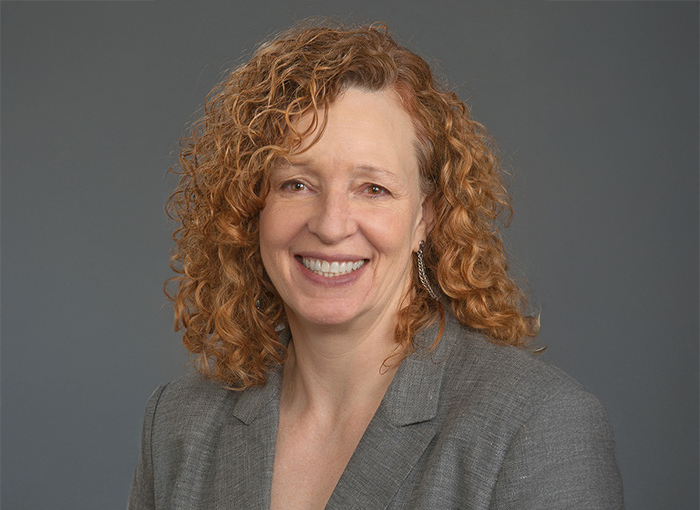
NANCY KEACH: Welcome from BrightFocus Foundation’s Alzheimer’s Disease Research Program. I’m Nancy Keach, and welcome to the 39th episode of Zoom In On Dementia and Alzheimer’s. The Zoom In series is generously sponsored by Lilly, Biogen, and Genentech, and we are very grateful to these sponsors for making these free programs possible.
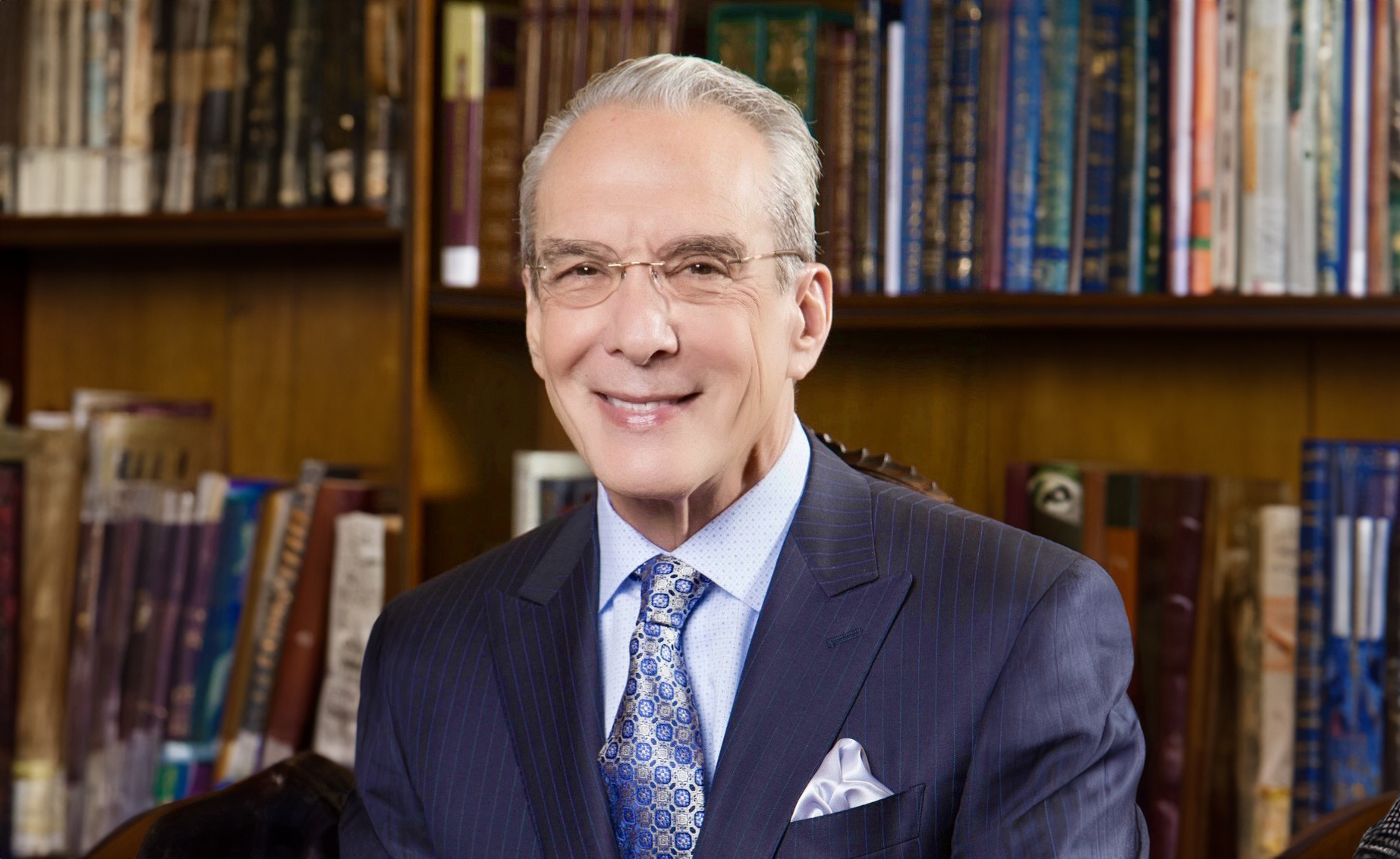
Today’s program is “Alzheimer’s Clinical Trials 2026: An Insider’s Look.” And I’m delighted to introduce today’s guest expert, Dr. Jeffrey Cummings. He is professor in the Kirk Kerkorian School of Medicine and director of the Chambers-Grundy Center for Transformative Neuroscience at the University of Nevada, Las Vegas. Dr. Cummings is globally recognized for his contributions to Alzheimer’s research, drug development, and clinical trials. He was the founding director of the Mary S. Easton Center for Alzheimer’s Disease Research at UCLA and founding director of the Cleveland Clinic Lou Ruvo Center for Brain Health. Dr. Cummings has published 43 books and over 1,000 peer-reviewed papers on Alzheimer’s disease, neuropsychiatry, and clinical trials. Welcome back, Dr. Cummings, for the third year. Thank you so much for being here.
DR. JEFFREY CUMMINGS: Thank you, Nancy. I am delighted to be here. And I saw how many people we have online. It’s fantastic.
NANCY KEACH: It’s amazing. Actually, I’ll tell the audience we have just passed the six-million viewer mark. We’re just so grateful that all of you are interested and keep coming back to get this really incredible information from the best experts in the world, like Dr. Cummings.
So a little setup today. Last year, at the beginning of 2025, Dr. Cummings came on to talk about the year end in trials for 2025. And on that episode, he talked a lot about what a clinical trial is, what the phases of trials are, how you find a trial, how you determine whether you’re eligible or not. I’m not going to go into that as much this year. But if you want to watch that episode for the basics in how a clinical trial is organized and how you can participate, you can go to https://www.brightfocus.org/resource/navigating-clinical-trials-for-alzheimers-disease/
For today’s episode, we received over 230 questions. And that’s why I don’t want to go back and cover the basics again as much. Let me tell you what we’re going to try to cover: Phase III trials that are closest to the readout and possible approvals. The latest information on the AHEAD 345 trial and Trailblazer-ALZ 3 (that’s Leqembi and donanemab). Trials for people who are on or have been on Leqembi or Kisunla. Trials that focus on tau removal. Trials for people who are APOE4 positive or homozygotes. Gamma wave or light therapy trials, prevention trials, upcoming trials for trontinemab and a lot more subjects. Those seem to be the most asked questions in detail.
And before we go, Carol from Shorewood, Wisconsin asks, “Can we get a website URL which has a list of the trials, open, closed restriction, and contacts, et cetera?” If you want to find a clinical trial, you can go to the BrightFocus Trial Finder: Brightfocus.org/clinicaltrials. You can try NIH at clinicaltrials.gov. And Dr. Cummings’ website, which always has a lot of good information, is alzpipeline.com.
We’re also showing here the Leqembi and Kisunla websites and patient support phone lines. So if you have specific questions about being on those medications or trials that include those medications, these are the websites and the folks to call. (See resources at the end of this transcript.)
And finally, before we jump in, Sarah from Brant Lake, New York, wrote, “How can I receive notices of available clinical trials and information on participation?” So here is a website at nih.gov, where you can find registries, where you can put yourself in a registry for different types, potentially of trials, if it’s a prevention trial, or if you just want to be observed over years and get called in. If you have signs that would be good for a trial. You can sign up at a registry and then get information that way. https://www.nia.nih.gov/health/clinical-trials-and-studies/registries-and-matching-services-clinical-trials
So now, I can jump in to this really exciting landscape. Actually, before I jump in with phase III trials closest to readout, Dr. Cummings, how many drugs are in the pipeline right now being tested for Alzheimer’s?
DR. JEFFREY CUMMINGS: I am delighted to tell you, Nancy, that there are 158 drugs in 192 trials in the pipeline at this moment. And that includes 20 new drugs this year, which is as years go, 20 new drugs in a year is quite a substantial increase. So what we’re seeing is more trials, more drugs, and more mechanisms being tested in the Circle of Hope.
NANCY KEACH: It’s so wonderful, after so many decades of slow progress, to have this type of progress. So Jeff from Knoxville, Tennessee, wrote in, “What are the three possible closest new medications to be voted on by the FDA, and when will the readouts be for each?”
DR. JEFFREY CUMMINGS: So that’s a little bit difficult to say what are the three. I can tell you that there are eight drugs that are likely to read out this year. And so we will have new information. Also a peculiar thing we observed is that there are, I think, about 11 trials that were supposed to have read out in 2025 and did not. And that means that either the data are in press and they’re going to come out soon or the trial didn’t recruit as fast as it thought it might and therefore, it’s delayed. So we might actually have quite a few other readouts this year from these delayed trials.
But there is, I think, a lot of excitement in this year’s pipeline to readout. One is, and you referred to this in your opening remarks, is Kisunla has a good chance of reading out this year. That’s a prevention trial that was started with people who had no symptoms of Alzheimer’s disease, but had a biomarker change consistent with Alzheimer’s disease. And they were put on Kisunla. And now, the question is, can we prevent the occurrence? And the reason I said it might read out is because they have to have a certain number of people who reach the MCI stage.
NANCY KEACH: Mild cognitive impairment.
DR. JEFFREY CUMMINGS: Or they would have confidence that they could see a drug placebo difference. So if they reach that number this year, then it’ll read out this year. If they don’t, then it will read out next year. So that’s going to be one of the most interesting trials that we’ll read out.
NANCY KEACH: Dr. Cummings, I’m sorry. What is the name of that trial?
DR. JEFFREY CUMMINGS: That is Trailblazer-ALZ 3. And so we’ll know soon about it, but it might either be 2026 or 2027 if they have fewer of these events of progression to mild cognitive impairment.
So that’s not only an exciting therapeutic insight, but an exciting new opportunity to see whether we can stop Alzheimer’s disease. And how do we do it? And how do we measure it? And what are those trials like? And how interested are people in it? These are all the questions that will be answered, whether or not the drug has the effect that we hope that it will have.
Other positive things in the pipeline that will read out this year, there’s a very interesting trial of a drug for Alzheimer’s psychosis. This is KarXT. And that it’s already approved for schizophrenia as Cobenfy. And so I think an important drug because psychosis is such a challenge to patients and caregivers. You can imagine how terrible it is to believe that people are trying to hurt you or stealing from you or something like that, one of the paranoid beliefs that comes with psychosis. And of course, this takes a great toll on the caregiver as well. So I think that’s going to be one of the most interesting readouts of the year as well. There are others that I think will be interesting, but those are at the top of my list of things to be aware of.
The other point I’d like to make, Nancy, is that we’re making progress in tools that are going to help all drugs, and those are biomarkers. And until we had biomarkers, we were shooting in the dark because we didn’t know whether the drug was hitting its target by measuring the biological change. We didn’t know how to measure the biological change. Now we have biomarkers for eligibility. Does the person actually have Alzheimer’s disease? So that’s important. And then, is the drug changing the biology of Alzheimer’s disease? So that’s important. So these new drug development tools are so important in terms of allowing us to press forward with all these new drugs, all 158 of them. We can push forward faster and better with biomarkers.
NANCY KEACH: I’ve been fascinated to watch, over these couple of years we’ve been doing this program, how much people seem to have learned about what is a biomarker, amyloid, tau. Because now, instead of saying, how do we know what is Alzheimer’s, people are saying—so here’s a question in the chat from Bruce. “Aren’t amyloid drugs becoming irrelevant in light of the fact that the reduction of amyloid does not seem to affect symptoms? Tau seems to have replaced amyloid.” I think this is not accurate. So I’d love for you to address this.
DR. JEFFREY CUMMINGS: Yes. So a good question. Amyloid drugs have a measurable, reproducible effect of slowing patient’s disease progression by about 30%. And that was sufficient to allow FDA approval. And the FDA is very stringent in terms of drug approval. So amyloid drugs are far from irrelevant. But can we make them better? Can we make them safer? And the answer to that is yes.
We now have in the market the first generation of amyloid drugs. But I think we can already see the second generation coming. And you referred to trontinemab in your opening remarks. And this is, again, an antibody that is delivered by infusion. However, rather than having infusions fusions every other week, as you do with Leqembi or every month as you do with Kisunla, this drug will be given once a month for six months and then only every three months thereafter. And that will be a great decrease in the patient burden.
And we’re also seeing much less ARIA. And you know that ARIA is the word we use for the MRI abnormalities that are seen with these drugs and that we monitor very carefully because occasionally, a patient with ARIA will have a very serious reaction, and a few have died. So it’s very important that we keep on top of ARIA. And of course, drugs with less ARIA are very important. And it looks like trontinemab, from the preliminary studies, has less ARIA. So we’re really excited about the progress in anti-amyloid drugs because I think they’re going to be safer and better.
NANCY KEACH: And before we get to tau drugs, which Bruce asked about, we had a lot of questions about from people, if they are on Leqembi or Kisunla or have been on it, can they be in a trial? And I’m going to read William’s question from the chat: “My loved one with an Alzheimer’s diagnosis had 14 infusions of Kisunla with no adverse side effect, and scans showed no further amyloid plaques, and treatments were halted. Is he available for later infusions if and when plaques appear?” So there’s a lot of questions about if you’ve been treated. If somebody said that they were in a trial with trontinemab, which removed the amyloid, should they take something for tau? So can you give us a general overview of if you are on or have been on Leqembi or Kisunla, what the current trial state is?
DR. JEFFREY CUMMINGS: The two drugs are managed differently. So in the Kisunla trials, patients were treated for 18 months. Some stopped short of that. And then the drug was stopped. And most patients had removal of the plaques that we worry about in the brain of the Alzheimer’s patients. And Kisunla is targeted only on the plaques. So when they’re gone, then the target is gone. Leqembi is managed differently. It was administered in the trial, again, for 18 months. But the idea of Leqembi, because it targets other types of amyloid beyond the plaque, that patients would continue it until they get sufficiently severe that we don’t believe that the drug is working anymore. So that’s the basic use of the two drugs.
Now a key question is can a person be on another drug in a clinical trial if they have been on one of these antibody therapies. And the answer is sometimes. Each company, each sponsor makes an individual decision about their trial, whether they will allow patients who have been on these antibody therapies before.
For example, we just finished and read out the trial of Ozempic in Alzheimer’s disease. And it was a negative trial. It showed no benefit from treatment with Ozempic. But we learned a lot because we allowed patients who were on monoclonal antibodies, these infusions, to come into the Ozempic trial. So in the end, we only had 70. It was a worldwide trial. And of course, these drugs are not approved worldwide. So almost all of those patients came from the United States and a very few came from Europe. But we were then able to administer the Ozempic on top of the antibody. We’re able to see whether there were any differences in those patients. Were there more side effects, fewer side effects? And that sample size is so small, we’re not quite certain what they have told us yet. But we’re looking at all of those data very carefully, and that’s an example of the decision that we made, that yes, those patients could come into the trial.
But other drugs, the sponsor might say, no, we want to know just what our drug is doing. And therefore, we’re not going to allow patients who had amyloid removal drugs into our trial. So the person would have to look at each trial individually to determine whether or not they could be in the trial.
NANCY KEACH: And it’s a good place to mention that you can look up Alzheimer’s Disease Research Centers. You can look up Alzheimer’s clinical trials near me or memory center near me. You can find out what trials are happening near you and find out specifically if there’s one nearby that you are eligible for. And before we leave this topic, Dave from Dublin, Ohio, said, “Is there any data yet on the use of subcutaneous lecanemab earlier than after 18 months before completing 36 infusions?” I know I’m getting in the weeds a little bit here, but several people have asked about subcutaneous lecanemab.
DR. JEFFREY CUMMINGS: Yes. Really great question and a very informed questioner. So just to set the stage, Leqembi has been given intravenously. But Eisai has developed an autoinjector that can be used. And that autoinjector and the subcutaneous injection has been approved for maintenance therapy. So after 18 months of the intravenous therapy, then patients can transition to the subcutaneous version of Leqembi.
Now, the introduction of Leqembi using the subcutaneous autoinjector is under review by the FDA right now. So we don’t have the answer to that. And we think that it’s likely to be approved because the bioequivalence that is did the patient get the same amount of drug from the subcutaneous version as they did from the intravenous version? That study has been done, and the answer appears to be yes. So I think the FDA will have a positive outcome. But nobody knows until we hear what the FDA actually says. So we think we will have an answer soon. I think maybe the date is in May. And so we will soon know whether we could start the drug with the autoinjector.
Now the autoinjector has to be given every week, and there has to be two injections. So patients and caregivers will have to learn how to manage that and if that’s what they want rather than the IV. The IV would still be available to them.
NANCY KEACH: Wonderful. And I actually was thinking, I wanted to go back when you talked about the negative trial of Ozempic that you mentioned to me before we came on live, that there was a question as to whether or not in this trial, the GLP-1 drug, the Ozempic was actually getting across the blood brain barrier. So does that mean that there still is hope for GLP-1s and that we have to do more testing to find out if the drug is actually getting through the blood-brain barrier? Is that still something positive on the horizon?
DR. JEFFREY CUMMINGS: Yeah, great question. Thank you for that. We knew that Ozempic did not cross the blood-brain barrier. And the theory that drove the trial, and there was a lot of supportive evidence for this, was that by decreasing the inflammatory reaction that’s in the blood, that one could decrease the inflammatory reaction that is in the brain because we know there’s a great communication of these cells, and processes, and chemicals between the blood and the brain. So the idea was can we decrease the inflammation in the blood, and that will translate into benefit of decreasing inflammation and disease progression in the brain. That did not happen. And so there was no benefit to the patient for being on Ozempic.
However, we did show that we successfully reduced inflammation in the blood. So that’s so important because that means that that’s not enough. You can decrease the inflammation in the blood, and it doesn’t help the brain. That’s such an important outcome of that trial.
So to your point, then what about a brain penetrant, a form of Ozempic? Would that be beneficial? I think that is a pathway worth exploring. I will say that the distribution of the Ozempic receptors in the brain, the receptor system that Ozempic is aimed at, does not particularly map onto the distribution of the pathology of Alzheimer’s disease in the brain. So I would still have limited enthusiasm even for a brain penetrant form of Ozempic. I think it’s worth testing, but I would do it in a smaller phase II trial to see how likely it is that we would get a benefit for the patients.
NANCY KEACH: Thank you. I’m going to move on now to tau removal, which I’m getting a lot of questions about. Kate from Tucson had written, “Are any current trials focused on removing p-tau from the brain and the tangles that they cause?” Lots of questions. Kurt, “Can the doctor speak more about what can be cutting back on the tau plaque?” Can you talk a little bit about therapeutics that may focus on tau?
DR. JEFFREY CUMMINGS: Yes, absolutely. This is one of the really great excitements. And I think it was Bruce who made the point that there was a stronger relationship between tangles and cognitive decline than between amyloid and cognitive decline. And that’s absolutely true. And that’s what makes tangles such a great target for therapy. We would just love to have these drugs, and they’re making progress.
I would say one of the very promising drug is a drug from Biogen BIIB080, and it doesn’t have a name yet because it’s an experimental agent. This is a drug that is given by spinal tap directly into the spinal fluid. And this is common in cancer, and it’s common in other diseases. So although it’s kind of unusual in Alzheimer’s disease, this is a known route of therapy. And the patient would have to have the treatment only once every three months or perhaps even only once every six months. And with that drug, we see a marked decrease in the tau measures in the spinal fluid and a decrease in the tangles on tau scanning.
So it really looks good. The clinical measures were stable. That’s what you would like to see. But the sample is so small that I’m not confident of that quite yet. So the phase II trial will read out soon. It’s not one of the phase III trials that will read out this year, but it’s one of the most important phase II trials that will read out this year. Because that will determine whether or not 080 will be advanced to phase III. And can we manipulate the tau pathology, which seems so intimately related to the cognitive decline?
And then there are other tau drugs in the pipeline. There’s a drug that’s being tested in concert with Leqembi. So you’re giving them both the anti-amyloid drug and the anti-tau drug. And I think that’s a very interesting combination therapy that we’re watching very closely.
And then there are other tau molecules in the pipeline as well. There’s only two at phase III at this point. So not very many. But there are many in phase II. So we’re going to learn a lot about tau in the next few years.
NANCY KEACH: If people are interested in participating in those studies, it sounds like there are several options, two in phase III and more in phase II. And so they can look and see which ones are currently recruiting and which ones have already recruited.
DR. JEFFREY CUMMINGS: That’s exactly right. And let me just make the point that participation in clinical trials is so important. It is the only way to develop new therapies. It’s the only type of information acceptable to the FDA. It is the only way we can get new drugs to market. So we really appreciate the consideration of participation in clinical trials.
NANCY KEACH: Absolutely. When you talked about tau, and I believe you said that we did see removal of tau, and you said something like clinical was stable. Can you explain what that means, the different things that you’re looking at? You can see the removal of the biomarker, and then you’re looking at how it is actually affecting the cognition of the patient?
DR. JEFFREY CUMMINGS: That’s exactly right. Of course, we want to know, are we affecting the disease? But it is conceivable that one could affect some biomarker without it helping the patient. Maybe the biomarker just wouldn’t be that tightly linked to cognition.
Now we have a lot of evidence that the tau PET and some tau measures in the plasma and CSF are very tightly related to cognition. But you have to have a fair number of patients in order to be sure that you have slowed cognitive decline. Because under any circumstances, in all trials, there’s a lot of heterogeneity in people’s memory testing after they are on the drug or while they’re on placebo. And so you have to have enough patients to dampen down that heterogeneity, so that you can see whether the signal is there. And there weren’t enough patients in the 080 trial to be absolutely certain that that had occurred. It looks promising, but I would say it’s not certain.
I wanted to respond to one thing that you brought up earlier, Nancy, that I didn’t get to address. Someone asked about the effect, I think, of Leqembi on tau. And I think that’s an important point, that we are seeing downstream effects of removing the amyloid. Most striking has been the decrease in one of the inflammation markers, so-called GFAP. And that’s a marker of the activation of certain inflammatory cell type in the brain. And we can see that GFAP coming down when we give the anti-amyloid treatment, even though that is not the primary intent. So this is a downstream effect that suggests we are interrupting the process of Alzheimer’s disease when we remove the plaques.
And that is true to a certain extent with some of the tau measures, it’s been a little bit less consistent than say the GFAP measure has been. But in several of the trials, there was an impact on tau as well as an impact on inflammation. So we’re optimistic that when we give a drug that is working, that it’s working not only on the target, but it’s also working on those downstream processes that were driven by that target.
NANCY KEACH: Excellent. I’m going to move along to a lot of questions from people who are APOE4 positive, have two alleles of APOE4. And we’ve just, last month, did an entire episode on what that means. So if you’re interested in it, please look at last month’s episode with Dr. Eric Reiman.
Gloria says, “I’m interested in any clinical trial for prevention or treatment of AD. I’m a 4/4 carrier.” Let me just use Jennifer who put in the chat, “I am APOE4 positive both parents. Cognitive testing, MRI results, amyloid, and tau bloodwork are all negative. What medications are available, if any, or in trials?”
So they fall into the categories of, I’m APOE4 positive. Is there anything that’s in trial or that I can use? And then there’s specific questions about people who have gotten tested, and they are pre-symptomatic. They do not show that they have amyloid and tau in the brain, but they are APOE4 positive. So if you can address both of those scenarios, that would be great.
DR. JEFFREY CUMMINGS: OK. I’ll do my best. I know that Dr. Reiman was on with you last month, and Eric is just such a great expert in E4, and I encourage people to go back and look at that episode with you because I’m sure they would learn, and I would learn a lot, from Eric about E4. But let me just say as an introductory comment, APOE4 is a gene. It facilitates the aggregation or collection of the amyloid protein in the brain. So if someone is an E4 carrier, that is they have the gene. They’re more likely to accumulate amyloid in the brain and therefore to have Alzheimer’s disease. If one has two copies, so their E4/4, that all happens more. Because it’s like a dose. If you have a one gene dose, you have a certain increased risk. And if you have a two-gene dose, you have twice that risk. And so we think a lot about this gene. It is disappointing to me that there are so few drugs in the pipeline. I think only two that are addressing E4 in some specific way.
NANCY KEACH: Can you name those two?
DR. JEFFREY CUMMINGS: I can’t, but it’ll be in the pipeline paper when it comes out. I don’t have all 158 drugs memorized, so I can’t give you that information. But it will be in our report. And our report has now, since we talked, been provisionally accepted. So I think it will be appearing soon.
So there are few drugs for this. But it’s very important. Because if someone is a carrier, they’re more likely to get Alzheimer’s disease, and they get it earlier in life. They have more amyloid in the brain, and they have greater risk for ARIA, the side effect we were discussing, if they receive a monoclonal antibody. So all of those things are important for the decision-making that the person is making when they’re an E4 carrier or a double E4 carrier.
One of the people that you mentioned did not have any symptoms. So there are no approved therapies and no approved tests for people who are asymptomatic. That’s why the coming, Kisunla readout, and then after that, the coming Leqembi readout, are going to be so exciting because we will learn what biomarkers, what blood test, what brain scanning is giving us information, and what does that look like, and can we successfully intervene in people who have no symptoms? So all of that is to come, but there are no approvals yet in that therapeutic space of an asymptomatic individual.
NANCY KEACH: Just going to run back to a question Kurt put in. He said, “I thought that the doctor stated that Leqembi has some effect on tau. Is this the same in Kisunla?” Do we know that about Kisunla as well?
DR. JEFFREY CUMMINGS: Yes. So the Kisunla readout for tau was complicated. So the basic readout on tau was negative. There was no effect. But when they did a regional readout on the tau, you could see that there were areas of the brain in which the tau was being removed. So how we interpret that is still, I think, uncertain. So we know that it was a very powerful as an amyloid remover. I think there’s still question as to what its impact on the downstream tau biomarkers, and of course, tau itself.
NANCY KEACH: I think it’s a wonderful place to just stop and acknowledge how complicated these trials are that results from, sometimes, as we were talking about with the blood-brain barrier being open for Ozempic, you can test and get a negative readout, and then you can switch something and get a different readout. So it’s such an exciting time in Alzheimer’s research, and this is why I love when people like you come on here, because these are really complicated questions, and the world of understanding of these therapeutics is just opening up. And so I just think, maybe you want to comment on that and also on the future of combination therapies.
DR. JEFFREY CUMMINGS: It is just such an exciting time in therapeutics. The biomarkers that I mentioned are giving us information that we couldn’t imagine just a few years ago and so helpful in terms of drug development, the innovation in drug development is marked.
I mentioned the drug trontinemab earlier in our discussion. One of the innovations in trontinemab is that the antibody is attached to another antibody that will only interact with a transporter that takes the antibody into the brain. And we think that’s why ARIA is less and we think why so much more of the trontinemab is getting into the brain than is seen with other drugs. So this use of the receptor and transporter into the brain, called the brain shuttle, is very important. And the exciting thing, Nancy, is that transporter could potentially be used for many other types of drugs. So it’s not likely to be limited just to taking an antibody into the brain. It can be used in many ways. So that’s an excitement.
Now, combination therapies are obviously necessary, right? We have 30% slowing with monoclonal anti-amyloid drugs. That leaves 70% of the problem unsolved. So how can we address that? And almost certainly, that requires a second drug. And maybe that’s a tau drug. Maybe that’s an inflammation drug. Inflammation is one of the most active areas in the pipeline. There are 28 anti-inflammatory or immune drugs being tested in the pipeline. It’s just a very large number. So we’re looking forward to combination therapy.
At the same time, it’s important to acknowledge that developing combinations is particularly complicated because the FDA usually wants to know that each member of the combination is making a contribution to the success of the treatment. So that means you have to have one group of patients who are on one of the drugs, another group of patients who are on the other drug, a third group of patients who are on both drugs together, and a fourth group of patients who are on the placebo. So all of a sudden, you’ve gone from a two-arm trial to a four-arm trial. If you really want a very comprehensive answer to is the combination drug working? And if you want an answer that the FDA would be particularly receptive to.
NANCY KEACH: Thank you. I think everyone understands that the cocktail is the future. You mentioned trontinemab and the mechanism of the brain shuttle, and everybody’s very excited about this. So I just want to mention that I believe those trials, they’re called Trontier 1 and Trontier 2, are just starting to recruit. And that there will then, after that, be a trial called PrevenTRON, using trontinemab before you are symptomatic. And so in a couple of months, when Roche is the sponsor of that drug, when they are ready, I would like to bring somebody on and do a whole episode on trontinemab and on those trials because they will be recruiting all over the country and all over the world, and that will be a really exciting trial to participate in.
And somebody asked is, and I believe that Dr. Cummings has said it a couple of times, that yes, that appears to be safer for people who are APOE4 positive and/or have less ARIA or is expected to. Is that correct?
DR. JEFFREY CUMMINGS: That is correct. And there were E4 carriers included in the early trials. And there were very few instances of ARIA. So we do think it will be a safer drug. But until it gets into a larger trial, we won’t have a definitive answer on that.
NANCY KEACH: So we’ve been talking all about drugs, and we have also done a couple of episodes previously on lifestyle interventions, which do have wonderful protective effects, and I would refer people to the episode we did with Laura Baker on the US POINTER study if you’re interested in some recent trial readouts for doing lifestyle interventions for prevention. But I would love to see if you can comment at all on gamma wave or light therapies. I know Cognito has its Spectris device in a phase III trial that should read out this year, and there are other non-invasive non-pharmacological treatments, and there have been several questions in particular about gamma wave or light therapies.
DR. JEFFREY CUMMINGS: We should acknowledge the nonpharmacologic approaches. Let me just say a POINTER that I thought that was just a wonderful outcome. It’s important for people to realize that that was not an Alzheimer’s trial. Those were asymptomatic, at risk, older individuals, and they got better with the POINTER intervention. It was fantastic. It is not the same population that we have been talking about today. They were asymptomatic, not necessarily biomarker positive individuals who participated in that trial. Very important.
And then as you indicate, devices are a whole other universe that are very important because it would just be great if you could put on some device on your head and it would produce sound waves or light waves or both or brain stimulation of some other sort. And many people have been coming down to this 40 hertz. That’s the speed of the stimulation. It seems like there’s been a convergence of several types of technology on that particular wavelength, as if maybe it’s activating some important biological process in Alzheimer’s disease that we haven’t really identified yet. So those trials are really interesting.
Many of them are ongoing right now, as you alluded to. We’re going to have some readouts on those. So we’ll start to get a feeling for what might success look like with a device type of intervention. I’m really looking forward to those. And we don’t know as much about them as we would like, and we know less about the biology of them than we do with drugs. But I’m sure it’s all going to be put together now that we have more biomarkers, there’s every reason to use them in the device trials as well as in the drug trials. So I’m really looking forward to that aspect of treatment for patients emerging in the next few years.
NANCY KEACH: We’re very excited about that as well. Not everybody can get to an infusion site. There’s just a lot of limitations. And so if there ultimately are devices that can be used in the home and that type of thing that help, I think it provides so much greater access to people. And that would be very exciting.
DR. JEFFREY CUMMINGS: Absolutely. I think we’re looking for convenience and safety along with efficacy. And those are all important dimensions of a successful therapy.
NANCY KEACH: We got several questions about whether or not there are trials without placebo arms. Like for example, Denise in La Mesa, California, “Very interested in participating in trials but very reluctant to do double blind studies. I feel at my age, with a familial risk, I need to be proactive. I’m 67. Thank you.” So a lot of people don’t want to be on placebo. Are there trials that they can participate in?
DR. JEFFREY CUMMINGS: There are. There are not as many as there as the number of placebo controlled trials, but there are some. For example, sometimes, you would just like to know, does giving a drug reduce some biomarker that you’re interested in? And that might just be a comparison with your own baseline compared to a period of treatment. And so there are such trials, but there aren’t very many of them.
So let me make a few comments about placebos. One is if you’re in a placebo-controlled trial and it’s just two arms, then there’s a 50% risk of being on placebo. If you don’t go into the trial, your opportunity to get the drug is 0. So you’re talking about 0% opportunity versus 50% opportunity. So that’s an important thing. If it’s a three-arm trial, let’s say that the company is not sure whether one of two doses is best, then there will be a one arm for one dose, one arm for the other dose, and one arm for placebo. So now, there’s only a third chance, a 30% chance of being on placebo. So that might be a more attractive trial.
It’s also important to know that for many trials, certainly the later stage trials, there’s almost always an open label extension at the end of the double blind period. So if the double blind period was 12 months, then at the end of 12 months, the patient would be guaranteed to have access to the drug if there was a built in open label extension for that particular trial. And many drugs have open label extensions because we just learn more by having patients on for a longer period of time. So at that point, the placebo issue goes away because everybody goes on the drug at the end of that period.
NANCY KEACH: Would a participant know that when the trial starts? Will they be told whether or not it will be an open label extension?
DR. JEFFREY CUMMINGS: Sometimes, it is built in, and they would know, and sometimes, it’s not decided until later. So there’s not a single answer to that question.
NANCY KEACH: I’ve had several questions about whether or not there are trials for lithium orotate. Can you comment?
DR. JEFFREY CUMMINGS: Yes. There was just a readout. I think it was last week in JAMA Neurology about a lithium trial. And it was an early stage trial, which showed safety. It did not show efficacy, but it wasn’t really large enough to be sure whether or not it had efficacy. And the safety was so important because it has been difficult to manage lithium in older individuals. The margin between no adverse events and adverse events is very thin for lithium, very narrow. So we have been worried that it might be too difficult to use lithium in older individuals. And this trial showed that it can be done. And now, they would have to do very much larger trial in order to decide whether or not efficacy was shown. No efficacy was shown in this particular trial, but it was too small to determine whether efficacy was possible with lithium.
NANCY KEACH: And I believe it was earlier in 2025. We did an episode on an oral drug called blarcamesine. And we had a few questions about that. Where does testing on blarcamesine stand?
DR. JEFFREY CUMMINGS: Yes. A good set of questions and a very interesting drug in the pipeline. It has recently been reviewed by the EMA. That is the FDA of Europe. And they wanted more information. And then it was recently reviewed by the FDA here in the United States, and they wanted more information. So at this point, I would say that that program is in the process of deciding what to do next because more information was requested by both regulatory agencies.
NANCY KEACH: And that would be also exciting because it’s an oral agent.
DR. JEFFREY CUMMINGS: Yes. We would love to have an oral agent that was efficacious and safe.
NANCY KEACH: I hope everybody is not upset with me for running through one after the other after the other, but there were so many excellent questions, and I think we touched on a lot of them. I’m going to ask you a closing question and see what else we have time for. Chuck from Franklin, Wisconsin, wrote what everybody is wondering, “Using your educated guess, how long before we make a true breakthrough in Alzheimer’s disease and treatment options? Will there come a day where Alzheimer’s is not a death sentence, but people will be able to function normally in the future, like AIDS patients can do currently?”
DR. JEFFREY CUMMINGS: Yes. It’s coming. It’s absolutely coming. No question about it. We’re going to change the nature of aging. And I just am so excited to be part of this process. I am not sure that it will be the product of a breakthrough. I think we had a breakthrough. We never had a disease-modifying agent approved before aducanumab was approved in 2021. And now two more drugs that remove plaques and slow the disease process, approved in 2023. That is fantastic. That’s a breakthrough. That shows that we can slow this disease. We can intervene in the basic biology of Alzheimer’s disease. Now let’s build on that. And science is largely an incremental process. So here’s 30% slowing. Can we get to 50% slowing? Can we start earlier and get an arrest of the disease? These are the kind of questions that are now feasible, and we can ask those questions in a way we never could before. And the end game is going to be that just as the person is saying, like AIDS, one can manage it without symptoms for the rest of your life. That’s our goal.
NANCY KEACH: And it’s so exciting that there are these prevention trials. A lot of researchers who are very hopeful that if you can intervene beforehand and so prevent the onset, in addition to these drugs that are slowing it down. It’s incredibly exciting. And I have so many more questions I’d like to ask, but I know you’ll come back.
And so as our time today comes to a close, I want to thank our amazing team at BrightFocus Foundation. Dr. Sharyn Rossi, who’s been answering your questions in the comments, who is the senior director of our Alzheimer’s Disease research grant program. Our producers, Amanda Russell and Alexa Villarreal. The team at M Squared who produced this, who give us this platform to be able to have a situation where I can look at your faces and actually see you when we’re talking.
And I especially want to thank you, Dr. Cummings, for sharing information with us even before your Circle of Hope has been peer-reviewed. Thanks for the sneak peek and for your tremendous contribution throughout your career to Alzheimer’s research. You’re just a gift, a true gift to all of us. You and your wife, Kate, who’s such a wonderful scientist as well.
And I’d like to mention something new. We’re going to be kicking off a new podcast at the end of April called Let’s Talk Alzheimer’s that will use content from this program, but will also feature personal stories that reflect the science that we’ll be discussing. So if you are willing to share your story with us in complete confidence, I want to ask you to go to brightfocus.org/alzstory. And you can just type in a little bit about what your personal story is. Because sharing the stories can be so reassuring and so destigmatizing for this disease. And then we may want to contact you and see if we could record your story a little bit. And hopefully, that would help other people. So if you’re willing and interested in sharing your story, please do at brightfocus.org/alzstory.
So as I’ve mentioned several times, this is the 39th episode. If your question wasn’t answered today, it’s likely that it is answered to some extent in one of our previous episodes. Please go to brightfocus.org/zoomin, and you’ll find them all for there for free.
We also have a lot of new free resources, new and old. This new infographic that shows all of the FDA-approved therapeutics available today for Alzheimer’s, both symptomatic and disease-modifying and for agitation. I know there were some other questions about that that we didn’t get to. I want to reassure everybody we will be sending out the recording and transcript of the episode.
And finally, almost finally, if this program would be helpful to someone you know, I think that’s almost always the case, please share the link brightfocus.org/zoomin and give them an opportunity to join us.
Later this month, we have wonderful Dr. Sharon Cohen from Toronto coming back on. She was our first speaker on Zoom In three years ago. And her topic will be “Is it Alzheimer’s? Recognizing Early Signs and Symptoms.” I think she will be sharing newer research on recognizing signs and symptoms. So please stay tuned for that. And then early April, we have a really interesting trial that we’re going to profile that’s called the SPRING trial, which targets the question about gum bacteria and its effect on Alzheimer’s. And that trial is recruiting. So if you’re interested in tuning in for that, I think it’s going to be extremely interesting.
And I’ll just say, as I always do at the close of these episodes, we’re so grateful to you for joining us and participating in your interest because there are so many people working so hard to try to mitigate this disease. You’re not alone. We’re here to try to answer your questions and please reach out to you anytime. And life is so short. Tell everyone you love how much you love them. Give them a hug. Keep them close to you. Don’t let stigma and loneliness happen for people who are going through this. So I just, again, want to thank Dr. Cummings.
DR. JEFFREY CUMMINGS: Thank you, Nancy. It’s a pleasure to be on. Really great discussion.
NANCY KEACH: Great discussion. Thanks again to all of you for joining us. I look forward to seeing you again very soon. Be well.
DR. JEFFREY CUMMINGS: Bye.
NANCY KEACH: Thank you so much. We’ll see you soon. Take care.
Resources: