How Targeting a Molecular 'Switch' Could Inspire New Macular Degeneration Treatments
A scientist funded by BrightFocus’ Macular Degeneration Research program is zeroing in on a protein that damages eye cells in the early stages of dry age-related macular degeneration, offering insights that could lead to new treatments.
Abnormal buildup of a harmful protein may trigger the cell damage seen in early dry age-related macular degeneration (AMD). BrightFocus Macular Degeneration Research-funded scientist Sandeep Moothedath Subrahmanian, PhD, is investigating how a molecular “switch” activates this damaging process.
His research focuses on preventing the accumulation of REDD1, a stress-response protein that drives inflammation and oxidative stress in the retina—key contributors to vision loss in AMD.
By uncovering how this switch works, Dr. Subrahmanian’s work could point the way to treatments that stop AMD progression before it robs people of their sight.
Even though age-related macular degeneration (AMD) is the leading cause of blindness in people over age 60, researchers know very little about what exactly is happening in the eye when the disease first emerges. Understanding the molecular events that contribute to the development of AMD could uncover new targets for treatment.
Sandeep Moothedath Subrahmanian, PhD, a BrightFocus Foundation Macular Degeneration Research grant recipient, is tackling this challenge by investigating two drivers of vision loss in AMD: inflammation and oxidative stress, a condition in which an imbalance of unstable molecules damages cells in the eye. His project focuses on studying a molecular “switch” that activates both inflammation and oxidative stress.
“By [studying] these pathways, I aim to identify potential therapeutic targets for developing novel treatments,” said Dr. Subrahmanian, a postdoctoral scholar at Penn State College of Medicine working under the mentorship of Michael Dennis, PhD.
“These treatments could act preventatively or offer interventions earlier in the progression of AMD, preserving vision and improving the quality of life for those affected,” he added.
Targeting a Key Protein to Protect Vision
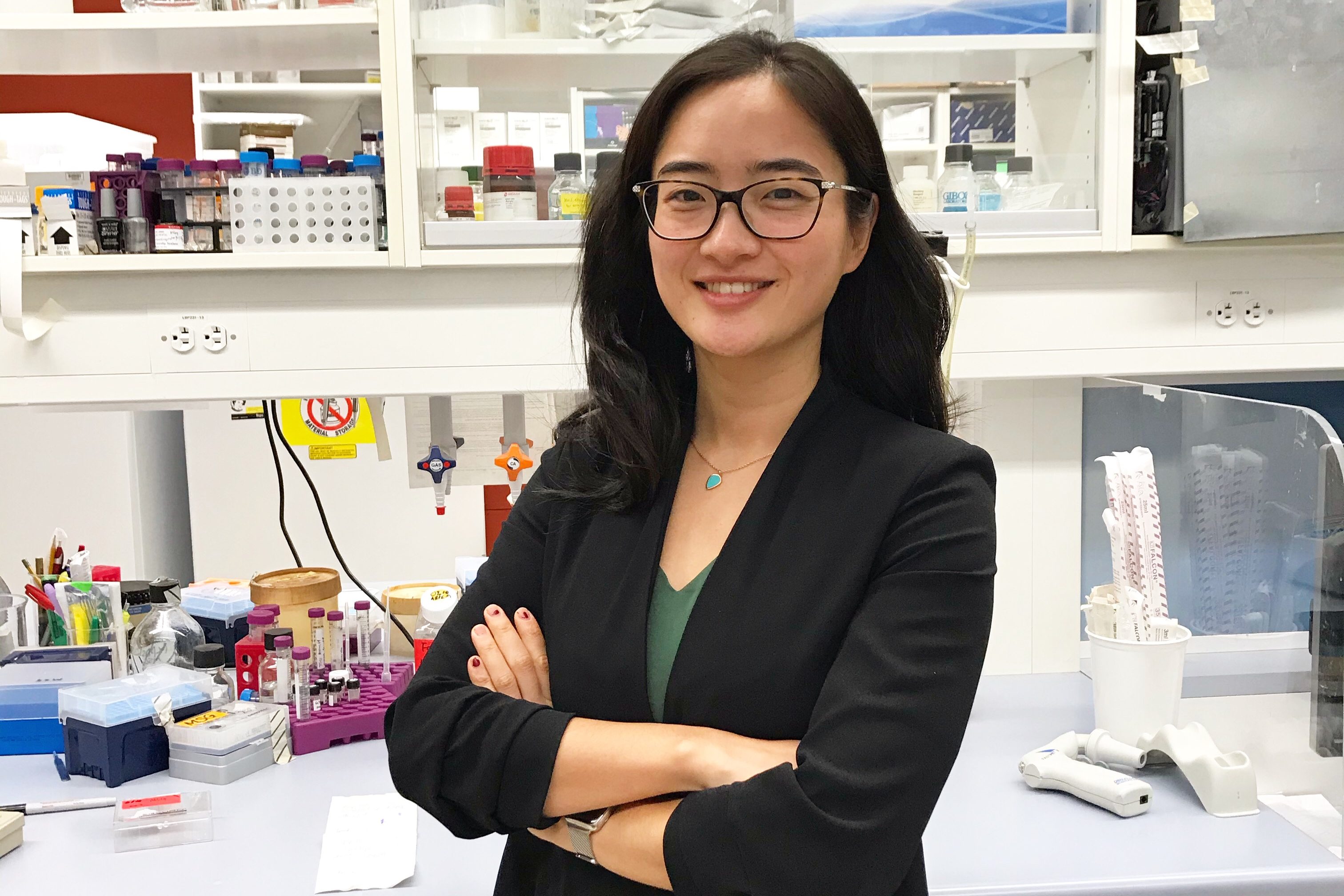
Sandeep Moothedath Subrahmanian, PhD, Macular Degeneration Research grant recipient
Dr. Subrahmanian’s study exemplifies Macular Degeneration Research’s 360-degree approach, which supports innovative approaches to exploring many different scientific paths that could lead to better treatments, improved early detection, and ultimately, a cure. This includes delving into early influences on the development of AMD.
The molecular switch at the center of Dr. Subrahmanian’s research affects a protein called REDD1, which is produced by many different cells in the retina. Normally, cells efficiently breakdown REDD1, which prevents it from accumulating in the eye and causing damage. The molecular switch prevents this process, causing REDD1 to build up in retinal cells.
In a previous study, Dr. Subrahmanian and his colleagues discovered that REDD1 protein levels are abnormally high in laboratory models of dry AMD—the early form of the disease—and that this buildup promoted oxidative stress and inflammation of the retina. It also correlated with a loss of retinal pigment epithelium cells and photoreceptors.
“These findings highlighted REDD1 as a potential driver of disease progression in dry AMD,” he said. By targeting this switch, he added, “I hope to develop strategies to prevent abnormal REDD1 accumulation, reduce retinal oxidative stress and inflammation, and ultimately slow or halt AMD progression.” His team will use a wide range of laboratory models to test the role of the REDD1 molecular switch in AMD development, including human retinal pigment epithelium cells that will be exposed to known AMD stressors.
From Diabetes to Macular Degeneration
Dr. Subrahmanian has long been fascinated by the role of cellular stress in chronic diseases. While earning his doctorate in biochemistry at the University of Mysore in India, he focused on the development of diabetes, a field he continued to study when he joined Penn State, where he works closely with ophthalmologists. His current lab, which he joined in 2022, had previously demonstrated in diabetic models that REDD1 contributes to oxidative stress and inflammation of the retina.
“These findings inspired me to focus on AMD because both diseases share common mechanisms of oxidative stress and inflammation in retinal cells,” he said.
Dr. Subrahmanian is also motivated to fill the demand for intervention strategies in dry AMD, noting that many existing treatments address the more advanced wet form of the disease. “Recognizing the lack of effective treatments for dry AMD and the profound impact this has on patients’ vision and quality of life has motivated me to focus my research on identifying new molecular pathways that could lead to better therapies for this devastating disease,” he said.
In future research, Dr. Subrahmanian hopes to build upon the findings from this study so his team can more precisely define how REDD1 regulates inflammation and oxidative stress. That insight could lay the groundwork for future studies aimed at finding new therapies for preserving vision in patients with AMD.
Dr. Subrahmanian credits BrightFocus’ Macular Degeneration Research program for providing the funding he needs to pursue his novel strategy of targeting the REDD1 molecular switch. “The support from BrightFocus donors is invaluable in enabling this critical research to move forward,” he said. “I am profoundly grateful for the opportunity to contribute to this important work and for the trust placed in me by BrightFocus Foundation and its donors.”
With the support of our generous community, Macular Degeneration Research is funding nearly $16 million in cutting-edge studies worldwide. Every gift moves us closer to ending this devastating disease. Discover how you can help.
BrightFocus Foundation is a premier global nonprofit funder of research to defeat Alzheimer’s, macular degeneration, and glaucoma. Since its inception more than 50 years ago, BrightFocus and its flagship research programs—Alzheimer’s Disease Research, Macular Degeneration Research, and National Glaucoma Research—has awarded more than $300 million in research grants to scientists around the world, catalyzing thousands of scientific breakthroughs, life-enhancing treatments, and diagnostic tools. We also share the latest research findings, expert information, and resources to empower the millions impacted by these devastating diseases. Learn more at brightfocus.org.
Disclaimer: The information provided here is a public service of BrightFocus Foundation and is not intended to constitute medical advice. Please consult your physician for personalized medical, dietary, and/or exercise advice. Any medications or supplements should only be taken under medical supervision. BrightFocus Foundation does not endorse any medical products or therapies.
How Understanding Lipid Processing in the Eye Could Spark Innovative AMD Treatment Approaches
With the help of funding from Macular Degeneration Research, Dr. Neetu Kushwah is studying the link between abnormal lipid regulation in the eye, inflammation, and age-related macular degeneration. Her findings could inspire new methods for treating the disease.
Article
New Supplement to Prevent Macular Degeneration Inspires Deeper Search for Cures
A Macular Degeneration Research-funded scientist launched a supplement based on a link he discovered between the eye disease and Parkinson’s disease. Now he’s continuing research in the hopes of finding novel cures.
Article
Transforming Macular Degeneration Care With Long-Acting Treatment
With funding from Macular Degeneration Research, Dr. Daisy Shu is exploring advanced drug delivery systems that release medicine slowly over time. This innovative approach could reduce the number of injections needed for macular degeneration while maintaining vision-saving results.
Article
How Better Models of Macular Degeneration Could Help Prevent Vision Loss
Most experimental models that researchers use to study macular degeneration fall short. BrightFocus Macular Degeneration Research grant recipient Dr. Brittany Carr aims to change that.
Article
Is This the Next Best Thing to Regrowing a New Retina?
A BrightFocus Macular Degeneration Research-funded scientist is investigating a new regeneration technique to restore key cells that are wiped out in late-stage age-related macular degeneration.
Article
Turning Back the Biological Clock on Aged and Injured Eye Cells
A de-aging technique offers hope for halting damage in early macular degeneration.