


Investigating the Role of TREM2 T96K in Alzheimer’s Disease Pathogenesis
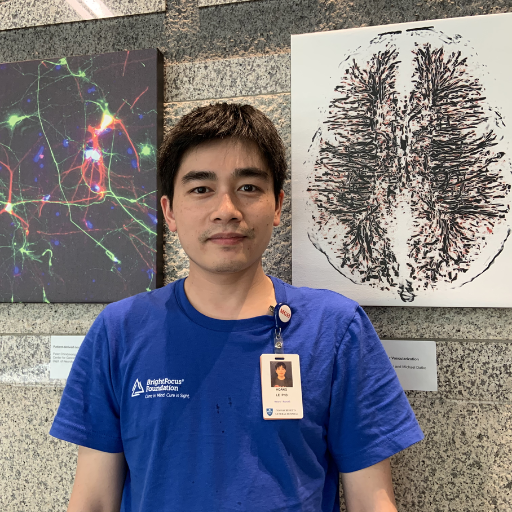
About the Research Project
Program
Award Type
Postdoctoral Fellowship
Award Amount
$200,000
Active Dates
July 01, 2022 - June 30, 2024
Grant ID
A2022009F
Mentor(s)
Ana Griciuc, PhD, Massachusetts General Hospital
Rudolph E. Tanzi, Ph.D., Massachusetts General Hospital (Mass General)
Goals
This project aims to comprehensively characterize the role of the TREM2 T96K mutation using the 5xFAD mouse model of Alzheimer’s disease to facilitate the design of potential therapies.
Summary
Alzheimer’s disease (AD) is the leading cause of dementia affecting more than 5.8 million people in the United States; however, we still do not have effective therapies to prevent or delay this debilitating disease. This proposed study aims to understand the impact of the AD-associated mutation TREM2 T96K on AD pathogenesis using a novel Trem2 T96K knock-in mice crossed with the 5xFAD mouse model of AD as well as in vitro microglial models. The insights obtained should be useful for AD drug discovery and development targeting TREM2.
Unique and Innovative
We previously showed that the AD-associated T96K mutation in the ligand-binding domain of TREM2 markedly increased binding to TREM2 ligands and activation of TREM2, suggesting T96K is a gain-of-function mutation. While TREM2 loss-of-function mutations have been studied, no studies have yet been reported showing the effects of TREM2 gain-of-function mutations in mouse models of Alzheimer’s disease (AD). Using our novel Trem2 T96K knock-in (KI) mouse model crossed with the 5xFAD mice, we will investigate the functional consequences of the AD-associated TREM2 T96K mutation in vivo.
Foreseeable Benefits
The proposed study will provide critical insight into the role of the TREM2 T96K mutation in Alzheimer’s disease (AD), which may offer personalized AD treatment strategies depending on TREM2 genotype. In addition, our study will greatly extend our understanding of TREM2 functions in AD and facilitate the development of therapeutics targeting TREM2 and neuroinflammation for AD treatment.
Related Grants
Alzheimer's Disease Research
The Astrocyte Cell Surface Proteome in Alzheimer’s Disease
Active Dates
July 01, 2025 - June 30, 2027

Principal Investigator
Omar Peña-Ramos, PhD
Current Organization
Baylor College of Medicine
The Astrocyte Cell Surface Proteome in Alzheimer’s Disease
Active Dates
July 01, 2025 - June 30, 2027
Principal Investigator
Omar Peña-Ramos, PhD
Current Organization
Baylor College of Medicine
Alzheimer's Disease Research
Targeting the Adaptive Immunity to Prevent Alzheimer's Brain Degeneration
Active Dates
July 01, 2025 - June 30, 2027

Principal Investigator
Joshua Emmerson, PhD
Current Organization
Washington University in St.Louis
Targeting the Adaptive Immunity to Prevent Alzheimer's Brain Degeneration
Active Dates
July 01, 2025 - June 30, 2027
Principal Investigator
Joshua Emmerson, PhD
Current Organization
Washington University in St.Louis
Alzheimer's Disease Research
Understanding the Role of Brain Immune Cells in Protection Against Alzheimer’s
Active Dates
July 01, 2025 - June 30, 2027

Principal Investigator
Ghazaleh Eskandari-Sedighi, PhD
Current Organization
University of California, Irvine
Understanding the Role of Brain Immune Cells in Protection Against Alzheimer’s
Active Dates
July 01, 2025 - June 30, 2027
Principal Investigator
Ghazaleh Eskandari-Sedighi, PhD
Current Organization
University of California, Irvine