Download PDF
SARAH DISANDRO: Hello, and welcome to today’s Glaucoma Chat, “What I Wish I Knew About Glaucoma: Your Top Questions Answered.” My name is Sarah DiSandro, and on behalf of BrightFocus Foundation, I’m pleased to be here with you today. Glaucoma Chats, presented by BrightFocus Foundation, are a monthly program in partnership with the American Glaucoma Society designed to provide people living with glaucoma and the family and friends who support them with information straight from the experts.
The information provided in this program is for educational purposes only and should not be considered medical advice. Always consult a qualified health care professional regarding any medical concerns or conditions. BrightFocus Foundation’s National Glaucoma Research Program is one of the world’s leading nonprofit funders of glaucoma research and has supported more than $52 million in scientific grants exploring the root causes, prevention strategies, and treatments to end this sight-stealing disease.
Now, I would like to introduce today’s guest speaker. Dr. Poonam Misra is a glaucoma specialist at Manhattan Eye, Ear, & Throat Hospital of Northwell Health, where she is also the co-director of the glaucoma fellowship. In her clinical practice, she focuses on adult glaucoma, comprehensive ophthalmology, and cataract surgery. She is a member of the American Glaucoma Society, American Academy of Ophthalmology, and Women in Ophthalmology. She has a particular interest in teaching medical students, residents, and fellows. Dr. Misra also volunteers as an examiner for the American Board of Ophthalmology. Dr. Misra, thank you so much for joining us today.
POONAM MISRA: Thank you so much for having me. It’s a pleasure to be here, and I can’t wait to chat about glaucoma.
SARAH DISANDRO: Fantastic. So, throughout the year, we received so many listener questions, and today we’ll be reviewing some of the top-asked questions. We’ve grouped them together to make it easier, and we’re going to keep things rapid-fire today so we can cover as many as we can. If you would like more information on any particular question, please visit our website at www.BrightFocus.org for additional resources. Okay, let’s jump in. Our first category is diagnosis and cause. So, our first question is: What causes glaucoma?
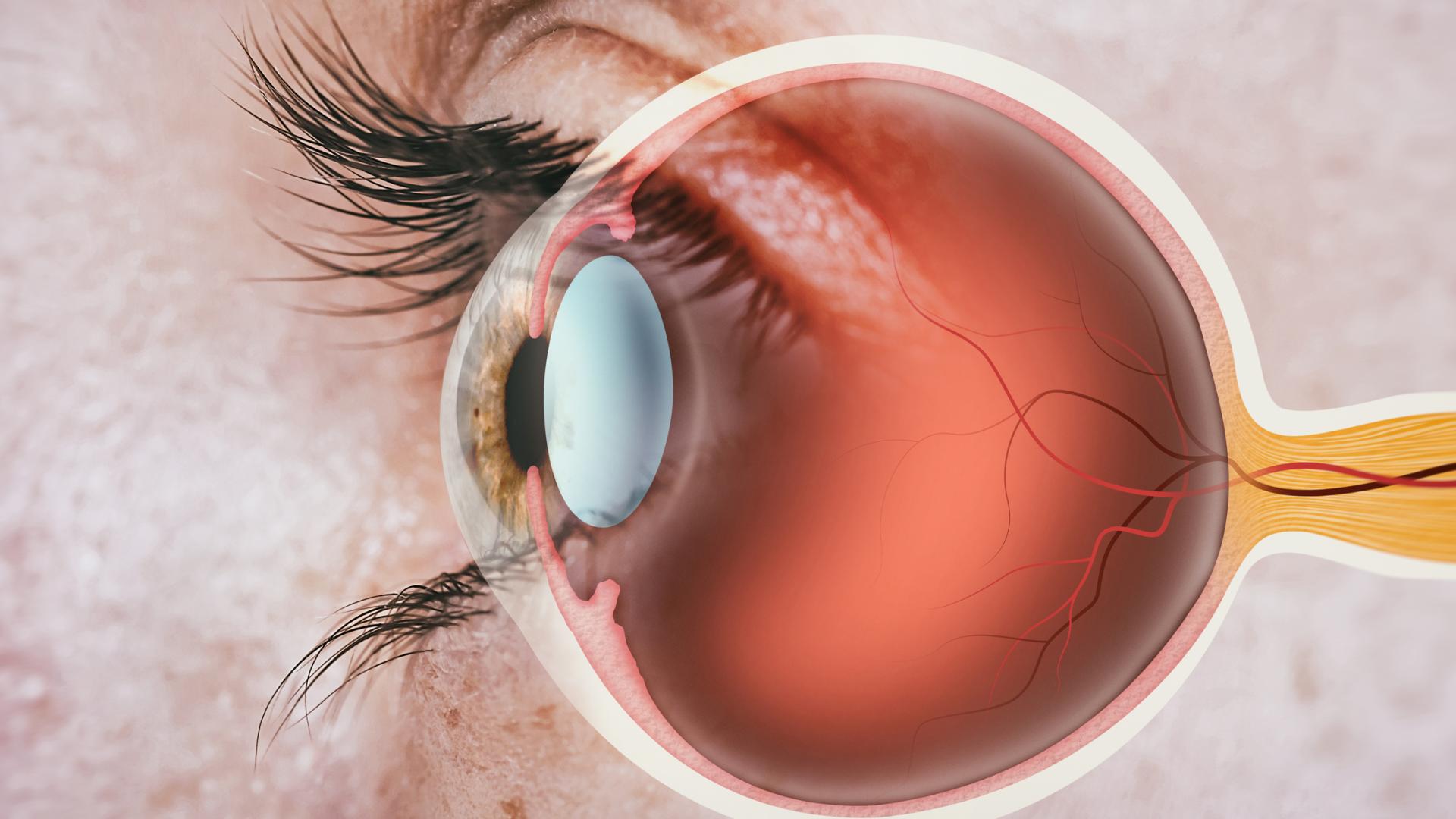
POONAM MISRA: So, that is a very multifaceted question, but what I will say is that glaucoma in and of itself is a diagnosis that means that your optic nerve, which is the nerve or the wire that connects your eye to the brain, has become thin, and that is due to an elevated intraocular pressure. Now, that can be caused—the elevated intraocular pressure—by many things. Certain medications, general functionality of the drainage system of the eye is usually the primary cause, but something is causing the intraocular pressure to be higher than the nerve can tolerate, and that leads to thinning of the nerve. And in particular, there’s a specific tissue we call the retinal nerve fiber layer, which we measure in the office using imaging, and that shows thinning, and that is how we diagnose glaucoma.
So in terms of causes, again, certain medications can raise your intraocular pressure, sometimes it’s genetics. And essentially, the intraocular pressure is increased because the drainage system of the eye, which we call the angle sometimes—you may have heard that—doesn’t function well. So, what I often tell patients is if you think of the eye like a sink, there is a fluid being produced, similar to a faucet being on, and then a drain where it must leave the eye, and if there is anything that blocks that drain or disrupts the functionality of it, that will lead to an increased pressure within the eye, similar to a drain that’s clogged in a sink. And again, that translates to damage to the optic nerve, which is then when we diagnose glaucoma.
SARAH DISANDRO: Okay, great. And that’s a really great analogy. All right, so question two: Do you need to see a doctor that specializes in glaucoma, or can an optometrist treat glaucoma successfully?
POONAM MISRA: An optometrist is trained to recognize the signs and symptoms of glaucoma and often can do this imaging, which requires something specifically called an OCT to be performed in the office. However, not all optometrists will be comfortable in managing this diagnosis. So, certainly an optometrist is going to be capable of diagnosing it and also managing it, but it’s a conversation to be had with the doctor in particular to say, “Is this something that we need a referral to a glaucoma specialist or not?” In most areas, a further treatment besides, let’s say, drop therapy if it’s needed—because there are many ways to treat glaucoma, which I think we’ll discuss at some point, other than drops, including lasers and surgery—those must be performed by an ophthalmologist. So, it is really up to the discretion of the provider that you’re seeing to know is this a stage of the disease that is manageable with what they can do, or if it is something that needs to be escalated. And seeing a glaucoma specialist is always helpful. A lot of times I will co-manage patients with an optometrist who may be handling more of the general ophthalmology concerns but would like a second opinion in regard to the glaucoma. So, it’s also possible to still see a glaucoma specialist, and that may not be as regularly as your optometrist, and also have the optometrist still help. So, I would say both—you can have both doctors involved, but you really want to trust your provider to make that decision.
SARAH DISANDRO: Great. Thank you. How is glaucoma diagnosed, and how is the vision loss that you’re experiencing monitored?
POONAM MISRA: Of course. The three things I look for in monitoring or diagnosing glaucoma are: (1) The intraocular pressure, as we discussed, which is measured in the office using different techniques—whether it’s using a handheld device or an applanation tip, which is on a split lamp on the moving machine that we examine the eyes with. The intraocular pressure, we monitor. (2) The OCT, which I mentioned, which shows the thickness of the nerve fiber layer, that is truly how we diagnose glaucoma is if we see a thinning of the nerve fiber layer in certain patterns that suggest glaucoma. And then, (3) vision loss is monitored using what’s called a visual field test. This is an interesting test that measures your peripheral vision. It’s somewhat of a little video game that you do in the office one eye at a time, and you are shown different lights of different intensities in your peripheral and central vision. During this test, we’re checking that peripheral and central vision, not necessarily from an acuity standpoint, but just the presence to be able to detect light in those different parts of your vision.
And then, we look for correlation among the OCT and the visual field to suggest if this is glaucoma or not. And what I mean by that is that of the optic nerve and the areas that can get thinner, certain parts of your visual field or your peripheral vision will decrease correlating to the section of the nerve that has become thin. So, what we call that is looking for structure–function correlation. So, if, let’s say, the top part of your optic nerve is thinner than it should be, you would notice that vision loss in the bottom part of your visual field test. So, we’re looking at those three factors and then looking for correlation amongst them.
SARAH DISANDRO: Okay. Thank you. Can a person have more than one type of glaucoma?
POONAM MISRA: Yes. Unfortunately, as I mentioned, sometimes some causes of glaucoma are genetic, and so that is something that you may not know or you may have some sense of based on your family history. But there are other types of glaucoma that can also develop, even some that are related to trauma or to prior surgeries that you may have had. So, yes, you can have multiple forms of glaucoma.
SARAH DISANDRO: Right. And so, you’ve mentioned that glaucoma is genetic. Should people be asking for a glaucoma screening if there’s a family history of glaucoma? And at what age would that be appropriate?
POONAM MISRA: It’s definitely helpful to mention that you have a family history when you’re seeing even your general practitioner or your general ophthalmologist, because they may want to do some of these baseline tests to see if there’s any ideas of glaucoma or suggestion of it. In terms of whether you should require genetic screening, if you need a genetic screen, there are some more holistic genetic screens that you can do, and glaucoma is included in them, but I don’t know if that’s necessary. I think the most important thing if you have a family history is to let your doctor know so that they can run at least a baseline test for you to see the health of your optic nerve. It’s always helpful when I see patients if they have some sort of a baseline from even years prior to show what their nerve has looked like at some point, and then we can detect if there’s been a change, because that’s really how we make the diagnosis.
SARAH DISANDRO: Okay. Got it. That’s very helpful. All right. So, now we’re going to move on to questions around lifestyle and prevention. The first question in this category is: What is the best diet someone can follow to slow down glaucoma? Is it Mediterranean, vegetarian, keto? Does it matter?
POONAM MISRA: It’s a very common question. So, in general, most studies are just showing that a heart-healthy diet and whatever that means for the person based on their other medical history or medical problems is all that’s needed. So, there is not necessarily a proven benefit to one of these more specific diets. It’s that general health is important. There is a component of glaucoma that we believe is related to adequate blood flow in the body, and adequate blood flow in the body relates to heart health. So, that’s why we usually will say that a heart-healthy diet, whatever that means for that particular person given their age and other medical problems, that’s what we would recommend.
SARAH DISANDRO: Great. So, what’s good for the heart is good for the eyes.
POONAM MISRA: Exactly.
SARAH DISANDRO: Yeah. So, now let’s switch gears to exercise. Do exercise and physical activity help with glaucoma? How often should you exercise, and what types of exercises might be helpful?
POONAM MISRA: Similar to the diet question, regular exercise in terms of a mix of cardiovascular exercise and weight training is what’s recommended. Studies did show that patients who regularly did cardiovascular activity did show a lower incidence of glaucoma, but it wasn’t completely correlated, meaning that you weren’t going to necessarily slow or halt your disease just by exercising. But again, similar to what I had said prior, a heart-healthy lifestyle and diet are really all that we recommend. Now, there are certain exercises that, let’s say, if you have glaucoma or you’ve had glaucoma surgery, that we may ask you to refrain from doing—and we may be able to discuss that, I don’t want to take up too much time with this—but things where you’re in an inverted position, where your head is below your heart, we try to minimize those shortly after glaucoma surgery. And in general, if patients have glaucoma, we often ask them to avoid any prolonged inversion exercises. So, again, those are patients who have already carried a diagnosis of glaucoma, or perhaps are very high risk, but in general, in terms of prevention, there is not necessarily one exercise that’s helpful. Just whatever is good for your heart, again, good for your body should be helpful to your eyes.
SARAH DISANDRO: Okay, fantastic. Now, how much does extreme stress or anxiety affect glaucoma?
POONAM MISRA: Another great question that we get a lot, because nowadays there is a lot of stress and anxiety going around. So, when we’re measuring your intraocular pressure, we do know that your intraocular pressure can go up under states of stress, and especially if there is a physical component to that. For example, if you’re straining, if you’re holding your breath, we do see that intraocular pressure goes up. In terms of long-term effect though, there is not necessarily correlation between that and actual glaucoma. And I go back to what I had initially said, where intraocular pressure being high raises the risk of glaucoma, but if intraocular pressure is high for a brief period during short periods of stress or anxiety, it doesn’t necessarily lead to glaucoma, where the glaucoma I’m referring to is actual thinning of the optic nerve. So, temporary changes in the intraocular pressure due to stress may not necessarily lead to glaucoma, but it certainly can raise your intraocular pressure.
SARAH DISANDRO: Very interesting. So, what’s one lifestyle adjustment that has the greatest impact on reducing eye pressure?
POONAM MISRA: That’s a tough question. I think it may not be a specific lifestyle adjustment, but I think it’s monitoring. So, the more you can monitor the pressure to see what is happening and have regular visits—and I don’t mean on a constant basis—you can address the glaucoma or the high pressure before it starts to affect the actual optic nerve. Certainly, again, health is great, keeping your body or everything healthy is important, but doing regular eye check-ups so that you are being monitored if you are a suspect of glaucoma, if they’re suspicious, getting regular monitoring is really what’s going to reduce your risk of developing glaucoma.
There are certain things that can raise the pressure that I alluded to earlier, such as steroid medications, and so being aware of that if you are a suspect of glaucoma or you have a high risk, you want to avoid steroids or at least let other doctors know that you’re using them, that you may have glaucoma, or that you do have glaucoma. That can really reduce your eye pressure. There is not a specific measure you can do at home to reduce it. In allusion to what we discussed earlier, certainly yoga, meditation, things that calm your mind will lower the intraocular pressure, but those may be short term. So, having a good sense of what your baseline intraocular pressure is and then following it regularly, whether that be yearly with your annual exams if you are a low-risk patient or more often if you’re a higher-risk patient of glaucoma, is the best thing you can do.
SARAH DISANDRO: Well, fantastic. That’s such great advice. Knowing your baseline and monitoring is so important. So, next question: Can sleeping with your head elevated help with fluid drainage?
POONAM MISRA: Not necessarily. So, the drain of the eye that we discussed, or the angle, is actually a 360-degree structure within the eye. And so, again, if we had just done glaucoma surgery and patients had just been treated, then we do often ask them to keep their head elevated for a specific reasons. That may be due to some of the healing or to minimize some of the inflammation. But in general, you’re not going to necessarily reduce your risk of glaucoma on a regular basis by keeping your head elevated. Again, that drainage system is a 360-degree structure, so in any position, that drainage is going to be upside down or right-side up, if that makes sense. So, being upright doesn’t necessarily help with everything, but certainly if you have just undergone a glaucoma procedure, your provider may ask you to sleep with your head elevated.
SARAH DISANDRO: Okay, great. Thank you. Now, we are going to be talking about treatments and management. So, question one for this section is: What new glaucoma treatment is being used the most by glaucoma specialists?
POONAM MISRA: There are a lot of new glaucoma treatments out there. It’s probably one of the most exciting fields—and I am biased—in ophthalmology, because with glaucoma, we have a lot of less invasive approaches that are being discussed. But I’d say the most common procedure or treatment being used—besides drops, because drops are very commonly used—is actually laser. There’s a laser called selective laser trabeculoplasty that we do in the office. It’s a very effective procedure, and a lot of studies from the past, and even recent ones, are showing that it’s an incredibly effective way to lower intraocular pressure, thereby reducing your risk of glaucoma. And the really nice thing is that if it is effective, which it usually is in about 80 percent of patients, it can reduce the number of eye drops you need to control your intraocular pressure. And so, in my practice, I generally will offer it as one of my first-line treatments for glaucoma if I suspect that someone needs their intraocular pressure lowered, because it is easy, there is a very low risk profile, and it actually can also be repeated. So, it’s not necessarily a new treatment, but I would say it’s probably something that’s re-emerging as a very common first-line treatment for glaucoma.
SARAH DISANDRO: That’s really interesting. And we actually just got a listener question on this topic, and the question is: How often can follow-up laser surgery be performed?
POONAM MISRA: In regard to selective laser trabeculoplasty, my current practice is generally that I would repeat it if I notice that the effect has worn off after about 6 months. For some people, the effect can wear off sooner, but a lot of times, the second laser treatment can actually be helpful as well, or even more helpful. So, I will repeat it if at 6 months, it seems like the pressure is going up. However, I generally don’t repeat it more than two to three times, because we also have a lot of other options for treating high pressure and so, some of those may be a better-suited option if the laser was lasting less time than we expected or we hoped for.
SARAH DISANDRO: Okay, great. That makes sense, yes. Are there any vitamins or supplements you recommend patients take? And if so, at what stage? And along these same lines, are there any benefits for individuals with glaucoma to take supplements, like PreserVision®, which is typically used for dry age-related macular degeneration?
POONAM MISRA: Yes. So, right now, that’s a pretty common question, as well. There is some discussion of using some vitamins to help with prevention of glaucoma. What I would say is that things like PreserVision, the ones that were more developed for macular degeneration, they were really developed to prevent the progression of that specific disease. Now, there hasn’t been any high-risk profile with those medications. They’ve been very studied, but in terms of glaucoma directly, a lot of them don’t have a direct effect on it. So, I would say, in terms of a heart health perspective, an eye health perspective, they are safe to use, but I don’t know that they would necessarily be specifically lowering your risk of glaucoma.
Now, there are some studies that vitamin B3 might be a potential treatment for glaucoma, and that can potentially reduce the risk of damage to the optic nerve. However, this also has other side effects, including systemic side effects. So, you really need to speak with your medical provider and your ophthalmologist to see if it’s safe for you to use, and you certainly need to be monitored. In particular, looking at things like your liver health is important when using any of these vitamins, and specifically, B3. So, what I would say is, generally, health is the most important. I don’t think there is one supplement that is proven to be helpful in glaucoma, but it really depends on your entire case.
SARAH DISANDRO: Okay. Thank you. That’s such great advice. Next question: Is it dangerous to have cataract surgery if you have glaucoma? How does someone know when it’s time for cataract surgery?
POONAM MISRA: Not at all dangerous. Cataract surgery is actually a great procedure that has been shown to lower your intraocular pressure. And so, we sometimes think of cataract surgery as a glaucoma procedure for that reason. Again, there are different forms of glaucoma, and in some of those forms, the cataract surgery can be a bit more complicated. So, it’s important to discuss with your doctor.
And to your second part of your question, when it is time to have surgery, the best answer for that is that you have to know that your vision is being affected. Meaning, if you are noticing your vision getting more cloudy—or potentially, you’re experiencing more glare, which is the most common symptom associated with cataracts—it means it’s almost time for you to have cataract surgery. This is still an elective procedure. So, we really ask the patient what their experience is like. Things like noticing more glare, halos around lights, or just general distortion or blurriness are reasons to see your ophthalmologist and have them do a thorough exam to check for cataracts, but also any other issues going on with the eye. But it is certainly safe with glaucoma. There are actually a number of glaucoma surgeries, something we refer to as minimally invasive glaucoma surgeries that we often do with cataract surgery at the same time that add very little risk and operative time to the surgery, but they can help both your vision and reduce your eye pressure to reduce the risk of glaucoma.
SARAH DISANDRO: Okay. Great. Thank you. Is red light therapy approved for glaucoma treatment?
POONAM MISRA: Not in a formal way. There are currently no large-scale studies proving any benefit from it at this time, but it’s certainly a big point of research. Red light therapy can be delivered in many different ways, and there are a lot of devices out there. So, again, it’s something you need to discuss with your individual provider and see exactly what type of red light you’re using. Some of them can be dangerous to your eye or other parts of the body, so it’s really important to show or discuss with your doctor exactly what you’re thinking of using.
SARAH DISANDRO: Okay, great. Thanks. So, how should someone best deal with diminished color and contrast with glaucoma, including options for improvement using medication, lenses, or other aids?
POONAM MISRA: So, a lot of patients will mention this. Unfortunately, some of the optic nerve damage that results from glaucoma is going to lead to these issues in a very permanent way, and there won’t be much to do. But simple things like, in your lifestyle, increasing the contrast on your phone or screens has been shown to be very helpful. Using an iPad to read where you can increase the contrast versus a paper, book, or newspaper can sometimes help improve your ease of reading. There are certainly lenses that can reduce glare, if you get glare from certain screens or monitors, that you can try. A lot of times a low-vision therapist—who we work with often but often have their own offices—can work through different modifications to your home or your lifestyle, whether it be reading or working on paperwork, that can improve your vision and quality.
But in terms of what you can do, I think finding a lighting source that is most helpful to you, so seeing whether very bright rooms or very dim rooms, which one is easier for you to see in, and increasing your contrast are small improvements you can make on your own. And there’s a lot of great resources online in terms of low-vision options for improving your quality of your vision because it’s a great question. Color and contrast are something that can be very hard for us to measure in the office. And so, although glaucoma patients’ visual acuity in the office may be stable, their experience may be really dramatically changed by their glaucoma diagnosis. So, acknowledging that and sharing that with your doctor are very important.
SARAH DISANDRO: And along these same lines, we just got a listener question in that asks: Does reading on a tablet affect glaucoma? So along the same lines of when you were talking about tablets and different devices, does reading on a tablet somehow affect glaucoma?
POONAM MISRA: If the question is more like if it impacts in terms of worsening the disease, then no. I certainly think it can be helpful because you can adjust the size of the font and the brightness and the contrast much more easily than you can a traditional book. And so, I actually think it’s very helpful to have a device or some sort of technology that you can adjust those settings to meet your needs.
SARAH DISANDRO: Okay. Fantastic. So, now let’s start talking about glaucoma progression. What is the optimal eye pressure for someone with glaucoma?
POONAM MISRA: The way we achieve or we set a target pressure, which is what we refer to as the number we’re looking for, is we look at the highest the pressure has ever been, and then we also look at the rate of progression. So, we follow the rate of progression by looking at the rate of change in the optic nerve thinning. Again, thinning of the nerve is how we diagnose glaucoma. So, we are looking at how quickly that’s happening, whether it be months or years, and then we look at the rate of progression of your visual field loss. So, the visual field, again, is the peripheral vision test, and both of those tests—the OCT and the peripheral vision test—we do periodically every year or, depending on your severity, maybe several times a year. And we’re looking for how quickly is the disease progressing. We then look at the highest your pressure has been or the highest the pressure was during that period that we’re monitoring you. We want to aim for somewhere around 30 percent less than that highest pressure. So, there is not a magic number for every patient. If we have enough data, what we look at is what was the pressure during the periods of the fastest or highest rates of progression, and then we tailor our treatments to try to be a proportion less than that. So, for some people, that may mean that their original pressure was 20, and we’re aiming for something around the mid-teens. In some patients, their original pressure was only around 15 or so, and we need to aim closer to 10 or 12. So, your specific target pressure is based on your disease and also your highest eye pressure.
SARAH DISANDRO: Okay, great. Now, will people who’ve been diagnosed with glaucoma eventually lose their sight completely? And how fast does this progress? This is a question we get a lot. A lot of people are very concerned with understanding what will happen to their sight.
POONAM MISRA: It’s a very common concern, and understandably. So, the mixed answer is that eventually glaucoma will continue to worsen. That is just the state of the disease, and we do not have anything at the time that will reverse the disease. However, the timeline of how or if you would lose your vision entirely really depends on the disease severity that you have at the time of your diagnosis, and then also the rate. So, what I just alluded to, monitoring to see how quickly it’s progressing, that’s how we know whether you’re at risk of losing meaningful vision in the future or if it’s a very slow-moving disease. So, unfortunately, the only way to know that would be to look at your own progression, and what I encourage patients to do is to make sure you’re reviewing your visual fields with your provider so that you understand where your loss of vision is—both for your own safety so you understand where your blind spots might be on a functional level, but also so that you understand how severe your disease is—and then you can have a discussion of, “What is my future going to look like?” from a lifestyle perspective. So, unfortunately, yes, the glaucoma will continue to progress, but the rate of that progression varies from person to person.
SARAH DISANDRO: I see. Thank you for that. Now, we did actually receive two new listener questions. So, the first question is: Are eye exercises safe to do with glaucoma?
POONAM MISRA: They are safe to do. I mentioned this before, but if you’ve had recent eye surgery, you certainly want to talk to your provider before you resume any eye exercises, but in general, there is a lot of therapy for vision or for positioning of the eyes if someone has certain other conditions, and that is safe to do. But again, something to discuss, especially if you have glaucoma that is actively being treated and especially if you’ve had any surgical procedures.
SARAH DISANDRO: Right. Great. So, the other question is: What will happen to my glaucoma if I stop using my eye drops?
POONAM MISRA: It is a tricky question because it sort of depends how your glaucoma was progressing prior to your treatment. So, if you are very dependent on your eye drops—meaning that if you stop your drops and your pressure rises significantly—that is a high risk for worsening of your glaucoma, and the rate of that can be very fast if you have a fast-progressing disease. So, there are times when, certainly, drops are not tolerated or your treatment is not tolerated, you may need to stop it, but in general, if you’ve been identified as someone who needs a certain intraocular pressure or needs it to be lowered, it’s best to continue your medication.
SARAH DISANDRO: Right. Yeah, that’s such important advice. So, now we’re going to move on to the category everyone wants to know about: research to find a cure and vision restoration. So, first question in this category: Is there a cure for glaucoma or can glaucoma be reversed? We get this question very often.
POONAM MISRA: Unfortunately, there is no cure for glaucoma. Once the optic nerve has sustained damage, there is no way at the current time to regenerate those cells. Now, caveat to that is that there is no clinically available way right now. Now, there is a lot of research going on to try to regenerate those optic nerve cells, whether that be by radiofrequency, by stem cells, but there are no active treatments available to patients that would regenerate those cells at this time.
SARAH DISANDRO: Okay, thank you. Is there any promising research in development for vision restoration?
POONAM MISRA: There are some studies that show that there can be some improvement—slight improvement—in your peripheral vision over time with regularly and well-controlled intraocular pressure in terms of catching the disease very early on. But in general, there is not a lot of confidence that we can regenerate vision loss in terms of those cells at this time, but it is a great point of research and hopefully that will be the future. Now, I’m also speaking just in the U.S. There are a lot of trials internationally that are looking into this, as well. But in the U.S., what we can offer patients is that there is nothing that we are offering that is going to restore vision loss from glaucoma in particular.
SARAH DISANDRO: Okay, thank you. So, to close out today, let’s talk about resources. What resources do you most often recommend to your patients?
POONAM MISRA: I think the American Academy of Ophthalmology and American Glaucoma Society websites both have amazing patient resources. There’s a lot of information about treatments, the risks, benefits, how to discuss that with your provider. And you can really research a lot before going into that conversation. So, those two are probably the most reliable sources I would recommend to patients.
SARAH DISANDRO: That’s fantastic. And, of course, www.BrightFocus.org also has great resources for patients, as well, including our new Understanding Glaucoma publication. So, we do also encourage people to visit our website, as well. So, this is great. This was our rapid-fire glaucoma top questions answered. Thank you so much for being with us here today, Dr. Misra. This is all the time that we have for questions. To our listeners, we just want to thank you so much for joining our Glaucoma Chat. And I sincerely hope that you found it helpful. Dr. Misra, before we close, do you have any final advice for our audience?
POONAM MISRA: I think the best thing you can do is be screened if you feel that you’re in a position of needing that, and also see an ophthalmologist on a regular basis, at least annually, because most times we’ll be able to pick this up before it really affects your vision, and we can really save vision in that way. So, earlier treatment is key.
SARAH DISANDRO: Wonderful. Thank you so much for that takeaway advice. This is our last Glaucoma Chat of the year, so our next Glaucoma Chat will be on Wednesday, January 14, 2026. Thanks again to everyone for joining us, and this concludes today’s Glaucoma Chat.
Useful Resources and Key Terms
BrightFocus Foundation: (800) 437-2423 or visit us at www.BrightFocus.org. Available resources include—
Helpful resources mentioned during the Chat include—