Download PDF Leer en español
DIANE BOVENKAMP: Hello, and welcome. My name is Dr. Diane Bovenkamp, Vice President of Scientific Affairs at BrightFocus Foundation. I am so pleased to be your host for today’s Macular Chat, “Vitamins and Supplements for Retinal Health.” Macular Chats are a monthly program, supported in part by sponsorship from Genentech and Regeneron, designed to provide people living with macular degeneration and the family and friends who support them with information straight from the experts, like the two amazing people that we have today. The information provided in this program is for educational purposes only and should not be considered medical advice. Always consult a qualified health care professional regarding any medical concerns or conditions. Please note that BrightFocus doesn’t endorse any particular brand of supplements, and it is recommended that changes in your diet or supplement regimens should be checked with advice from your trusted health care provider.
Now, before we get started today, I am excited to let you know that Macular Degeneration Research recently awarded 12 new research grants to exceptional vision scientists around the world, an investment of $3.8 million. These scientists are investigating some of the most innovative and cutting-edge ideas in the field, from researching how aging, diet, and inflammation contribute to AMD development to studying new therapies for dry AMD. During next month’s Macular Chat, we will take a deep dive into each of these new research grants, so please make sure that you register for next month’s Chat.
Funding exceptional scientific research worldwide has always been a core part of our mission at BrightFocus. I want to briefly update you on what is happening in the research funding world in the U.S. In short, we need to stand together to protect scientific progress. The proposed 2026 federal budget released by the Trump administration would cut the budget for the National Institutes of Health (NIH) by 40 percent. This would slow essential progress in the fight against macular degeneration, as well as Alzheimer’s disease, glaucoma, and other serious age-related conditions. In addition to dramatically cutting research funds, the proposal calls for a sweeping consolidation of NIH’s 27 institutes and centers into just eight, including a plan to merge the National Eye Institute (NEI), a cornerstone of vision science, into a broader National Institute on Neuroscience and Brain Research. This restructuring would dilute NEI’s singular focus on vision research, risking setbacks in the fight against blinding diseases, like macular degeneration. So as the world’s largest public funder of biomedical research, NIH is the lifeblood of scientific discovery. So, if enacted, these federal budget cuts will have stark short- and long-term ripple effects on science and the research community. So, BrightFocus is joining together with hundreds of research institutions, patient groups, academic centers, medical societies, and industry partners to urge Congress to protect the future of science and innovation by fully funding the NIH and keep the National Eye Institute a dedicated institute within the NIH. So, this proposal coupled with recent major cuts to federal funding make private foundations like BrightFocus more essential than ever. BrightFocus Foundation’s research programs are supported entirely by private donor contributions from the public and corporate and foundation grants. And BrightFocus receives no government funding. So, please visit our website to find out more and to read BrightFocus Foundation’s statement on this important matter.
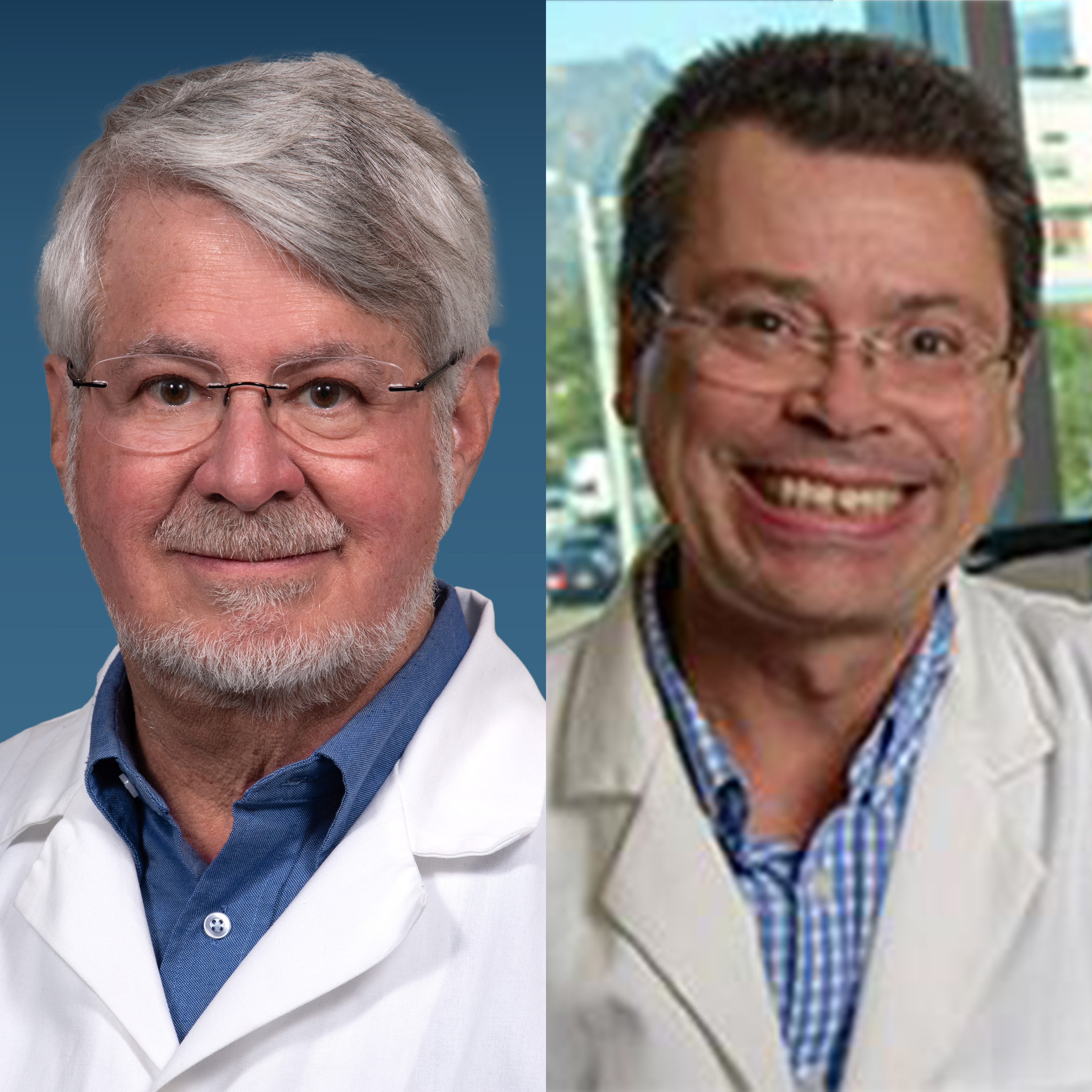
So, now on to today’s topic, “Vitamins and Supplements for Retinal Health.” I would like to introduce today’s guest speakers. Dr. Murray Brilliant is currently a professor of ophthalmology at The University of Arizona, where his research focuses on age-related macular degeneration. He has 40 years of experience in mouse and human genetic research, including studies on albinism and the genetic risk factors for AMD and glaucoma. Dr. Brilliant is Vice President for Research for Aging Health Sciences, a company producing MaculaPM, a new dietary supplement that we will be discussing today. We also have Dr. Brian McKay, who is a professor of ophthalmology and vision science, as well as Physiology, at the College of Medicine at The University of Arizona. Dr. McKay has focused his research for several years on solving the puzzle of how ocular pigmentation, especially pigment in the RPE, relates to retinal health. Thank you so much for joining us today, Drs. Brilliant and McKay.
MURRAY BRILLIANT: It’s certainly our pleasure, and thank you for inviting us.
BRIAN MCKAY: Thank you.
DIANE BOVENKAMP: Absolutely. So, why don’t we just get right into it? Our topic today is all about vitamins and supplements for our retinal health. Can you start us off with the big picture? What do nutrition, vitamins, and supplements have to do with your eye? Ingesting something, how does that get to the eye? What role do everyday habits, like the food we eat or how we care for overall health, play in our risk for age-related macular degeneration?
MURRAY BRILLIANT: So, I’ll jump in. I think that, certainly, a well-balanced diet is important for all of our health, and we’ll get into some of the specific ingredients to some of these supplements in subsequent discussions. But also, we should remind ourselves that our daily rhythm patterns, such as regular sleep and sleep at the same time each day, are quite important for our ocular health, because it is during our sleep time at night when there’s regeneration of our photoreceptor cells that’s critically important for our vision.
BRIAN MCKAY: People frequently don’t consider, like, the whole dynamic with the eye, but one of the major risk factors for AMD is actually smoking. So, if you think about that, a major risk factor is smoking, which is largely your lung, right? But that actually drives AMD in a lot of people.
DIANE BOVENKAMP: Absolutely. The eye receives blood, it’s connected through nerves, it’s connected to the whole body. You have to think of your whole body. You want to improve the health of your whole body. And everything that you said today, if people have actually talked to their doctor, it almost sounds like what’s good for your heart is also good for your eye, as well.
BRIAN MCKAY: Correct. Yeah, and so one of the highest blood tissue sources or blood flow areas you have is the choroid right underneath the macula in the eye. So, you have more blood flowing past there to nourish the macula of the eye than you do anywhere else.
MURRAY BRILLIANT: And our retina tissue is among the highest metabolic cells that we have.
DIANE BOVENKAMP: Oh, my goodness. So, it’s almost like the eye is like the canary in the coal mine, so to speak. It’s very vulnerable to changes in our health. That’s really interesting.
BRIAN MCKAY: Fantastic example.
MURRAY BRILLIANT: Yeah. And as we talk about degenerative disorders, such as age-related macular degeneration, Dr. McKay and I share this idea that these age-related disorders are not caused by something new, really; they’re caused by a lack of something that kept us healthy in the earlier parts of our lifetime. And so, that’s sort of the way we’re looking at age-related disorders. It’s not something that causes this, per se, but what is missing now as people age.
BRIAN MCKAY: So, along that line, one of the things that disappears in the back part of the eye as we age is actually—and we’re going to come up on this because it’s central to what we’re doing—is pigmentation decreases. So, we lose pigment granules from the back part of the eye, from the retinal pigment epithelium back, as we age. And as we lose those, we lose the signaling pathway that we’re going to be talking about today. So, it probably is a precipitating part of the pathology.
MURRAY BRILLIANT: Right. And this occurs starting around age 60 to 65.
DIANE BOVENKAMP: Yeah, it’s really interesting that there’s just some kind of switch that happens. Everybody’s a little bit different and when our bodies notice age. But yeah, there’s a switch. And thinking about this pigment, I guess people could almost think of it as, if the pigment is like sunglasses that are protecting your eyes, kind of like these molecular sunglasses in the tissue in the back of your eye, when that starts to disappear, it’s kind of like then you’re walking around without protection, and then you can increase damage. So, this is so exciting. Maybe we’re jumping ahead of ourselves, but I know we’re going to revisit this, so go ahead.
BRIAN MCKAY: Yeah, we agree.
MURRAY BRILLIANT: We agree, yeah. Open to your next topic.
DIANE BOVENKAMP: Yeah, absolutely. I just I wanted to give you an opportunity to speak. So, yeah, we were talking about nutrition and food and sleep and cigarettes and everything, but right now we’re going to go to focus just on supplements. So, we wanted to put that in the context of our whole-body health. So, one of the things that people on the call might be familiar with, where they’ve heard of supplements before, is something called the AREDS2 supplement. It’s like a combo of different nutrients, and it is normally taken by people who’ve been already diagnosed with dry macular degeneration and they’re kind of in the intermediate stage, right? And people are being given it to try and prevent moving on to late stages. So, can you remind us what are these nutrients and what formula it contains and who should take this?
MURRAY BRILLIANT: So, AREDS1 and AREDS2 are a product of many years of research from the National Eye Institute and many thousands of participants. The AREDS2 formula contains vitamin C at 500 milligrams, vitamin E at 400 international units, 2 milligrams of copper, 80 milligrams of zinc, 10 milligrams of lutein, and 2 milligrams of zeaxanthin. And this is something that’s been studied, again, over thousands of patients. The research shows that this has, I would say, moderate benefits, in particular for individuals who are at what we call stage 2 macular degeneration, to delay the progression to stage 3. That’s where we see the maximum benefit.
BRIAN MCKAY: But it didn’t prevent the disease.
MURRAY BRILLIANT: Right.
BRIAN MCKAY: So, if you take that pill, it’s not going to keep you from getting AMD. If you already have AMD, it helps 25 percent of the people from progressing. But I would prefer to actually keep people from ever getting the disease if I can.
MURRAY BRILLIANT: Right. And I think that’s the key here in keeping us healthy. We talked about lifespan, but I think we should talk about health span. That’s more important, the number of years that you have where you’re relatively healthy. And the best way to do that is to prevent these kinds of degenerative disorders.
DIANE BOVENKAMP: Right. And what one of you said there was something that’s related to why you decided to move forward with the MaculaPM. Only 25 percent of people responded to it in the clinical trials that were undertaken, right? So, there’s obviously more that could be added or something that we’re missing at that time or not knowing about it. So, why don’t we just jump into your research then? Through your research, you’ve developed this new supplement called MaculaPM. But before we get there, let’s dive into the research done by Dr. McKay. So, Dr. McKay, we’ve known each other for a while. I know you’re a former Macular Degeneration Research grantee. Yes, I know. I’ve been with BrightFocus for 15 years. I think I’ve pretty much almost known you for that amount of time. And you’ve been working on that for this amount of time, so it’s not an overnight success—
BRIAN MCKAY: No.
DIANE BOVENKAMP: —but we’re so proud that we were able to fund the beginnings of you trying to work on this general problem, I guess. Dr. McKay, can you please give us a brief overview of your research, including how our understanding of eye health and nutrition has evolved over the past decade?
BRIAN MCKAY: So, we knew for quite a while that age-related macular degeneration had a racial bias. In fact, it’s an incredibly racially biased disease. It’s eight times more likely to get in Caucasians than any other race. So, my research lab and stuff has been trying to figure out what is the basis of the racial bias, under the assumption that if I can figure out why, I can figure out how to stop it. And so, we figured out why. And so, there’s actually a receptor, a protein on the surface of all pigmented cells, that is controlling the safety or the health of the retina as we age. We found the receptor, and then we found a ligand that we could take to turn it on. And we’ve done that study retrospectively, and we’ve had four clinical trials. And that works, so we’re in the right place, but we have one huge goal left now. It only works in half the people. So, why? Because we must be missing something. So, part of what we’re looking at now is: L-DOPA works, but only in half the people. What am I missing? And that’s part of what this is, trying to figure out if that’s what I’m missing.
DIANE BOVENKAMP: Yeah. And if I could just clarify for people who might not be familiar with it, Caucasian means … typically it’s a word for people who have White skin, lighter skin, right?
BRIAN MCKAY: Yes.
MURRAY BRILLIANT: So, Brian and I have come at this from two different directions. Brian was looking, again, for this receptor. What signals this particular receptor? The receptor is actually something called GPR143. And it’s the product of a gene that is associated with albinism—a particular form of albinism called ocular albinism.
So, my research started with trying to understand why first, mice and then people come in different colors. What is the genetic basis of pigmentation? As a geneticist, I started to look at people who had defects in the pigmentation pathway, which include people with albinism or what we would call albino. These are people that lack pigmentation, typically. There are many different forms, genetic forms, of albinism. And one that’s pretty odd is this ocular albinism. So, most of us think about people who have albinism as having, you know, very light skin; very light hair, if not white hair; and ocular problems. As we’ve been discussing, the pigmented layers in the eye are very important for a number of reasons. And so, what we’d find is that albinism is defined, rather, by all these ocular features, which affect mainly the central vision of the eye, which is the macula, and within that, a structure called the fovea, which is a small area where our best vision is. People with albinism of all types have structural issues with the fovea and fewer photoreceptor cells in their macula, such that this degrades their vision. And this is the angle that I was coming from.
The interesting thing is the ocular albinism, these people can have normal hair color, normal skin color, even normal eye color, but they still have the exact same ocular features of these other forms of albinism. So, understanding how this ocular albinism works was key to our research, and that’s when Dr. McKay—Brian—and I, began to talk about this and try to understand what’s going on here. Brian found that this receptor that’s not working in this form of ocular albinism is a receptor for this substance called L-DOPA. L-DOPA is a by-product of making melanin. So, it’s really the first product of an enzyme called tyrosinase. And for a long time, we didn’t understand the significance of making melanin, basically starting in these two separate steps that this particular enzyme does. Why does it kind of stutter in the middle of making melanin, and we produce this L-DOPA? So, Brian’s finding that L-DOPA signals through this GPR143, the product of this ocular albinism, was critical in understanding how L-DOPA is critically important for the development of the retina. And that led to the idea that perhaps it’s also critically important in age-related macular degeneration. Because, as we discussed earlier, we start making much less melanin in our retina as we age. So, maybe it’s the lack of this L-DOPA signal that causes the degeneration of this area of the retina. And so, that’s the, sort of, the basis of the research that led us to this point.
DIANE BOVENKAMP: Wow. If I could just stop there and try and summarize that, because I know you just brilliantly summarized, you know, what is that, 15, 20 years of research in a paragraph?
BRIAN MCKAY: At least, yes.
DIANE BOVENKAMP: Sorry for having to gloss over on that. But I just wanted to take the time to say that this is very important to know, that having scientists get together and talk about—almost like show and tell—about, “Oh, what are you doing on albinism?” “Oh, I’m doing this on AMD.” And there’s a lot of times, because the body likes to recycle things and use the same proteins for different purposes, we can actually take findings from one disease and apply it to the other. And especially what you were saying there with, you know, when people age, the melanin goes down, and that’s important because the melanin is basically the chemical sunglasses that protect our retina from damage from sunlight and whatnot but that people who have albinism are born with not having these molecular sunglasses. So, I think that’s really fascinating, and kudos to you for making that brilliant connection.
BRIAN MCKAY: So, one of the connections between these diseases was actually … one of the biggest clinical trials that we did was actually retrospective. So, when we found the ligand for GPR143 at L-DOPA, one of the first things we did was ask, “Well, do people taking L-DOPA for Parkinson’s disease get AMD?” So, we asked that question of 86 million people, a quarter of the population in the United States. And the answer was no. The people who are treated for Parkinson’s have a third less AMD incidence, but they also developed the disease about 8 years later. So, L-DOPA protects from the disease and delays its onset. And that was one of the biggest things that we could see without ever actually seeing a person; we just looked at medical charts.
MURRAY BRILLIANT: Yeah. And that’s sort of part of my research at the Marshfield Clinic was to look at very, very large patient databases. And this is more or less a kind of artificial intelligence (AI) kind of way to look at it and to say, “Okay, people are getting this drug for this particular disorder, whether it’s Parkinson’s or restless legs. Do they go on to develop age-related macular degeneration?” And what we found was so profound that it led us to the idea that L-DOPA is highly protective against the onset of age-related macular degeneration. And then that leads us to try to understand, well, if it’s protective against the onset, can it slow it down once you have age-related macular degeneration? And that led to some early clinical trials and other studies, which all showed the benefit of L-DOPA in reducing not only the onset but also the progression in a large number of the patients in these trials.
BRIAN MCKAY: It also reduces the number of injections necessary to treat wet AMD. So, if you’re taking injections for wet AMD because you already have it, L-DOPA will reduce the number of injections you need by over a half.
DIANE BOVENKAMP: The best is to try and prevent the disease, of course, but if you already have the disease, and with macular degeneration, we tend to get it in one eye. So, the other eye might be healthy and you might have wet macular degeneration in the other eye, so taking it could also help maybe try and prevent the dry AMD onset on the other eye, as well as what you’re saying have better results from the wet AMD injections.
BRIAN MCKAY: Yes.
MURRAY BRILLIANT: And I think you alluded to this before, Diane, but that we’ve been working on this for more than 15 years now. And it’s kind of a rare thing when we both approach this differently in terms of basic research but when we shared our ideas and thoughts here, we’re able to actually come up with something that we feel is quite beneficial to people. And that’s a rare thing. And also, I just want to thank you from Dr. McKay’s point of view and my point of view for the initial funding that really got us to this point.
DIANE BOVENKAMP: We’re so pleased that we could help catalyze this wonderful research. So, I think we’ve kind of set up all the pieces here for background. I think everybody’s chomping at the bit to find out: What are the main ingredients of MaculaPM, and how are they beneficial to our retinal health?
MURRAY BRILLIANT: So, the key ingredient of MaculaPM is L-DOPA, as we’ve been discussing. We have found that L-DOPA at a dose of 100 milligrams per day is protective. We’ve also included some of the some of the protective ingredients that’s found in the AREDS supplement—vitamin C, vitamin E, lutein, and zeaxanthin—all in MaculaPM. But we also put in melatonin in MaculaPM, which is why we have the name PM on it. And again, what we’ve discussed before about the circadian rhythm, we feel that that would be also very helpful for people with macular degeneration, or people who want to prevent macular degeneration, to get their circadian rhythm in sync here. So, this is something that we’ve developed that, you know, is taken 1 hour before bedtime once per day. And this gives us the resetting of the circadian rhythm, which is critical to the health of the retina. And this kind of dose of L-DOPA, this hour before bedtime, is helpful for the health of this retinal pigment epithelium, or RPE. And so, that’s the basis of this formulation.
We also wanted to make it as a supplement so that it’s readily available. You can get it online from our company, Aging Health Sciences, or www.AgingHS.com will take you there. And it goes through a lot of the science behind it, the science that’s been funded by BrightFocus, by the NIH, by the Marshfield Clinic, and others. So, we just feel so really blessed to be able to bring something that can help people and as a product of our research. So, I don’t want to make this too much of a commercial, but I think that as with any supplement, including AREDS, if you decide to take this, it should be done in consultation with your own physicians, and all of the science behind it and everything is on our webpage.
DIANE BOVENKAMP: Yeah. One of the things I did want to mention is that I think, just like other nutritional supplements, they’re not necessarily approved or endorsed by the FDA, right?
MURRAY BRILLIANT: Correct.
DIANE BOVENKAMP: Yes. And this is why we want people to check with the doctors. I mean, heaven forbid, people have like allergies or whatever, because one of the things that I wanted to mention that you didn’t mention yet is that the levels of L-DOPA are a lot less than what people are taking with Parkinson’s, right?
MURRAY BRILLIANT: Yes.
DIANE BOVENKAMP: So, it’s an extract, a natural product from the velvet bean, Mucuna pruriens, I guess.
MURRAY BRILLIANT: Yes.
DIANE BOVENKAMP: So, everything in here individually has been taken by people. Like melatonin, people take it for sleep or trying to avoid jet lag, things like that. And then, so could you just give more information on that for people so that maybe … I don’t want people to be afraid. It’s like, “Oh my gosh, I’m taking like a Parkinson’s drug level of L-DOPA or something.”
MURRAY BRILLIANT: Correct, it’s not Parkinson’s level. And it is from a natural source, the velvet bean or Mucuna pruriens. And all the ingredients of MaculaPM, we’ve had independently assayed—so, for any contaminants like heavy metals or pesticides, this doesn’t contain anything like that. We’ve been very strict about quality here. But again, like any other supplement, we can’t emphasize enough that you do this in consultation with your physician, including … some people don’t tolerate AREDS. There are some side effects from AREDS, so, it’s up to the individual person and their physician. But I would add also that L-DOPA has been around since 1964. And so, all of these ingredients for MaculaPM, millions of people have been taking these ingredients, whether it’s AREDS or L-DOPA.
BRIAN MCKAY: So, in the clinical trials that I’ve been part of—four big ones—the biggest issue that the patients being moved to L-DOPA have said was they get thirsty.
DIANE BOVENKAMP: So, take it with a glass of water.
BRIAN MCKAY: Exactly. My opinion was, “Okay, well, have a drink of water. It should go away.”
MURRAY BRILLIANT: And we’ve also had clinical trials with L-DOPA with very young kids with albinism. And so, the safety and efficacy of L-DOPA is well known.
BRIAN MCKAY: The FDA had us do a safety trial when we did the children, because L-DOPA has been around since 1964, but the FDA said, “Yeah, but that’s in adults; you have no evidence on children.” So, we actually did a safety trial in children, and it was safe.
DIANE BOVENKAMP: Great. And this is, again, what I mentioned before about taking information from other diseases. So, in clinical trials, and we have some information on clinical trials. We can provide a link to it. And all the information, don’t worry, that both of the doctors today mentioned, including anything I say, too, we’ll provide references and links to that at the end. But yeah, I think that, yes, the FDA does require that things be safe. And that has been tested. And I think on your website, I would highly recommend people go to the website, get information, read it for yourself. I mean, I think the medical record retrospective you said you did was on 37,000 patients, you know, who had —
MURRAY BRILLIANT: The initial one was 37,000, then we upped it to 84 million people.
DIANE BOVENKAMP: Oh, it was 87 million, so yes, yes, that’s multiple papers. Thank you. But yes, go and read that information for yourself. Okay. So, we have some questions coming in.
BRIAN MCKAY: Good.
DIANE BOVENKAMP: And this is related to one of the questions here that people are saying: If they’re already taking AREDS2, can they take the MaculaPM, or are they going to, like, double out on the AREDS2? And then I guess related to that is: How does MaculaPM compare to AREDS2, and are they contraindicated to take both together?
MURRAY BRILLIANT: So, I’ll answer that. They’re not contraindicated. They do overlap with a couple of things, including the lutein and zeaxanthin, but they don’t exceed any safe dose if you’re taking both AREDS and MaculaPM. So, we’ve formulated it such that people can still take AREDS as well as MaculaPM, or if they find that MaculaPM works better for them, that’s just fine—again, I think in consultation with your individual physician. And then one more thing about the safety: My own wife is taking MaculaPM, and she’s doing just fine. I know that’s an N of 1 here, but one of our other physicians, his wife is also taking Macula PM.
DIANE BOVENKAMP: Yeah, you know, definitely, as you’re saying, talk with your doctor.
MURRAY BRILLIANT: Absolutely.
DIANE BOVENKAMP: One of the things is, other than the thirst that Dr. McKay talked about earlier, are there any other risks or limitations associated with MaculaPM?
MURRAY BRILLIANT: Sure. I would not recommend it for pregnant women, but typically pregnant women are not at risk for macular degeneration because of their age. And I wouldn’t, of course, not for children either. In terms of other risks, it does contain melatonin. And both melatonin and L-DOPA can make you a little sleepy, so we recommend that it’s taken 1 hour before bedtime, and after you take it, not to drive, for example. But it probably will help people get a good night’s sleep.
DIANE BOVENKAMP: Okay. And I know that you talked about Caucasians and that the majority of people at high risk for macular degeneration are Caucasian or White. But can any population take this, or is it only for Caucasians? Are there certain populations that might benefit more or less?
MURRAY BRILLIANT: So, I think that, first of all, if you have macular degeneration, this is something that should be considered. If you have a family history of macular degeneration, you’re at a higher risk.
And given the research that shows that L-DOPA, the key ingredient of MaculaPM, can delay the onset of macular degeneration, that would be something to consider. But if you are darkly pigmented, whatever that means, and you have no family history of age-related macular degeneration, and your regular eye exams don’t show any signs of macular degeneration, I would say that it probably would not be beneficial to you. However, again, if you have any risk factors, any early signs of macular degeneration, this would be a supplement to consider.
BRIAN MCKAY: I would also want to clarify. I did say it’s racially biased, but that doesn’t mean it’s only in one race. So, it’s 8.1 times more frequent in Caucasians and in White people, but it’s not absent from any race, it’s just more frequent in White. So, anybody can get AMD.
MURRAY BRILLIANT: Anybody, yes.
DIANE BOVENKAMP: Yep. And, as you found with albinism, your retina is more at risk, so you can still have pigmentation in your skin, so to speak, but it might be absent in your retina.
BRIAN MCKAY: Yes.
DIANE BOVENKAMP: So, I think we have about 10 minutes left, so we have plenty of time. I just wanted to ask you … I mean, that was so helpful for you to take us through that, and I’m sure that for everyone listening, this is like drinking water from a fire hose, and I highly recommend everyone goes back and listens to this.
BRIAN MCKAY: Does the audience have any other questions?
DIANE BOVENKAMP: Yes. So, what I wanted to ask you is: What is next in your research, and what are you most hopeful about in the future?
BRIAN MCKAY: I want to know the other half, right? So, I know that L-DOPA helps half of the people with AMD. Why only half, and can I do something? And part of what this is, is if it’s not helping the other half, I’m missing something, so maybe it’s this, and can I help the other half of the people? Because I don’t want to only help half the people; I want to help everyone.
DIANE BOVENKAMP: Yeah, absolutely. So, there’s a lot of questions that we have still left to be answered. Do you … and putting MaculaPM aside, can you tell us more about a combination of personalized nutrition and other treatments? I mean, what are your thoughts on how this could really reshape how we approach retinal health as we age?
MURRAY BRILLIANT: So, I was a former Director of Personalized Medicine at the Marshfield Clinic, and one of the best ways that we can help people to have better health is, again, of course, through research, but we can look at all kinds of patterns based on their medical records, based on their genetics, and that sort of thing. In public health, we look at large populations, and we say that, “Okay, this intervention helps more people than it harms, and so this is a good thing to do for everybody.” But I think more information and particular information that can distinguish those who benefit from something from those who don’t would be very important, and I think that that’s something that I’m very excited about in terms of artificial intelligence as applied to health data.
I share your initial comments and concerns about funding for research, future funding for research, in particular the National Eye Institute, and I’m hopeful that, as you are, that this will be corrected and that we can continue to try to better understand individual differences and tailor the treatments and nutrition and all sorts of things—lifestyle changes and such—to individuals.
DIANE BOVENKAMP: That’s great. Dr. McKay, did you have anything else—or both of you, do you have any other concluding thoughts before I go on to our next survey and concluding comments?
BRIAN MCKAY: I think that the public service you’re doing, just telling people that getting rid of the National Eye Institute is bad, because it’s happening in the background, and I don’t think the general public realizes what the implication of getting rid of my lab is going to be for their sight. So, I thank you very much for letting people know that this is happening right now.
MURRAY BRILLIANT: And I would just add that if people have further questions about MaculaPM, we can answer those questions through info@aginghs.com. And we can answer questions that maybe we didn’t get to today.
BRIAN MCKAY: I would also say that anything I’ve published, everything I’ve talked about, is freely available to the whole world. I make everything I do accessible for everyone. You don’t need to log in or sign in, just PubMed, Brian S. McKay, and you will see everything I’ve published for free.
DIANE BOVENKAMP: This is great. This all open access science is really, really important for people to be able to take control of their own health, and I really salute you for doing that. And I just wanted to let everyone know, again, we’ll put all the links to those papers, key papers, that Drs. Brilliant and McKay gave to us and that email address at the end. Well, gosh, I mean, I could sit here and talk another 45 minutes, but, you know, it has to come to an end somehow. So, thank you so much for Drs. Brilliant and McKay for sharing your research with us, answering our questions, and informing us about your research discoveries and this new supplement. So, to our listeners, thank you so much for joining our Macular Chat. I sincerely hope you found it helpful. So, to learn more about MaculaPM, you can visit their website www.AgingHS.com or find them on Facebook at Aging Health Sciences. If you need additional information or if we haven’t answered your questions, as Dr. Brilliant said, you can contact them at info@aginghs.com. Well, thank you so much, Drs. Brilliant and McKay, for coming with us today.
MURRAY BRILLIANT: Thank you.
BRIAN MCKAY: Our pleasure.
DIANE BOVENKAMP: Great. All right. And thanks to all the listeners for joining us today. Our next Macular Chat, as I mentioned at the beginning of the call, will be on Wednesday, August 27, where we will explore the newly funded research by BrightFocus’ Macular Degeneration Research. We’re just funding so many other brilliant scientists, just like two of the scientists that we talked with today. So, goodbye. And this concludes today’s Macular Chat.
Useful Resources and Key Terms
BrightFocus Foundation: (800) 437-2423 or visit us at www.BrightFocus.org. Available resources include—
Helpful low vision tools or resources mentioned during the Chat include—
- AREDS1 and AREDS 2 vitamins