Transcript
Download PDF
Please note: This Chat has been edited for clarity and brevity.
DR. JIMMY LIU: Hello and welcome. My name is Dr. Jimmy Liu, and I’m the Director of Vision Science Programs at BrightFocus Foundation. I am pleased to be your host for today’s Macular Chat, “Taking Charge of Wet AMD: Treatment and Tips.” Macular Chats are a monthly program, supported in part by sponsorship from Genentech and Regeneron, designed to provide people living with macular degeneration and the family and friends who support them with information straight from the experts.
The information provided in this program is for educational purposes only and should not be considered medical advice. Always consult a qualified health care professional regarding any medical concerns or conditions. Please note that BrightFocus does not endorse or promote any specific brand or product.
BrightFocus Foundation’s Macular Degeneration Research Program has supported over $56 million in scientific grants exploring the root causes and potential prevention, treatment, and cure of macular degeneration, and is currently investing in 44 active projects across the globe.
Now, I would like to introduce today’s guest speaker. Dr. Manuel Amador is a clinical epidemiologist, retina specialist, and medical director at Genentech’s U.S. Medical Affairs, Ophthalmology. He has dedicated his career to advancing the understanding of retinal diseases and addressing health care inequities. He is also medical lead for ELEVATUM, the first industry-sponsored retina trial focused on underrepresented populations in the U.S. Thank you, Dr. Amador, for speaking with us today.
DR. MANUEL AMADOR: Hi, Jimmy. Thank you for having me.
DR. JIMMY LIU: So just to start off, can you briefly explain what is wet age-related macular degeneration, or AMD, and how it differs from dry AMD?
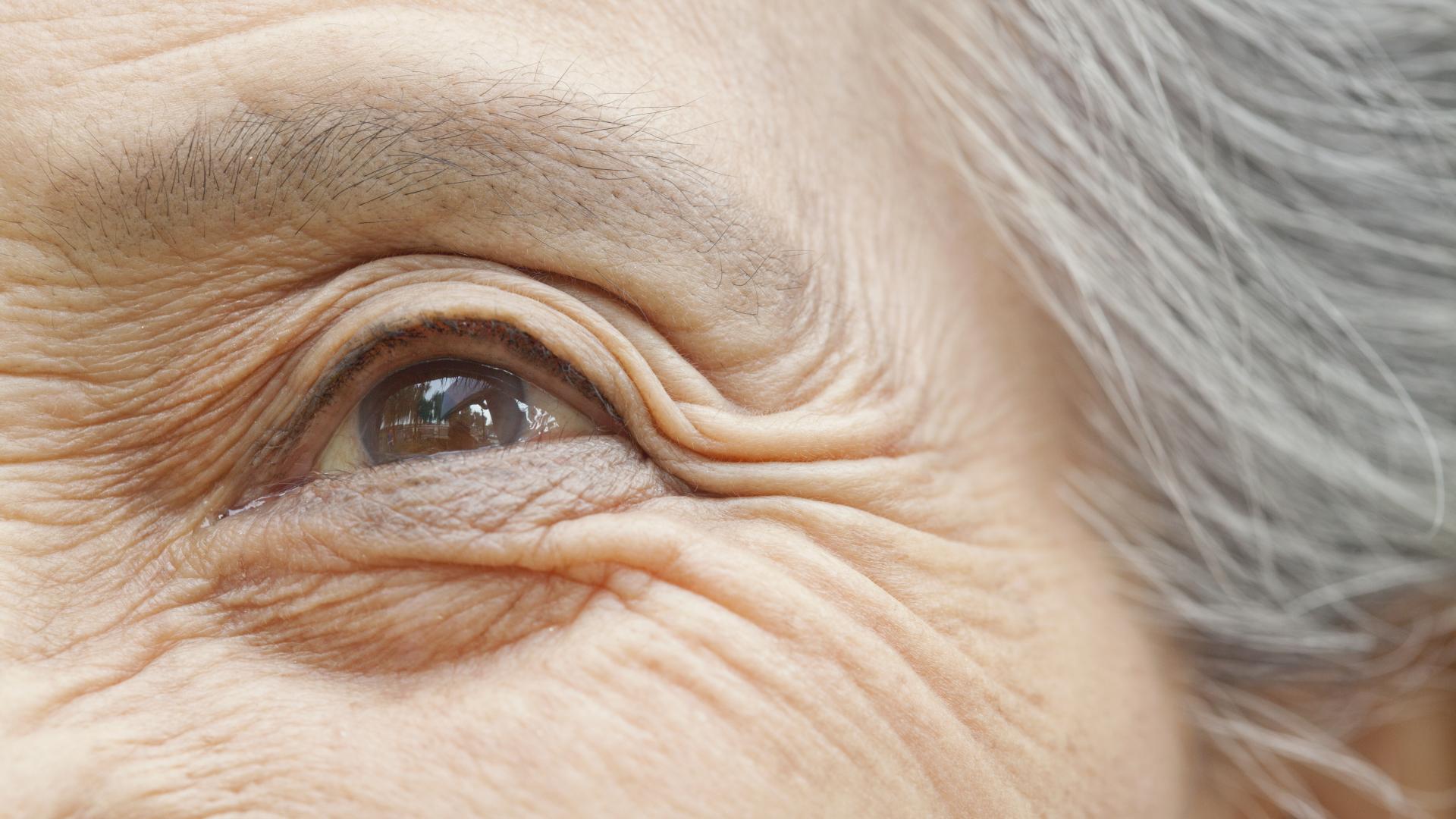
DR. MANUEL AMADOR: Jimmy, that’s a great question. Age-related macular degeneration, or AMD, as you named it, is a condition that affects the macula. But what is the macula? That is the first question that we need to ask ourselves. It’s the part of the retina that is mostly responsible for the sharp or the central vision. When you have a problem in the macula, that type of problem will cause us problems with reading or driving or recognizing faces because it’s the central area of the vision. So, you can imagine that it’s a very, very important part of the retina. That’s why it’s called age-related macular degeneration. Now, you mentioned that there are two types, right? There’s a dry type, and there’s a wet type. Dry age-related macular degeneration is a very common form. A lot of us will have dry age-related macular degeneration, or dry AMD, because it’s something that happens with age. It’s very similar to what we have when we start aging on the skin, like wrinkles or like white hair. It’s very, very common once you start aging. It’s very slow. It starts happening very slowly, similar to wrinkles, for example. And you start seeing that the retina slowly starts thinning, and it creates little deposits called drusen that are basically just accumulations of material in the retina. And the vision is lost, but it’s very gradual and very minimal, but it’s very progressive and slow. Currently, there are very, very few effective treatments for it. And with the dry age-related macular degeneration, there’s still a lot of research to try to kind of slow it down or at least be able to have some sort of prevention for it.
You also mentioned the other more relevant one. And I mentioned “relevant” because it tends to affect more the vision and it tends to also be quicker. And unfortunately, it’s also less common but definitely more serious. It is wet age-related macular degeneration, or wet AMD. In this one, because of the aging process that our retina is suffering, the retina tries to kind of fix the problem. But because it happens in folks that tend to be already in certain ages, there’s some abnormal blood vessels that are growing under the retina and they start leaking fluid and they start leaking blood—specially the fluid—so that’s why it’s called wet. And this can cause faster and definitely more noticeable vision loss in patients. Patients tend to complain that they lost vision more quickly. The key difference between the wet AMD and the dry AMD is that the wet AMD involves these leaking vessels, and that’s why it tends to progress more quickly, so we see that the vision deteriorates really quickly. You can see a patient complaining about vision loss almost immediately once this starts happening, so we’re able to potentially treat it quicker.
DR. JIMMY LIU: Thanks so much, Dr. Amador, for that explanation between wet AMD and dry AMD. And so for today’s Chat, we’re going to focus mostly on wet AMD. For wet AMD, we often hear that staying “on schedule” is very critical. Can you explain why consistency in treatment is important for preserving vision and what kinds of changes in the eye can happen if treatments are missed?
DR. MANUEL AMADOR: Yes. Let’s focus on wet AMD, which is, again, the one that involves these leaking vessels and this fluid, because that’s the one that has the most relevant treatment. So, you’re right. We often hear that it’s very critical to stay on schedule, right? And this consistency is definitely very important. The wet AMD is driven or it’s caused by those abnormal leaky blood vessels. We are very fortunate that we live in times that there are medications to treat those abnormal or those leaky vessels. There’s medications that can help us control that leakage and potentially allow the disease to be on this kind of rest mode so it’s not causing more trouble. The medications don’t cure the disease, but they treat the disease. And they work for a very specific period of time, and they can potentially in the future wear off, so you need to be consistent with the treatment. There’s no cure, but there is a way to treat it and to keep the disease under control.
So, what happens if treatment is delayed or what happens if a treatment is missed? Well, the fluid can build back, and that is a problem because it’s building under the retina—again, that organ or that piece of the eye that is definitely the most important one to see faces, to drive—and if this swelling returns, if this fluid returns, there is high risk for scar formation, and of course, there is also a risk for more vision decline that could be potentially permanent if it is not treated on time. So, we need to keep in mind that the retina is very delicate and you really don’t want to be under-treating or not being on schedule with your injections because there is a risk for this fluid to come back, and it can come back very aggressively. And while you’re on treatment and you are handled by your physician, this disease can be treated, can be controlled, and we can prevent major loss of vision that could be very hard to recover in the future.
DR. JIMMY LIU: Perfect. Thanks so much, Dr. Amador, for talking about staying on schedule with your treatments for wet AMD. So just to reiterate, so for someone who has wet AMD and feels that their vision is stable, from what you previously described, you would tell them that continual need for routine treatment is very important, correct?
DR. MANUEL AMADOR: Yes, yes, I often tell patients, like, “Look, your vision is stable because the treatment is working. So, you will see once the treatment is started that there is a very good improvement of vision, and we need to keep it stable.” We need to continue, as you mentioned, routine treatment because wet AMD can become active again. It doesn’t have a very obvious warning. It doesn’t tell us. It’s a very, very quick disease. It doesn’t kind of start signaling anything; it could just happen from one day to the other one. And the subtle changes are potentially easy to miss. So, it’s very, very important to continue that routine treatment, to continue visiting the physicians because we really want to prevent damage from occurring. So, continuing the treatment, even when the retina feels stable, some patients just feel that because the vision is fine, they can start missing visits and that maybe no more injections are needed. Patients will require injections for a long, long time, usually—sometimes even permanently. So, we need to make sure that people understand that this has to become a new routine in their lives. And the goal is not just to improve the vision but to preserve it for the long term.
DR. JIMMY LIU: Thanks so much for that explanation, Dr. Amador. So, you talked a little bit before about treatments for wet AMD. Can you walk us through those main types of treatments available today for wet AMD?
DR. MANUEL AMADOR: Yes, of course, happy to. And there are some main types of treatment available today for wet AMD. Currently, the main treatments that are being used are, number one, anti-VEGF injections. These are by far the most common and effective treatments. These came out back in the early 2000s and really revolutionized what we could do against this disease, this very problematic disease that, before these treatments, there was barely anything that we could do. So, this really revolutionized and changed everything. These are the anti-VEGF injections. They help reduce the leakage. They help also with this abnormal growth of blood vessels that I mentioned, so definitely very effective and very likely the first line of treatment that your physician will suggest if you have wet AMD.
More recently, there are new technologies and new medications, which have different mechanisms of action, which is very interesting. We have dual mechanism of action, for example. These are more modern drugs that can be maybe a little longer acting, which is something that is very desired for patients because, of course, you want to be receiving less treatments or less injections. And at the same time, they are also a little better at drying. So, we can have, in some cases, that the fluid is a little bit resistant. These newer medications, one of the ones, for example, that our company handles, which is Vabysmo®, it has a double mechanism of action, a dual mechanism of action. It not only blocks the anti-VEGF, but it also blocks the angiopoietin-2. So, we are seeing that there’s definitely an additional mechanism of action. And we saw in the clinical trials that these are drugs that can allow patients not to need the injections as frequent as with, for example, an injection that just provides monotherapy or only anti-VEGF. These are longer-acting medications that are also slightly more efficacious.
And another interesting type of treatment is the port delivery system. But this is an eye implant. So, this is an implant, which is the size of a grain of salt, that is implanted inside the eye with a little window on the surface of the eye that allows it to be refilled and allows the medication, these anti-VEGF treatments, to slowly be released over several months in the eye, allowing patients even more freedom towards their therapies and towards their treatment. So, there’s kind of these great options right now, fortunately, and a lot of or a majority of patients are treated with these treatments. These are injections, so they are treatments that can be done in the office, and definitely dramatically have been improving the outcomes for almost more than 20 years now.
DR. JIMMY LIU: Perfect. Thanks so much, Dr. Amador, for that explanation. And so, for all these newer options, like what you talked about, such as Vabysmo, Eylea HD®, and Susvimo®, who may be a good candidate for these different treatment options?
DR. MANUEL AMADOR: Yes. So, any patient can be a good candidate. When you look for how these therapies work and a little bit of the expectations of the patients, it’s important to understand that patients have very, very different expectations, right? Some patients want a little additional time without having injections as often, as frequently, and these new technologies or these newer drugs allow that, a little bit of extra time without injections. On the physician side, on our side, we do see that, for example, there are some patients that are slightly more resistant to the therapies—patients that are not drying as well, which means that maybe their vision is not as good as it could be. So, there is potential to kind of boost or give an additional potential mechanism of action or therapy that would help them kind of reach that more ideal vision that they’re looking for. These newer therapies definitely are great for those patients. But as we continue investigating and as we continue understanding the therapies, we are constantly learning new things, and definitely we see the value of starting with the better therapies as early as possible. So, that is something that is also very relevant.
DR. JIMMY LIU: Perfect. Thanks so much, Dr. Amador, for that explanation. The next question that I have is: We talked about these different treatment options and these newer treatment options to treat wet AMD. Are there any risks we should know about with these treatments for wet AMD?
DR. MANUEL AMADOR: So on the risk side, like with any drug, there is always going to be a small risk. We’re very fortunate that these injections have proven to be extremely, extremely safe. Even though there’s always some potential risk, some of the rare risks can be, for example, infection. As with anything that is put in or introduced into the body, there will always be a risk for infection, which we are very careful with, and there’s a lot of ways to mitigate that risk. And of course, there’s a lot of procedure that is done during the clinic to really, really minimize this to kind of almost one in thousands. Other potential risks, although even more rare, are bleeding or bruising after the injections, which are, again, extremely, extremely rare and tend not to impact the eye that much. So, definitely, there are some risks, but usually are extremely rare. And the treatment overall and its efficacy, it really kind of beats its efficacy and what it’s doing with vision is definitely worth that minimal risk.
DR. JIMMY LIU: Thanks so much, Dr. Amador, for that explanation. In terms of treatments for wet AMD, you talked a lot about the injections into the eye to treat it. Are there any promising treatments on the horizon that either don’t involve injections or maybe even a treatment that reduces the amount of injections even further? Is there anything that you’re looking forward to in the future?
DR. MANUEL AMADOR: There’s definitely a lot of technology, and there’s a lot of research involved or invested right now on these diseases. We are constantly updating ourselves. There’s so many molecules now, and there’s so many new mechanisms of action that are being introduced constantly, especially in these past 5 years, that do look very, very promising for patients. Technologies that could potentially allow for even less injection burden for patient, which I think is one of the bigger things that patients tend to complain about, but also injections or treatments or mechanisms of action that could potentially allow for some of those resistant patients to be treated and find a resolution for their disease. There is also, for example, gene therapy, which could potentially in the future allow for the disease or for the eye to start producing some of these molecules or kind of mechanisms of action but inside the eye. And that could allow patients to even have less of a burden of injections or even cure the disease. So, we are definitely pushing the science, and the researchers are looking into very, very interesting new ways of addressing this disease. And we’re definitely excited, and I can guarantee that in the next 5 to 10 years, we will have a ton, a ton of great developments for it.
DR. JIMMY LIU: Perfect. Thanks so much, Dr. Amador, for giving everyone on this call some hope about awesome new treatments for wet AMD. We have a couple of listener questions because this topic has been so intriguing and engaging for the audience. One listener asked, “I have wet AMD in one eye. What is the chance I get it in my other eye too?”
DR. MANUEL AMADOR: And that is a very, very good question. And unfortunately, if somebody has wet AMD in one eye, the risk of developing in the other eye is definitely higher. So, we should expect that those patients might have a higher-than-the-general-population probability of having wet AMD in the fellow eye or in the other eye. Based on studies that, for example, our company or research that academic centers have done, there is, over the years—over several years—around 30 percent to 50 percent of patients that might develop wet AMD in the fellow eye or the second eye. That is another reason for us to really, really pay attention. Once it happens in one eye, we really need to pay attention to the other eye. So, we always need to, one, monitor both eyes carefully, so don’t be surprised if the doctor asks you to take imaging for both eyes, for example, because what the doctor is doing is trying to protect or prevent or catch the disease as soon as possible when it happens in the fellow eye.
We definitely need to encourage patients to check their vision at home. So, for example, you know you already have any wet AMD in one eye, be really aware of the fellow eye or the other eye. Covering one eye at a time could be a good test to try to see if the other eye is having problems. Because unfortunately, our brain is very smart and it tries to compensate and tries to improve the vision when just one eye is working well. So, definitely cover one eye to see if the other eye is having problems. And yeah, always report if you notice any change, any distortion. The key symptom, I think, that we need to make sure that patients are always aware of is distortion. If you see that some of the lines are crooked … of the straight lines that you see, for example, a door or anything that is straight, you see it a little bit crooked, which makes no sense for you to be seeing something crooked in front of you, make sure that you get your vision checked.
DR. JIMMY LIU: Perfect. Thanks so much, Dr. Amador, for answering that listener question. We have one more listener question. One listener chimed in, “I have both wet and dry AMD in the same eye. Can I get injections for both types at the same time?”
DR. MANUEL AMADOR: Yes, and that is another great question that has come, especially now that we have therapies for both wet AMD and now we also have therapies for dry AMD. And the answer is yes, you can have both therapies for both diseases or both types of the disease. But this should be definitely done in counsel with your physician, because sometimes due to the volume of these drugs, the eye cannot be extended too much, and pressure inside the eye can accumulate if we introduce too much drug at the same time. So, it’s definitely important to discuss this with your physician and see what is their recommendation on how to give these two drugs. They could be given maybe at the same time, or they could consider giving at slightly different times or days to make sure that we’re not going to be having trouble with the pressure inside the eye, which is another thing that can happen when we introduce too much drug in the eye.
DR. JIMMY LIU: Perfect. Thanks so much, Dr. Amador, for answering our listener questions. So moving on to a slightly different topic, February is National AMD and Low Vision Awareness Month, and so we wanted to get your take on some overall tips and information. What should our listeners know about their and their family’s risk factors for developing AMD?
DR. MANUEL AMADOR: That’s a very good question. And I’m happy that you’re bringing up the month, the February event, because I do think that it is very relevant for us to be aware that everybody can have this disease. This is not something that happens to just your neighbor, this can happen to anybody, including members of our family. And the ones that are especially at risk are folks that are on the older side—so, 60 or up, definitely we need to start paying more attention. We need to definitely have some checkups with the ophthalmologist or the retina specialist.
Changes in your vision is the first thing that everybody will notice, when there’s changes in your vision, especially if you’re able to test it eye by eye. So, always remember: Cover one eye, check your vision. Cover the other eye and check your vision, because that’s a great way to really understand if your vision is in trouble. Get regular eye exams, super important, especially after 60. We need to prevent; we need to make sure that we catch this problem as early as possible.
And if you are diagnosed, really, really try to stay consistent. Try to stay consistent with the treatment because folks that are not consistent with the treatment, their vision deteriorates much, much quicker, and it’s very, very difficult to recover that vision—or even impossible. And vision is extremely valuable for patients, especially those that are aging. It’s what they use to move, to interact with their environment. And it’s especially important for them because there’s a lot of other problems that are happening simultaneously in their lives, a lot of different health challenges, so you don’t want for vision to be another one. So, really, really important.
DR. JIMMY LIU: Perfect. Thanks so much, Dr. Amador, for that explanation. You mentioned in your previous answer that it is really important for folks to get routine eye screening. How often should people get checked for their eyes?
DR. MANUEL AMADOR: And that is a great question. And it depends a lot on the risks. A person that is already maybe 60 or reaching that 60 mark definitely should have a checkup. And depending on what the physician finds or the findings, those checkups can become as often as every 6 months or as late as maybe every year. The plan is just to kind of monitor if there is any type of advancing of the dry AMD or wet AMD. But if wet AMD is diagnosed, these checkups definitely will become very routinary, so that’s why the risks change. If a patient has dry AMD, we can definitely wait 6 months to 1 year for checkups. If a patient develops wet AMD, the checkups will definitely become monthly or bimonthly.
DR. JIMMY LIU: Thanks so much for that explanation. One of the last questions we have is: What steps can we take outside the clinic to help maintain our eye health?
DR. MANUEL AMADOR: Some of the key things that we definitely should be doing is some of the things that also keep us healthy on other parts of the body. The retina is an organ that is linked to every single other part of … like anything in the body, it responds really well to routine exercise. So, keeping ourselves engaged with good exercise, that decreases the amount of oxidative stress that our body is suffering. So, exercising, it is really helpful. Food is really, really relevant. Having a good, healthy diet, very similar to any other kind of disease. These retina diseases tend to respond well also to having a healthy diet, also especially to try to prevent it, as having a healthy diet, again, also reduces the oxidative stress, especially a diet that is rich in vegetables, especially green vegetables, tend to be extremely good for the retina. There’s also some vitamins, which should be prescribed by your eye doctor. So if you start having dry AMD, there are some vitamins that might be able to help to prevent the advancement of or the quicker advancement of the disease. So, definitely something that patients can also think about, but again, this should be prescribed or suggested by your physician that is monitoring and that is aware that you have the dry AMD.
DR. JIMMY LIU: Perfect. Thanks so much, Dr. Amador, for providing so much insight on today’s call. And so, that’s all the time we have for questions today. Thank you again, Dr. Amador, for answering so many of our questions and all the information you have imparted with us today. I would like to mention that our website, www.BrightFocus.org, has a wealth of information about macular degeneration. Dr. Amador, before we close, if there’s one message that you’d like every listener to walk away with regarding AMD and vision protection, what would that be?
DR. MANUEL AMADOR: Thank you, Jimmy. And I want to really be able to reiterate those important things that are: Pay attention to changes in your vision; get regular exams; and if you’re diagnosed, please stay consistent with treatment. Because vision loss from wet AMD is very preventable, it’s often preventable. It is significantly reducible when we catch it early and when we stay on schedule. So maybe more importantly, you’re not alone on this. AMD is common, but there’s a lot of tools, there’s a lot of treatments, and we can have a plan to help protect your vision and your sight. So, definitely continue to be connected to this network and to this group because it’s definitely very relevant for everybody to know that they’re not alone and that we and physicians and groups like BrightFocus Foundation are dedicated to saving sight and to protecting the patients.
DR. JIMMY LIU: Thank you so much, Dr. Amador, for such amazing takeaway advice. Our next Macular Chat will be on Wednesday, March 25. Thanks again for joining us, and this concludes today’s Macular Chat.
Useful Resources and Key Terms
BrightFocus Foundation: (800) 437-2423 or visit us at www.BrightFocus.org. Available resources include—
Helpful low vision tools or resources mentioned during the Chat include—