Transcript
Download PDF
Please note: This Chat has been edited for clarity and brevity.
DR. JIMMY LIU: Hello, and welcome. My name is Dr. Jimmy Liu, and I am the Director of Vision Science Programs at BrightFocus Foundation. I am pleased to be your host today for today’s Glaucoma Chat, “Retinal Regeneration: A New Path Toward Curing Glaucoma.” Glaucoma Chats are a monthly program presented in partnership with the American Glaucoma Society and supported in part by sponsorship from Glaukos, designed to provide people living with glaucoma and the family and friends who support them with information straight from the experts.
The information provided in this program is for educational purposes only and should not be considered medical advice. Always consult a qualified health care professional regarding any medical concerns or conditions. Please note that BrightFocus does not endorse or promote any specific brand or product.
BrightFocus Foundation’s National Glaucoma Research Program is one of the world’s leading nonprofit funders of glaucoma research and has supported more than $55 million in scientific grants, exploring the root causes, prevention strategies, and treatments to end this sight-stealing disease.
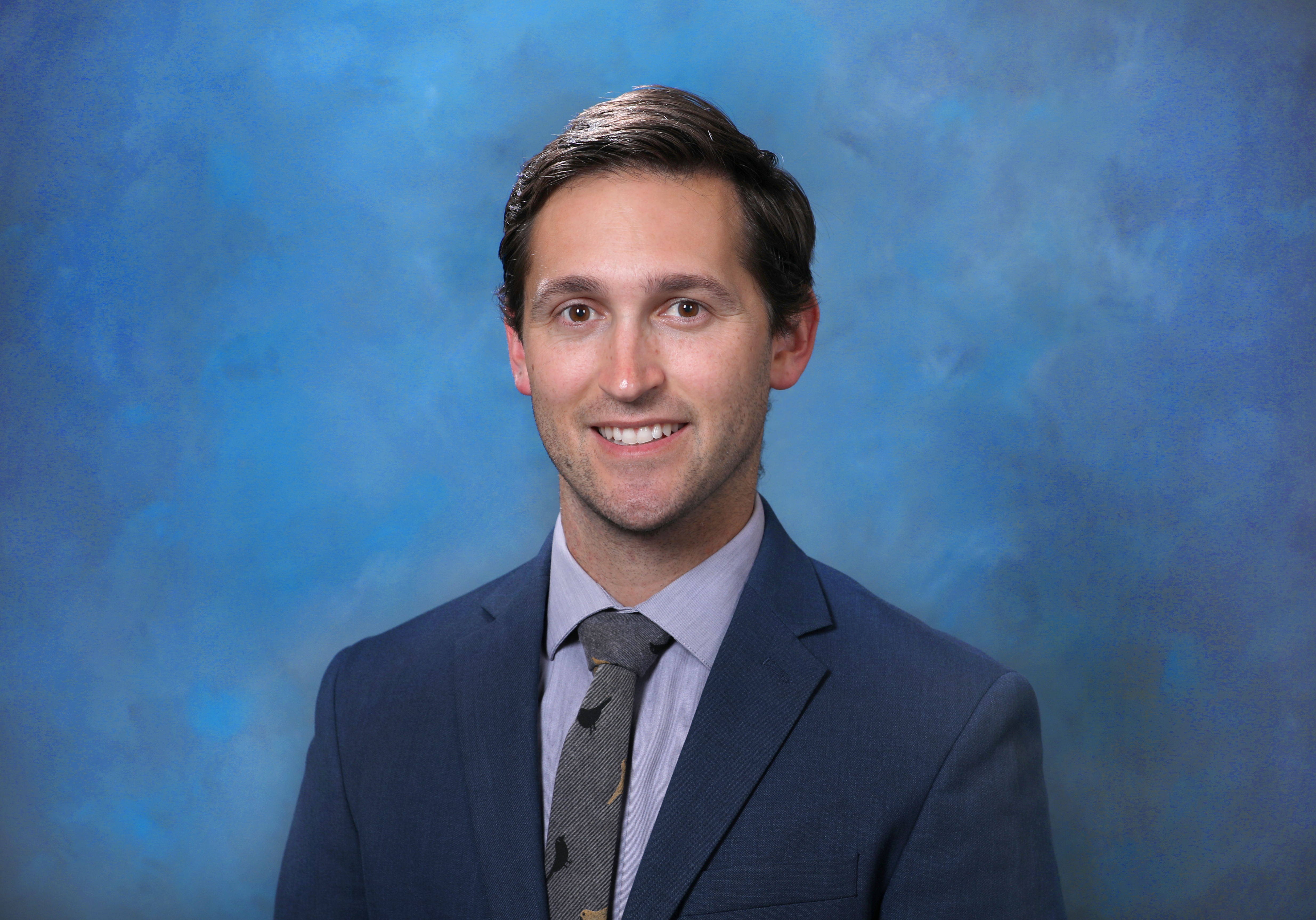
Now, I would like to introduce today’s guest speaker. Dr. Karl Wahlin is the Director of the Richard C. Atkinson Laboratory for Regenerative Ophthalmology and an Associate Professor in the Department of Ophthalmology at the University of California, San Diego. He is currently a National Glaucoma Research grantee working on a project titled Human Retinal Regeneration to Cure Glaucoma. Dr. Wahlin’s lab leverages stem cells and genetic engineering to uncover the basic biology of eye development. Dr. Wahlin, thanks so much for joining us today.
DR. KARL WAHLIN: Great. Well, thank you for having me. Thank you all for tuning in. So, as Jimmy mentioned, I’m a vision science researcher at UC San Diego’s Shiley Eye Institute, and I’m very excited to be able to share with you what I think is a really exciting area of research that holds the potential to restore vision to millions of people with vision loss. Some of you may be newly diagnosed, and some of you may be long-time patients. Regardless, the important thing, I think, is that you’re here taking an active role in your health and learning about some of this cutting-edge research that one day will be available. Today, I hope that we’ll be able to talk about what glaucoma is, limitations to current treatments. We’ll go into a deep dive into stem cells and regeneration research and maybe an honest timeline for when this might be available for primetime. I also want to say that nothing about your current treatment plan should change because of anything that I say today. This conversation is about what may be coming, not something to act on now. So, back to you, Jimmy.
DR. JIMMY LIU: Yeah, of course, Dr. Wahlin. So, great. Thank you so much for that introduction. So, just to kind of start off for all of our listeners, how did you get into eye research? Can you kind of give us a background into why you got into eye research?
DR. KARL WAHLIN: Sure. So, many years ago, my first research position after college was in an eye research lab at Johns Hopkins, where I focused on eye development, using the chicken as a model organism. A little bit of a strange organism, but it was very useful and used by scientists for many years to study eye development. There, we also studied retinal degeneration using mouse models, and I was exposed to the myriad of different causes that lead to retinal degeneration. Today, we know that there’s over 300 genes, which, when mutated, cause disease leading to retinal degeneration of various causes. And so, there’s a lot of different things that can go wrong in the eye.
To me, this was all fascinating, and I learned just how complex this simple little eye is. I learned about how the eye processes light and sends signals to the brain, where it’s further processed to shape how we perceive the world around us, and it was just all really so fascinating. I learned that light-receptive tissue in the back of the eye called the retina is remarkably similar to the rest of the nervous system in how it works, develops, becomes organized, but the architecture is easier to visualize and study the brain. If the eye is like a club sandwich, the brain is like a bowl of spaghetti. The eye’s simple architecture is one of the main reasons it’s such a great model for studying the nervous system, which is what I studied in detail at Johns Hopkins where I received a PhD in neuroscience.
Another great thing about the eye is that it’s a hot area for testing new treatments, including gene therapy. It has a simpler architecture. It’s accessible for things like injections. And if you inject something in the wrong place in the brain, you can kill somebody. That isn’t much of a concern with the eye, so it’s a very useful place to test things. Finally, vision is such a critical part of our experience and affects so many people, often people close to us. It means a lot to me to focus on work that may one day improve the quality of life for people, and it was lots of these little things that led me to eye research.
DR. JIMMY LIU: Perfect. Thanks so much for that background to yourself, Dr. Wahlin. I think also, you know, obviously I don’t do research into the eye right now, but I think my path into vision research was also the same in terms of improving the quality of life for folks, and I think it’s really underappreciated that if you lose your vision, how much of your quality of life would decrease, so doing the type of research that you’re doing is really important, not only for the listeners on this call but for anyone who’s suffering from any sort of eye diseases. Can you tell us more about what your lab research focuses on and how stem cells are being used to study glaucoma?
DR. KARL WAHLIN: Sure. Well, my lab takes a general approach to studying human eye development, disease, and regeneration. We focus almost entirely on human biology and use human pluripotent stem cells to study the human retina. So, how do stem cells allow us to do that? Well, a little bit about stem cells first. These are cells that we make in the lab from a person’s white blood cells. You can make it from skin. A variety of tissues in the body can be used to make stem cells. What we do is, we make them through a process called reprogramming, during which we take four proteins and expose them to the white blood cells for about a week. The blood cells then convert into stem cells and remain undeveloped as stem cells forever until we give them a new set of instructions to turn them into the eye, brain, cardiac tissue. This is a blank slate. So we can instruct them to become literally any type of cell or tissue as long as we have the instructions for this. Fortunately, in our case, we have the instructions to make eye cells and even eye tissues that can recreate an actual human retina. We call these tissues retinal organoids because they’re organized and function just like a human eye but are much smaller. Again, we call these retinal organoids. That’s a word we’re going to come across many times here.
So, back to the question: Why did my lab get into stem cells and glaucoma research? Well, scientists have been studying the biology of the eye for many years using knowledge acquired through the study of different animal species, and this has been extremely successful. But animals and humans are really not the same, and many clinical trials have failed because the science was based on a mouse or a rat and not a human. And to fully understand the human condition, we need to take into account human biology, and with recent progress in the stem cell field, we can do a lot of things we can never dream of before.
When I began this stem cell work about 16 years ago, we were able to make stem cells, but there was no such thing as retinal organoids. There were also no good ways to edit the genome of a human cell or literally any cell. Now we have a powerful technology called CRISPR gene editing that allows us to introduce mutations or repair them, to introduce fluorescent reporter cells, to track cells over time and development. We can discuss this in greater detail in a little while, but to make a long story short, we can do a lot of things with stem cells that we can never do before, and this is huge.
And so, a major reason why I got into glaucoma research is that there’s a huge unmet need to explore human ganglion cell biology and figure out how they form and how to keep them alive. The organoid technology is perfectly suited for this because it not only allows us to test neuroprotective agents to keep neurons alive but also gives us a platform to explore regeneration and bring back the cells that have been lost, and that’s a very important theme that we’re going to be sort of harping on here. In glaucoma, when you’ve lost vision, it’s because the cells are already gone, and you need to bring them back if there’s any hope of restoring vision. So, in a nutshell, that’s how I got into glaucoma research.
DR. JIMMY LIU: Awesome. That’s great to hear. So, kind of piggybacking off of what you said in the previous question: For any of the listeners who may be unfamiliar with glaucoma research and things like that, what is actually happening in the eye during glaucoma? And I know you mentioned in your previous answer about retinal ganglion cells, which we can also refer to them as RGCs interchangeably throughout the rest of this Chat. Why are they so important for vision and glaucoma as well?
DR. KARL WAHLIN: Right. So, glaucoma is actually a little bit more complicated than many people appreciate. In some ways, glaucoma is an age-related plumbing problem of the eye. The front of the eye continuously makes fluid—it’s called aqueous humor—that normally drains out of the eye through a tissue called the trabecular meshwork. Like a sink with a slow drain, when the drainage can’t keep up with production of that fluid, the pressure inside the eye rises. And this pressure can be managed surgically or with eyedrops. Many people with glaucoma just get eyedrops. If it advances a little bit more, they need surgery.
But there’s another problem, and the problem is that elevated pressure stresses the optic nerve, specifically those retinal ganglion cells, which are specialized neurons that bundle together to form the optic nerve and carry visual signals from the eye to the brain. The optic nerve is essentially an electrical cable that transmits information, and when these cells die, communication to the brain shuts down too. And that’s what happens in more advanced cases of glaucoma. So, a central problem in glaucoma, then, is once the optic nerve cells die—the ganglion cells—they don’t regenerate on their own. And that single fact is the reason why regenerative research exists. You know, to give you an idea of the scope of the disease, there are more than 4 million Americans affected and roughly 80 million people worldwide. And about half of the people in the U.S. with glaucoma don’t even know that they have it because early peripheral vision is easy to miss, and the brain can partially compensate for quite some time, until a certain threshold of cells are lost. And then the brain can’t do any more, and then all of a sudden the person starts losing their vision. And so, this is a huge medical problem.
DR. JIMMY LIU: Thanks so much for that explanation, Dr. Wahlin. So, now let’s go to the different strategies that researchers are taking to preserve retinal ganglion cells. Can you talk a little bit about the different research that’s occurring that people are doing in glaucoma that are preserving retinal ganglion cells?
DR. KARL WAHLIN: Yeah, so I think that there are several different strategies that researchers are exploring to preserve retinal ganglion cells, including surgical approaches that aim to fix some of the plumbing problems of the eye: neuroprotection, which aims to protect dying neurons with drugs or gene therapies; transplantation, which has been challenging to do; and finally endogenous regeneration, which aims to replace dead neurons with existing support cells that we reprogram and convert into the neurons that have died. You know, the latter part really sounds like science fiction, but it’s not. It’s the main focus of my lab that I’m most excited about and one which I personally think is the greatest chance of restoring vision loss.
There are many good labs that have been studying ways to enhance neuroprotection to save the cells that are there or to come up with better surgical approaches. And these are all things that are really needed in glaucoma because the underlying problems that cause those plumbing problems are still going to be evident. But, you know, at some point the cells have been lost and that vision is gone, and then the plumbing problem isn’t an issue anymore. It’s the fact that you don’t have the neurons. And really, there are very few strategies which can bring back cells, and regeneration fits that bill. So, I would say that’s probably the long-term view. The short-term view is neuroprotection.
DR. JIMMY LIU: Awesome. Thanks so much for that, Dr. Wahlin. I know you mentioned a little bit about your passion and how you were inspired to focus your research on stem cells and treating eye diseases, like glaucoma, so do you want to kind of describe … is there anything else you’d like to add about how you were inspired to focus your research on stem cells and retinal cell regeneration as a potential treatment for glaucoma?
DR. KARL WAHLIN: Sure. So, my training is in visual neuroscience and that was in a basic science department. However, I’ve always done research in an eye institute, so I’ve always had a strong translational connection to the basic science work that I’ve done. And I think, you know, during the course of my career, this has really helped me to think about the potential to apply my research to cure real-world problems in patients with a variety of retinal degenerations. I would say, on a personal connection on top of that, my own father developed advanced glaucoma, despite the fact that I was a vision researcher and he was seeing an ophthalmologist. By the time that I realized that his vision had deteriorated quite a bit, it was too late, and, you know, this is pretty typical of what a lot of patients suffer.
Patients who have lost significant vision usually notice these subtle little losses at home while driving or while going about their day. And the brain can compensate for a while, but when somebody says, “I’m seeing dark spots or having trouble seeing at night,” that’s a huge red flag, and usually a visual field test will confirm the loss of neurons. In my father’s case, this is exactly what happened. We all know that once a neuron is gone and vision is compromised, the vision loss is usually permanent. One can stave off further loss with eye drops and surgery, but much of that damage is done.
And so, the realization that for most people, eye drops and surgery would not bring back vision inspired me to explore a more creative approach, and that approach is endogenous regeneration, the process whereby the body can make new neurons to replace those lost to injury. You think about it: If this works, one could treat glaucoma, AMD, retinitis pigmentosa, and other retinal disorders where ganglion cells or photoreceptors have died. It really would be revolutionary. So, the biology of regeneration is very fascinating, but now I have a personal connection to glaucoma, as well, and I’m more motivated than ever to bring those retinal ganglion cell neurons back, and I hope that our efforts will make a difference.
DR. JIMMY LIU: Awesome. That’s so great. And thanks so much for sharing your personal story and personal impact on why you are so driven to do glaucoma research. That’s really awesome. So, I know we threw a lot of terms out that may be complicated for our listeners. Again, one of the most exciting aspects of your work is the idea of regenerating retinal ganglion cells to potentially bring back functional vision. Can you just briefly describe: What does retinal regeneration mean to our listeners?
DR. KARL WAHLIN: Okay, sure. And I totally agree. Retinal regeneration is very exciting. And a lot of it is inspired by the animal world, where regeneration is very common. In fish and amphibians, an injured animal can replace lost limbs. A fish can lose almost all of its eye and regrow that eye in a highly organized fashion. So, when I refer to regeneration, I mean growing new cells to replace what is lost. So, making new neurons to replace dead ones is what we call regeneration. And this can refer to limb replacement, brain tissue, skin, etc. This concept goes far beyond just the eye. And it’s a pretty simple concept, which sounds very science fiction-y, but it’s rooted in reality in species across the animal world.
DR. JIMMY LIU: Awesome. Thanks so much for that explanation. Why doesn’t the optic nerve heal itself, and why has regeneration been so difficult to achieve in humans? And for our audience, retinal ganglion cells make up our optic nerve.
DR. KARL WAHLIN: Yeah. So, I mean, this is a good question, and it’s not the easiest to answer. This is a very active area of research in the regeneration field. Scientists have seen that as we move up the evolutionary tree, from fish and frogs to mammals, like mice and humans, the regenerative capacity of the nervous system becomes silenced. And unlike skin or liver, the human nervous system, including the retina and the optic nerve, has almost no natural ability to regrow lost connections, which is exactly why this research is hard and slow.
We’ve established that mature neurons in the central nervous system don’t readily regrow their fibers after injury, which is a problem. To make matters worse, restoring vision isn’t just about growing new cells. It requires all of the following in sequence. We would need to make the right type of cell in the lab. We would need to get that cell to survive and integrate into the retina in the correct layer and orientation. We need to grow a brand-new axon, which is the connection that the ganglion cell uses to reach the brain. We need to create a new axon the full length of the optic nerve. We need to navigate that fiber to the correct region in the brain, and it needs to form a functional connection with its target cells. These steps are not completely solved in humans yet. Many of the different pieces, we have a very good understanding of how they work, but they haven’t all been put together yet. And so, little by little, we’re getting there, but we have a little bit more work to do before the optic nerve can heal itself. But, you know, I’m very hopeful that this is going to happen.
DR. JIMMY LIU: Absolutely. And thanks so much, Dr. Wahlin, for that explanation. Totally agree. I think the glaucoma community in general is quite excited about where retinal regeneration is going, and I feel like for our listeners here, there is a lot of hope on the horizon for a lot of innovative research coming down the pipeline that will eventually impact human patients positively and potentially going forward in terms of treating glaucoma. And so I guess on to the next question that we have: As we know, Dr. Wahlin is one of our National Glaucoma Research grantees, and so we’re really proud to have funded your work on the topic of this Chat, which is regenerating retinal ganglion cells to treat glaucoma. For our listeners, can you talk us through the research and kind of the progress of the research thus far?
DR. KARL WAHLIN: Sure, I’d be happy to. So, our work, I would say, is an ambitious project to build cell and molecular tools based on human 3D retinal organoid technology that would allow us to test drugs, gene therapies, and other approaches that will hopefully lead to the creation of new retinal ganglion cells in the human retina in a laboratory setting, which will hopefully become a future treatment in actual people. These retinal organoids are miniature human eyes. They’re about a millimeter across. They have all of the cell types and architecture of an actual human retina, but they grow in a lab, and we can grow hundreds. These days, we’re able to grow thousands of these. They’re a very scalable source of tissue that we can test different treatments, so they’re a very valuable research tool for us. These retinal organoids, as I mentioned, are very small, and they have a really nice opportunity for us to test things, which will allow us to jumpstart the regeneration process.
Now, I mentioned other species can regenerate very well, but humans are not good at this, and we really can’t understand why unless we can study humans, which we, for obvious reasons, cannot. If we can compare what happens in humans versus fish after injury and after the regeneration process started in fish, we can begin to unravel why. In fact, recent studies by the Blackshaw Lab, now also at UCSD, have shown that by suppressing a set of genes and activating others, they can trigger some degree of retinal regeneration in the mouse eye. The problem, though, is that the cells don’t become retinal ganglion cells. They become something else, and so we need more instructions to give these progenitor cells before they will become the type of cell that we want them to, and that’s what we’re working on.
Another great example of regeneration involves the loss of teeth that occurred about 70 million years ago in chickens. Modern chickens still have the genetic circuitry for making a tooth, but it’s dormant. In 2006, a group of scientists uncovered what caused this dormancy, and a mutant chicken then developed teeth, like the conical teeth of its crocodile-like ancestors. The ability to grow eyes at this scale lets us test different therapeutic strategies that might uncover similar types of conditions needed to overcome dormancy and promote regeneration. So, if you think about it, the animal world serves as a template for us to study the human condition, and it’s been very useful for us. We take these principles, and then we test them in human retinal organoids. Our approach covers tool-building areas that lets us visualize living cells in real time. It’s a big time saver.
Some of these experiments take hundreds of days to carry out, and if we can’t see the cells that we’re growing, we may not have confidence that we’re actually growing retinas. So these types of biosensors that allow us to visualize retinal ganglion cells in real time have been a huge asset for us. And so our lab uses CRISPR gene editing to make these tools. You may have heard of CRISPR gene editing because it actually received a Nobel Prize not too long ago, and it allows us to gene-edit cells, introduce reporters, introduce mutations, or correct mutations. There’s any number of things we can do with gene editing. And so, with this approach, we now have stem cells that can change color when retinal ganglion cells are present, and to test this, we began making retinal organoids. It’s just like, you know, cooking or brewing with the right ingredients and timing. The stem cells differentiate and self-assemble into retinal organoids, and retinal ganglion cells then form in the correct location within the eye after 3 to 4 weeks, which we can visualize with those fluorescent color reporters. And the rest of the retina takes quite a bit longer to mature, but by 1 month, we’re confident that we have real retinas floating in a Petri dish.
Second, we need to make a different type of reporter that labels a different cell type of support cell in the eye called a Müller glial cell. Now, the Müller glial cell is a cell that is the source of regenerative capacity in many different species. It responds to injury in its environment. It begins to divide in species that can regenerate, and this division leads to new cells, some of which replace the Müller glia and some which become a blank slate cell capable of standing around waiting for instructions to become a neuron. So, we’ve built the tools that will allow us to visualize and track those cells over time so that if more of these support cells are made, we see more red cells. If those go on to produce retinal ganglion cells, those cells keep the red color and additionally acquire a new green color. And by watching the colors change under a microscope, we can assess whether or not a treatment is working and producing more retinal ganglion cells. So it’s a huge innovation that’s really going to kind of transform the field, making it much easier for us to test and retest different strategies.
And I think at the end of the day, you know, having reporters is one thing. Being able to provide instructions to the cells to become the proper type of retinal ganglion cell is another case altogether. And not too long ago, we uncovered a series of genes which actually do that. They create retinal ganglion cells in record time. So, with all of these new innovations and tools, I think we’re leveraged pretty nicely to advance the area of retinal regeneration.
DR. JIMMY LIU: Thanks so much for that explanation about your research, Dr. Wahlin. I think your research is going to be such a useful tool for the community, and we’re really excited and happy that we were able to fund your research. That’s awesome. So, I think you kind of alluded to this a little bit before, but what are some of the biggest scientific hurdles that your lab and the scientific community must overcome before retinal regeneration could become a treatment for patients with glaucoma?
DR. KARL WAHLIN: Yeah. I guess in science, there’s always many hurdles. It’s no secret that the scientific community here is facing some serious headwinds. We’re not here to talk about that. In terms of the science part, there are hurdles here, as well. We’re getting pretty good at making new cells from existing Müller glial support cells using a cocktail of factors which promote proliferation of those Müller cells. Our big challenge is converting those newly dividing cells into new retinal ganglion cells, but there’s promise there, too. So, my lab recently uncovered a genetic program that allowed us to create retinal ganglion cells with high efficiency from a cocktail of just four genes. We turned on these four genes for just a few days, and within 4 or 5 days, we had a highly pure population of retinal ganglion cells. This tells us that we know what instructions to give progenitor cells in the case of regeneration to push them in the right direction. Whether or not this will work in retinal organoids, that’s an area of investigation that we’re currently doing right now.
So, we know what genes are important, but getting them into the supporting Müller cells is another challenge without perturbing the rest of the retina. This is probably going to require some new delivery tools. Delivering these genes and factors might include using viruses, which have the ability to be targeted to different cell types. There’s a number of relatively safe gene therapy viruses which have been used in clinical trials. That’s one possibility. There are also non-viral approaches, like lipid nanoparticles and secreted extracellular vesicles. These are technologies which are a little bit more, you know, in the early stage, but they’re really promising looking because you can load proteins, RNAs, DNA, and a variety of other biological molecules into these and deliver them to target cells.
So, while it’s potentially a lot safer, because they’re reversible and potentially safer than viral approaches, there are still some challenges, too. We need to figure out how to target them to specific cells so that they only get in the cells that we’re targeting. These are technical challenges that the field is overcoming. And my lab is developing these technologies, too. So, I think that if we can overcome these technical challenges, regeneration is well within the realm of reality. And I personally would favor these non-viral nanoparticle and secreted EV-based approaches.
DR. JIMMY LIU: Thanks so much, Dr. Wahlin, for that explanation. Yeah, totally agree. I think that’s a really exciting avenue of research, and it’ll be really awesome to see that research go forth in the next several years. So, really exciting. Could discoveries from your project eventually benefit people with other eye diseases or optic nerve conditions beyond glaucoma? I think you mentioned this before, such as retinitis pigmentosa and AMD. Is there any other eye-related diseases that this could positively affect and other things like that?
DR. KARL WAHLIN: Oh, absolutely. The concept of regeneration is, as I mentioned earlier, a very general principle. If you can make new body parts and new limbs and brain cells, you know, it can be applied anywhere in the body. So, whether or not we’re talking about glaucoma or age-related macular degeneration, the first step in regenerating retinal neurons is to make more of these blank slate progenitor cells capable of turning into new neurons. The final steps are to create specific retinal cell types, including retinal ganglion cells and cone photoreceptors. The cocktail of genes needed for that and proteins will differ, but the starting point will be the same.
So, in the case of retinal degeneration, there are something like over 300 genes and loci which, when mutated, cause retinal disease. The approach that we’ve been talking about essentially applies to all of these, too. So it’s far-reaching. And I should also point out that the benefits don’t stop in just the eye. Many neurodegenerative diseases, like Alzheimer’s and Parkinson’s, also result from the loss of neurons, so the ability to make new neurons could apply to those diseases, too. So, success in this project could be potentially far-reaching and impact a lot of people.
DR. JIMMY LIU: Awesome. Thanks so much for that explanation, Dr. Wahlin. Again, that is really exciting, and I hope our listeners on the call know that this is a really exciting avenue of research that I think will be really, really impactful for curing diseases in the next several years. Patients are often hopeful when they hear about groundbreaking research, such as retinal regeneration. How should they think about this work in terms of timelines and future potential?
DR. KARL WAHLIN: This is probably one of the most challenging questions you’ve given me today, but I think that patients should be hopeful. I mean, I certainly am. Groundbreaking research doesn’t happen overnight, and for those with worsening vision, I’m sure that this research can’t move fast enough. I know that growing organoids for hundreds of days, it certainly doesn’t move fast enough for me. We’ve had a lot of success, but there are still some technical hurdles that exist. But the field has been very good at tackling these one by one. So, I think if all goes well, our preclinical organoid models will hopefully show that human regeneration can occur and provide a blueprint for doing so in a clinical setting.
It’s reassuring that the FDA recognizes human stem cell–derived organoids as a legitimate preclinical model, so this moves us in the right direction. Typically, they want a couple different models. It could be organoids. It could be different animal models. But before these go into people, a regenerative therapy would probably need to be tested in one more model. Often this is done in monkeys because they have very close parallels between human and monkey anatomy and physiology. But first, we need to make this work in a human model. And the human model is just really perfect for testing out all of the hard questions first. And I think with the momentum that I see in this field, I’m personally very hopeful that we’ll get there sooner than later, but that’s it in a nutshell.
DR. JIMMY LIU: Awesome. Thanks so much for that, Dr. Wahlin. Yeah, that’s a difficult question, but rest assured, and I think we both share the same sentiment. This is really exciting research, and our listeners on the call can definitely look forward to some really awesome treatments on the horizon. Many so-called stem cell clinics claim they can restore vision or cure glaucoma. How can listeners tell the difference between legitimate research and clinics making promises that may not be supported by scientific evidence?
DR. KARL WAHLIN: Yeah, I think the problem here is that there’s a lot of great science going on, but there’s also, unfortunately, people willing to take advantage of desperate people. And, there are many warning signs and predatory stem cell clinics that have been shut down. These things may be asking you to participate in a clinical trial. Legitimate trials don’t charge participants, so if they’re asking you to pay for anything, that’s a big red flag. Offering many different treatments, unrelated eye diseases with the same injection, that’s a big red flag. Sometimes identifying these things requires a little bit of scientific background and experience. It may not be the easiest thing for a layperson to identify, so it’s really important to consult with your physician and really make sure that this is something that’s legitimate. I believe that the BrightFocus Foundation can probably give guidance on that, as well.
Treating both eyes on the same day, that’s another big problem. No FDA investigational drug status. You really want to look on public sites, like ClinicalTrials.gov, and confer with your ophthalmologist, but even that, you know, just because something’s on ClinicalTrials.gov, it doesn’t necessarily mean that that’s a legitimate trial. It’s just the means that they’ve gone through the paperwork of getting registered. There really are no approved treatments yet, so I would be skeptical about a lot of those things, but it will happen. The FDA is approving things at record pace these days, and there’s a lot of promise here.
DR. JIMMY LIU: Absolutely, yeah, and I think just to kind of echo your statement, yeah, BrightFocus is a is a great wealth of knowledge for macular, glaucoma and Alzheimer’s treatments, and so if you stay tuned to our website, any treatments that get approved by the FDA for glaucoma that use stem cells will be on our website for sure. So please keep in touch in order to find out those details. Looking ahead, what excites you the most about the future of regenerative medicine and the possibility of restoring vision for people affected by glaucoma?
DR. KARL WAHLIN: Well, the thing I’m most excited about is the prospect of improving the quality of life for millions of people affected by vision loss. Many existing studies try to block progression of disease, and while this is really important, it does nothing to bring back what is lost. And whether we’re talking about glaucoma or AMD, bringing back vision once it’s been lost is a huge thing. I think about my own father, who has glaucoma and vision loss, or my daughter’s friend, whose sister has lost her vision due to an optic nerve glioma that has wreaked havoc on her vision. You know, regenerative medicine is really the only hope to restore vision for these people, and this is what excites me most and motivates me to really make this happen.
DR. JIMMY LIU: Awesome, yeah. I think it’s such a great thing that you’re doing this, Dr. Wahlin, and we really appreciate—not only us at BrightFocus but everyone on this call—the research that you’re doing, so thank you so much. I think we have time for one more listener question, and I think it should be pretty quick, because I think you talked a little bit about this. So, one of our listeners asked: When will optic nerve regeneration trials be open to join, and how can listeners join a trial? I think you already mentioned that there’s no clinical trials for optic nerve regeneration at the moment—so there’s the first answer—but can you provide some details on how some listeners could join in a legitimate trial?
DR. KARL WAHLIN: Yeah, as you mentioned, there is no active clinical trial. I think we’re still a little ways off. We still are working on the basic biology of first getting those cells to proliferate. We have part of that story worked out, and then the next part is to convert them into the correct retinal ganglion cell. And so, I think that we’re still a little bit ways off before we can establish that it is working reliably across multiple labs. You know, it’s not enough for just one lab to demonstrate this. The lab needs to be replicated and shown to be effective by others, as well, and then there needs to be partnerships with industry, who has deeper pockets that can make these things happen.
For regeneration itself, I would say there is not a clinical trial, but there is movement in the area. There’s a clinical trial now which is more focused on cell rejuvenation, and so this kind of falls into the realm of neuroprotection, which takes older, stressed-out cells, and it delivers genes called the Yamanaka factors. The three of the genes that are used to make stem cells are actually being repackaged and used in clinical trials to rejuvenate cells, and it’s being used in a ganglion cell–related neuropathy called open-angle glaucoma … or non-arteritic anterior ischemic optic neuropathy—or NION—with potential applications for open-angle glaucoma, as well. This is the first trial that I know of that potentially will rejuvenate cells and make them more likely to survive, and this kind of approach could also facilitate reprogramming, as well, to make new ganglion cells. But really the goal here is to make the ganglion cells happier, younger, rejuvenated.
And you can find these on clinicaltrials.gov. And if you want to look up more information on this particular one, it’s sponsored by a company called Life Biosciences, and I believe they’re in Boston. But I think that that could potentially be a model for how we approach optic nerve regeneration via endogenous repair that we talked about today. So, I think science happens in sort of big movements at a time. Sometimes it’s slow. Sometimes it moves quickly. And I could see this moving in a quick direction if things work out well.
DR. JIMMY LIU: Awesome. Yeah, thanks so much for that information, Dr. Wahlin. So, I think that’s all the time we have for questions today. So, again, thank you so much, Dr. Wahlin, for answering so many of our questions and all the information you shared with us. To our listeners, thank you so much for joining our Glaucoma Chat. I would also like to mention that both BrightFocus Foundation and the American Glaucoma Society’s websites have a wealth of information about glaucoma. So please visit BrightFocus.org and AmericanGlaucomaSociety.net to learn more. Okay, before we close out, Dr. Wahlin, do you have any final remarks for our audience?
DR. KARL WAHLIN: Yeah, absolutely. First, I want to thank the audience who tuned in today to learn about glaucoma and take ownership of this disease. For me, it’s really inspiring for researchers like me to see an engagement by the public to learn more about the disease and support vision research. With shrinking science budgets at the NIH level and across the board in research, I want to thank all the supporters of vision research through donations to BrightFocus and those who support policies to strengthen funding at the NIH. Any of this little bit helps, and I think the future looks very bright here, and I think that there’s some promising treatments down the road, and we’ll get there soon.
DR. JIMMY LIU: Absolutely. Great ending message, Dr. Wahlin. So, thank you so much for speaking with us today. Our next Glaucoma Chat will be on Wednesday, October 14. Thanks again for joining us, and this concludes today’s Glaucoma Chat.
DR. KARL WAHLIN: Great. Thank you.
Useful Resources and Key Terms
BrightFocus Foundation: (800) 437-2423 or visit us at www.BrightFocus.org. Available resources include—
Helpful items mentioned during the Chat include—