Download PDF
JULLIA ROSDAHL: Hello and welcome. My name is Dr. Jullia Rosdahl, and I’m pleased to be your special guest host for today’s Glaucoma Chat on “Dry Eye and Glaucoma.” The Glaucoma Chats are presented by BrightFocus Foundation, and they’re a monthly program in partnership with the American Glaucoma Society, designed to provide people living with glaucoma and family and friends who support them with information straight from the experts.
The information provided in this program is for educational purposes only and should not be considered medical advice. Always consult a qualified health care professional regarding any medical concerns or conditions.
BrightFocus Foundation’s National Glaucoma Research Program is one of the world’s leading nonprofit funders of glaucoma research and has supported more than $52 million in scientific grants exploring the root causes, prevention strategies, and treatments to end this sight-stealing disease.
And now I’d like to introduce today’s guest speaker. Dr. Astrid Werner is a member of the New England Eye Center’s Glaucoma and Cataract Service. She’s also Medical Director of the Wellesley office and serves as the Vice Chair of Clinical Services for the Department of Ophthalmology at Tufts. She’s board certified in ophthalmology, and she completed her ophthalmology residency at the Tufts New England Eye Center, followed by a glaucoma fellowship at the Massachusetts Eye and Ear Infirmary. Prior to her residency, Dr. Werner attended medical school at the Tufts University School of Medicine. She’s originally from New Jersey, where she attended Princeton University as an undergrad before moving north for her medical studies. Dr. Werner’s clinical interests include adult and adolescent glaucoma care; the medical and surgical treatment of glaucoma, including minimally invasive glaucoma surgery; and cataract surgery. Dr. Werner, thank you so much for joining me today.
ASTRID WERNER: Thank you so much for having me. It’s a real pleasure to be here.
JULLIA ROSDAHL: Great. So, let’s dive in. Let’s start with: What is dry eye disease, and how is it different from glaucoma?
ASTRID WERNER: Certainly. Well, dry eye is a totally different disease from glaucoma, but they typically coexist in patients for reasons that we’ll get into a little bit later. Dry eye is a disease where the ocular surface becomes dry, and this is typically related to decreased tear production or increased or abnormal evaporation of the tear film. And this can lead the ocular surface to become dry, and that can cause discomfort and also issues with blurry vision in patients because an intact tear film on the surface of the eye does a lot of the optical work of focusing light and images.
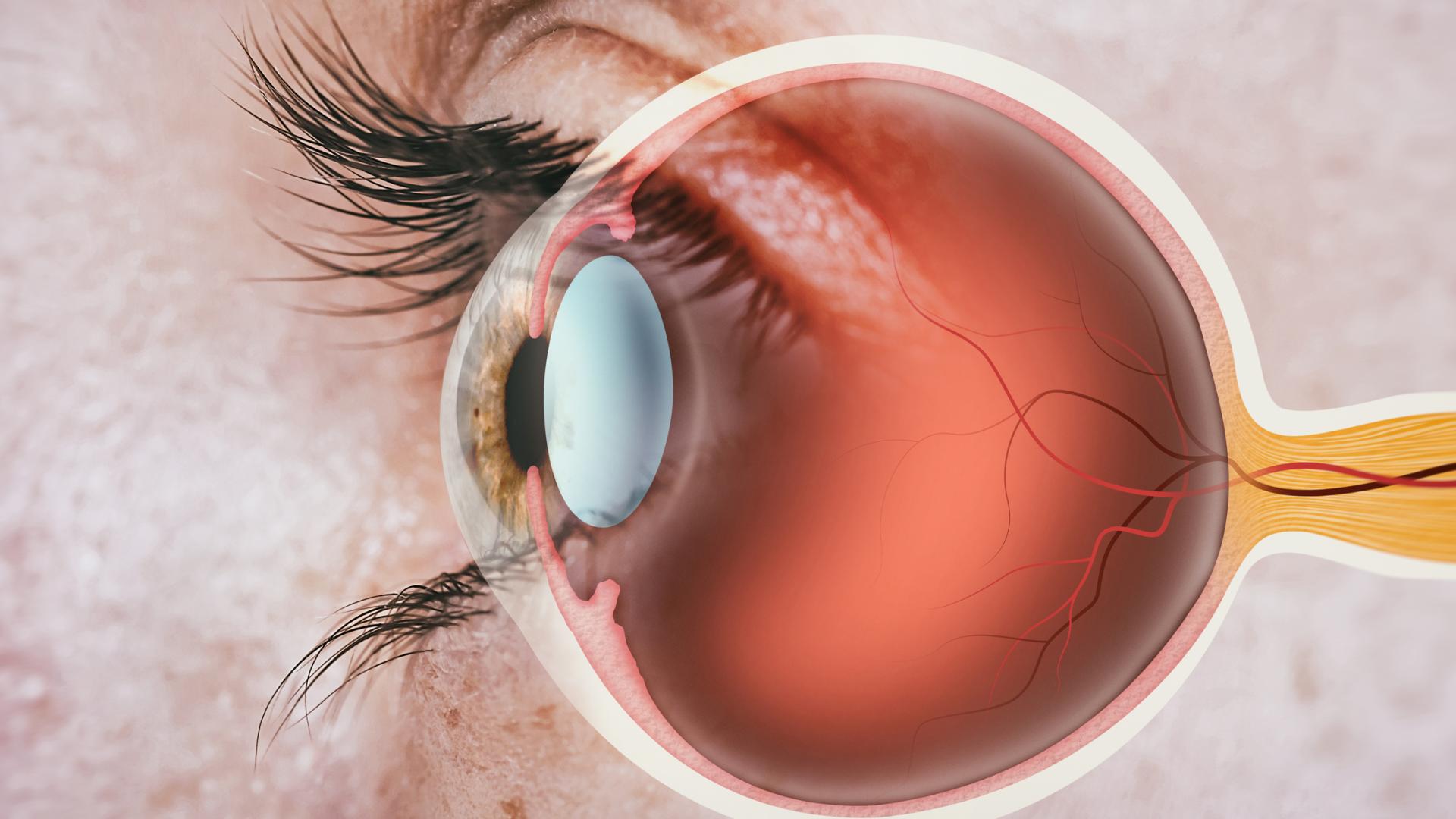
On the other hand, glaucoma is a disease affecting the back of the eye at the optic nerve. The optic nerve is the cable that connects the eye to the brain. And in glaucoma, the optic nerve can become damaged over time in characteristic ways. And if it’s left untreated, it can cause irreversible vision loss. Typically, glaucoma is associated with elevated eye pressure. High eye pressure over time damages the optic nerve, although there are other factors at play that are not quite as well understood, such as vascular autoimmune or mechanical causes of damage to the optic nerve. And for the most part, the primary modifiable factor when we’re treating glaucoma is lowering the eye pressure.
JULLIA ROSDAHL: Yeah, so very different diseases. Why do you think they seem to occur together, dry eye and glaucoma? And what are the shared risk factors?
ASTRID WERNER: Well, this is a big topic, and I could probably write a whole textbook on the subject because there are a lot of reasons why dry eye and glaucoma coexist. It’s a very complicated, complex problem. The first reason is really just a numbers issue. Dry eye is incredibly common. Some studies show that up to half of the population has some degree of dry eye disease. So, the likelihood that any patient with glaucoma also has dry eye disease is high.
Secondly, the risk of developing glaucoma and the risk of developing dry eye both increase with age. So again, the likelihood that these diseases coexist, especially in older patients, is high. The incidence of dry eye goes up with age for many reasons. We can see that older people have reduced tear production. There can be changes in the quality of the tears, such as decreased oil content. And this can be related to hormonal changes, like decreased estrogen and testosterone levels. And then, there are some mechanical problems, like eyelid laxity, which disrupts the normal tear flow or can prevent complete eyelid closure, so the surface of the eye can dry out. And then, we can also see changes in corneal sensation with age. So, decreased corneal sensation can disrupt the normal reflex from the ocular surface to help to produce tears.
And similarly, the risk of glaucoma goes up with age. There can be degeneration of the natural drainage system in the eye that can lead to increased eye pressure. You can get crowding of the natural drainage system inside the eye due to development of a cataract. And then, there are other factors like underlying vascular disease, which tends to increase with age, that can disrupt the normal blood flow and oxygen delivery to the optic nerve and make it more susceptible to glaucoma damage. And there are also age-related changes within the nerve itself and the support structure for the nerve that also make it more susceptible to damage. So again, you know, these are just numbers of reasons why these diseases often coexist.
But separately, one of the other major issues is that many of the treatments we use for glaucoma can cause dry eye or can exacerbate existing dry eye. So, many of the topical medications that we use to treat glaucoma and lower eye pressure are very irritating to the ocular surface in a variety of manners that we’ll delve into a little bit later. Also, some of the surgeries that we do in glaucoma—specifically what we call filtering surgeries, where we’re creating a new drainage system for fluid to get out of the eye—can cause dry eye issues, as well. This partly has to do with the fact that in these surgeries, we’re disrupting the tissue, the conjunctival tissue, to create the filtering bleb. And this tissue where it meets the cornea contains the stem cells called limbal stem cells that help the corneal surface regenerate. And so with our surgeries, we can disrupt this and inhibit the cornea’s ability to regenerate a healthy ocular surface. Also with our surgeries, we’re using antimetabolite medications often. These are medications that help prevent the body from scarring down our surgery. And these medications impact both cells that we want to be functioning and healthy, like the limbal stem cells, and those that we don’t, those that are involved in scar tissue. So, the medications we use with these surgeries can also impact the eye’s ocular surface. And the shape of the bleb, the filtering bleb with our glaucoma surgeries, can also interfere with the normal way that the eyelid moves to spread tears over the ocular surface with blinking. I should add, though, that many patients can actually have improved dry eye symptoms after surgeries because they can reduce the patient’s dependence on the topical glaucoma medications that can be so irritating to the eye.
JULLIA ROSDAHL: Oh gosh, thank you. I love how comprehensive that answer was. I think that so often we just don’t have enough time in our clinics to really explain things as thoroughly as you did, and that was really, really useful.
ASTRID WERNER: Oh, great.
JULLIA ROSDAHL: Next, maybe you can talk about some of the symptoms that people with these conditions report. I know that most of the listeners out there have heard our conversations in the past and know how glaucoma doesn’t always have symptoms early on, but dry eye certainly does. Can you talk about that?
ASTRID WERNER: Yeah, absolutely. So, the symptoms of dry eye are the same whether you have glaucoma or not. And the symptoms include discomfort, in some fashion, and blurry vision. So, with regards to the discomfort, patients will often describe a burning sensation or a gritty, sandy sensation on the eyes. Another common thing people will mention is that their eyelids feel sticky. And then, often, there’ll be complaints of increased tearing, which sounds a bit counterintuitive. If you’re tearing, how could your eyes be dry? And then also, the eyes can be red. People will often use certain specific words when they’re describing dry eye symptoms. They’ll often say things like their eyes feel tired or their eyelids feel heavy. And the symptoms can often be worse by the end of the day.
With regards to the tearing, this is something my patients often ask me about, like, “How on earth can I have dry eye? My eyes are constantly watering.” But this is a symptom of dryness because this type of tearing is reactive. It’s the eye’s response to a dry or irritated ocular surface, and it’s trying to flood the surface of the eyes with liquid to help the dryness. And the blurry vision, there can be some specific features to this which can clue you into the fact that this is dry eye. So, it’s blurry vision that fluctuates, so it can change over the course of the day, or often, people will say that it changes with blinking. That’s another hallmark of dry eye disease. As I mentioned earlier, you need a smooth, undisrupted tear film on the surface of the eye for clear vision. And if you’ve got areas that are dry and some areas are wet, it can cause an effect kind of similar to looking through a windshield with spots of rain on it. You really need your windshield wiper to wipe that fluid smoothly over the surface of your windshield so that you can have a clear view.
JULLIA ROSDAHL: Yeah. Now, you mentioned this, you touched on it earlier with regards to some of the glaucoma treatments and their effects on dry eye. Could you tell us a little bit more about how glaucoma medications can contribute to dry eye symptoms?
ASTRID WERNER: Sure. So, one of the primary culprits within glaucoma medications is actually the preservative that’s used in it. It’s called BAK, or benzalkonium chloride. BAK is associated with every measure of dry eyes that we know of. So, it can cause reduced what’s called Schirmer’s test. So, that’s a measure of how much tears are made in the eye. It can change the tear osmolarity, reduce the volume of tears that patients make, and redness, and it can also decrease the lipid layer in the eye. And it can also destroy these important cells called goblet cells in the eye, which are the cells that make mucin, which is a protective mucus layer on the surface of the eye. And it can even cause a problem called neurotrophic keratitis, where basically the nerves on the surface of the eye die off. And we can see reduced nerve density on our special imaging test looking at corneal nerves after exposure to BAK.
So, the corneas that are exposed to BAK can have reduced sensation, and that interferes with the normal pathway that signals the eye to blink and produce tears. BAK is also pro-inflammatory, and it can cause inflammation in the surface of the eye and can actually lead to scarring of the conjunctiva, which is the skin over the white part of the eye. And that can actually interfere and cause failing of some of our glaucoma surgeries. Independent of BAK, some of the medication elements themselves can interfere with tear production. So for instance, there’s a common medicine we use in glaucoma called timolol, which is in a category of medicines called beta-blockers. This medication blocks the part of the eye that makes aqueous fluid inside of the eye. So by blocking this, it can lower intraocular pressure, which is a desirable effect in glaucoma, but it also can block the signaling pathway in the lacrimal gland so that it causes reduced tear production. So while it’s simultaneously helping the glaucoma, it’s causing another mechanism by which it gives dry eye. And then, of course, people can simply be allergic to the glaucoma medicines, and the ocular surface with an allergy to drops just really is an unpleasant situation.
JULLIA ROSDAHL: Yeah, it can certainly disrupt what was a previously excellent regimen for a patient when they become allergic to something.
ASTRID WERNER: Yeah.
JULLIA ROSDAHL: And certainly, you know, whenever I think about BAK and read about it, I continue to be surprised that so many patients do fine with it, but it can be, you know, just really, really difficult for some people.
ASTRID WERNER: Yes.
JULLIA ROSDAHL: So, what should we do? What are the most effective treatment options for dry eye in glaucoma patients?
ASTRID WERNER: Yes. Well, as you just mentioned, some patients do fine with BAK, some patients don’t. Similarly, I’d say every patient’s situation with dry eye is unique. And so, you really need to have a customized approach when you’re figuring out what you’re going to do for the particular patient that’s in front of you. So, the first thing I do is I look at the patient, and I try to identify any underlying cause of dry eye that could be a factor. So, does it look like the patient has what’s called meibomian gland dysfunction? That’s where the eyelids are inflamed, and the little oil glands in the eyelids that make the oil component of the tears are clogged. Does it look like they have demodex blepharitis? So, demodex is a little mite that lives on the skin and can get into the eyelids, the hair follicles, and cause a lot of irritation symptoms. So, I look for those clues first, and I go after those things first. So, if it looks like a demodex infestation, I’ll treat that. And if it looks like meibomian gland dysfunction, I will go after that. And that involves using therapies that will reduce inflammation in the eyelids and get those oil glands flowing better. And listeners may be familiar with some of these things, so things like using hot compresses on the eyelids to help melt those clogged oils and get them into the tear film. Sometimes oral antibiotics are helpful with reducing eyelid inflammation. Oral omega-3 supplements have also been shown to help improve the oil content of the tears. And then there’s some treatment procedures like IPL, or intense pulsed light, or LipiFlow™, which similarly can help reduce eyelid inflammation and thin out those oils in the glands to help improve the lipid layer of the tears.
Beyond that, the other cornerstone of dry eye treatment is increasing lubrication on the surface of the eye. So in my practice, this means I’m advocating or telling the patient to please use frequent preservative-free artificial tears. And then, the other thing we can consider doing to increase the lubrication on the eye is what’s called punctal occlusion—blocking the tear duct in the eyelid to help the tears stay around longer. And an example of this would be something called punctal plugs. They’re like little plugs that go in the drain to keep the fluid around.
I’m frequently switching patients from regular glaucoma drops with BAK preservatives to preservative-free drops or trying to find combination drops wherever possible to help reduce the exposure to the irritating elements of the glaucoma drops. There are compounding pharmacies that will make some noncommercially available combinations in preservative-free forms. And this is something that I use commonly in my practice for patients that I suspect really need to have preservative-free medications in larger combinations than are commercially available. These are a great tool. The downside of them is because they’re not commercially available, they’re typically not covered by insurance and have an out-of-pocket fee. And then I will frequently also use anti-inflammatory agents alongside glaucoma medications. So specifically, topical cyclosporine is very helpful in improving all of the measures of dry eye, even if used alongside glaucoma medicines. So, using topical cyclosporine can help patients who aren’t able to stop their glaucoma drops for whatever reason, so we can see benefit in the dry eye simply by adding this other therapy.
And then, the last thing I will often do is try to find alternatives for drops. So, there is a treatment that’s been around now for quite a while called the SLT laser, or selective laser trabeculoplasty, which uses a laser to help stimulate the drainage system within the eye to get it to pump out fluid better and lower eye pressure. And it can be an alternative to a drop. I will even try to use this as a first therapy in many of my patients, but it can be done really at any time to help reduce the eyedrop burden. And along those lines, there are now some newly available implantable medications. So, there’s an implantable form of bimatoprost, which can be directly implanted into the front part of the eye in clinic. And there is a sustained release travoprost medication that can be implanted inside the eye in the operating room. And so, these can help spare the eye, the ocular surface, from exposure to the medications but help treat the glaucoma.
JULLIA ROSDAHL: Yeah, it’s great to have so many options for patients with glaucoma now. I’d like to ask you a little bit more about when you will make that switch to the preservative-free. But first, we had a great question come in from a caller who wanted to know the symptoms that indicate an allergy. And I thought this was a great question because sometimes, as a patient, it can be hard to know: Is it an allergy, or is this something that’s just an irritation that I can just use some preservative-free tears and get through? So, would you mind answering that question?
ASTRID WERNER: Sure. That is a great question. And it can be a little difficult because some of the symptoms are the same. You can see redness. You can just have a sense of irritation on the surface of the eye. But one of the common things that distinguishes dry eye from allergy is itching. And then, often, we can also see that the eyelid—not just the surface of the eye, but the eyelid itself—can become quite red and irritated looking. And I would say also, if the symptoms aren’t improving with standard dry eye treatments, that might be a clue that there’s something else going on here, like an allergy. Then when you go to the doctor and we take a look at you under our microscope, we can see specific hallmarks that indicate allergy versus dry eye. So when we pull down the eyelid and look in the inside of the eyelid, we can see all of these little red bumps, which can indicate an actual allergic reaction rather than simply dry eye.
JULLIA ROSDAHL: Yep. That papillary reaction, that definitely lets us know what’s going on. So, how do you decide when to switch someone from a regular BAK preserved drop to preservative-free, that are often maybe more expensive, less likely to be covered by insurance, just a little bit more complicated to get? How do you make that switch?
ASTRID WERNER: Right. So usually, I start by trying to treat dry eye first. So, you know, as I mentioned earlier, I’ll see if there’s any indication that they have some underlying problem that’s causing dry eye. And I will add lubrication with preservative-free artificial tears. But if they’re not responding to that and the surface of the eye is showing some signs of ocular toxicity or dryness, then I’ll try switching patients from preserved to preservative-free medications.
JULLIA ROSDAHL: Yeah. So, the next question is really around what’s so important to us as glaucoma specialists, balancing glaucoma treatment with symptoms. How do you prioritize treatment when a patient is bothered by dry eye, but the glaucoma is really posing a big risk to their vision?
ASTRID WERNER: Yeah, this is a very good question. And it’s a very complex thing to think about. And again, we have to individualize it to the particular patient that’s in front of you. So in general, what I do is I’m thinking through: What’s my short-term plan for this patient versus my long-term plan? Because sometimes the short-term plan for getting the dry eye and the surface irritation under control involves stopping glaucoma medicines, which is great for the ocular surface but not so great for treating glaucoma. So, I have to think about things like: How long or how high can I let this patient’s pressure go safely and for how long while I’m treating the surface? And then, once I’ve gotten the eye calmed down, what are we going to do to treat the glaucoma? Because if we simply go back to the same medicines we were on before, we’ll just end up where we started. And often, the long-term solution involves alternatives to eye drops.
So, as an example of a short-term versus a long-term plan, a very common scenario in my practice is that a patient with advanced glaucoma is referred to me, and they’re on five topical medications. The ocular surface looks really irritated. The eye is very red and inflamed. I can see the long-term trajectory for this patient is that they need surgery to help control the glaucoma, but we have to calm down the eye first to set them up for success with surgery. Because if we do one of our glaucoma surgeries in a very inflamed eye, it’s more prone to failure. So in these situations, my short-term plan often involves putting a patient on an oral medication to lower eye pressure while we can optimize the ocular surface and stop some of their glaucoma drops. But it’s not a great long-term solution. The medications often have side effects, and many people don’t tolerate them over the long-term. So, the long-term plan is surgical intervention, often with a filtering procedure to help control the eye pressure.
JULLIA ROSDAHL: Yeah, where it’s definitely the long game, that you’ve got to be thinking a couple steps ahead for what our patients are going to need.
ASTRID WERNER: Yes.
JULLIA ROSDAHL: So, the listeners to these Glaucoma Chats, they are an incredibly proactive bunch. I wonder: What recommendations do you have, what steps can patients take at home to improve their comfort and protect their vision when they’re having symptoms like these?
ASTRID WERNER: Yeah. Well, there are a lot of things that you can do at home to help improve the lubrication in your eye and the ocular surface. So, doing things like using preservative-free artificial tears, warm compresses, and omega-3 oral supplements. Although, I should point out that the use of omega-3 supplements, you should check with your primary care doctor, because there are some conditions in which you may not want to use those. And then other simple things like taking blink breaks if you’re doing a lot of reading or computer work, using humidifiers in your room if the air seems particularly dry. And some patients have issues with dryness in the morning because their eyelids are opening up overnight and drying out, particularly with the use of CPAP machines. So, there’s some other things you can do in these scenarios, like using artificial tear ointments or thicker formulations of tears or even moisture chamber goggles to help keep the eyes moisturized overnight. So, those are all things that are available over the counter or that you can do at home to help treat your dry eye symptoms.
JULLIA ROSDAHL: Yeah. And they can be so helpful for patients. Yeah. Thank you for sharing those.
ASTRID WERNER: And I would add one other thing, which is that consistency is also important. So, treating dry eye, we can’t put in the tears and expect to be 100 percent better immediately. Really, these are therapies that you have to use consistently over a period of time to see the benefits.
JULLIA ROSDAHL: Yeah. I often really compare them, the same … like, both the dry eye and glaucoma, there’s no cure.
ASTRID WERNER: Right.
JULLIA ROSDAHL: There are things that we need to manage on an ongoing basis. So, there are those similarities. Actually, we have another hot-off-the-presses question before we go to our next one. This listener asks: Can we just start with preservative-free, or is it necessary to start with regular glaucoma drops first? This is a question that comes up, especially when someone’s having an issue like, “Oh, why did we start with that other one first”?
ASTRID WERNER: Yeah. I think maybe in an ideal world, we would just start with preservative-free medications, but we don’t really know how a patient is going to react to the eye drops initially. And there are insurance reasons often that we start with the preserved medications. A good number of patients tolerate medicines with preservatives well. And so, that’s often where we start and then proceed on to the preservative-free if we detect that there’s a problem.
JULLIA ROSDAHL: Yeah. And I know that there is enhanced awareness of environmental effects, and so certainly less plastic with the regular drops compared to the preservative-free. I’ve even had some patients—I’m not sure if you’ve experienced this, Dr. Werner—but that they don’t like the preservative-free because they worry about that tip being a little bit sharp from the edge being cracked off. I don’t know if you’ve had problems with that.
ASTRID WERNER: Yes. I’ve had patients mention that. And then there’s also some issues with dexterity that some of the preservative-free medications, the little vials or the larger bottles that have the preservative or have the special tip to allow them to be preservative-free can be very hard for people with dexterity issues to use.
JULLIA ROSDAHL: Yeah, I know there are some really wonderful eyedrop installation aids for squeezing the bottle or aiming it, and they don’t work for those preservative-free vials.
ASTRID WERNER: That’s right.
JULLIA ROSDAHL: And so, there’s room for innovation.
ASTRID WERNER: Yes, that’s true.
JULLIA ROSDAHL: Yeah. And speaking of innovation, can you talk about new therapies or technologies that show promise for managing both simultaneously?
ASTRID WERNER: Yes. Well, these are newer therapies and technologies that are already on the market but are newer. I mentioned earlier, there are some implantable medications, so that can help treat dry eye by not exposing the ocular surface to medications. And then, there’s a whole category of these newer minimally invasive glaucoma surgeries, where we either implant stents into the internal drainage system in the eye or perform modifying procedures on the drainage system in the eye, such as something called a goniotomy, where we unroof the drainage system, or something called canaloplasty, where we stretch out the drainage system to improve its function. These can be done at the time of cataract surgery or sometimes independent of cataract surgery. And these can help reduce the need for glaucoma medications. And there’s been a lot of innovation in these minimally invasive glaucoma surgeries over the years, and there’s always new things on the horizon.
JULLIA ROSDAHL: Yeah. It’s really exciting to see what is becoming available for our patients. It’s a wonderful time to practice, although still room for more, that’s for sure.
ASTRID WERNER: There always is.
JULLIA ROSDAHL: Yeah. So, how can patients advocate for themselves at their eye care visits so that they are really having all of their issues addressed? We have less and less time with patients. What do you recommend?
ASTRID WERNER: Well, I think the first thing is that you need to speak up if you’re having symptoms like discomfort or blurry vision, because sometimes the symptoms or the signs are not immediately apparent, and we need our patients to help clue us in if they’re having a problem. And then the other thing that I would mention is that this is often a process by which we have to try many different things to find the right solution for a patient and their individual situation. So, you know, it’s important to speak up if you’re having problems, but also understand that there’s probably going to be a series of visits where we try to figure out what’s going to be the best solution for your problems. So, don’t just assume you have to live with the symptoms. Definitely speak up and view your doctor as your partner in trying to figure out the right solution to help treat your glaucoma and your dry eye symptoms.
JULLIA ROSDAHL: Yeah, 100 percent. That partnership is so important for the long-term success, both for the glaucoma and for the dry eye.
ASTRID WERNER: Yes.
JULLIA ROSDAHL: So, we did have a couple more listener questions, Dr. Werner, and the first is: Can dry eye affect glaucoma readings? And so, I’m thinking can it affect glaucoma readings, such as the eye pressure measurements, the visual field testing. Can you talk about that?
ASTRID WERNER: Certainly. It’s a very good question. Dry eye is not going to affect the intraocular pressure itself, but it can affect our readings of the eye pressure. If the ocular surface is really irritated, it can be difficult for us to measure the eye pressure in our typical ways just because it disrupts the tear film that we use to measure the eye pressure. And it certainly can interfere with our ability to test the overall state of the glaucoma—as in, is it stable or is it getting worse? If the ocular surface is really dry and irritated, it can give funny results on the visual field test, making it inaccurate or making it look like there are defects that aren’t there. And it can also impact the quality of the structural tests we do to monitor glaucoma. So, the OCT is a common test we use to measure the thickness of the optic nerve tissue. And a very dry ocular surface can disrupt the signal of the light and give us a poor quality test. So, dry eye, it’s not just a problem from a symptom standpoint; it can also cause some difficulty with our ability to monitor how a patient is doing with their glaucoma.
JULLIA ROSDAHL: Certainly, your glaucoma doctor wants you to have your dry eye controlled, not just for you, but for them, too. That’s for sure.
ASTRID WERNER: That’s true.
JULLIA ROSDAHL: So another listener question—and actually these two questions kind of go together. One of them is: Can we heal the ocular surface damaged by BAK? And then: Is there any danger of overusing the preservative-free artificial tears? I’m thinking those questions kind of go together.
ASTRID WERNER: So, yes, we can heal an eye that’s been irritated by the BAK by reducing exposure. And then, there are other treatments we can do to help heal the ocular surface. So, I’d mentioned earlier that you can even see loss of corneal nerves from exposure to BAK. And there are treatments out there that if the corneal nerve damage is extreme enough, sometimes we will use treatments like serum tears to help regrow corneal nerves and improve the ocular surface. And with regards to the question of overusing preservative-free artificial tears, I think essentially the answer is no. You can use them almost as often as you want. I tell patients they can use them often, as frequently even as every half hour if they want to.
JULLIA ROSDAHL: Yeah. I get this question a lot, and I really am interested in hearing your answer: Which dry eye drop is the most effective?
ASTRID WERNER: That is a good question. It’s a little bit hard to answer because all of these things in glaucoma really depend on the particular situation. I often start patients on a category of medicines called prostaglandin analogs first, because they are very effective in lowering eye pressure, and they have the convenience factor of being able to be dosed once a day. So, that’s often the one that I will try first for those reasons. And then, there’s some thought that certain eye drops may be more effective in certain scenarios. So, there’s some evidence that potentially the rho kinase inhibitors may be more effective in a type of glaucoma called normal pressure glaucoma than other medications. But again, there’s no single best eye drop for glaucoma. It really depends on the scenario.
JULLIA ROSDAHL: Yeah. And then, what about for dry eye? Which do you think is most effective for patients with dry eye?
ASTRID WERNER: Which of the glaucoma medications?
JULLIA ROSDAHL: No, I would say, you know, you’re at the drugstore, and you’re in front of that section with all of the green and the white— Which ones are we going to choose?
ASTRID WERNER: Right. I usually recommend that people start with the preservative-free artificial tears if they can, because again, just reducing exposure to preservatives in a dry eye situation is helpful. But again, there’s also no obvious magical solution among the dry eye eye drops out there. They all contain different elements. Some have oily components, mineral oil, which can be more helpful for patients who have evaporative dry eye. But again, it involves a little bit of trial and error. So, I’ve had patients tell me that they find one brand more effective than another for their particular situation. There are some new types of artificial tears. There’s a new one out called Miebo®, which has a chemical structure that allows it to just stay around on the surface of the eye longer than some of the other forms of artificial tears. And I’ve had a lot of patients have good success with that. That one, unfortunately, you can’t just buy in the pharmacy. It does require a prescription.
JULLIA ROSDAHL: Yeah. I like to tell people, “Well look for the one on sale and start with that one.” It’s going to be a lot of trial and error to find the one that works for you. Great. So, I think our last question, unless something else comes in, but it’s a doozy: Should we replace an open eye drop bottle every 30 days, or does it depend on which eye drops? This person reports they have a pharmacist who told them that all eye drops were only good for 30 days because the preservatives are only good for 30 days. But their own doctor said to use the same bottle until empty. And they report that they are confused, and I would be too if that was the information I was getting.
ASTRID WERNER: Yes. This is a very common question that we get. I would say that probably the by-the-book answer should be that you should follow the manufacturer guidelines about when you should be replacing the eye drops. So if you’re able to stick to the guidelines for when to replace it, and you know what it says on the bottle or the box, that’s the ideal situation. The reason that we would replace it according to the manufacturer’s guideline is that we are worried about the bottle becoming contaminated if the preservatives have become ineffective. But in terms of the fudge factor for my patients, I usually tell them if it’s a choice of you being able to use your eye drop or not, I’d rather you use your glaucoma drop. But in general, we should be following the manufacturer guidelines for replacing the bottles.
JULLIA ROSDAHL: Good advice. And we did have one more sneak in: Should we use the lubricating eye drops before we go to the doctor’s appointment, or does it affect the testing? I thought this was really key, and some people who might have appointments scheduled in the next couple of days would be really interested in the answer.
ASTRID WERNER: That is a very good question. I would say if you’re going in to have your glaucoma testing, like your visual fields, your OCTs, definitely try treating the dry eye in advance because if you have a nice smooth ocular surface, we’re more likely to get accurate testing. If we’re going in to discuss the dry eye symptoms, I wouldn’t do anything out of the ordinary, because I’d like to see what the ocular surface looks like on a day-to-day basis.
JULLIA ROSDAHL: Yeah. And then just to add in, sometimes patients don’t use their glaucoma drops the morning of their visit because they want us to see their eyes without them. But I would say, please use your glaucoma drops every day like normal because, just like for the dry eye and these other things, we want to see how your eyes are looking on a regular basis. I’m not sure if you have that come up for you, Dr. Werner.
ASTRID WERNER: Yes. That actually is very common. But we want to know if the eye drop is working to control your eye pressure. And really, the only way for us to know that is for you to use it as scheduled.
JULLIA ROSDAHL: That’s right. Well, that’s all the time we have for questions today. I have just so much enjoyed our conversation, Dr. Werner. Thank you for all of the information that you shared. I think it’s so helpful, so comprehensive for folks to get that information. To our listeners, thank you so much for joining our Glaucoma Chat. I sincerely hope that you found it helpful, as well. Dr. Werner, before we close, what final advice would you give to patients who feel overwhelmed managing both dry eye and glaucoma?
ASTRID WERNER: Well, I mentioned this before, but realize that this is a complicated problem and we probably aren’t going to solve this in one visit. So, take a deep breath, and view your doctor as your partner in the process. We’ll work together, and we’ll have to find the solution for you, and it will often involve trying multiple different things to optimize the glaucoma therapy and minimize all the undesirable side effects from treatment.
JULLIA ROSDAHL: Thank you. Thank you so much for this wonderful conversation and really that great takeaway advice. Our next Glaucoma Chat will be on Wednesday, November 12. Thanks again for joining us, and this concludes today’s Glaucoma Chat.
Useful Resources and Key Terms
BrightFocus Foundation: (800) 437-2423 or visit us at www.BrightFocus.org. Available resources include—
Helpful treatment options or resources mentioned during the Chat include—
- Glaucoma treatments
- Benzalkonium chloride (BAK)
- Timolol
- Selective laser trabeculoplasty (SLT)
- Implantable bimatoprost
- Sustained-release travoprost
- Minimally invasive glaucoma surgery (MIGS)
- Prostaglandin analogs
- Rho kinase inhibitors
- Dry eye aids
- Oral omega-3 supplements
- Intense pulsed light (IPL) treatments
- Topical cyclosporine
- Miebo®
- Vision tests
- Schirmer’s test
- Optical coherence tomography (OCT)
- Visual field testing
- American Glaucoma Society
Other key terms mentioned during the Chat include—
- Filtration bleb: a pocket-like bubble created under the eyelid during surgery that helps with eye drainage. (American Academy of Ophthalmology)
- Limbal stem cells: a type of stem cell that helps the corneal surface regenerate.
- Schirmer’s test: a measure of how many tears are made in the eye.
- Antimetabolite medications: medications that help prevent the body from scarring down our surgery.
- Osmolarity: a measure of how much salt is in the tears. (Review of Optometry)
- Goblet cells: cells that make a protective mucus layer on the eye’s surface.
- Neurotrophic keratitis: a condition where the nerves of the eye surface die off.
- Conjunctiva: the skin over the white part of the eye.
- Meibomian gland dysfunction: a condition where the eyelids are inflamed, clogging the oil glands that make part of the components for tears.
- Demodex blepharitis: a condition where the eyes are irritated that can be caused by demodex mites that can get into various parts of the eye.
- Punctal occlusion: blocking the tear duct in the eyelid to help the tears stay around longer.
- Papillary reaction: tiny red bumps on the inside of the eyelid that can indicate an allergic reaction.