Transcript
Download PDF
Please note: This Chat has been edited for clarity and brevity.
DR. JIMMY LIU: Hello, and welcome. My name is Dr. Jimmy Liu, and I’m the Director of Vision Science Programs at BrightFocus Foundation. I am pleased to be your host today for today’s Glaucoma Chat, “Discussing Glaucoma With Your Family.” Glaucoma Chats are a monthly program, presented in partnership with the American Glaucoma Society and supported in part by sponsorship from Glaukos, designed to provide people living with glaucoma and the family and friends who support them with information straight from the experts.
The information provided in this program is for educational purposes only and should not be considered medical advice. Always consult a qualified health care professional regarding any medical concerns or conditions. Please note that BrightFocus does not endorse or promote any specific brand or product.
BrightFocus Foundation’s National Glaucoma Research Program is one of the world’s leading nonprofit funders of glaucoma research and has supported more than $52 million in scientific grants exploring the root causes, prevention strategies, and treatments to end this sight-stealing disease.
Now, I would like to introduce today’s guest speaker. Dr. Inas Aboobakar is a glaucoma specialist at Mass Eye and Ear/Harvard Medical School. In addition to her clinical work, she also conducts research to understand how an individual’s genetic makeup contributes to their risk of developing glaucoma. The long-term goal of this work is to use genetic knowledge to personalize approaches to diagnosis, monitoring, and treatment. Her research is supported by the National Eye Institute, Research to Prevent Blindness, the American Glaucoma Society, and the Chandler Grant Glaucoma Society. She has also been an invited speaker on glaucoma genetics at multiple national and international meetings. Dr. Aboobakar, thank you so much for joining us today.
DR. INAS ABOOBAKAR: Thank you so much for having me. It’s a real pleasure to be here.
DR. JIMMY LIU: Perfect. So to start off, can you explain what glaucoma is and why it’s often called the sneak thief of sight?
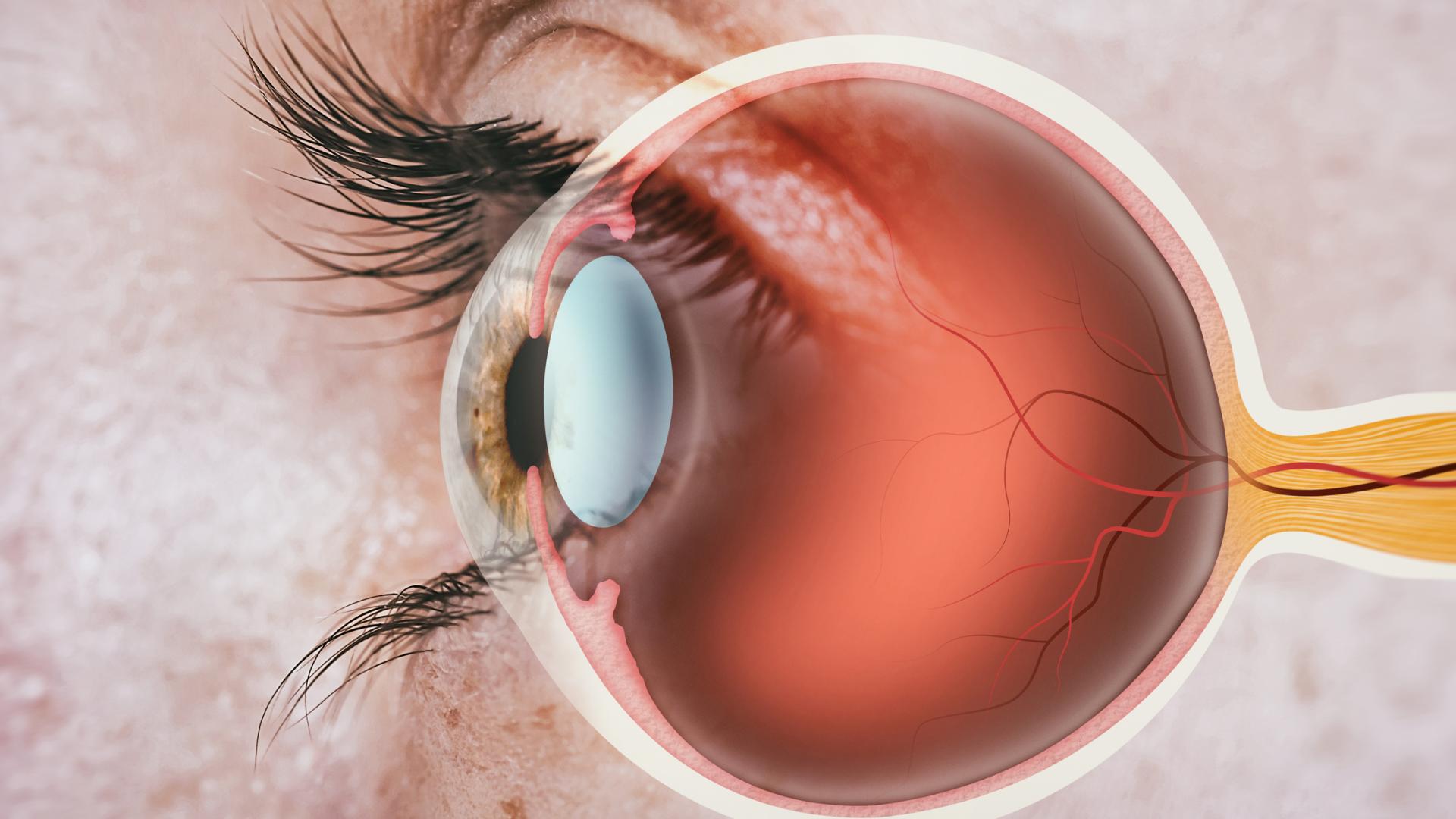
DR. INAS ABOOBAKAR: Yes, that’s a great question. So the term glaucoma refers to actually a group of diseases that all have the common feature in that they damage the optic nerve in the eye, which is basically the cable that connects the eye to the brain and allows us to see. And what happens is that in the initial stages, you typically have vision loss in what we call the peripheral or the side vision, and so at that time, patients may not notice any symptoms, especially if the other eye is completely healthy. That’s what really makes it a sneaky thief of sight. And as the disease worsens, it ultimately does affect the central vision and cause symptoms. But unfortunately, by the time that has happened, the disease is very advanced, and there’s no way to bring back the vision that is lost.
DR. JIMMY LIU: Great. Thanks so much for that explanation, Dr. Aboobakar. So, when we talk about glaucoma risk, how big of a role does family history actually play? For example, how does having a parent or sibling with glaucoma increase someone’s risk?
DR. INAS ABOOBAKAR: Yeah, that’s a great question. We’ve known for a long time that family history is one of the most important risk factors for the disease. There have been many studies that have been done in different populations, and they have compared risk of disease in those who have a first-degree relative—so, that means either a parent, a sibling, or a child with glaucoma. And the people who have what we call a first-degree relative with the disease, they have up to 10 times higher risk of the disease compared to those who don’t. So really, that is a very high-risk group—the people who have a first-degree relative.
DR. JIMMY LIU: And then we had a listener question that came in and asked: If my family doesn’t have glaucoma, how did I get it?
DR. INAS ABOOBAKAR: Yeah, that’s a good question. You know, that can be frustrating. It kind of seems like, “Why did I get the disease when no one else has it?” We do know that there are many genes associated with the disease, but also your genes are not your destiny, and there are other risk factors, too, that are unassociated. One of the other big risk factors, unfortunately, which none of us can control, is aging. There are other medical conditions—like high blood pressure or low blood pressure, diabetes—that can influence your disease risk. There are many other risk factors, so this is not the only risk factor for the disease, unfortunately.
DR. JIMMY LIU: Perfect. Thanks so much for that explanation. So, as we heard in your bio, you’ve been studying genetics and glaucoma for a while now. Can you please share with us what is currently known about the genetics behind glaucoma? And how much of the disease is inherited versus influenced by lifestyle or other factors, like kind of what you explained earlier?
DR. INAS ABOOBAKAR: Yeah, it’s a good question. So, you know, when we think about the genetics of glaucoma, we usually break it up into two different groups of the disease. One is the patients who present before age 40, and that’s what we call early-onset glaucoma. And typically, for that form, there are known genes where a single mutation in a gene is enough to cause the disease. And those tend to be very strongly inherited, and if you have those variants, you’re at very high risk of developing disease. Now, the other type of glaucoma is what we call adult-onset glaucoma, which presents after age 40. And these are the common forms, like primary open-angle glaucoma, primary angle-closure glaucoma. These forms are typically what we call complex inherited diseases. So a single gene variant will not cause disease in most instances. We have many different common genetic variants that have a small but cumulative impact on disease risk. And when we look at all of these genetic markers together, those explain about 40–70 percent of the disease risk. That’s a high number. But also that tells us is that your genes are not your destiny. It’s not 100%. There are other factors, like your environment; your lifestyle; what other diseases you have, like high blood pressure, diabetes; your age. All of these things also do interact with the genetic burden to influence disease development.
DR. JIMMY LIU: Thanks so much for that explanation. To kind of follow up on this in terms of the genetics of glaucoma, do you know if people can get screened for some of the genes that you just talked about that are associated with glaucoma?
DR. INAS ABOOBAKAR: Yeah, that’s a good question. I think there are good panels available currently for early-onset forms of disease—the ones that present before age 40, single-gene mutation, those can be helpful in terms of knowing if you carry that same mutation that your family member has that caused them to develop a disease at an early stage. It also provides information in terms of family planning, like how likely are you to pass that gene on to your own children? But then in terms of the adult onset, there are also these emerging commercial tests called polygenic risk score tests that are now becoming available. All of these do have currently an out-of-pocket cost associated with them. And, you know, it is a good tool to look at where you fall in terms of the population distribution, but it’s not really clear right now in terms of how the performance varies across different ethnic populations. We don’t have as much information to know if it works equally well in European-derived individuals versus African versus Latino; that is something that is kind of unknown currently. The other thing is what to do with that information, whether that influences whether we start treating earlier or how we monitor. All that is kind of not yet very clear. And so, they are available, but the use is kind of limited currently.
DR. JIMMY LIU: Thanks so much for that explanation, Dr. Aboobakar. Many people hesitate to share health information with relatives. What should people tell their families about glaucoma and their hereditary risk, and how early should these conversations start?
DR. INAS ABOOBAKAR: Yeah, that’s a great question. I would say it’s really important to let your family members know, especially your first-degree relatives, as soon as you’re diagnosed. There’s no real need to wait because we know that they’re 10 times higher risk, and they may actually already be losing vision silently at that time. And we have good treatments available right now in terms of being able to lower the eye pressure and keep their disease from getting worse. And so, I would say discussing as soon as you’re diagnosed is important. And what you can do is you can let your family members know that it would be a good idea for them to call and schedule an appointment for an eye exam to be screened for glaucoma and that when they have this eye exam, they should specifically mention their family history of glaucoma; that way they get the appropriate test that you need to screen for the disease.
DR. JIMMY LIU: Perfect. And do you have any suggestions for how to start the conversation if someone feels uncomfortable or unsure of what to say?
DR. INAS ABOOBAKAR: Yeah. I know it can be uncomfortable sharing this information with your family, but also at the same time, it really is one of the best gifts that you can give your loved one, you know, to help them preserve their vision for the rest of their life. We know how critical it is to all of our activities—driving, reading, so many other things—so really, it’s one of the best gifts we can offer our family. And one approach I think would be to tell them that you were recently diagnosed and that your doctor mentioned to you that all your first-degree relatives are a 10 times higher risk, and so you’re passing this information along to them so that way they can schedule a visit with their eye doctor to be screened. And if they want more information about glaucoma or its connection to family history or anything else, you can also direct them to some great educational materials that are available online. The American Glaucoma Society has a Family Matters Program that touches on the family member risk. There’s also great resources from the BrightFocus Foundation and other groups, as well. So, there’s lots of great resources you can direct them to, as well.
DR. JIMMY LIU: Perfect. Thanks so much for that information, Dr. Aboobakar. You kind of talked in the previous questions about how family members should start being evaluated when you’re diagnosed with glaucoma. What type of eye exam is needed to check for glaucoma, and how often should people with family history be screened?
DR. INAS ABOOBAKAR: Yeah, it’s a good question. What we typically recommend is that family members of people who have glaucoma usually start eye exams around 35 to 40 years old. And if there’s a strong family history of disease even before the age of 40, then I would recommend screening even earlier—possibly even in childhood, early adulthood—because they’re at risk of developing the disease even before age 40. And then a comprehensive eye exam; it kind of involves a few different things. One thing we do is we check the vital signs of the eye. That includes things like vision, the eye pressure in the eyes. And then we look throughout the eye itself. We look at the front of the eye. We look at the back of the eye. We can take a look at the optic nerve on our exam and see if it looks suspicious for glaucoma. We also use a contact lens that we place on the eye to look at the eye’s drainage pathway to see if it’s open or closed, because that tells us if you are at risk of open-angle versus closed-angle glaucoma. So we do a comprehensive eye exam. And then the other things that we do are we get some important pictures of the eye. One of the pictures we get, it allows us to measure the thickness of your nerve. And then we also have you do what’s called a visual field test, where we have you take a look straight ahead, and we test targets in your peripheral vision to see if you can see them. And so that tells us whether there’s any damage to the peripheral or side vision.
DR. JIMMY LIU: Perfect. Thanks so much for that information, Dr. Aboobakar. What tips do you have for motivating family members, especially those who feel fine or feel nothing at all, to get a glaucoma exam?
DR. INAS ABOOBAKAR: Yeah, so it can be tricky in those situations to motivate family members who feel fine. But I would emphasize to them that with glaucoma, it is a silent thief. It may be damaging your eyes even though you don’t have any symptoms. That’s what really makes it tricky to catch without an eye exam. And that’s why you recommend that they get screened, because catching it early and treating it can help preserve their vision, which is important for their quality of life, their independence for the years to come, and it’s also sometimes important to kind of follow up and remind patients or see if they’ve already scheduled a visit or maybe even offer to attend the appointment with them if they want someone to be there with them.
DR. JIMMY LIU: Perfect. Thanks so much. And then, we talked a little bit about letting your family members know about your diagnosis and things like that. Afterwards, after all of this has occurred, how can families support each other after one member is diagnosed, both in terms of understanding the diagnosis and adhering to the treatment regimens associated with having glaucoma?
DR. INAS ABOOBAKAR: Yeah, a diagnosis of glaucoma can be stressful in that regard because it is a lifelong disease. It can cause permanent vision loss. It does require you to take treatment, sometimes eye drops very regularly on a daily basis. Some of the things you can do is, first, provide emotional support to help your relatives manage their fears about their diagnosis. It can also be helpful to share the resources that you’ve found helpful as you’ve navigated the disease. And you guys can also help each other stay accountable in terms of staying on schedule with the treatment, maybe checking in to see if you’ve used your drop that day, or making sure that you’re making all your regular follow-up visits to catch the first signs of the disease worsening.
DR. JIMMY LIU: Perfect. And if a family member is diagnosed early because of screening, how does early detection change their treatment outlook overall for glaucoma?
DR. INAS ABOOBAKAR: Yeah. Once glaucoma is diagnosed, you can start treatment right away. And usually that involves lowering the eye pressure. And we can do this through many different ways. We can either use eye drops, laser procedures, surgeries. And what the data shows is that people who are able to successfully lower their eye pressure, it dramatically slows or prevents further damage to the nerve. That helps preserve the field of vision and independence in their daily activities. So, the bottom line is if the disease is caught early, we can help prevent glaucoma from stealing a patient’s sight with all the treatment available to us in most situations.
DR. JIMMY LIU: Perfect. Thanks so much for that information, Dr. Aboobakar. So we’re going to go to some listener questions that we received online. So one question that we had was: If I do not have early-onset glaucoma, and I do not have any first-degree relatives, do I need to discuss glaucoma with my cousins?
DR. INAS ABOOBAKAR: I think it’s worthwhile still, because there are other gene variants and stuff that could be missed on some of these…you know, that we don’t know about yet. It may be that their risk is somewhat similar to the normal population, and maybe they are slightly higher risk. They may not necessarily be 10 times higher risk, but usually it’s a good idea for everyone after the age of 40 to get just a baseline eye exam and follow up every few years to make sure nothing is changing, if there is any suspicion on that initial exam.
DR. JIMMY LIU: Perfect. And then another listener question that we had was: Can those with a family history of glaucoma take anything, like vitamins or supplements, to help with glaucoma?
DR. INAS ABOOBAKAR: Yeah, it’s a good question. Unfortunately, we don’t have any kind of lifestyle factors, any supplements, anything else right now that is available to kind of help decrease the risk of the disease developing or getting worse. I know for macular degeneration, there are vitamins that, once the disease is caught, it can keep it from getting worse. We don’t have anything like that for glaucoma currently. But people are investigating certain new treatments that may be available in the years to come.
DR. JIMMY LIU: That sounds great. And that’s really exciting for the future of glaucoma treatment that people like yourself are working so hard to find treatments for those with glaucoma.
DR. INAS ABOOBAKAR: Yeah. We want to do our best to be able to have new therapies and new ways of detecting the disease at its earliest stages. So there is hope that we can still do better in the years to come, as well.
DR. JIMMY LIU: To just wrap up, do you have—I know previously you talked about different resources at the American Glaucoma Society and at BrightFocus Foundation—do you have other places where listeners can go to learn more or find support about learning about glaucoma and things like that?
DR. INAS ABOOBAKAR: Yeah. So there are other—I mentioned the American Glaucoma Society, BrightFocus Foundation, American Academy of Ophthalmology. A lot of places have resources. There also are books available on Amazon that have been written by patients with the disease that kind of discuss sort of their experience with glaucoma and how they’ve kind of navigated it, as well. So, I think there are a lot of wonderful resources out there for patients.
DR. JIMMY LIU: Perfect. I guess that’s all the time we have for questions today. Thank you so much, Dr. Aboobakar, for answering so many of our questions and all of the information you shared with us. To our listeners, thank you so much for joining our Glaucoma Chat. I sincerely hope you found it helpful. I would like to mention that both BrightFocus Foundation and the American Glaucoma Society websites have a wealth of information about glaucoma, just like what Dr. Aboobakar said. So please visit BrightFocus.org and AmericanGlaucomaSociety.net to learn more. If you are already subscribed to National Glaucoma Research emails, you will automatically receive an email that links to the transcripts and resources from today’s call when it’s ready. Dr. Aboobakar, before we close, what’s the one message you wish every family knew about glaucoma and hereditary risk and any closing remarks that you have?
DR. INAS ABOOBAKAR: I think the biggest thing is just the fact that it is a very high-risk group. I mean, 10 times higher risk when you have a first-degree relative. So, it’s really a population where I think we can make a meaningful impact in terms of reducing the burden of blindness from the diseases. You know, if you have these conversations with your family members and they’re caught early, really it’s a wonderful gift to give them. It’s the gift of sight for the rest of their lives.
DR. JIMMY LIU: Perfect. Thank you so much for that takeaway advice, Dr. Aboobakar.
DR. INAS ABOOBAKAR: Yeah, thank you so much for having me. It was a pleasure to be here.
DR. JIMMY LIU: Of course, likewise. So our next Glaucoma Chat will be on Wednesday, April 8, 2026. Thanks again for joining us today, and this concludes today’s Glaucoma Chat.
Useful Resources and Key Terms
BrightFocus Foundation: (800) 437-2423 or visit us at www.BrightFocus.org. Available resources include—
Helpful treatment options or resources mentioned during the Chat include—
- American Glaucoma Society
- Family Matters Program
- American Academy of Ophthalmology
- National Eye Institute
- Books written by patients who have glaucoma
- Polygenic risk score tests