Transcript
Download PDF
Please note: This Chat has been edited for clarity and brevity.
DR. JIMMY LIU: Hello, and Happy New Year. My name is Dr. Jimmy Liu, and I am the Director of Vision Science Programs at BrightFocus Foundation. I am pleased to be your host for today’s Glaucoma Chat, “Beyond Eyedrops: Modern Options for Glaucoma Care.” Glaucoma Chats presented by BrightFocus Foundation are a monthly program, in partnership with the American Glaucoma Society, designed to provide people living with glaucoma and the family and friends who support them with information straight from the experts. We would also like to thank this month’s Chat sponsor, Glaukos, for their support.
The information provided in this program is for educational purposes only and should not be considered medical advice. Always consult a qualified health care professional regarding any medical concerns or conditions. Please note that BrightFocus does not endorse or promote any specific brands or products.
BrightFocus Foundation’s National Glaucoma Research Program is one of the world’s leading nonprofit funders of glaucoma research and has supported more than $52 million in scientific grants exploring the root causes, prevention strategies, and treatments to end this sight-stealing disease.
Now, I would like to introduce today’s guest speaker, Dr. Mehul Nagarsheth, who is a glaucoma fellowship–trained specialist who has been in private practice for the past 12 years in Reading, Pennsylvania. He is part of a large multispecialty group practice and delivers high-quality interventional and medical care for his patients. He also helps actively train and educate the next generation of medical students. In his spare time, Dr. Nagarsheth enjoys spending time with his wife and two kids, exploring new areas around the world, singing karaoke with his staff, making various cocktails, and is a big fan of the WWE. Thank you for joining us today, Dr. Nagarsheth.
DR. MEHUL NAGARSHETH: Thanks so much for having me, Jimmy. It’s a pleasure to be on the call with you and to reach out to more people, educate them about glaucoma. And maybe we have some WWE superstars that are in our attendance, too. It would be nice. But before we get started, I do want to thank… if my staff is listening, I do want to thank them for giving me the time to be able to do this, to help other people out around the country, around the world, if we have any worldwide listeners, just educating them about this disease and hopefully letting them know what our options are for glaucoma going forward.
DR. JIMMY LIU: Yes, of course. And thank you so much, Dr. Nagarsheth, for taking time out of your busy day to conversate with everyone on this call. So, I want to start off with our first question of the day. Can you start briefly by explaining what glaucoma is and why early diagnosis is so critical?
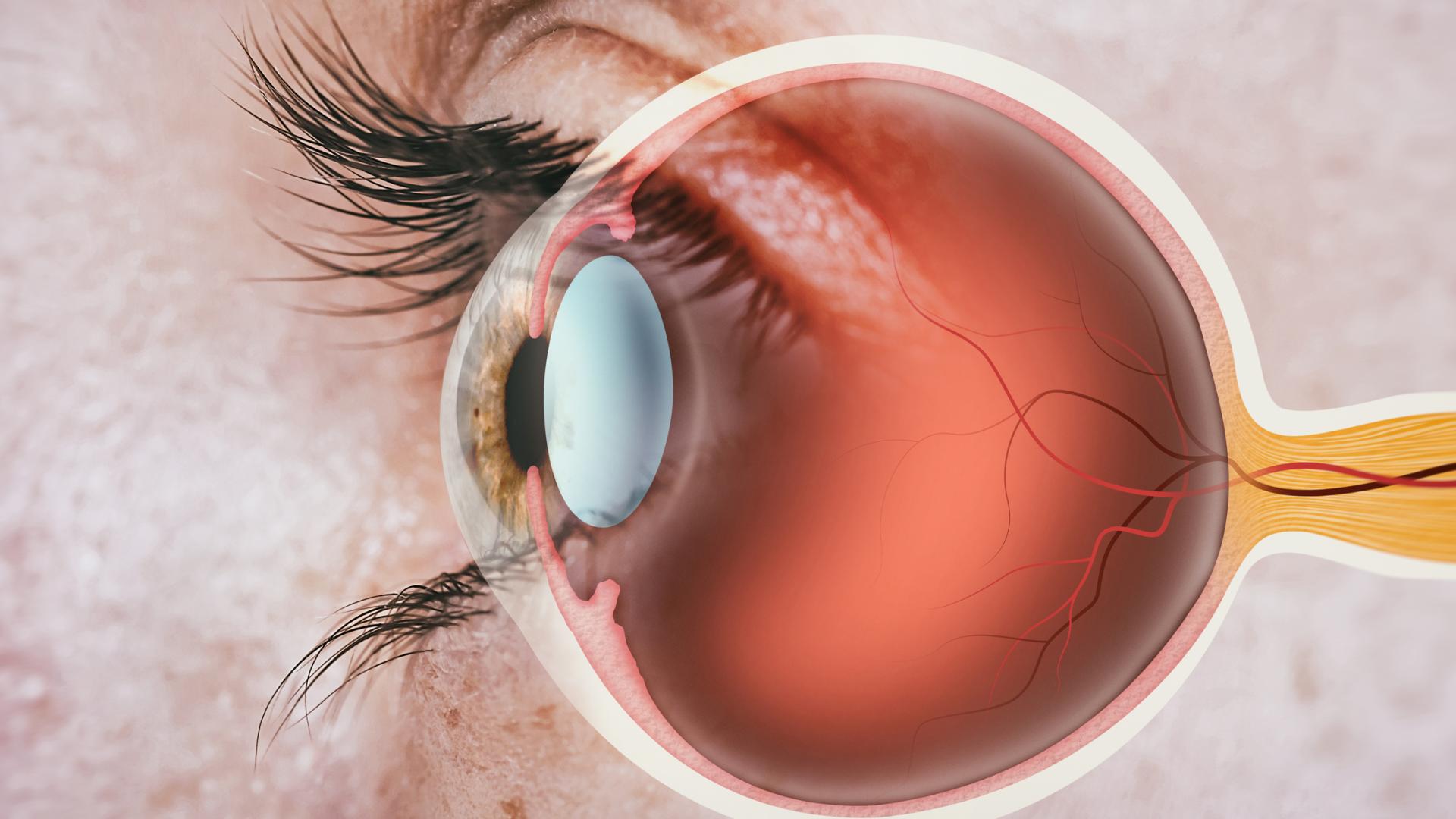
DR. MEHUL NAGARSHETH: Yeah, it’s such a great question, and so many different ways to answer it, but I’ll try to break it down as simply as I can. Glaucoma is a disease that we’ve known for essentially hundreds of years now, where it’s a disease that affects the optic nerve. The optic nerve is the main cable that transmits vision from the eye to the brain. As the nerve gets diseased and damaged from glaucoma, it’ll typically cause you to lose areas of your peripheral vision, and it kind of sneaks up on you over time. That timeframe can vary person to person and disease to disease. It could be anywhere from months to years, and sometimes it could even be very quickly, over the course of a couple of days. With glaucoma, when you lose vision from it, you can’t get it back, so it’s irreversible loss of vision, and it can potentially cause you to go blind.
The way that we end up really targeting glaucoma and treating it, it always involves the intraocular pressure. So, patients will often know the pressure in their eye—that’s what we’re always measuring. And the way we target the pressure is by looking at the drain. So, not only is glaucoma a disease of the optic nerve that controls the vision, but it’s a disease of the plumbing mechanism, what we call the angle that helps to drain fluid out of the eye into the bloodstream and regulates the pressure. So, you have to think of it as essentially three things. At first, you have a drainage system in the eye called the angle that controls the intraocular pressure. That intraocular pressure, if it goes uncontrolled, it’ll cause damage to the optic nerve. If the optic nerve gets damaged, then it causes you to lose vision. So, that’s the pathway, and it’s important to understand that pathway because a lot of that involves our treatments and how we manage glaucoma for patients. So, it’s important to catch the disease early because you don’t want to catch it when it’s very late stage, when you’ve already lost a lot of your vision, because, again, we can’t bring it back. But if you catch the disease early, you can target the disease earlier in that drain and you have a lot more options to work with when you’re targeting the drain and improving the pressure to hopefully prevent any damage from happening to the nerve.
DR. JIMMY LIU: Perfect. Thanks so much Dr. Nagarsheth for that very detailed explanation about glaucoma. So leading onto that, what are some common misconceptions individuals have about glaucoma treatment, maybe some that you’ve heard in your practice?
DR. MEHUL NAGARSHETH: Yeah, great question. So, glaucoma, there’s so many different misconceptions about it. First, people think that glaucoma is curable, that we can cure glaucoma, we can cure this disease. Unfortunately, that’s not the case right now. There’s no cure for glaucoma. Once you lose the vision, we can’t get it back, so glaucoma is not a curable disease. It’s not like once we start you on an eyedrop or we do a therapy, that it’s gone forever. It doesn’t work like that. This thing is always with you. All we can do is just try to control it and hopefully prevent it from affecting your quality of life and your vision.
The other misconception is that all we have in glaucoma are eyedrops. Oftentimes, people will think that drops are the only way that we can control glaucoma. And to some degree, I’m guilty of that, too, because one of the things that I always ask our patients is, “Do you have any family members that have glaucoma?” And they may not know what glaucoma is, but then as soon as they say like, “Oh, were they using eyedrops?” And then, they’re like, “Yeah, they’ve been on like three, four drops every day.” Then they kind of equate that with having glaucoma. That’s not the case. We don’t just have eyedrops, we have excellent targeted therapies now that we didn’t even have even 5 to 10 years ago.
And then the other common misconception—and we’ll talk about all those treatments coming up—the other misconception is that once the doctor tells the patient that, yeah, you have glaucoma, they automatically think that they’re going to go blind. And there may be some element of truth, but there’s a lot of falsities in that in the sense that having glaucoma is not a death sentence for your vision. The whole goal is catching this disease so it doesn’t cause further trouble with your sight. So, we have a lot of great therapies and a lot of great solutions to try to get this disease early and prevent all the bad stuff from happening to your sight.
DR. JIMMY LIU: Perfect. Thank you. Thank you so much, Dr. Nagarsheth, for that explanation about misconceptions about glaucoma treatments. Kind of what you were alluding to in your explanation, you talked about how treatment for glaucoma has evolved from even 5 to 10 years ago. Can you explain how treatment for glaucoma has evolved since that point?
DR. MEHUL NAGARSHETH: As far as the nature of the disease, we’ve shifted gears in the sense that I think that we’re now in a Renaissance period of glaucoma, just because we didn’t really have too many other options besides medicines and high-risk surgeries. And then over the past couple of decades, things have really evolved with research, intervention, and just smart people coming up with great, brilliant ideas of how to fix this, the nature of this problem. So, now we’re able to be more proactive with the disease. We’re now in a state where we’re not waiting for the person to start losing vision. We’re able to catch this disease earlier at the source of the nerve, or even at the source of the drainage system, and we can target that, the eye, a little bit sooner before it really starts affecting their quality of life. So, there’s been a lot of technology, a lot of developments, a lot of biomedical engineering that’s been safe, effective, and essentially directing therapy to that drainage system. And it delivers that therapy 24 hours a day, 7 days a week—that oftentimes is much more successful than even treating the patient with ongoing eye drops.
DR. JIMMY LIU: Perfect. Thank you so much for that explanation. Continuing on, what is interventional glaucoma?
DR. MEHUL NAGARSHETH: Interventional glaucoma is essentially our whole new paradigm shift for how we’re managing and treating patients with glaucoma. Now, as technology has gotten better, we have much safer and more effective ways of treating this disease. And it may not necessarily involve treatment, it’s just more thinking about the disease a little bit differently. So now, again, we want to try to be proactive with the disease. We don’t want to wait for people to start losing vision, we want to be more proactive. We can start catching the disease earlier with different diagnostic tools, what we call OCT or optic coherence tomography, where we actually analyze the thickness of the nerve and we can act on the disease a little bit earlier before it causes visual field loss. We want to treat the disease earlier when we have so many more options of treatment, and we can really fine-tune and tailor the treatment to the lifestyle of the patient, so patients themselves.
Again, drops have always been typically our first line way of managing this disease, but things have greatly changed as we’re really paying attention to the patient and their needs and their burdens and what they’re facing on a day-to-day basis. Sometimes even eye drops, just taking the bottle, trying to squeeze the bottle is very difficult for a patient that has arthritis. And oftentimes patients, they may not be too great at seeing the drop coming into their eye or feeling the drop hitting their eye. So, now we have other ways of managing that, often with laser or with what we call pharmaceutical therapeutics, where we introduce the medicine directly into their eye, and that helps to stabilize the pressure. So, interventional glaucoma is essentially like our renaissance for glaucoma, just because we have so many different treatment options. And ideally, the sooner we get people on these sorts of therapies, the longer the therapies will last without really changing their lifestyle.
DR. JIMMY LIU: Perfect. Thanks so much, Dr. Nagarsheth, for that explanation about interventional glaucoma. For someone who is newly diagnosed, what are the first steps that they should take?
DR. MEHUL NAGARSHETH: With newly diagnosed glaucoma, oftentimes the person will have no symptoms. Glaucoma has often been called the silent killer of vision because you have no symptoms early on, like you’re not really noticing these subtle changes in your peripheral vision. So, often they have no symptoms. Typically, the natural story is that they’ll go in to see their optometrist to get checked for glasses or contact lenses, and then the optometrist is going to say, “Oh, you know, your pressure is a little bit higher. Do you have other family members that have glaucoma? Do you have other people that are affected with this disease?” And then they may notice changes with their optic nerve. When they look into their eyes, they examine the optic nerve, they can see changes that are falling in line with potential glaucoma.
When they get to that point, then the optometrist, if they have certain diagnostic tools at their disposal, then they may check this OCT. They may do a scan of their optic nerve to get a sense of how much thinning there actually is, like an objective test to directly measure how thick the optic nerve is, and more importantly, how thin the optic nerve is, how much disease is actually there. From that point on the other diagnostic tool that they would use is what we call a visual field. Most people hate this test. I hear on a frequent daily basis as to how much people hate this test, because it’s a test that they have to do. It’s kind of anxiety provoking, where you’re in, I would call, like an igloo machine, and there’s little lights that flicker, and you have to click a button every time you see a light. Most people that have taken this test once, they’re going to remember it for the rest of their life because they hate it so much. But it’s one of those tests that we have to do to really measure and identify how severe the disease is, how quickly it’s advancing.
And hopefully, it’s not advancing too much, it’s something that we can catch and we can direct our treatments to prevent it from really taking away their main aspects of peripheral vision. We never want to see them lose any sight altogether, but it’s much more devastating to the patient if they start losing their central vision because of this disease. So for newly diagnosed patients, they’re going to have some imaging done to the nerve, they’ll have their pressure checked, they’ll usually have a dilated eye exam, and then they’ll have this visual field assessment. And then from that point on, the eye doctor is going to let them know if you need to be on either some medicine or if there’s other options that you want to consider to try to help treat the disease.
DR. JIMMY LIU: Perfect. Thanks so much for that explanation. So continuing on, you talked a little bit about eye drops and how that’s been used as traditional treatment for glaucoma. You’ve also talked about many other treatments that you’ve alluded to in this call. Can you detail a little bit about those modern alternatives to eye drops that can be used to treat glaucoma?
DR. MEHUL NAGARSHETH: Yeah, I would love to. So yeah, again, the way that we used to think of glaucoma is just a disease of eye drops, where you’re constantly on eye drops until it’s really, really bad, and then you end up doing more invasive surgery, where there’s essentially more risk involved and potentially just lifelong risk of infection. So, what we end up doing now is there’s a lot of advances and a lot of support for laser therapies—often what we call laser trabeculoplasty, where we directly target the drain and we stimulate it with light, and we try to make the drainage system work better. These are often our first line.
We had a large, multicenter study. It was a LiGHT trial that was there, and the results were very impressive in the sense that it was quickly showing that laser trabeculoplasty—selective laser trabeculoplasty—is safe, effective, and even financially effective for the patient to try to help prevent the disease from really getting worse and affecting their quality of life. Often, doing that as first line helps to really prevent the disease from progressing, and it can control the disease for several years and can safely be repeated. So laser trabeculoplasty, safe, low-risk procedure, that often is our first line over some eye drops. And then after that, if, you know, if the disease continues to progress after trabeculoplasty, then we go the route of, typically, pharmaceutical therapeutics.
Now over the past 5-plus years, we’ve had advances where the medicines that have given so many patients so much improvement with trying to prevent the disease from getting worse, they’ve now biomedically engineered these medicines from a drop form into a more long-acting agent. Sometimes it involves us putting a pellet directly into the eye, almost like targeted therapy, where we’re putting that pellet directly into the eye and it goes directly to the drain and starts to give it a kick start, so to speak, where it helps to control the pressure even better by working on the drain. It’s a treatment called Durysta®, and we introduce it in a pellet form through a microneedle that patients don’t feel. It’s a very safe treatment that we do right here in the office, and that essentially takes the place of one of our longest and most successful eye drops to help treat the patients. There’s also another way of introducing that medicine through a device that we would physically implant into the eye, also through a microincision. It would involve a trip to the operating room, but very safe treatment, which only takes a matter of minutes to perform, where we can insert this device directly around the drain into the eye, and it slowly releases that medicine over an extended amount of time. So, these pharmaceutical therapeutics are great because it takes the burden away from the patient, and patients don’t have to use eye drops nearly as often, or they probably don’t have to use eye drops at all for maybe a couple months, maybe a couple of years, and all to help control this disease from getting worse.
Then we have more advances in the realm of stents and what we call canaloplasty, where these are all considered the minimally invasive glaucoma surgeries, where we can implant these devices or we can open up the drain directly. The drainage system that’s there that gets affected in glaucoma, we can either open up and dilate that canal, dilate that drain, and then we can put a mini stent into that drain to keep that the functionality open. So, it’s almost equivalent to interventional cardiology, how if they have a diseased blood vessel in their heart or in their body, we can use a balloon, expand open the blood vessel, and then they can put a stent in. A lot of that is similar with interventional glaucoma. We’re doing these same things that have been done in different fields of medicine, and just working at a much, much smaller level inside the eye. And then, we have other stents that are a little bit bigger, that can essentially drain fluid out of the eye and create what we call a bleb into the subconjunctival space. The only one that’s approved right now in the U.S. is the XEN® Gel Stent. So, that’s also another sort of what we call a minimally invasive bleb surgery, because this is forming a separate bubble in the eye, but also very safe, very effective, and much less risk compared to our traditional glaucoma surgeries, which include trabeculectomies and putting in tube shunts.
Not to say that those are outdated, but now we have so many other safer means of treating the patient compared to trabeculectomies and tube shunts that may do enough to help prevent the disease from escalating. So, there’s a lot of cool things that we have now for modern day treatments of glaucoma.
DR. JIMMY LIU: Well, that’s awesome. Thanks so much, Dr. Nagarsheth, for that very detailed explanation. I think that’ll give a lot of people on this call a lot of hope that there’s a lot of really up and coming new treatments for glaucoma. So moving on, what factors determine whether a patient is a candidate for these new interventions that you described previously?
DR. MEHUL NAGARSHETH: Yeah. So a lot of that goes into it. In the end, it’s going to be the comfort of their eye doctor. But aside from that, a lot of it has to do with the nature of their disease and how their eye is. So if the disease is very severe, if the patient has unfortunately already lost a lot of their vision from glaucoma, then some of these other means of controlling the disease like our Durysta pellets, our eye stents, they may not work as effectively. It’s not to say that they won’t work, but they just may not work as effectively compared to a bigger sort of surgery, like a trabeculectomy or a tube shunt. So those bigger surgeries, they’re still very important as the disease escalates, but typically, if they’re early in the disease, if we’re catching it early, we can directly kind of work on their natural drain and fix the problem a little bit more directly. It’s almost like if you have a blocked drain in the house, if there’s a blocked drain in your kitchen or whatever, you want to try to catch the clog right at the level of the sink. You don’t want it to wait until there’s massive problems with your pipes further down, because that’s going to be a much bigger problem. So in glaucoma, we want to try to catch the disease early, where it’s really just affecting the beginning portions of that drainage system and it’s not going much further out into the blood vessels of the eye.
Other things that’ll determine if they’re a candidate for interventional glaucoma is: What other eye problems do they have? So, if they have other cornea problems, if they have something what we call Fuchs’ dystrophy or they have macular edema, they have bad diabetes with a lot of swelling in their eye, then we may favor one interventional therapy compared to another. Sometimes we may not want to put a stent in. We may not want to put an actual device if it’s going to be potentially causing some trouble with the cornea. We may not want to put a Durysta pellet in the eye if they have this Fuchs’ dystrophy. So, there’s different indications to do these therapies. At the same time, there’s different contraindications as to why not to do these therapies. A lot of that is going to be at the discretion of the doctor and the nature of their eye.
And then, of course, the main thing that determines if they’re a candidate for a lot of these therapies is if their drainage system is open. So, patients, they’ll often remember if we say that they have open angles or if they have angle closure. If they have angle closure, then often we need to open up the angle first, typically with a laser iridotomy, or they may need cataract surgery to open up the angle. A lot of these therapies are directed when their angles are open. So, that’s very important. Their anatomy has to be conducive to these treatments.
And probably the most important is going to be what your target pressure is. If the patient is coming in with pressures in their 30s and 40s, then sometimes the new modern day therapies may not be enough to really get their pressure down. They may need a combination of different therapies to really get the pressure down into a safe zone. That’s going to be up to the doctor that they’re seeing, what they feel is going to be the best target pressure for the patient. A lot of factors go into figuring out what the best strategy is. And oftentimes, it may not even be just one strategy. It may be a combination of different things that have to be done to really help stabilize their disease and prevent them from going blind. Because, again, this disease is not like a once-and-done fix; it’s with you forever. And we try to do the least amount of things possible to keep them stable. But oftentimes, we have to move up the ladder to make sure that they’re staying several steps ahead of this disease and preventing it from causing them to lose vision permanently.
DR. JIMMY LIU: Perfect. Thank you so much, Dr. Nagarsheth, for that explanation. So thinking about this from our listeners perspective, you talked a lot about all the different treatments—these modern treatments—that can be used to treat glaucoma. What can our listeners do in terms of working with their physicians to choose the best treatment plan?
DR. MEHUL NAGARSHETH: Ultimately, you have to be open with the doctor. Now, it’s like we are at a point where we have so many great tools and disposals and options for treating the disease. So, you want to be open with the patient if they’re on drops, say, and they’re having a lot of trouble with administering, if it’s tough for them to put the drops in, if they have trouble with the bottle, if they’re dependent on family members to put drops in and that family member is always working, making it hard for them to make it to see the patient. There’s a lot of things that go into that. We don’t think about it often. And we never did back 10 years ago. I feel like at that time, we were just worried about the disease. Now, we’re really shifting gears and focusing on the patient and their lifestyle and their burdens.
So now, if they’re having a lot of difficulties with drops in general, even just one drop a day, it can be very devastating and very anxiety provoking to that individual. We can tell them what their options are. Sometimes all they may need is a laser treatment that takes anywhere from like a minute or 2 to help get them off of a medicine. Or they can have these pellets put in right there in the office, or these implants that help to relieve the burden of medication. So, a lot of that, in order for the treatment to work effectively, the patient and the doctors have to have a good relationship where there’s open communication. If they’re having any difficulties with the drops, then it’s best to let the doctor know. Oftentimes, our treatment paradigm now, so to speak, has shifted where we’re trying to postpone drops as much as we can, knowing that there’s side effects long term with eye drops. Not only side effects to the surface of the eye, but it could cause more redness, pain, irritation. And then on top of that, there’s also a financial component to it. Over time, the insurance says they may not cover the drop that you used to be on, the medicine that has worked for years. Insurance may deny it now, and then we should go the route of these other modern-day treatment options to try to alleviate that burden, because those are getting covered, sometimes even better than eye drops now.
So, often we’ll start with laser treatment, like the laser trabeculoplasty. If that doesn’t do enough, then we’ll go the route of pharmaceutical therapeutics, where we introduce the pellet or these implants. And then, often, we’ll still use drops as a bridge between one therapy and another. If they’re still progressing, then we can go the route of putting these stents into the eye or essentially that canaloplasty, where we’re opening up the whole drainage network. If that doesn’t do enough, then we go the route of the minimally invasive bleb surgery with a XEN Gel Stent, typically. And if that doesn’t do enough, then we go the route of the more conventional, higher-risk, more invasive surgeries, like a tube shunt or a trabeculectomy.
DR. JIMMY LIU: Perfect. Thanks so much, Dr. Nagrasheth, for that explanation. I want to ask: What advancements in glaucoma care are you most excited about? And you talked a lot about a lot of these treatments are really not cures for glaucoma, but they slow progression. And so, is there anything in terms of advancements in the field that are really exciting to you that will slow progression? And is there anything out there that can potentially cure glaucoma?
DR. MEHUL NAGARSHETH: Oh, that would be great. And then I may be out of a job, though. So, the things that I’m really excited about with this field is just how we’ve rethought about this disease. Before, it was like we were always focusing on drops, and patients have to use their drops. Regardless of what their problems are with the drops, they have to use it, because that was the only medical way of really managing the disease.
And then we started thinking more about the nature of why they have glaucoma, why it progresses. And we really started thinking of it more as a plumbing problem, where there’s a plumbing mechanism inside of the eye that begins to fail. That rethinking of this disease process opened up the door to interventional glaucoma, where we’re directly treating, essentially, the damaged pipes, so to speak, inside of the patient’s eye, and we’re trying to make that work again, we’re trying to revitalize that component. We may not be able to restore the health to the nerve, the optic nerve, but there’s a lot of options to help repair the drain. And if we can get to that disease when it’s just a drainage problem, when it’s just like problems with their anatomy and physiology, now we have the tools and we have the abilities to directly target the actual problem. Like a bad drainage system, we can open that system up and make it work more effectively. So, we’re kind of restoring the way that their anatomy and their physiology should be. And that’s exciting to me.
I feel like we’ve done so much in the past 10 to 15 years, rethinking about this disease and the pathology that’s associated with it, the pathophysiology, and we’re directly able to shift it. We can make their eye work a little bit better. We can make the physiology of their eye work better to hopefully protect the nerve. So while we can’t directly restore damaged nerve tissue in any real field of medicine—we haven’t been able to do that successfully for every single patient, for every single person—but we’re able to slow this disease down when we catch it earlier in the course with all this modern day therapy. And probably the other thing that I’m liking is that we’re thinking more about the patient. This is more now quality-of-life driven, rather than just scolding the patient for missing their drops or not being 100 percent compliant, so to speak, with their eye drops on a day-to-day basis. We’re actually listening to the problems that they’re having with their drops, and then we can direct therapies, to be there in accordance with their quality of life. We never were able to do that 20, 30 years ago.
DR. JIMMY LIU: Yeah, I completely agree. I think the field of glaucoma is really moving along quite well. And I think for all the listeners on the call, there’s a lot of hope in terms of treating glaucoma and treating the disease going forward. And so, we have a little bit of time for a couple of listener questions. I’ll ask one question from a listener who wrote, “I have severe glaucoma. Much worse in my left eye than my right eye. My doctor says that if I need more treatment than my current eye drops, I will need surgery that could blind me. What should I do if it gets worse? Can you please touch on the potential side effects of surgeries? And in general, how safe these procedures are?”
DR. MEHUL NAGARSHETH: Yeah, so the nature of glaucoma is that it’s an escalating scale, where you start with kind of mild disease, and then as it progresses, it becomes more severe and starts really impacting the sight. So, as you’re going further down that course, if you have more severe disease, then typically you’re going to need a bigger surgery in general. And those other surgeries like trabeculectomy and tube shunts, which have been around now for so many decades, we know that they are very, very effective, but at the same time, they’re very risky. The risk of the surgeries go up as the nature of the disease gets worse. At the same time, if it’s milder in the course, then you have a lot of safe and effective options that don’t carry that same risk. The nature of the risk could be anywhere like less than a 1 in 10,000 risk of really running into any trouble or to the point where it would harm the eye in any way.
For trabeculectomies and tube shunts for the more severe types of glaucoma that have really taken away the bulk of the vision, yeah, there is a greater risk that by doing a surgery, you could end up losing that little bit of vision. At the same time, it’s always good to know what the options are to get a better understanding of what surgeries the doctor is talking about. And sometimes it may even require openly communicating with the doctor, “Are there other options that perhaps other doctors are doing that you may not be doing?” A second opinion in when it involves your eye and your vision, I feel like I’m a big fan of that because we don’t always have all the answers. But that’s where we rely on our colleagues and other surgeons in the area that may think of the disease a little bit differently, and they may have other ways of managing it that could still be a little bit safer for you. So if you’re in a location where there could be another specialist, then it may not be a bad idea just to go in for a second opinion and just explore what the different options are.
DR. JIMMY LIU: Perfect. Thanks so much, Dr. Nagarsheth, for that explanation. And I agree with you. I think it’s really important for everyone on the call to make sure to be proactive and to make sure that you catch this disease earlier on versus later on to open up more treatment options for you. The last question that I have that we have time for today is a listener asked, “You mentioned,” like what I said before, “early diagnosis of glaucoma. Do any of these treatments apply to someone who has had glaucoma for several years? What is really your cutoff for early diagnosis?”
DR. MEHUL NAGARSHETH: Early would be when they have essentially no major visual field loss or very minimal visual field loss. Earlier in the disease is often where you have more options with the plumbing, with the drainage system. You can kind of restore that in some way and make it work better. And then, they often will need the least amount of interventions and the least amount of treatments. Anyone that has glaucoma, they can be in that framework in that early, mild disease. They can stay at that level for years, and they can still be on, like, maybe two or three eye drops, you know? If that’s the case, then they are an excellent candidate to try to get off of these medicines with some of these other therapeutic ways, you know? So, having glaucoma for years, if it’s been controlled and you’re not actively progressing, you’re not showing any signs where you’re losing more peripheral vision or even central vision, then those are the patients that would really benefit from these treatments as a way of trying to help cut back on their need for drops, free up their time so that they’re not actively thinking about when they have to put the next drop in. Those are often the best patients to do these treatments on.
DR. JIMMY LIU: Perfect. Thanks so much, Dr. Nagarsheth. That’s all the time we have today for questions. Thank you so much, Dr. Nagarsheth, for answering so many of our questions and all the information you shared with us. I would like to mention that BrightFocus Foundation’s website has a wealth of information about glaucoma. Visit www.BrightFocus.org to learn more. Another website you may find helpful is www.LivingWithGlaucoma.com. There are sessions on this website about treatment options and guidance for talking with your doctor. Again, that website is www.LivingWithGlaucoma.com.
To our listeners, thank you so much for joining our Glaucoma Chat. I sincerely hope you found it helpful. Dr. Nagarsheth, before we close, what advice would you give to patients who feel overwhelmed after receiving a glaucoma diagnosis?
DR. MEHUL NAGARSHETH: It’s always tough. I mean, glaucoma, having any sort of new disease, being diagnosed with it is never easy. Nobody wants to have this stuff. And believe me, the doctor doesn’t want to tell you that you have something like that. But the good thing is that there’s so much more technology and innovation that we have for this field where, again, it’s not a death sentence for your sight. You have to view it as an opportunity that there’s so much different stuff that we have at our disposal to save your vision, to prevent you from going blind.
Glaucoma is not like a disease like how it once was, where you have an overwhelming burden of being on drops, you have to pay attention to putting drops in all the time, otherwise you’re going to lose sight or you’re going to go blind. That’s not the case now. Now, there’s so many different options to help restore your lifestyle and to prevent you from losing vision, that can save your vision. It’s tough. I think everyone agrees that having a disease is never fun, but you have to think that there’s a lot of tools, a lot of technology and good people that are helping to prevent this disease from progressing that have worked so hard to figure out new ways of treating this and making it better for a person’s lifestyle.
DR. JIMMY LIU: Perfect. Thanks so much for that takeaway advice, Dr. Nagarsheth. Our next Glaucoma Chat will be on Wednesday, February 11, 2026. Thanks again for joining us. And this concludes today’s Glaucoma Chat.
Useful Resources and Key Terms
BrightFocus Foundation: (800) 437-2423 or visit us at www.BrightFocus.org. Available resources include—
Helpful treatment options or resources mentioned during the Chat include—