Lessons from Zebrafish: Restoring "Ground Zero" in Macular Degeneration
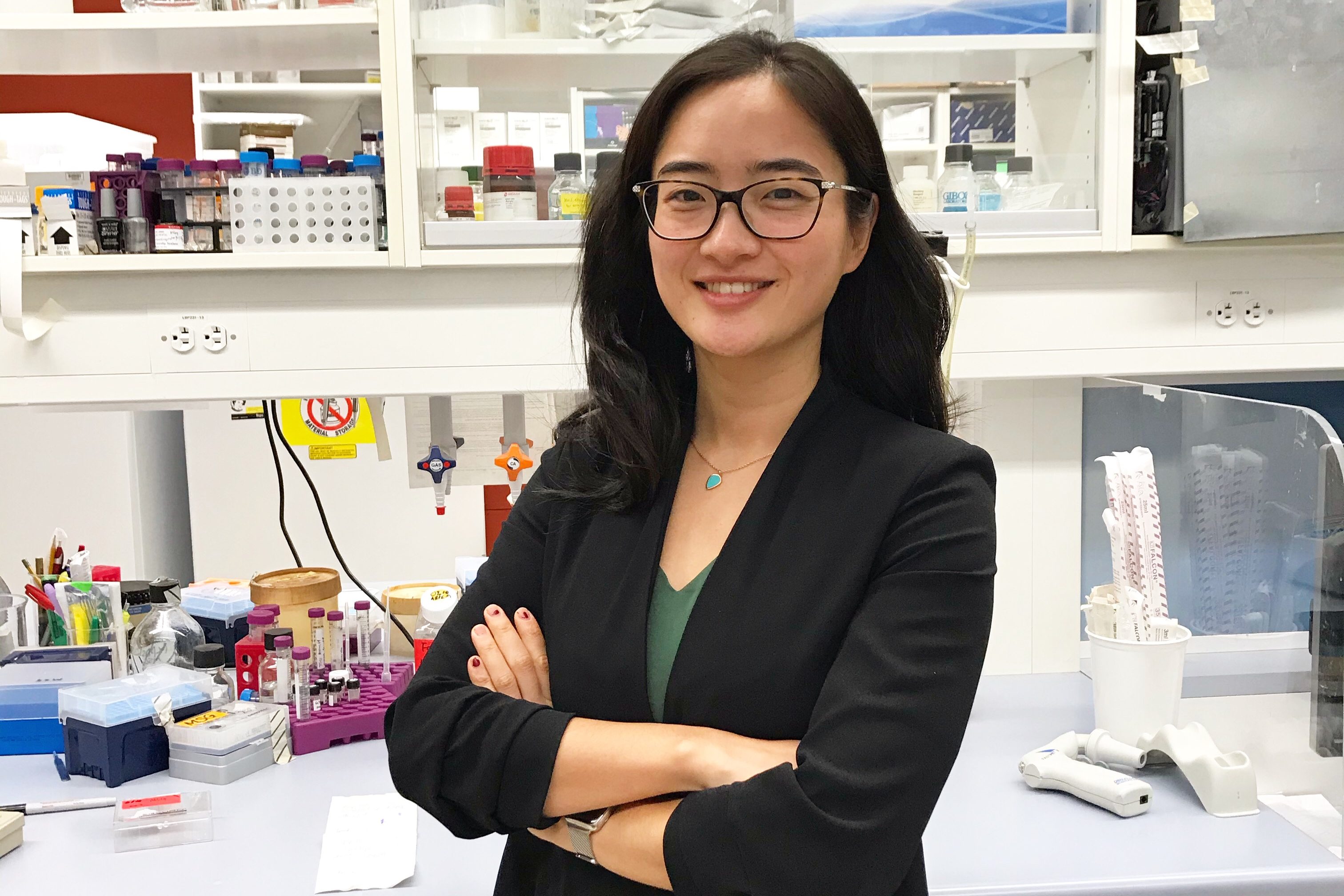
BrightFocus Macular Degeneration Research grant recipient Lyndsay Leach, PhD, is investigating what makes another species capable of regrowing the part of the eye where age-related macular degeneration starts.
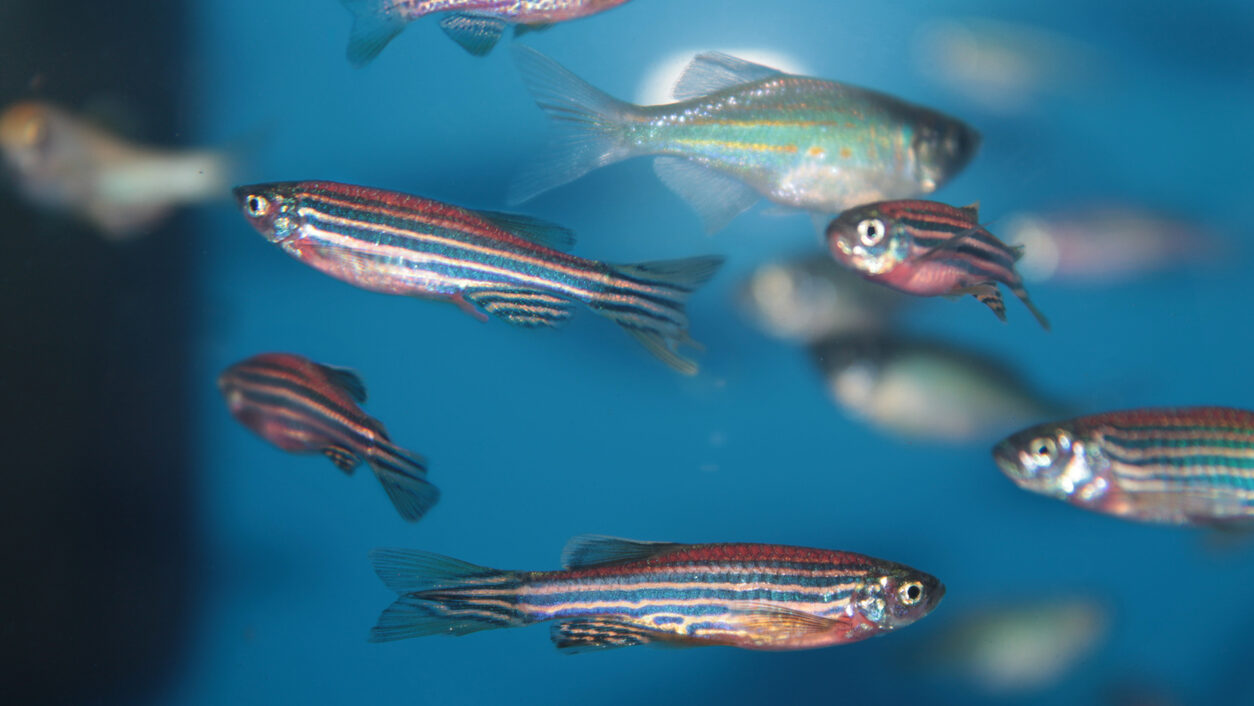
Using a unique animal model, scientists are exploring what makes zebrafish capable of completely replacing the first part of the eye to suffer severe damage in age-related macular degeneration.
The way the immune system of zebrafish responds to damage in this area plays a key role in the process.
Learning how this differs from how the human immune system responds to such damage could lead to treatments that mimic zebrafish’s self-repair process.
Scientists are studying zebrafish to understand how they can regrow the retinal pigment epithelium, the first part of the eye to suffer severe damage in age-related macular degeneration.
Could zebrafish hold the secret to learning how to regrow a crucial part of the eye where age-related macular degeneration (AMD) first takes hold?
BrightFocus Macular Degeneration Research grant recipient Lyndsay Leach, PhD, is well on the way to answering that question. Using a unique zebrafish model, her research team is unraveling how this species can regrow a whole, working retinal pigment epithelium (RPE) after this crucial layer of cells suffers severe damage.
AMD is a disease that attacks the light-sensing cone cells in the retina that give us the ability to read, drive and recognize faces. But AMD actually starts in the RPE. Sandwiched between the retina and the blood vessels that feed it, the RPE acts like a sort of life support system for the retina. As the dry form of AMD progresses, damage spreads from the RPE to cone cells in the center of the retina. Damage to the RPE is thought to trigger or drive this process.
Zebrafish Model Offers Insight into RPE’s Regeneration Potential
Zebrafish contain 70% of the same genes found in humans1. Unlike humans, however, zebrafish can replace many kinds of tissue, including the RPE, after it’s been damaged or injured. Dr. Leach, a research professor in medical biophysics at the University of Texas in Austin, developed a precise, non-invasive way of damaging only the animals’ RPE layer. The technique involves slightly changing a gene in zebrafish in such a way that RPE cells self-destruct when exposed to a specific drug.
Using this technique, Dr. Leach and her colleagues showed for the first time in 2019 that zebrafish can regrow a whole, working RPE after the existing RPE cells had been damaged2. Next, the researchers focused on whether the immune system plays a role in the ability to kick-start this repair and regrowth process.
Dr. Leach believes that uncovering the steps in this process and eventually comparing it to what happens when human RPE cells sustain damage, could lead to new treatments for dry AMD.
“Our overarching goal is to identify promising targets for developing therapies against RPE injury and diseases,” she said. Treatments based on this research could offer advantages over other approaches such as stem cell transplantation, which has not yet proven successful in regrowing a properly organized, functional RPE.
Dr. Leach has deeply personal reasons for committing her career to advancing our understanding of AMD. Before she entered graduate school, two things happened around the same time. She began working as a technician in an eye disease research lab, and her grandmother was diagnosed with AMD.
“Conversations with my grandmother about her symptoms, her fear of further vision loss, and her hope for successful treatment left a huge impression on me,” Dr. Leach said. These experiences pushed her to pursue advanced training in eye disease before forging her own path in AMD research.
Unraveling the Immune System’s Role in RPE Regeneration
“Chronic inflammation is a key contributor to AMD progression,” noted Dr. Leach. That’s because the aggressive immune response that gives humans strong protection against invaders like viruses has a darker side. It’s prone to jumping into overdrive, which can lead to diseases involving ongoing inflammation.
This kind of over-response could also be what prevents us from being able to repair and regrow damaged RPE cells. And while the zebrafish immune system is similar to ours in some ways, “it is more subdued overall,” Dr. Leach said. Additionally, “zebrafish are able to clear up inflammation quickly, which is thought to be the underlying reason for their robust ability to regenerate.”
In a study published in 2021, Dr. Leach and her colleagues confirmed that certain steps related to how the zebrafish’s immune system reacts when the RPE is damaged do indeed play a key role in regrowing the critical layer of cells3. In fact, the research pinpointed a specific type of white blood cell—macrophages—as being a key player in RPE regrowth. (Macrophages ‘gulp down’ and digest potentially harmful cells and material in the body, including bacteria and cellular debris).
Macular Degeneration Research Grant Played Key Role in Recent Discovery
Support from Macular Degeneration Research allowed Dr. Leach and her team to pinpoint how macrophages make RPE regrowth possible. The cells were cleaning up “garbage” where the damage had occurred4.
“We determined that injury site debris cleanup by macrophages is a critical step for RPE regeneration success,” Dr. Leach said. Her findings were published in Cell Reports in October 20253.
“We are now determining if cleanup is also linked to resolving inflammation in the injury site,” said Dr. Leach. “We are really excited about starting studies in lab-grown human RPE cell cultures. We will begin testing whether the regeneration-promoting signals and processes we are discovering in the zebrafish cross over to human cells.”
“The BrightFocus Macular Degeneration Research grant has changed the trajectory of my career,” Dr. Leach said. “I’m deeply grateful to the BrightFocus donors for supporting my research.”
“Being involved in this field of research gives me hope for a future where blinding diseases are easily treatable or curable,” Dr. Leach said. “I hope my long-term contributions will lead to improvements in treatment, and better quality of life for people with AMD.”
BrightFocus Foundation is a premier global nonprofit funder of research to defeat Alzheimer’s, macular degeneration, and glaucoma. Since its inception more than 50 years ago, BrightFocus and its flagship research programs—Alzheimer’s Disease Research, Macular Degeneration Research, and National Glaucoma Research—has awarded more than $330 million in research grants to scientists around the world, catalyzing thousands of scientific breakthroughs, life-enhancing treatments, and diagnostic tools. We also share the latest research findings, expert information, and resources to empower the millions impacted by these devastating diseases. Learn more at brightfocus.org.
Disclaimer: The information provided here is a public service of BrightFocus Foundation and is not intended to constitute medical advice. Please consult your physician for personalized medical, dietary, and/or exercise advice. Any medications or supplements should only be taken under medical supervision. BrightFocus Foundation does not endorse any medical products or therapies.
How Understanding Lipid Processing in the Eye Could Spark Innovative AMD Treatment Approaches
With the help of funding from Macular Degeneration Research, Dr. Neetu Kushwah is studying the link between abnormal lipid regulation in the eye, inflammation, and age-related macular degeneration. Her findings could inspire new methods for treating the disease.
Article
New Supplement to Prevent Macular Degeneration Inspires Deeper Search for Cures
A Macular Degeneration Research-funded scientist launched a supplement based on a link he discovered between the eye disease and Parkinson’s disease. Now he’s continuing research in the hopes of finding novel cures.
Article
Transforming Macular Degeneration Care With Long-Acting Treatment
With funding from Macular Degeneration Research, Dr. Daisy Shu is exploring advanced drug delivery systems that release medicine slowly over time. This innovative approach could reduce the number of injections needed for macular degeneration while maintaining vision-saving results.
Article
How Targeting a Molecular 'Switch' Could Inspire New Macular Degeneration Treatments
A researcher funded by BrightFocus’ Macular Degeneration Research is zeroing in on a protein that damages eye cells in the early stages of dry age-related macular degeneration, offering insights that could lead to new treatments.
Article
How Better Models of Macular Degeneration Could Help Prevent Vision Loss
Most experimental models that researchers use to study macular degeneration fall short. BrightFocus Macular Degeneration Research grant recipient Dr. Brittany Carr aims to change that.
Article
Is This the Next Best Thing to Regrowing a New Retina?
A BrightFocus Macular Degeneration Research-funded scientist is investigating a new regeneration technique to restore key cells that are wiped out in late-stage age-related macular degeneration.