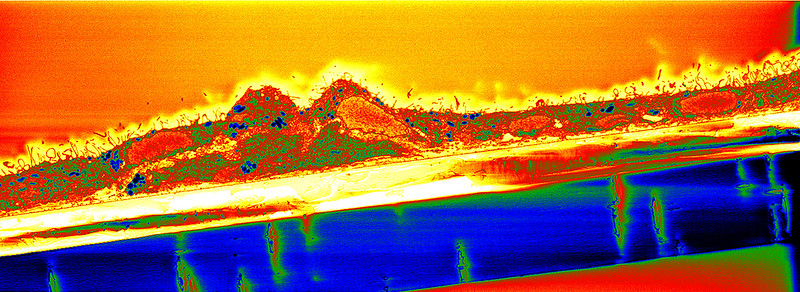


The Development of a Transplant-Independent Therapy for RPE Dysfunction
Principal Investigator
Shintaro Shirahama, MD, PhD
Schepens Eye Research Institute of Massachusetts Eye and Ear
Boston, MA, USA
About the Research Project
Program
Award Type
Postdoctoral Fellowship
Award Amount
$200,000
Active Dates
July 01, 2024 - June 30, 2026
Grant ID
M2024004F
Acknowledgement
Mentor(s)
Bruce Ksander, PhD, Schepens Eye Research Institute of Massachusetts Eye and Ear
Goals
The research team hypothesizes that epigenetic reprogramming of dysfunctional retinal pigment epithelium cells will reverse the biological age of the cells, ultimately improving visual function.
Summary
Aging is a critical risk factor for developing age-related macular degeneration (AMD), which implies that young retinal pigment epithelium (RPE) cells can successfully combat the underlying causes of AMD. Conversely, as RPE cells age, they undergo alterations, rendering them more susceptible to AMD pathogenesis. Dr. Shirahama’s team found that epigenetic reprogramming through OSK (Oct4, Sox2, and Klf4) transduction could reverse the cellular biological age and restore function. Therefore, if they can reverse the biological age of RPE cells, these younger cells could successfully combat the disease, stopping further progression and restoring functional vision.
Unique and Innovative
Most other studies focus on differentiating stem cells to form RPE monolayers to replace dysfunctional RPE.
This study is unique in rejuvenating dysfunctional RPE cells themselves in vivo using epigenetic reprogramming through OSK introduction.
Foreseeable Benefits
Loss of retinal pigment epithelium (RPE) function is a fundamental cause of dry and wet age-related macular degeneration (AMD).
A still treatment is the transplantation of RPE sheets derived from induced pluripotent stem cells (iPSCs). However, significant problems exist in regenerating the RPE layer using this transplantation method.
This study will bring transplant-independent therapies that restore dysfunctional RPE cells and prevent AMD progression.
Related Grants
Macular Degeneration Research
Targeted Removal of Disease-Causing Protein in Age-Related Macular Degeneration
Active Dates
July 01, 2026 - June 30, 2028
Principal Investigator
Celia Bisbach, PhD
Current Organization
University of Wisconsin-Madison
Targeted Removal of Disease-Causing Protein in Age-Related Macular Degeneration
Active Dates
July 01, 2026 - June 30, 2028
Principal Investigator
Celia Bisbach, PhD
Current Organization
University of Wisconsin-Madison
Macular Degeneration Research
Development of an Oral Treatment for Dry AMD Using Everyday Anti-Inflammatory Drugs
Active Dates
July 01, 2026 - June 30, 2028

Principal Investigator
Marco Bassetto, PhD
Current Organization
University of California, Irvine
Development of an Oral Treatment for Dry AMD Using Everyday Anti-Inflammatory Drugs
Active Dates
July 01, 2026 - June 30, 2028
Principal Investigator
Marco Bassetto, PhD
Current Organization
University of California, Irvine
Macular Degeneration Research
A Novel Implantable Device to Treat Wet Macular Degeneration
Active Dates
July 01, 2025 - June 30, 2028

Principal Investigator
Charles DeBoer, MD, PhD
Current Organization
Stanford University
A Novel Implantable Device to Treat Wet Macular Degeneration
Active Dates
July 01, 2025 - June 30, 2028
Principal Investigator
Charles DeBoer, MD, PhD
Current Organization
Stanford University