


Foot-Based Monitoring and Feedback to Improve Mobility and Reduce Falls in Glaucoma
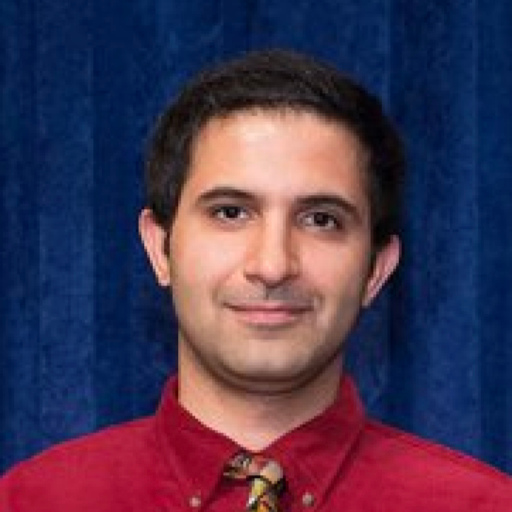
Principal Investigator
Navid Amini, PhD
California State University, Los Angeles
Los Angeles, CA, United States
About the Research Project
Program
Award Type
Standard
Award Amount
$150,000
Active Dates
July 01, 2026 - June 30, 2028
Grant ID
G2026001S
Goals
The goal of this study is to help glaucoma patients walk more safely and confidently through foot-based monitoring and feedback, improving their mobility and quality of life.
Summary
Nearly half of glaucoma patients fall each year. This study uses smart insoles (shoe inserts with motion and pressure sensors) to track how glaucoma patients lift their feet while walking and deliver real-time vibrations on the soles to correct unsafe patterns. Through continuous monitoring and personalized feedback, we aim to reduce falls and improve mobility, confidence, and quality of life.
Unique and Innovative
This project is innovative because it develops the first unobtrusive, foot-based system that combines wearable motion and pressure sensing with real-time vibrotactile feedback for glaucoma management and rehabilitation. Unlike traditional laboratory-based approaches, the system continuously evaluates walking patterns during real-world ambulation and provides immediate corrective feedback when unsafe walking patterns are detected. By integrating real-world mobility monitoring, adaptive biofeedback, and cloud-based analytics into a single wearable platform, this project advances a scalable and patient-centered approach to fall prevention and mobility rehabilitation in glaucoma patients.
Foreseeable Benefits
Once completed, this study may lead to practical wearable technologies that help glaucoma patients reduce fall risk, improve walking safety, and maintain independence in daily life. The project will also advance the research field by providing new insights into how glaucoma affects real-world mobility and by establishing objective mobility measures and biofeedback-based rehabilitation strategies. In the long term, the technology and methods developed in this study may be adapted for other populations with visual or mobility impairments.
Related Grants
National Glaucoma Research
Improving Glaucoma Care with Agentic AI
Active Dates
July 01, 2026 - June 30, 2028

Principal Investigator
Mark Christopher, PhD
Current Organization
University of California, San Diego
Improving Glaucoma Care with Agentic AI
Active Dates
July 01, 2026 - June 30, 2028
Principal Investigator
Mark Christopher, PhD
Current Organization
University of California, San Diego
National Glaucoma Research
Activating the Eye’s Own Nitric Oxide to Fight Glaucoma
Active Dates
July 01, 2026 - June 30, 2028

Principal Investigator
Myoungsup Sim, PhD
Current Organization
Duke University School of Medicine
Activating the Eye’s Own Nitric Oxide to Fight Glaucoma
Active Dates
July 01, 2026 - June 30, 2028
Principal Investigator
Myoungsup Sim, PhD
Current Organization
Duke University School of Medicine
National Glaucoma Research
Enhancing Access to Glaucoma Care Using Artificial Intelligence
Active Dates
July 01, 2025 - June 30, 2027

Principal Investigator
Benjamin Xu, MD, PhD
Current Organization
University of Southern California
Enhancing Access to Glaucoma Care Using Artificial Intelligence
Active Dates
July 01, 2025 - June 30, 2027
Principal Investigator
Benjamin Xu, MD, PhD
Current Organization
University of Southern California