


Role of TYROBP in the Pathogenesis of Alzheimer's Disease
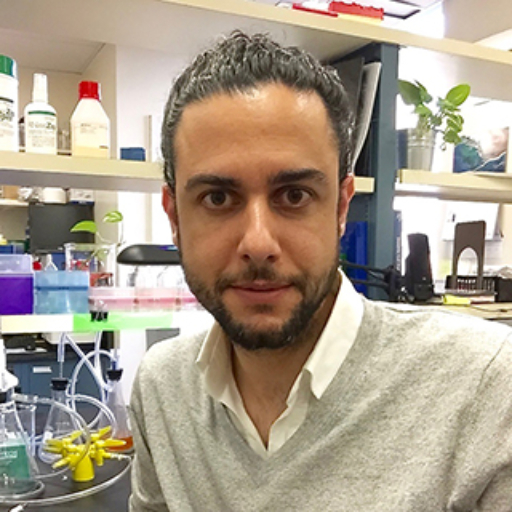
Principal Investigator
Jean-Vianney Haure-Mirande, PhD
Icahn School of Medicine at Mount Sinai
Orlando, FL, USA
About the Research Project
Program
Award Type
Postdoctoral Fellowship
Award Amount
$100,000
Active Dates
July 01, 2016 - June 30, 2018
Grant ID
A2016482F
Acknowledgement
Mentor(s)
Michelle Ehrlich, MD, Icahn School of Medicine at Mount Sinai
Goals
Recent studies highlight the possible role of the immune system in Alzheimer’s disease (AD). The immune system and its activation can be a “double-edge sword” event in AD: on one hand, it can protect the brain by reducing the formation of amyloid plaque, but on the other hand, it can induce brain inflammation and have deleterious effects. The aim of our project is to: 1) understand the role of the immune system in the pathogenesis of AD, and 2) provide new insight for a therapeutic target to control AD.
Summary
Alzheimer’s disease (AD) is a progressive neurodegenerative disorder characterized by amyloid beta (Aß) peptide accumulation which is believed to be a major pathophysiologic factor of the disease. An inflammatory component in AD has long been recognized, and it was first assumed that the chronic neuroinflammation associated with AD may be a secondary or even protective event in response to Aß deposition, and may occur only in late stages of AD. Recent genetic studies, however, identified an association between AD and mutations in genes encoding important immune mediators, eg, CD33 [an immunoregulatory receptor] and TREM2 [triggering receptor expressed on myeloid cells 2]. Their discovery highlights the role of a dysregulated immune response and neuroinflammation in AD, and suggests an earlier, and perhaps causative, role in pathogenesis.
In addition, integrative genomic analyses of human AD brain transcriptomes have provided convincing data regarding the role of microglia in the pathogenesis of AD. Microglial activation may be causative, reactive, and/or protective, perhaps varying with disease stage. For example, phagocytosis of Aß peptides may prevent their deposition into plaques. Alternatively, microglial activation leads to the release of proinflammatory cytokines that can contribute to neuronal death.
Using computational analysis, members of our team has identified TYROBP [TYRO protein tyrosine kinase-binding protein] as a causal regulator of multiple genes involved in microglia activation and its expression is increased in AD human and mouse brains.
We have proposed one of the first studies that would allow the validation of a network analysis model in AD. In particular, we will determine how TYROBP modifies and/or regulates the inflammatory response in mice in the presence or absence of mutations that lead to AD. We will perform detailed transcriptomic analysis in microglial cells and two vulnerable brain regions during presymptomatic and symptomatic stages of AD in the presence or absence of TYROBP. The transcriptomic analysis will be corroborated with behavioral tests of cognitive performance in order to assess whether modulation of TYROBP expression and microglia activation can have beneficial effects in AD symptoms.
This study should advance our understanding of the normal function of TYROBP and its role in AD, including its role as a potential therapeutic target.
Related Grants
Alzheimer's Disease Research
Understanding the Role of Brain Immune Cells in Protection Against Alzheimer’s
Active Dates
July 01, 2025 - June 30, 2027

Principal Investigator
Ghazaleh Eskandari-Sedighi, PhD
Current Organization
University of California, Irvine
Understanding the Role of Brain Immune Cells in Protection Against Alzheimer’s
Active Dates
July 01, 2025 - June 30, 2027
Principal Investigator
Ghazaleh Eskandari-Sedighi, PhD
Current Organization
University of California, Irvine
Alzheimer's Disease Research
Leveraging How the Brain’s Immune Cells Fuel Frontotemporal Dementia
Active Dates
July 01, 2025 - June 30, 2027

Principal Investigator
Laura Fumagalli, PhD
Current Organization
Flanders Institute for Biotechnology
Leveraging How the Brain’s Immune Cells Fuel Frontotemporal Dementia
Active Dates
July 01, 2025 - June 30, 2027
Principal Investigator
Laura Fumagalli, PhD
Current Organization
Flanders Institute for Biotechnology
Alzheimer's Disease Research
Blocking Jumping Genes to Stop Brain Inflammation in Alzheimer's Disease
Active Dates
July 01, 2025 - June 30, 2027

Principal Investigator
Joseph Herdy, PhD
Current Organization
The Salk Institute for Biological Studies
Blocking Jumping Genes to Stop Brain Inflammation in Alzheimer's Disease
Active Dates
July 01, 2025 - June 30, 2027
Principal Investigator
Joseph Herdy, PhD
Current Organization
The Salk Institute for Biological Studies