


Characterization of Novel C3 Conditional Knockout Mice: Tools to Better Understand the Role of Complement in Synaptic Dysfunction in Aging and Alzheimer’s Disease
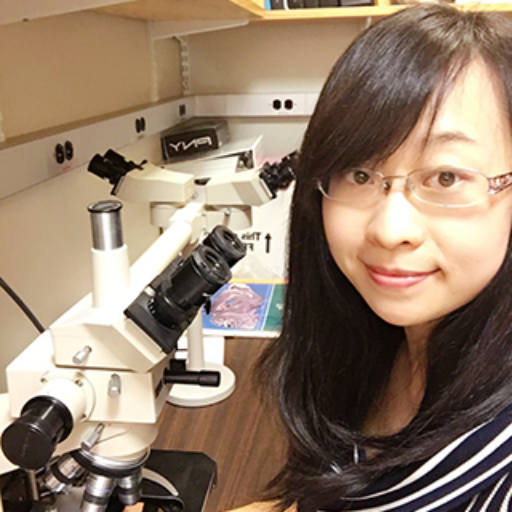
Principal Investigator
Qiaoqiao Shi, PhD
Brigham and Women's Hospital, Harvard Medical School
Boston, MA, USA
About the Research Project
Program
Award Type
Postdoctoral Fellowship
Award Amount
$100,000
Active Dates
July 01, 2016 - June 30, 2018
Grant ID
A2016425F
Acknowledgement
Goals
Complement component 3 (C3) is an immune molecule that helps to refine the visual system during brain development by removing weak synapses, or connections between nerves. C3 is up-regulated in Alzheimer’s disease (AD) and therefore may contribute to the synapse loss that underlies cognitive decline. We recently reported that aged mice lacking C3 throughout life have preserved synapses and better memory than normal-aged mice. To further understand when and where C3 plays a role in AD, we have generated two novel mouse models in which C3 gene expression can be shut off at any age by injection of a chemical, or deleted in specific immune cells (only) throughout life. Further characterization of these mice will better define the role of C3 in the aging brain and AD and may direct us to new therapies.
Summary
Complement component 3 (C3) helps mediate synaptic elimination during the development of the mouse brain and is upregulated in Alzheimer’s disease (AD), a condition in which synaptic loss is an early event. Recently, we reported that aged C3 knockout mice were protected against age- and brain region-dependent synapse and neuron loss, and had superior cognitive performance compared to age-matched normal mice (Shi et al, J Neurosci, 2015). Therefore, we recently generated two novel C3 conditional knockout mouse models in which C3 expression can be “shut off” at any age by tamoxifen injection, or deleted in all myeloid immune cells (only) throughout life, to distinguish C3’s effects on brain development versus aging and neurodegeneration. I will use high-resolution confocal microscopy to quantify structural synapses and novel microglia-specific antibodies to determine the effects of post-development global C3 deletion or myeloid-specific C3 deletion in these newly generated mice at different ages. In addition, I will crossbreed one of our C3 cKO mouse lines with AD mice to generate the first-ever, AD mouse model in which C3 expression can be deleted at any age.
Related Grants
Alzheimer's Disease Research
Understanding the Role of Brain Immune Cells in Protection Against Alzheimer’s
Active Dates
July 01, 2025 - June 30, 2027

Principal Investigator
Ghazaleh Eskandari-Sedighi, PhD
Current Organization
University of California, Irvine
Understanding the Role of Brain Immune Cells in Protection Against Alzheimer’s
Active Dates
July 01, 2025 - June 30, 2027
Principal Investigator
Ghazaleh Eskandari-Sedighi, PhD
Current Organization
University of California, Irvine
Alzheimer's Disease Research
Leveraging How the Brain’s Immune Cells Fuel Frontotemporal Dementia
Active Dates
July 01, 2025 - June 30, 2027
Principal Investigator
Laura Fumagalli, PhD
Current Organization
Flanders Institute for Biotechnology
Leveraging How the Brain’s Immune Cells Fuel Frontotemporal Dementia
Active Dates
July 01, 2025 - June 30, 2027
Principal Investigator
Laura Fumagalli, PhD
Current Organization
Flanders Institute for Biotechnology
Alzheimer's Disease Research
Blocking Jumping Genes to Stop Brain Inflammation in Alzheimer's Disease
Active Dates
July 01, 2025 - June 30, 2027

Principal Investigator
Joseph Herdy, PhD
Current Organization
The Salk Institute for Biological Studies
Blocking Jumping Genes to Stop Brain Inflammation in Alzheimer's Disease
Active Dates
July 01, 2025 - June 30, 2027
Principal Investigator
Joseph Herdy, PhD
Current Organization
The Salk Institute for Biological Studies