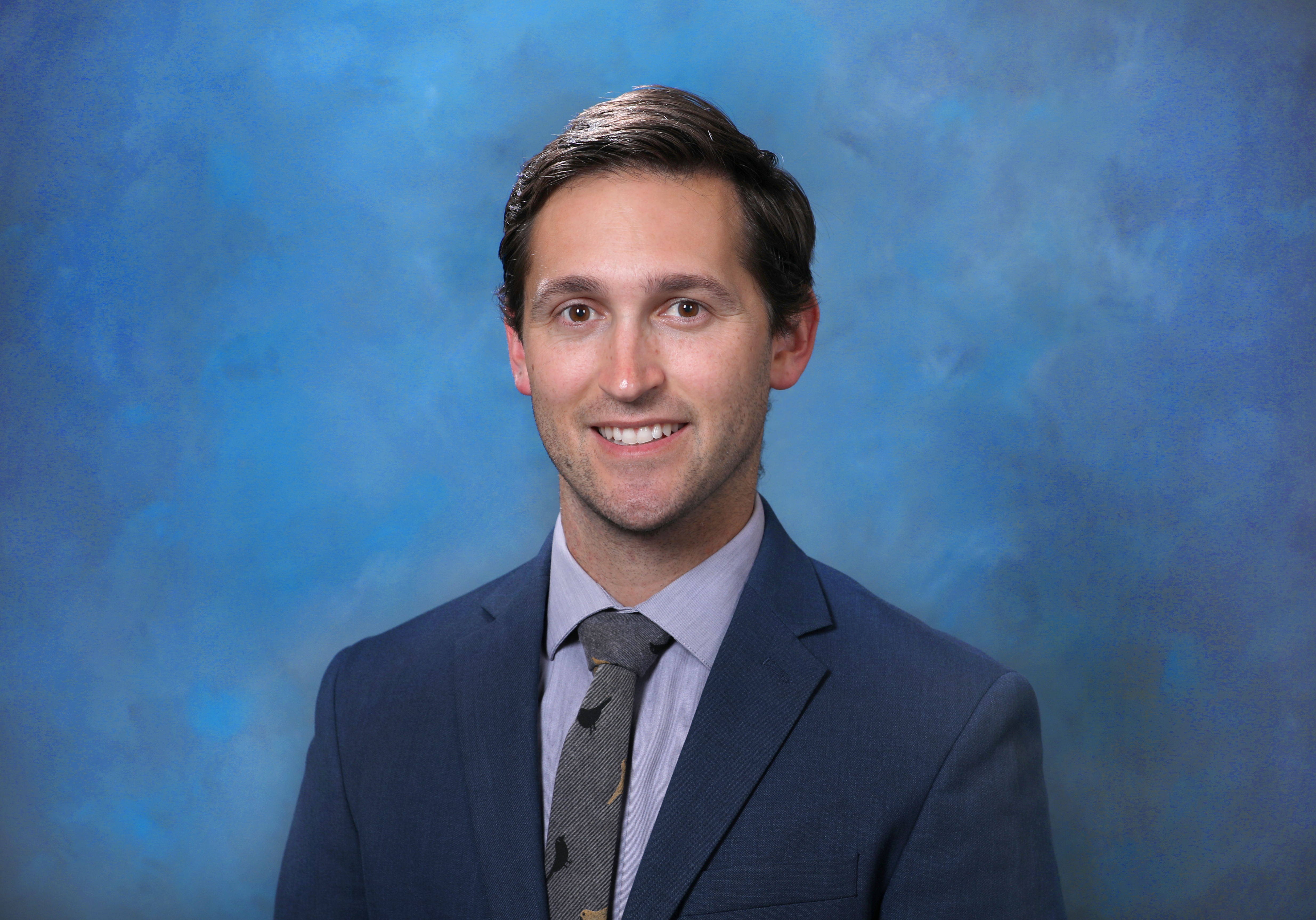
Join us for a fascinating conversation with Dr. Lucy Q. Shen as we explore cutting-edge research into restoring vision loss from glaucoma. From optic nerve regeneration to promising advances in stem cell and gene therapies, this episode will examine where science stands—and where it’s headed—in the quest to reverse glaucoma damage.
Dr. Lucy Q Shen is an Associate Professor of Ophthalmology and the Glaucoma Fellowship Director at Harvard Medical School, Massachusetts Eye and Ear, Boston, Massachusetts. Dr. Shen received her B.S. degrees in Biology and Chemical Engineering from Massachusetts Institute of Technology, and her medical degree cum laude from Harvard Medical School. She completed an internship in Internal Medicine at the Brigham and Women’s hospital, a residency in ophthalmology and a fellowship in glaucoma at the Jules Stein Eye Institute, University of California Los Angeles.
Dr. Shen has been an attending physician on the Glaucoma Service at Massachusetts Eye and Ear since 2009. She has organized several symposia on the clinical care of glaucoma patients, including co-chairing surgery day at the American Glaucoma Society Annual Meeting in 2021. As the director of the MEE Glaucoma Fellowship Program, Dr. Shen has been actively teaching medical students, residents and fellows. In addition, Dr. Shen has been conducting clinical research in glaucoma diagnostics. She leads a group of international research fellows, medical students and undergraduate students, and collaborates with basic scientists and bioinformatics experts to better characterize glaucoma based on pathophysiology and clinical manifestations. She has over 60 peer-reviewed original publications. She has received grant support from the National Institute of Health for her work on the autoimmune etiology in primary open angle glaucoma and also received a research grant from The Glaucoma Foundation to support her work in the vascular pathology of glaucoma.
<2>Transcript
Download PDF
DIANE BOVENKAMP: Hello, and welcome. My name is Dr. Diane Bovenkamp, Vice President of Scientific Affairs at BrightFocus Foundation. I’m so pleased to be your host for today’s Glaucoma Chat, “Can We Restore Vision Loss from Glaucoma? What the Research Says.” Our Glaucoma Chats are a monthly program in partnership with the American Glaucoma Society designed to provide people living with glaucoma and the family and friends who support them with information straight from the experts.
The information provided in this program is for educational purposes only and should not be considered medical advice. Please always consult a qualified health care professional regarding any medical concerns or conditions.
BrightFocus Foundation’s National Glaucoma Research Program is one of the world’s leading nonprofit funders of glaucoma research and has supported more than $52 million in scientific grants over the past 52 years, exploring the root causes, prevention strategies, and treatments to end this sight-sealing disease.
Now, it’s with extreme pleasure that I’d like to introduce today’s guest speaker. Dr. Lucy Q. Shen is an Associate Professor of Ophthalmology and the Glaucoma Fellowship Director at Harvard Medical School, Massachusetts Eye and Ear Infirmary. Dr. Shen received her medical degree, cum laude, from Harvard Medical School. She completed a residency in ophthalmology and a fellowship in glaucoma at the Jules Stein Eye Institute at the University of California, Los Angeles. Dr. Shen has been an attending physician on the glaucoma service at Massachusetts Eye and Ear since 2009. She has organized several symposia on the clinical care of glaucoma patients at the American Glaucoma Society annual meeting in 2021. As the Director of the Massachusetts Eye and Ear Glaucoma Fellowship Program, Dr. Shen has been actively teaching medical students, residents, and fellows. In addition, Dr. Shen has been conducting clinical research in glaucoma diagnostics and collaborates with basic scientists and bioinformatics experts to better characterize glaucoma based on pathophysiology and clinical manifestations. She has over 70 peer-reviewed original publications. Dr. Shen, thank you so much for joining us today.
LUCY Q. SHEN: Thank you. It’s a pleasure to be here.
DIANE BOVENKAMP: And I have to say, this is going to be a really great call. I think that all of our listeners are really looking forward to advice from someone and just getting to better know about the topic we’re discussing today from someone so distinguished as yourself.
LUCY Q. SHEN: Thank you for that.
DIANE BOVENKAMP: So, why don’t I start out with just the basics? Like, what is the optic nerve, and what happens to it during glaucoma?
LUCY Q. SHEN: Yeah, I think it’s always good to understand the basics before we dive into the research. So, the optic nerve is like a cable that connects the eyeball to the brain. And the broad way to think about it is that when the optic nerve gets damaged in glaucoma, even if the eye can see, there’s no way for the brain to perceive or to receive those signals and to actually see. And so, it’s kind of a disconnection between the eye and the brain, if you want to think of it that way. When it comes to glaucoma, we typically classify it based on the front part of the eye. In other words, how the fluid drains out of the eye. And there’s open-angle glaucoma and angle-closure glaucoma. In both types of glaucoma, we can see that the pressure in the eye can go up, and that causes damage to the optic nerve, which then leads to vision loss. Now, just to dive a little bit deeper about the optic nerve, the optic nerve is made of these fibers, which are basically the extension of the nerve cells to transmit the signals from the eye to the brain. And these fibers are known as axons. And a lot of this talk today is going to focus on how we regenerate those nerve cells, how we regenerate the fibers or the axons of these nerve cells, and how we make those nerve cells and these fibers work better to restore vision in patients with glaucoma.
To go into a little bit about current treatment and also in terms of how to stop the damage from glaucoma, I should explain the two types of glaucoma that I just mentioned. There’s open angle and angle closure. Primary open-angle glaucoma is the most common type of glaucoma in the U.S. and often affects patients who are 60 years and older. Treatment that we usually do for open-angle glaucoma deals with lowering the eye pressure. So in other words, if the pressure is above the normal range, which is between 10 to 20 millimeters of mercury, we usually give patients either eye drops or perform a laser treatment or even do surgery to lower the eye pressure. However, in some patients with open-angle glaucoma, they can continue to develop optic nerve damage even when the eye pressure is not high or it’s not abnormally high. And in those situations, we still do the same kind of treatment. We still use medications, laser, or surgery to lower the eye pressure. For angle closure glaucoma, which means that the drain in the eye is often blocked and hence “closed,” the treatment is different from open-angle glaucoma. The goal there is to restore the open angle or reopen the drain of the eye. And there we either do a different kind of laser, or sometimes we will do early cataract surgery to open up the drain. And once the drain is open, we will then see if the eye pressure is still abnormal. If it is, then we use the same kind of therapy, whether it’s eye drop, laser, or surgery to lower the pressure further. But in some of the patients who have angle-closure glaucoma, just by doing the initial laser to open up the drain or cataract surgery to open up the drain, that may be sufficient.
Today’s talk is mostly focused on patients who have already lost vision from glaucoma and how we can think about restoring vision. And I understand that it’s a very exciting topic in terms the research front, and so I’m happy to explain more about that. But I just hope I provided a little bit of a basic overview of glaucoma and the optic nerve.
DIANE BOVENKAMP: Yeah, and you’re really describing it in ways that are really easy to understand. So, I love it that you think of the optic nerve as a cable. And if you think of your retina as like the digital sensor in your phone, and the cable’s trying to go back to the CPU or processing unit of your brain, there’s a part of your brain where it processes it, but if the cable is damaged, even if your eye’s detecting what’s happening, you can’t see it. So, that is a really brilliant way of describing it. And then the treatments, I love how you talk about clogs, because there’s different ways, with the surgical and then the drugs. You can almost think of the same way we try and open up plugs in sinks, right? You can use Drano, which is the drugs, or you can try and use one of those little physical things to try and get the plug out and to get the fluid flowing again. So, thank you so much for making it a lot easier to understand.
LUCY Q. SHEN: Of course, happy to do that.
DIANE BOVENKAMP: Yeah, great. So, now that we kind of have an idea of what’s causing glaucoma, and then if you have damage to the optic nerve, we want to try and restore vision, right? BrightFocus funds research, and other organizations, and the NIH, we all fund research to try and try many different drugs and whatever to try and prevent people from losing vision, but also to restore vision when it’s been lost. But the thing is, it’s been so elusive. So, can you just give your thoughts on why it’s so hard to restore vision once the optic nerve is damaged?
LUCY Q. SHEN: The reason that it’s been elusive or difficult to do is because the optic nerve is part of the central nervous system, just like the brain and the spinal cord. And for those type of cells, the regenerative capacity—so in other words, its ability to regrow itself—is extremely limited. Just similar to how patients with a stroke or spinal cord injury cannot recover function, that’s why it’s been hard for glaucoma patients to regain vision. And so, hence the definition that we are teaching our medical students and our residents for glaucoma is that it’s a chronic, aggressive, irreversible disease of the eye. And the word irreversible is in there basically to explain the difficulties in terms of restoring vision. That said, I can say that—and you’ll hear more about this as we go on to talk about vision restoration efforts in vision restoration—that it’s certainly not a topic that is impossible to overcome. In fact, there is much progress in this regard, and we’re going to go into more depth about it. For our patients who are listeners on this call, I would just advise that currently most of the efforts in terms of treatment is on prevention of vision loss rather than restoration. In other words, do use those drops, do undergo the procedures and surgeries recommended by your doctors, because the goal is that if we can prevent you from losing vision, we can prevent you from developing visual disability from glaucoma. That is a lot easier to do than to restore vision.
DIANE BOVENKAMP: Yeah, and if I could just come in there, one of the mantras we love telling everyone, and I’m sure you do, is “time lost is vision lost.” So, just please make annual dilated checkups for your eye to try and detect glaucoma at the earlier stages, because then you can start to get treatments and save what you have, right?
LUCY Q. SHEN: Yes, and the thing with glaucoma is that it’s a silent disease. When the eye pressure goes up gradually, you don’t really have any pain or other symptoms, and the vision loss from glaucoma is often very gradual. Again, there are very few symptoms, and so the screening part, just like what you said, with annual eye exams is extremely important. Often when patients develop symptoms, that means that they’ve already lost a substantial amount of vision. So, we really try to catch our patients before they get there. The other thing that I’ll also mention is that family history does matter in glaucoma. Those who have a family history of glaucoma are more likely to develop glaucoma. So, the American Glaucoma Society actually started a new initiative called Family Matters, which basically encourages family members to be screened. And I can say that probably in the not-so-distant, near future, we’ll probably be able to use more of the genetic tools to better identify which family members are at higher risk for glaucoma. That is coming, but for now, if you have a family member who has glaucoma, you should definitely get your annual eye exam.
DIANE BOVENKAMP: Maybe what we can do is put a link to it retroactively at the bottom once that Family Matters info packet is out. And the one thing that I did want to spell out for people that go, “Oh, I go to annual checkups. How do I know they’re checking for glaucoma?” To have a dilated eye exam, you have a doctor look in your eye to look at the head of the optic nerve, but also you’ll have like those Tono-Pens®, someone puts a pen on your eye, or there’s a puff—I think pen is better, but anyways—to try and look at the pressure, right?
LUCY Q. SHEN: Yeah. So, there are different ways of screening for eye pressure. So, yes, Tono-Pen or air puff. There’s multiple different ways to screen for it, but I think it’s a great idea to have those annual eye exams and be checked for it.
DIANE BOVENKAMP: Great. Oh, and then one of the things that I thought of when you were talking is thinking of the damage to the optic nerve as kind of like a spinal cord injury, the eye is actually an extension of the brain, when you think about it. So, the spinal cord and the optic nerve are kind of behind part of your brain. And so, it’s really difficult to try and regenerate part of the brain, right? So, anyways, whereas periphery, if you cut yourself, right, maybe on your skin or something, sometimes some of those nerves can regenerate in some situations. So, yeah. So, it’s just a different situation.
LUCY Q. SHEN: That’s why it’s been challenging. But on the other hand, another way to think about it, the eye is a smaller organ, and sometimes the research is a little bit easier for the eye and the nerve cells in the eye than it is for the brain. And so, a lot of these research efforts that are happening for the eye can also potentially be eventually benefiting those patients who have spinal cord injury or a stroke. So, this may have bigger implications, as well.
DIANE BOVENKAMP: Oh, that’s great. That’s really great. Giving a lot of hope there. And then vice versa, people in glaucoma can learn from the spinal cord injury too.
LUCY Q. SHEN: Yes.
DIANE BOVENKAMP: So, my next question here is: Are there any symptoms individuals should watch for that might signal early damage to the eye or the optic nerve?
LUCY Q. SHEN: That’s a good question. That kind of goes back to what we were just saying, which is that, unfortunately, there aren’t too many symptoms. Now, for patients who have angle-closure glaucoma, for a subset of them, the drain can basically go from open to closed very quickly. In those patients, they do have symptoms, because the eye pressure rises very rapidly and you may have blurry vision in one eye or seeing halos around lights or headaches or even nausea that can send you to the emergency room. So, in those patients, yes, you may have symptoms when the pressure goes up very rapidly in your eye. But for most patients who have open-angle glaucoma, there are absolutely no symptoms because the eye pressure can go up gradually. And for some patients, their eye pressure doesn’t go up much at all. So, often when patients notice something, it’s either when they have lost a lot of vision already and they just feel that they’re not as steady as they used to be because they can’t see from their peripheral vision or that they somehow covered one eye and all of a sudden they’re like, “Well, why is my other eye not seeing well?” Often when patients present with symptoms, unfortunately, often it’s quite advanced. And so, that’s why screening is such an important part for glaucoma. And in fact, a lot of times when we report the incidence of glaucoma, we say those are the patients who actually have been diagnosed, but we assume a lot of patients are probably suffering from glaucoma without knowing that they have it.
DIANE BOVENKAMP: Yeah, I think publications have shown it could be perhaps half of people who have glaucoma don’t know they have it. That’s just shocking to me.
LUCY Q. SHEN: Exactly. And that is the hard part for a clinician to deal with, because sometimes the patient had no idea. So, that’s why we, again, emphasize the importance of being screened for glaucoma.
DIANE BOVENKAMP: Yeah, and the brain is a really cool, adaptive thing. It’s great for most things, but in this case, sometimes, you can have your vision kind of close in. It’s kind of like you start to get more tunnel vision, but your brain adapts, and especially if you have it in one eye versus the other. Yeah, so it definitely going sooner is better.
LUCY Q. SHEN: Yes, absolutely.
DIANE BOVENKAMP: So, what does it mean to “restore vision” in glaucoma? And why is this a major focus in glaucoma research?
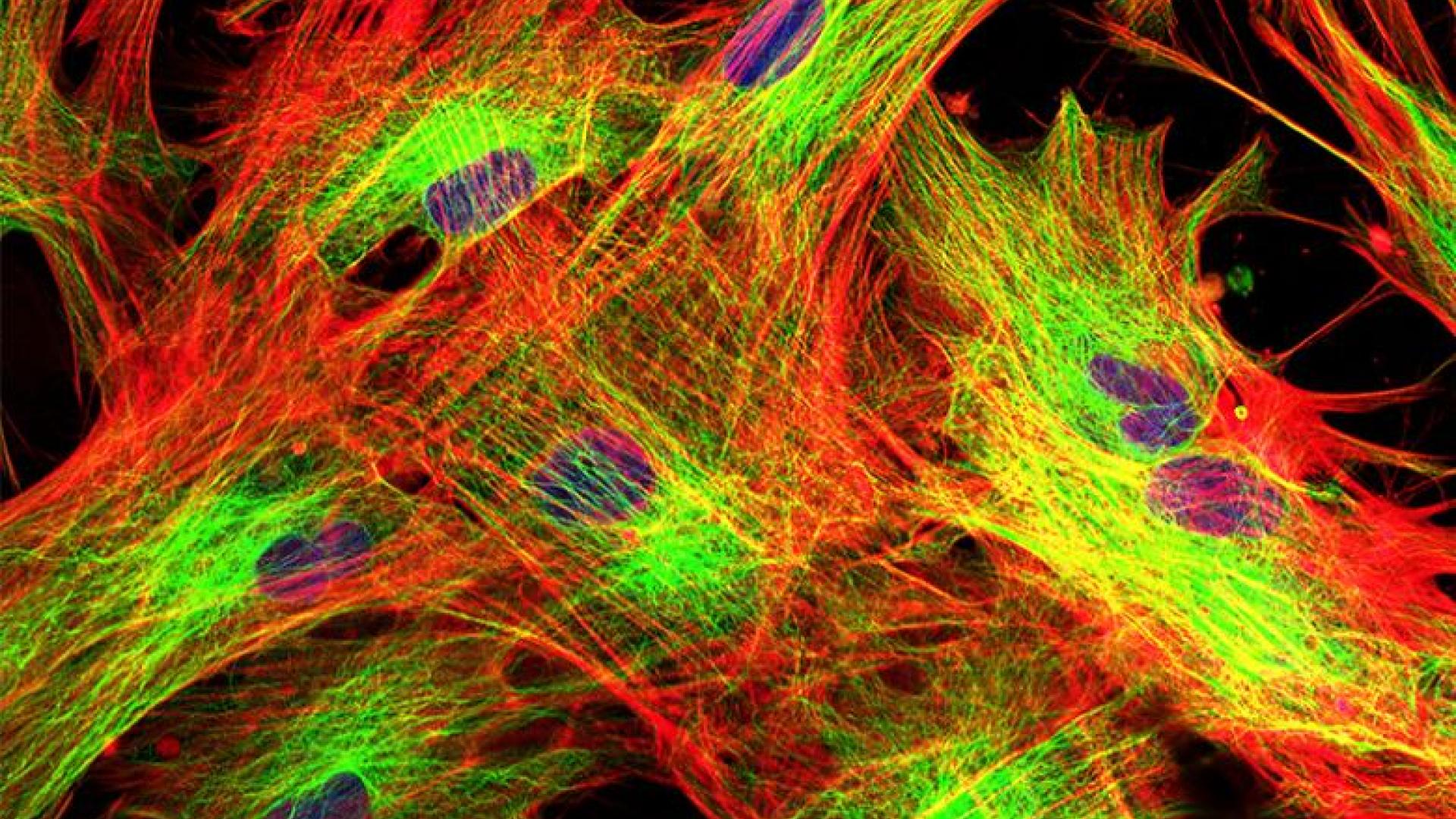
LUCY Q. SHEN: So, when we talk about restoring vision in glaucoma, there are really three different categories, and I’m going to throw the names out, and then I’m going to explain what each one means. They’re called neuroprotection, neuroenhancement, and neuroregeneration. So, neuroprotection, basically, it means what it says, which is to protect the optic nerve. And to be more specific, it’s basically to make the environment inside the eye be more friendly to the optic nerve and those nerve cells. And so, usually, the efforts go on to eliminate those potential factors that could damage the optic nerve, and we can go into this a little bit more later in the Chat. Neuroenhancement is similar to neuroprotection but goes a step further. In other words, the optic nerve, or the cells that make up the optic nerve, if they don’t work well because they’re already sick from glaucoma damage, neuroenhancement means that there are factors that one can use to make those cells work better. So, in other words, even though we’re not making new cells, the cells that are existing are able to transmit signals better so that the patient could see better. And then the third part, which is neuroregeneration, means that there are certainly research efforts ongoing to restore either the axons, or the connections that these nerve cells make, or the nerve cells themselves. So, those are three major research fronts that are trying to restore vision in glaucoma.
DIANE BOVENKAMP: That was perfectly described.
LUCY Q. SHEN: Thank you for that. I think that will be very helpful, yes.
DIANE BOVENKAMP: Yes. So, right now, are there any current treatments where it’s been shown that people with glaucoma are able to regain vision loss, like from the drops or the surgery or whatever that exists right now?
LUCY Q. SHEN: Yes. So, you know, as I mentioned earlier, usually we think of glaucoma as an irreversible blinding condition. However, there are actually several large retrospective studies where patients have undergone a type of glaucoma surgery known as a trabeculectomy. And what a trabeculectomy is, it’s a type of invasive glaucoma surgery that’s usually offered to patients with pretty advanced disease, those patients whose eye pressure cannot be controlled with medications or laser therapy and they are continuing to get worse in terms of losing vision from glaucoma. So, in those situations, we often perform a surgery where we create an artificial drain in the patient’s eye with their own tissue so that the pressure can be regulated in a different way. And what these studies have shown is that if the eye pressure is lowered a significant amount, to be hovering around 10 millimeters of mercury—in other words, normal is between 10 to 20, so we’re really dropping the pressure to the low end of normal—and if these patients can still retain good central vision, for some of them, their peripheral vision comes back after 6 months to a year. And I personally have seen this in some of my patients where we do the trabeculectomy, and after 6 months, the patient will tell me that “I’m seeing better.” And for those patients who have done the peripheral vision test, which is a common way for us to monitor glaucoma, called the visual field test, we can actually measure the improvement on those tests, which is really exciting and encouraging.
However, I think I need to caution our listeners that it doesn’t mean you should go ask your doctor for a trabeculectomy, because it is an invasive surgery. It has a lot of different risks associated with the surgery, such as infection or bleeding. And for some patients, when the eye pressure goes too low, they can actually lose vision from the low pressure. And so, it’s not a definite option for a lot of our patients. And if you have mild disease that is well controlled with drops and laser—in other words, less invasive options—I would not recommend that you undergo this kind of procedure. So, again, listen to your doctors. But that said, the fact that we’re seeing it a little bit clinically means the theory goes that for those patients who are recovering a little bit of vision after trabeculectomy, it’s probably more neuroenhancement and neuroprotection, as in the eye pressure is better, the neurons are less likely to continue to be damaged, and some of them may be able to recover some of their function. That’s where we think the vision recovery is coming from.
DIANE BOVENKAMP: Yeah, so I think you really made a really good argument for it’s not a bother for you to go to the doctor. Don’t wait until it’s too late, right? Getting in the earlier, the better, when the cells are maybe sick but they haven’t died yet in your eye is the best. Give your doctor and you more options that you could go forward with, like this trabeculectomy and other options.
LUCY Q. SHEN: Exactly. And I think as a physician, we’re all well trained on the different options and we understand the risks and benefits. And so, I think these really require a very open discussion with your physician to understand what your treatment options are. And as I would tell my patients, they’re different for each patient, and often they’re different for each eye of the patient. And so, these are very important decisions and discussions to have with your provider.
DIANE BOVENKAMP: Great. So, I know we’ve kind of been talking about regaining vision in glaucoma as a future thing, but there’s trials going on right now. So, can you give us some information on what we’ve seen so far in clinical trials in terms of helping people with glaucoma to regain vision? I think this is really exciting for people.
LUCY Q. SHEN: Yes. And I agree. And I think “clinical trials” means that we’re this much closer to make it a reality. So, I agree with you. I think it is very exciting. I can talk about a few different trials to just give our audience an idea of what’s happening. And the idea to think about what a clinical trial means is really bridging the laboratory side to the clinical side. So, usually, before a therapy can become available to our patients, they need to undergo clinical trials to make sure that they’re safe and that they’re effective. And so, one type of trial that’s happening is with this type of compound or supplement known as nicotinamide. It is also considered to be vitamin B3. And the idea is that this particular type of supplement can make the nerve cells in your eye work a little bit better. It’s working through an organelle in the cell known as the mitochondria, which basically helps the cell to get more energy to do its function. And the nerve cells in your eye use a lot of energy to be able to transmit those signals. This supplement could potentially make the nerve cells work better, so it’s in the line of neuroenhancement. And what has been shown … these are very short-term studies of 6 weeks to a couple months, and we know that glaucoma is a much longer-duration kind of disease, but at least in these short-term studies, they have shown that patients who use this type of supplement could potentially perform a little bit better on their peripheral vision test, which, again, is very encouraging. In other words, maybe this has the potential of restoring some of the vision loss from glaucoma. I should caution you that this particular type of supplement could cause liver damage. And so, again, I advise you to check with your doctor before using it. And also I should mention that Dr. Jullia Rosdahl, who was a guest on a Glaucoma Chat a few months before, also talked about this type of clinical trial. So if you haven’t listened to her Chat, it may be a good time to check on the website and look for Dr. Rosdahl’s Glaucoma Chat that was recorded.
DIANE BOVENKAMP: We can put that at the end, and I’ll also put in maybe a link to a pamphlet we have explaining clinical trials and what it means versus something that’s been FDA approved. So, we’ll do that for people.
LUCY Q. SHEN: Yeah, I think that’s a great idea. And then the other type I should mention, the clinical trial that’s happening, is happening at Stanford under Dr. Jeffrey Goldberg, who is looking at different factors that can, again, make the nerve cells happy. And these are usually what we call neurotrophic factors, which are basically a type of protein that the body can make to encourage the nerve cells to grow and to develop and to function better. And so, in their clinical trial—again, this is involving patients—they have seen that some patients may actually get some additional functional recovery and even regain some of the nerve fibers in their eyes after being treated with these neurotrophic factors, almost like a nutrition for the nerve cells, if you will. So, again, very encouraging results. These are still in trial, so they’re not available for patient use at this time. But again, I think this clinical trial just shows us how we are going against the common knowledge that glaucoma vision loss is irreversible. And I think this is very exciting.
DIANE BOVENKAMP: Yeah, we funded Dr. Goldberg’s research, and I just think it’s so cool that you can have like a little Tic Tac–sized capsule that has live cells in there that are housed in the Tic Tac and can’t get out, but they’re like little factories that make this neuroenhancement, neuroprotective factor that just bathes the eye and makes it happy. So, yeah, we’re all going to be looking at the results of this, crossing our fingers.
LUCY Q. SHEN: Yes, I agree. I think he has done a great effort to lead this kind of trial and to make it happen. So, we’re hoping that these can become therapies to our patients in the near future.
DIANE BOVENKAMP: Great. So, then another way that many … and actually, vision diseases are leading the way in gene therapy. So, especially as you were saying, the eye is very accessible, so there’s an ability to maybe go in there and correct the misspelling that may or may not be causing the disease. As you said, if glaucoma runs in family, you think, “Oh, there’s inheritance,” but can you explain how gene therapy might help to protect or even restore vision loss in glaucoma in simple terms?
LUCY Q. SHEN: Yeah, sure, I’ll give it a try, at least. First of all, as you explained with gene therapy, the idea is that maybe we can reprogram some of these cells in a way that will help them function better. So, one line of research goes along the path of when these nerve cells were in their developmental stage, they were able to grow their connections or their axons. And so, if we can give back those genes and make those genes function again, we can potentially reprogram the nerve cells to regrow their axons. And so, that has been shown in a laboratory, where the nerve cells can grow axons. And the thought is that maybe this will help, again, with our patients who have lost part of their optic nerve, they have lost those axons. So, maybe if there’s a way to get these genes into their existing nerve cells, then these axons can be regrown. So, that’s one line of research that’s happening. It is not in clinical trials at this time, but it’s very exciting to think about reprogramming these retinal ganglion cells or nerve cells.
Another type is to reprogram other types of cells in the retina. They’re already there, they’re not nerve cells, but maybe if we can, again, go into the genes and tweak their genes so that they can become nerve cells since they’re already in the right place, which I think is a fascinating idea, because then you overcome the obstacles with delivery of these cells into the right spot. It’s already in the right place; it just needs to develop those axons and form the connections to the brain. Easier said than done, of course, but certainly an active area of research.
And the third one that I will bring to your attention is the idea of reverse aging in retinal ganglion cells. And as you recall, I mentioned that glaucoma often affects patients age 60 and older. And so, if there are ways to make these cells young again, maybe they can become more resistant to damage and even regrow parts of their axons. So, these researchers are basically looking at ways … they’re called transcription factors, that usually are expressing if they’re getting older, and if they can reprogram them so that these cells become young again or youthful again, they may be better at surviving. So, they actually showed this in a mouse model of glaucoma, where when they change these transcription factors in the mouse, some of the mice actually regain some function. And that is, again, very exciting. But again, we are human, we’re not mice, but the proof of concept is certainly there to help us to see, “Okay, there are different ways of using gene therapy to help our patients in the future.”
DIANE BOVENKAMP: Yeah. And I love people to get to understand words. With this reverse aging, sometimes you’ll hear something called epigenetics or epigenetic reprogramming. And it’s essentially these little sticky tags that can develop and be put onto part of your machinery in your cells, that kind of build up over time.
LUCY Q. SHEN: Yes, exactly.
DIANE BOVENKAMP: So, I think a really cool … maybe the way to think of it, this is trying to do, like, a little molecular “Ponce de Leon’s fountain of youth” here. So, as you said, it’s still in mice, but we’d like to move it to humans soon, right?
LUCY Q. SHEN: Yes, I think that’s kind of the idea, again, because then you don’t have to, you know, bring in new cells, you can use the existing cells that are just older and potentially damaged, but then you can get them to function better and potentially even grow more connections. I think it’s a very fascinating idea. And I’m so glad they’re using the eye as their research model, because I do think this can really benefit our glaucoma patients.
DIANE BOVENKAMP: Great. And so, another thing that people might have heard of and that’s another avenue are stem cells. Sometimes it’s called adult stem cells or cell-based therapy. How could using these help repair the damage caused by glaucoma?
LUCY Q. SHEN: So, just a brief description of what stem cells are. They’re basically known as what we call undifferentiated cells. So, these are cells—and I’m going to explain how they get there—but these are cells that have the potential to become any type of cell. So in other words, if you were to give it the right signal, the right environment, it can develop into a nerve cell that is the type that’s lost in glaucoma. And the way we get these stem cells, at least in the current state, is you can either get them from embryonic development or you can reprogram a cell that is, say, a skin cell, to become a stem cell. The research has been going on for a while, and there’s, again, a lot of people working on this really exciting stuff that they’re doing. And I think at this point, they’re able to show that, you know, first of all, you can have these stem cells and that these stem cells can be transplanted into the eye of a mouse, and potentially become the type of nerve cell, at least they look to be, like the nerve cells that are lost in glaucoma, and potentially even integrate into the retina, which, again, it’s very cool to be able to do that, but now the bigger challenge is: How do you form those connections that link the eye to the brain? And that has been the tricky part. And I think that researchers are certainly working on that, to figure out how to do the signaling, etc., for those axons or connections to grow, and to be able to send the right signals to the brain. So, yeah, so that’s my basic understanding about stem cells.
DIANE BOVENKAMP: Yeah, great. And, yeah, people have some more curiosity about that. We had a whole Chat last year on stem cells with Dr. Tom Johnson from Johns Hopkins University, and we can put a link at the end so people can go to that.
LUCY Q. SHEN: Yeah, I think I listened to some of it, and I think he did a really good job explaining both the complexity, but also the different concepts of stem cells. So, yes, I highly encourage our listeners to listen to the podcast.
DIANE BOVENKAMP: Great. More easy listening as you fall asleep. There’s so many topics in the Glaucoma Chats you can listen to. I’m so excited that we can provide this to people. So, what are the biggest challenges that scientists face in making this a reality for individuals?
LUCY Q. SHEN: I think we have to understand that glaucoma is a complex disease with multiple different mechanisms or causes, and it may be different for each individual patient. And when we are trying to do research in glaucoma, we often use animal models, which are important; however, they don’t mimic the complexity in our patients. And so, sometimes when we translate … and this I tell my patients all the time, because they’ll come to me with like, different publications or newspaper articles, and they’re like, “Look, they just did this to mice. I’m sure you can do this in me.” And I’m like, “Well, unfortunately, a lot of translation gets lost when we go from animal models to patients because there are a lot of differences. And because in animal models, we’re really using a very simple way to create glaucoma, but in patients, often we don’t even completely understand why each individual gets glaucoma.” So that, I think, is a big hurdle. And the other part, as I mentioned before, is that the optic nerve is part of the central nervous system, which is like the brain, the spinal cord, and the regenerative capacity is very limited for the central nervous system. And so, again, we’re trying to overcome those obstacles, but first is to just understand why is it different, why are these regenerative capacities limited, what are the molecules that are responsible for that? And then, trying to undo those so that the optic nerve can regenerate. So, again, a lot of different challenges, but I do think that research is addressing most of these challenges.
DIANE BOVENKAMP: This has been so comprehensive. In your opinion, what do you think are the top three most exciting developments in glaucoma research so far? I mean, having a diversified portfolio is important, but are there any you think are the most exciting?
LUCY Q. SHEN: Yeah, again, I may be biased because I am involved in some of the work that’s happening in a very limited way, but I think glaucoma genetics is coming along really nicely. Some of my colleagues are really looking at multiple different pathways in genes that may increase a patient’s risk for glaucoma. So, this, again, links back to the idea of having family members being screened for glaucoma. So, right now, we’re just still screening patients based on how their optic nerve is looking and how their eye pressure is, but I think in the near distant future, we will be genotyping our patients and figuring out exactly how high is their risk for developing glaucoma. So, I think genetics is definitely a very exciting area. The other one that people mention quite a bit is artificial intelligence (AI). And I don’t mean to sound cliché, but at the same time, as I mentioned, glaucoma is a complex disease, and sometimes it’s not always easy to understand all the complexity. And so, AI becomes quite handy in the sense of connecting the different pathways, linking the damage that we see in the optic nerve to the actual functional loss that patients are experiencing, and also even just to help patients to understand some of the doctor language or to understand how they should be using their medications. I think AI is a huge area where we can really benefit for our patients with glaucoma. And the third one that I’m going to just throw out there is this whole idea of whole-eye transplants. Instead of just transplanting a few cells, what if we transplant the entire organ? Again, very early in research front, but very exciting, and many, many scientists are actively working on that.
DIANE BOVENKAMP: Absolutely. As I said, diversifying the portfolio, because the whole point is to get to the end line so that we can prevent it from happening, and if it does go far enough, we can replace. So, here’s a tough question: If one or more of these therapies succeed, how do you think glaucoma treatment could change in the next 5 to 10 years?
LUCY Q. SHEN: Yeah, and I think 5 to 10 years, this is certainly during my career time, and hopefully this is for a lot of our listeners is going to be when they really need care. I think that we’re going to diagnose glaucoma differently. We’re not just going to check your eye pressure and look at your optic nerve. We’ll still do that, but in addition to that, we may be profiling our patients through genetics, through additional imaging or taking pictures of different parts of your eye, and even blood tests to better understand the type of glaucoma you have. And by that I don’t just mean open-angle glaucoma and angle-closure glaucoma based on the drain of the eye, but to really understand what are the pathways that are affected to lead to optic nerve damage in your glaucoma. And if we understand that, then we can think of, possibly, treatment options that target those pathways, rather than just lowering everyone’s eye pressure. As you heard me say earlier, treatment these days is mostly about lowering the eye pressure, but maybe there are better treatments that can be tailored for our patients.
And then also, in terms of the way we deliver our treatments, I’m sure many of our patients are using glaucoma eye drops daily, multiple times a day, and first of all, it’s difficult to do, and second of all, it can also irritate the surface of your eye. And I think that there’s certainly a lot of interest in developing a treatment that can be injected directly into the eye. So, first of all, it minimizes some of that discomfort on the surface of the eye. Our retina colleagues are already doing that in clinics for patients with macular degeneration. And second of all, you’re delivering the treatment closer to the optic nerve, which is really what gets damaged in glaucoma. And third, it also minimizes the issue of the compliance, as in it’s not convenient to use the drop multiple times a day in a year; you just go to the doctor’s office and get a shot every few months or every 6 months or once a year, depending on how often you need the treatment. And all of these, hopefully, will really help to tackle this irreversible blinding condition. Hopefully, one day we won’t be calling it that anymore.
DIANE BOVENKAMP: All right. We’ll bring you back in 5 to 10 years to talk about it. We’ll see. We’ll talk to you before. So, we have a few minutes left before we go into your concluding thoughts, and I just wanted to throw out a few additional listener questions here. I think that one person asked, “I’d like to know more about optic nerve regeneration for congenital cataracts.” And I know that’s a different disease, but do you have any quick thoughts on that?
LUCY Q. SHEN: Yeah. So, just to explain what congenital cataract means, these are often patients who are born with cataracts—in other words, cataracts in babies. And these are different type of cataracts than what patients usually develop in their 60s or 70s. When a baby is born with cataracts, usually the cataract needs to be removed very early on, often at a very young age, to minimize all the potential problems because the eye is still developing. Those connections that we talked about are still forming, and so it’s really important not to have something blocking the vision, such as a cataract. Unfortunately, a lot of these patients subsequently develop glaucoma. And again, the best way to take care of the glaucoma related to the congenital cataract is prevention, to get the eyes checked every year or even more frequently as advised by your provider so that they can detect the elevated eye pressure and treat it. And in terms of optic nerve regeneration, specifically for glaucoma related to congenital cataracts, I think we kind of talked a lot about optic nerve regeneration already. Those are pretty much covered, but I think, again, prevention is the key here.
DIANE BOVENKAMP: And I guess the next question is: How long do you think optic nerve regeneration is going to take? And I know it’s multiple steps. What are your thoughts?
LUCY Q. SHEN: Yeah, and I think maybe the question could be how close we are to vision recovery from glaucoma, because I think there we’re getting much closer with neuroprotection and neuroenhancement therapies to help to make the optic nerve work better in those patients who have glaucoma. But we’re not quite there yet with optic nerve regeneration. But we are making great progress, both in terms of getting those nerve cells to regrow their connection and even to grow some of these nerve cells.
DIANE BOVENKAMP: Okay, so I have two more questions for you. One that’s very interesting is: When someone gets glaucoma, does everybody lose a function in the optic nerve? And if the optic nerve is gone, do you have a chance of getting an implant?
LUCY Q. SHEN: Yeah, so the optic nerve loss is not sudden, and it’s not dramatic. Unfortunately, it’s gradual. And so, when you develop glaucoma, yes, you are losing a little bit at a time of your optic nerve. And by that, I mean a little bit at a time of those nerve cells and their nerve fibers that make up the optic nerve. So, that’s why it’s hard to detect glaucoma, because the vision loss that’s associated with that is also gradual. And in terms of, “Can we just replace the optic nerve altogether?” this is where people are working on the whole-eye transplant. And I think the biggest hurdle is—in addition to having a recipient body to be able to accept a donor organ—the biggest issue is: How do you make those optic nerve connections to go back to recipient’s brain and to make those function properly? So, yes, it is certainly a great suggestion, and I think the researchers are actively working on it, but we’re not quite there yet to make it useful to our patients today.
DIANE BOVENKAMP: Great. Okay. And then I think this is a good question that kind of represents for people to be wary of cool miracle cures that you hear in the news and to listen to your doctor. Someone has said, “I’ve heard that they use infrared light in Australia to repair the optic nerve. Is that available in the U.S., and would it repair my sight?”
LUCY Q. SHEN: Great question. I actually wasn’t fully aware of the study, so I had to look it up myself. And it looks like that this is a study done in Australia where they use these light that have wavelengths similar to the infrared range to reduce some of the potential damaging factors to the optic nerve. And this was done in an animal model. However, it was not done in an animal model for glaucoma, but it’s in an animal model for optic nerve injuries. In other words, the researchers created these optic nerve injuries and then applied the light to see that the nerve cells were somewhat protected from the injury, but not necessarily to be able to regenerate themselves. And so, at this point, as far as I know, there are no clinical trials on this particular use of light. And I would suggest that at this time, I wouldn’t recommend this for any of my patients.
DIANE BOVENKAMP: Yeah. And I think it’s not minimizing the research. This is really great research that needs to be done. You need to start at the beginning and go through and show a lot of proof. But there is a difference between the experiments to be done on the right disease, the one that you have, and then also, mice are not humans, as you’ve been saying many times. So, great.
LUCY Q. SHEN: Exactly. And I think the thing about this type of research is that often they also discover different ways of why people get glaucoma. So, even if that particular therapy may not be beneficial to our patients, maybe the pathways that have been discovered could be addressed with other therapies in the future to better benefit our patients. So, I agree. I think the research effort is important, and I applaud those researchers for having done the work. But I do caution our patients: don’t go around asking for infrared light to your eye. That is not going to benefit your glaucoma.
DIANE BOVENKAMP: Probably going to do some damage. Yeah. Anyway, so that’s all the time we have for questions today. Thank you, Dr. Shen, for all the information you shared with us. To our listeners, I just want to thank you so much for joining our Glaucoma Chat today. I sincerely hope you found it helpful. Dr. Shen, that was an amazing discussion today. That was like drinking water from a fire hose, right, with all of the information that you gave everybody. Can you share what you think is the most important takeaway for individuals to do today to protect their vision while science works on these future solutions?
LUCY Q. SHEN: Yeah, I think, as we talked about before, prevention of glaucoma is the key. And prevention of vision loss from glaucoma is just as important. So, in other words, if you don’t have glaucoma but are at risk for glaucoma, please schedule your annual eye exam. If you have glaucoma and are on treatment for glaucoma, please use those treatments, please treat that part seriously. And if your doctors are advising potential procedures, please listen to your doctors. I think that is all very, very important. I also think that staying informed, just like what our listeners are doing today, read up about the topic, understand more about your condition, ask those questions to your doctors, that is also very important.
I do want to thank my collaborators, Dr. Dong Feng Chen, Dr. Milica Margeta, and my medical student Karen Liao for helping me to prepare for this podcast. And most importantly, I want to thank my patients who have really inspired me to do the work, to be a better physician every day, to be a better researcher every day. I have patients who read up on these research topics and bring me topics and inspired—actually, directly inspired—me to collaborate with some of our scientists to work on these topics. And I have other patients who have the means to support me in terms of conducting some of the research that are not always well funded through different organizations. And they say, “How can I help?” And I really am very appreciative of that. And again, I just want to thank our listeners for spending the hour to understand or try to understand this very complex condition. And I do hope that you will continue to support BrightFocus, because I think to have this kind of a resource where the clinical knowledge and the scientific knowledge are being translated in a way for a patient to understand, this is so important. So, I urge our listeners to continue to support BrightFocus, as well. And lastly, thank you for having me as a guest speaker today.
DIANE BOVENKAMP: Oh my gosh, it was so incredible to have you here. Thanks for that takeaway advice. Thank you for taking care of so many people who have glaucoma, for teaching others to take care of individuals who have glaucoma, and for your research. I’m sure we’ll be hearing more about you and the wonderful things that you’re doing for the glaucoma community. So, our next Glaucoma Chat will be on Wednesday, October 8, on the topic of “Dry Eye and Glaucoma.” So, thanks again for joining us, and this concludes today’s Glaucoma Chat.
Useful Resources and Key Terms
BrightFocus Foundation: (800) 437-2423 or visit us at www.BrightFocus.org. Available resources include—
Helpful treatment options or resources mentioned during the Chat include—
- Three categories of vision restoration:
- Mentioned Glaucoma Chats:
- Dr. Jeffrey Goldberg, a researcher at Stanford University and National Glaucoma Research grant recipient whose research is focused on neuroprotection and neuroregeneration