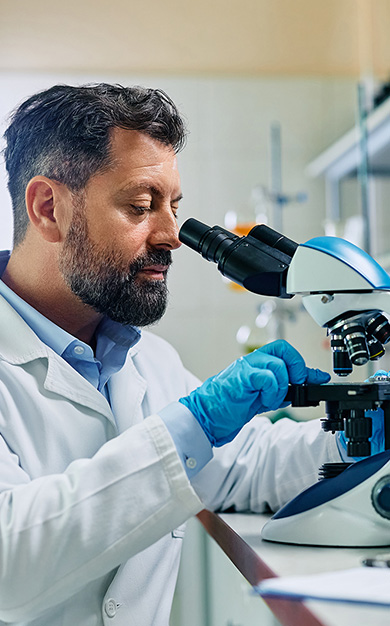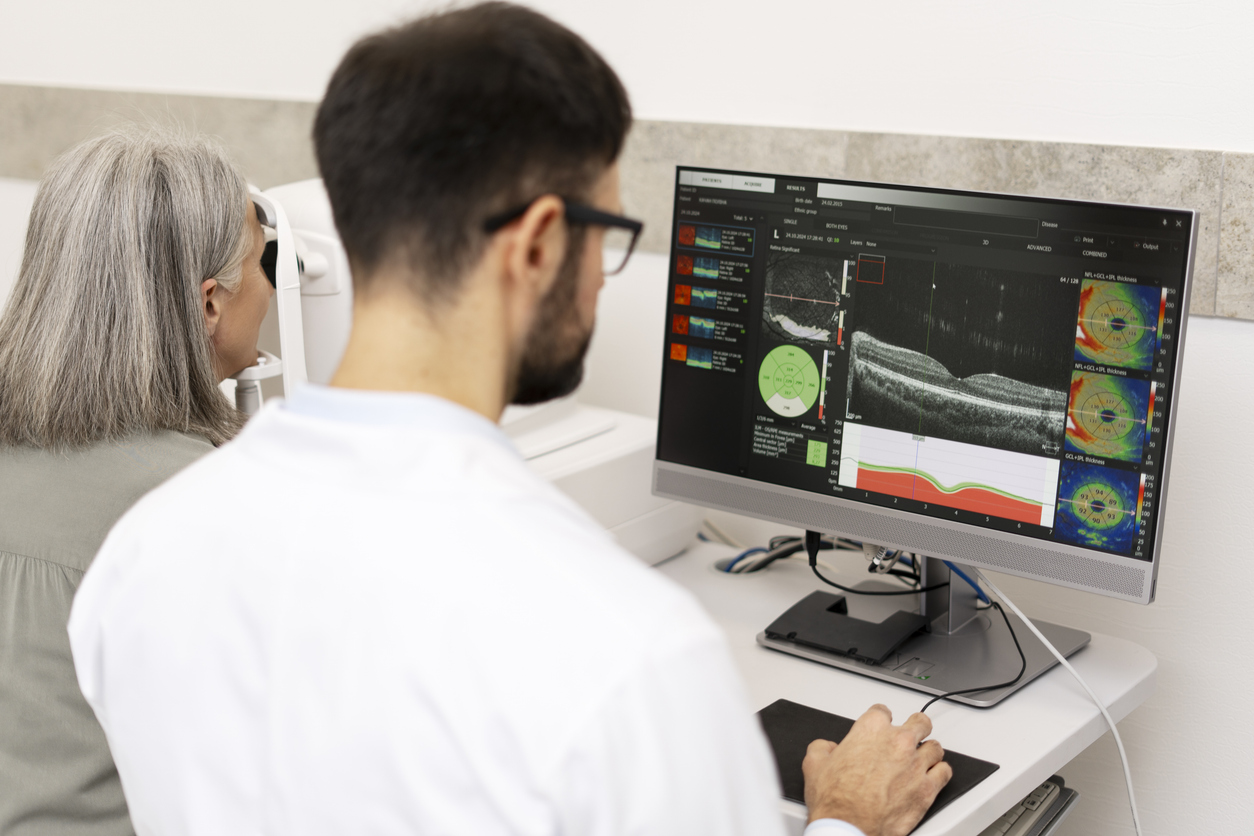
Much like a detective with a hunch, scientists are compelled to explore what possibilities an idea can bring about. They must collect early evidence, following the little clues that appear along the way until the mystery unravels itself over several years and often even decades.
Finding others to believe in them — especially during those early days — becomes the real challenge. What if the idea is so out of the box that others struggle to see the potential that lies ahead? All the scientist needs is that first “yes” to push their idea forward and bring about change that could impact the lives of countless others.
From early support to breakthrough status
Over a decade ago, Macular Degeneration Research, a BrightFocus Foundation program, funded one of these early hunches, a research project exploring a possible role for enriched vitamin A in treating vision disease. It was suspected that a form of enriched vitamin A may stop toxic clumps from appearing in the eye — a hallmark of macular degeneration.
The lead scientist’s goal was to collect enough evidence to determine if this treatment would be applicable in humans. With early funding, this first study ultimately led to the development of an oral pill now being tested in clinical trials. The treatment showed positive results for slowing vision loss in people with Stargardt disease — a genetic form of macular degeneration affecting about 30,000 people in the U.S. with no cure. The treatment is also in a Phase 3 clinical trial for treating geographic atrophy, a severe form of age-related macular degeneration.
Currently, there are no approved treatments for Stargardt disease. Two treatments are available for geographic atrophy but require regular eye injections. Those affected by these diseases are in need of more accessible, effective options. They need scientists brave enough to explore new ideas — and funders brave enough to say yes.
Fueling the next wave of innovation
Macular Degeneration Research supports bold, early-stage science across a wide range of approaches — from regenerating damaged retinal cells to exploring the roles of genetics, diet, and innovative treatment strategies. To date, the program has awarded nearly $53 million in research grants to scientists worldwide who are working to preserve and restore sight. By investing in promising ideas at their earliest stages, we help drive breakthroughs that may one day result in a cure for this leading form of blindness among older adults.
Saving sight is a fundamentally human imperative. It means more days spent watching the grandkids play and the sun come up with clear eyes. When we invest in bold ideas early, we’re not just funding research — we’re safeguarding the human experience. With the support of hundreds of individual donors, Macular Degeneration Research is helping turn scientific vision into real-world impact — bringing us closer to a future where everyone has the chance to see life’s most meaningful moments.
Learn more about our work to defeat macular degeneration and access free resources about diagnosis, treatment, risk reduction, and more at www.brightfocus.org/MDR.