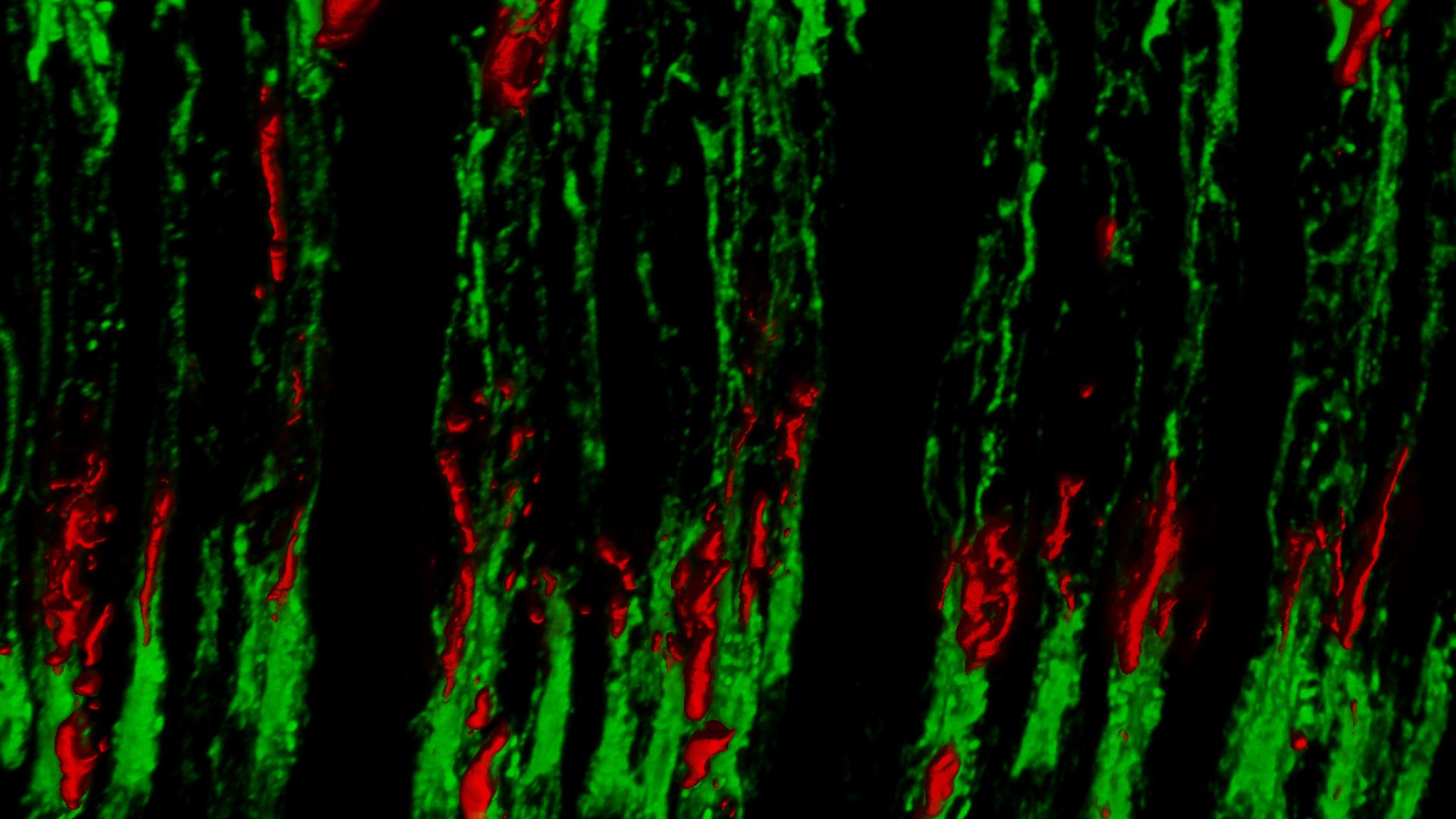


Role of Photoreceptors in AMD

Principal Investigator
Claudio Punzo, PhD
University of Massachusetts School of Medicine
Worcester, MA, USA
About the Research Project
Program
Award Type
Standard
Award Amount
$160,000
Active Dates
July 01, 2017 - August 30, 2019
Grant ID
M2017071
Goals
Age-related macular degeneration (AMD) is one of the leading causes for blindness in the elder population of the industrialized world. Besides aging of the body, it’s not well understood what causes the disease to occur in a certain percentage of elderly people, which makes it difficult to develop therapeutic strategies. Based on a new paradigm-shifting idea about how AMD develops, we have generated a new mouse model for the disease that for the first time shows a natural progression of most of the clinical pathologies found in humans, including geographic atrophy and wet AMD. Our new mouse model of AMD therefore allows us for the first time to study how AMD develops, which will help with the development of new rational therapeutic approaches.
Summary
Our hypothesis is that AMD is caused by photoreceptors, more precisely, by age-related metabolic adaptations in photoreceptors. To test this hypothesis we have generated a new mouse model with altered cell metabolism in photoreceptors. This mouse model recapitulates many features of human AMD. The goal of this study is twofold: First, to determine to which extent our new mouse model mimics the human pathology, and second, to identify the metabolic change in photoreceptors that precipitates AMD in our mouse model. In Aim 1, we will focus on the metabolic changes in rod photoreceptors, and in Aim 2, we will focus on those occurring in cone photoreceptors to determine whether the metabolic changes in photoreceptors that cause AMD are the same between the night active rod photoreceptors and the day active cone photoreceptors. The uniqueness of this study is that it proposes a paradigm-shifting view of our understanding of how AMD develops. Putting photoreceptors at the center of AMD’s development allows us to answer many of the unresolved questions regarding this disease. Successful completion of the study will thus redirect research efforts in the field and lay the groundwork for many researchers to identify novel therapeutic targets that can delay disease onset.
Related Grants
Macular Degeneration Research
Cellular Scale Measures of Short-Term Retinal Atrophy Progression
Active Dates
October 01, 2022 - September 30, 2025

Principal Investigator
Kristen Bowles Johnson, PhD, OD
Current Organization
Indiana University
Cellular Scale Measures of Short-Term Retinal Atrophy Progression
Active Dates
October 01, 2022 - September 30, 2025
Principal Investigator
Kristen Bowles Johnson, PhD, OD
Current Organization
Indiana University
Macular Degeneration Research
Investigating Multiarmed Cell Death (PANoptosis) in Dry AMD Progression
Active Dates
July 01, 2022 - June 30, 2025

Principal Investigator
Lucia Celkova, PhD
Current Organization
Trinity College Dublin (Ireland)
Investigating Multiarmed Cell Death (PANoptosis) in Dry AMD Progression
Active Dates
July 01, 2022 - June 30, 2025
Principal Investigator
Lucia Celkova, PhD
Current Organization
Trinity College Dublin (Ireland)
Macular Degeneration Research
Understanding the Role of Support Cells, Known as Glia, in Geographic Atrophy
Active Dates
September 01, 2020 - August 31, 2023

Principal Investigator
Malia Edwards, PhD
Current Organization
Wilmer Eye Institute
Understanding the Role of Support Cells, Known as Glia, in Geographic Atrophy
Active Dates
September 01, 2020 - August 31, 2023
Principal Investigator
Malia Edwards, PhD
Current Organization
Wilmer Eye Institute