


Astrocyte Reactions to Optic Nerve Damage
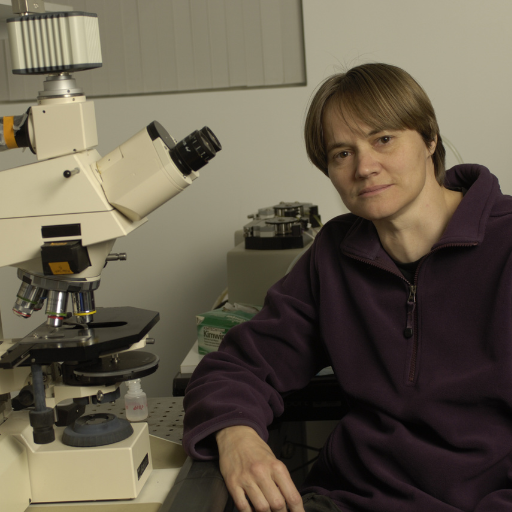
Principal Investigator
Tatjana Jakobs, MD
The Schepens Eye Research Institute, Mass. Eye and Ear
Boston, MA, USA
About the Research Project
Program
Award Type
Standard
Award Amount
$50,000
Active Dates
April 01, 2009 - June 30, 2010
Grant ID
G2009021
Acknowledgement
Goals
The optic nerve is damaged in glaucoma which interrupts the communication of the eye with the brain. Non-neuronal (glial) cells in the optic nerve may be directly involved, either by harming the nerve fibers, or by protecting them. It is therefore important to understand the role of these cells in glaucoma more fully.
Summary
In glaucoma, ganglion cells – the only retinal neurons that send axons to the brain – are damaged and eventually degenerate, leading to vision loss. Recent research suggests that the first insult to ganglion cells happen at the junction where their axons leave the eye and form the optic nerve. In this place, supporting non-neuronal cells (astrocytes) closely contact the nerve fibers, and the behavior of these astrocytes is clearly altered in glaucoma. But are these changes helpful or harmful? The answer to this question will indicate whether inhibiting or stimulating astrocyte function is a viable therapeutic approach to prevent vision loss. We have proposed two specific aims: (1) it is important to better understand the function of optic nerve astrocytes, in particular their reactions to increased intraocular pressure and nerve damage. For this purpose, a mouse strain will be used that develops glaucoma and shows individual astrocytes with a brightly fluorescent label. This allows observing these cells directly at a level of detail that is not possible with more conventional staining techniques. (2) To answer the question whether astrocytes are helpful or harmful, it is important to know the timeline of events in the optic nerve. If astrocytes show signs of disease before the nerve fibers do, it would suggest that they are harmful. If it is the other way around, they are more likely to play a protective role.
Related Grants
National Glaucoma Research
Developing New Drugs for Glaucoma
Active Dates
January 01, 2026 - December 31, 2027

Principal Investigator
Pete Williams, PhD
Current Organization
Karolinska Institutet
Developing New Drugs for Glaucoma
Active Dates
January 01, 2026 - December 31, 2027
Principal Investigator
Pete Williams, PhD
Current Organization
Karolinska Institutet
National Glaucoma Research
Mitochondria in Retinal Ganglion Cells
Active Dates
July 01, 2025 - June 30, 2027

Principal Investigator
Rob Nickells, PhD
Current Organization
University of Wisconsin-Madison
Mitochondria in Retinal Ganglion Cells
Active Dates
July 01, 2025 - June 30, 2027
Principal Investigator
Rob Nickells, PhD
Current Organization
University of Wisconsin-Madison
National Glaucoma Research
Role of a Key Gene, Angptl7, in Steroid-Induced Glaucoma
Active Dates
July 01, 2025 - June 30, 2027

Principal Investigator
W. Daniel Stamer, PhD
Current Organization
Duke University
Role of a Key Gene, Angptl7, in Steroid-Induced Glaucoma
Active Dates
July 01, 2025 - June 30, 2027
Principal Investigator
W. Daniel Stamer, PhD
Current Organization
Duke University