



News > Article
BrightFocus Foundation

The proposed 2026 federal budget released by the Trump administration would deliver crippling cuts to the National Institutes of Health (NIH). These cuts would threaten essential progress in the fight against Alzheimer’s disease, macular degeneration, and glaucoma—diseases of mind and sight impacting 1 in 7 Americans over age 40.
The proposal calls for a dramatic 40% cut to NIH and sweeping consolidation of its 27 institutes and centers into just eight, including a plan to merge the following specialized agencies into a broader National Institute on Neuroscience and Brain Research:
This restructuring would dilute NEI’s singular focus on vision research, causing setbacks in the fight against blinding diseases, and compromise NINDS’ ability to advance research into Alzheimer’s and related dementia.
In 2025, NINDS received about $2.6 billion to support a broad range of neurological research, and NEI received $896 million. Under the new proposal, the combined budget for all three institutes is just $2.445 billion—nearly $2 billion less than what NINDS alone was allocated in 2025.
In addition to stalling essential progress toward Alzheimer’s and related dementia and vision research by cancelling and delaying grant funding, the proposal would interrupt clinical trials and eroding the workforce through the loss of top scientific talent to other countries and industries.
“As the world’s largest public funder of biomedical research, NIH is the lifeblood of scientific discovery. If enacted, these federal budget cuts will have stark short- and long-term ripple effects on science and the research community—slowing progress, risking lives, and stalling hope for millions of Americans and their families,” said BrightFocus President and CEO Stacy Pagos Haller.
BrightFocus is joining together with hundreds of research institutions, patient groups, academic centers, medical societies, and industry partners to ask Congress to protect the future of science and innovation by fully funding the NIH.
This week, BrightFocus joined 480 researchers and organizations including patient advocacy organizations and health nonprofits, trade and professional associations, academic research and clinical institutions, home and residential care providers, and biotechnology and pharmaceutical companies urging the Senate and House Appropriations Committees to make sustained and robust investments in Alzheimer’s disease and dementia research and ensure that the work of scientists, research institutions, clinicians, and social service providers is not disrupted. Read the full letter, issued by the Leaders Engaged on Alzheimer’s Disease (LEAD) Coalition.
Earlier this year, BrightFocus urged Congress to maintain vision as a priority by keeping the National Eye Institute a dedicated institute within NIH, reject the blanket 15% indirect rate cap proposal on NIH grants, and increase NEI funding to $1 billion in FY26 to address rising public health needs. Read the letter issued by the National Alliance for Eye and Vision Research.
BrightFocus Foundation, through its flagship programs Alzheimer’s Disease Research, Macular Degeneration Research, and National Glaucoma Research, is a leading private supporter of research to defeat Alzheimer’s disease, macular degeneration, and glaucoma. We receive no government funding and are entirely supported by individual contributions.
Most of our grants to scientists support early-stage research, ensuring fresh perspectives are brought to the forefront and offering an increased return on research investment over time through novel discoveries that fuel the field.
On average, BrightFocus-funded researchers go on to receive eight times the amount of their initial BrightFocus grant from larger funding sources such as NIH. This follow-on support is what moves discoveries forward—without it, transformative research could be lost. Learn how to support our work and help keep the pipeline of innovation strong for generations to come.
BrightFocus will continue to monitor the administration’s budget and its impact on research, and we’ll keep you updated as more details emerge.
BrightFocus Foundation is a premier global nonprofit funder of research to defeat Alzheimer’s, macular degeneration, and glaucoma. Since its inception more than 50 years ago, BrightFocus and its flagship research programs—Alzheimer’s Disease Research, Macular Degeneration Research, and National Glaucoma Research—has awarded more than $300 million in research grants to scientists around the world, catalyzing thousands of scientific breakthroughs, life-enhancing treatments, and diagnostic tools. We also share the latest research findings, expert information, and resources to empower the millions impacted by these devastating diseases. Learn more at brightfocus.org.
Disclaimer: The information provided here is a public service of BrightFocus Foundation and is not intended to constitute medical advice. Please consult your physician for personalized medical, dietary, and/or exercise advice. Any medications or supplements should only be taken under medical supervision. BrightFocus Foundation does not endorse any medical products or therapies.

BrightFocus Foundation supports the bipartisan appropriations bill for fiscal year 2026, which provides critical federal funding for brain and eye research.
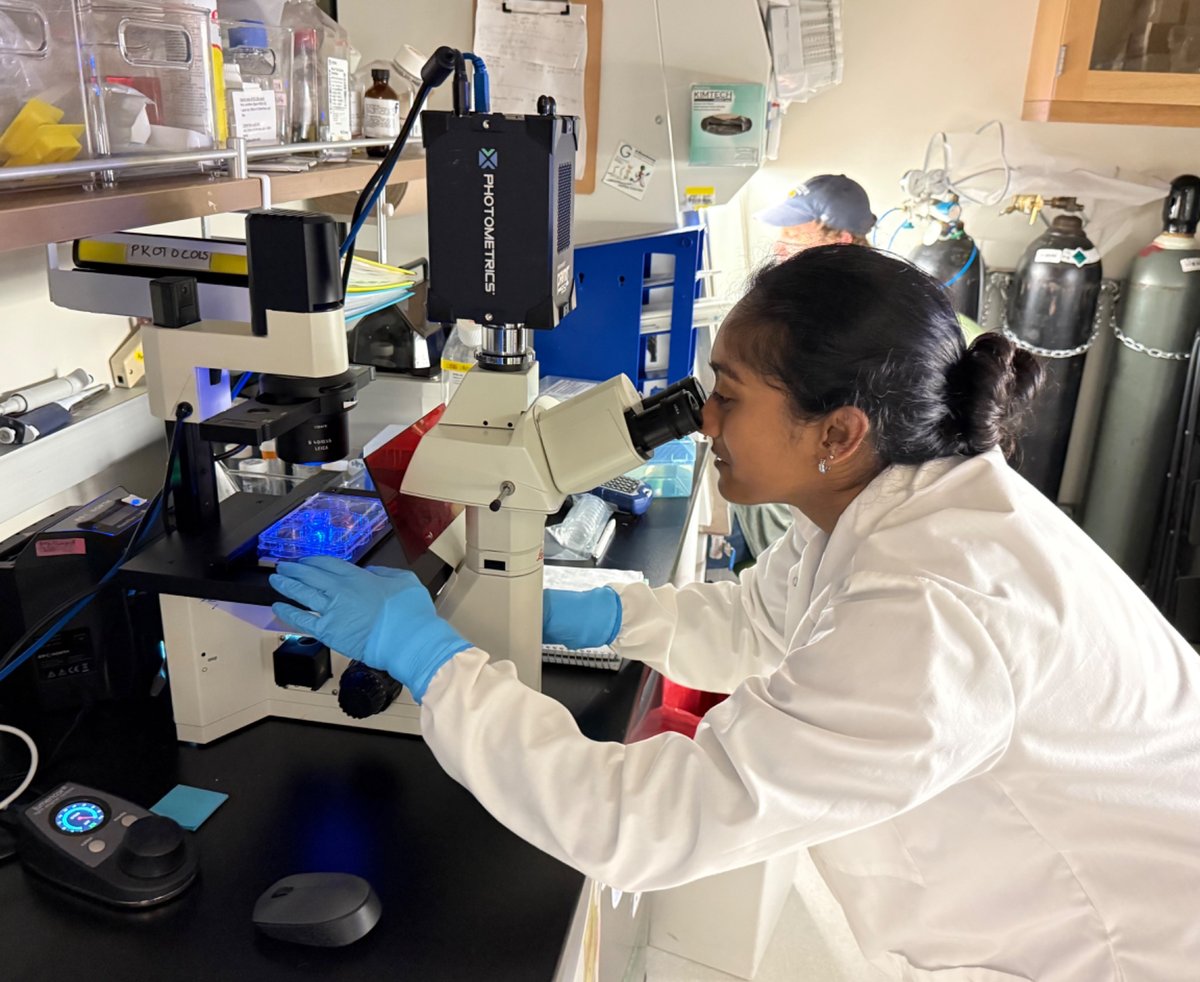
BrightFocus is proudly supporting 186 cutting-edge research grants, fueling the global fight against Alzheimer’s disease, macular degeneration, and glaucoma.
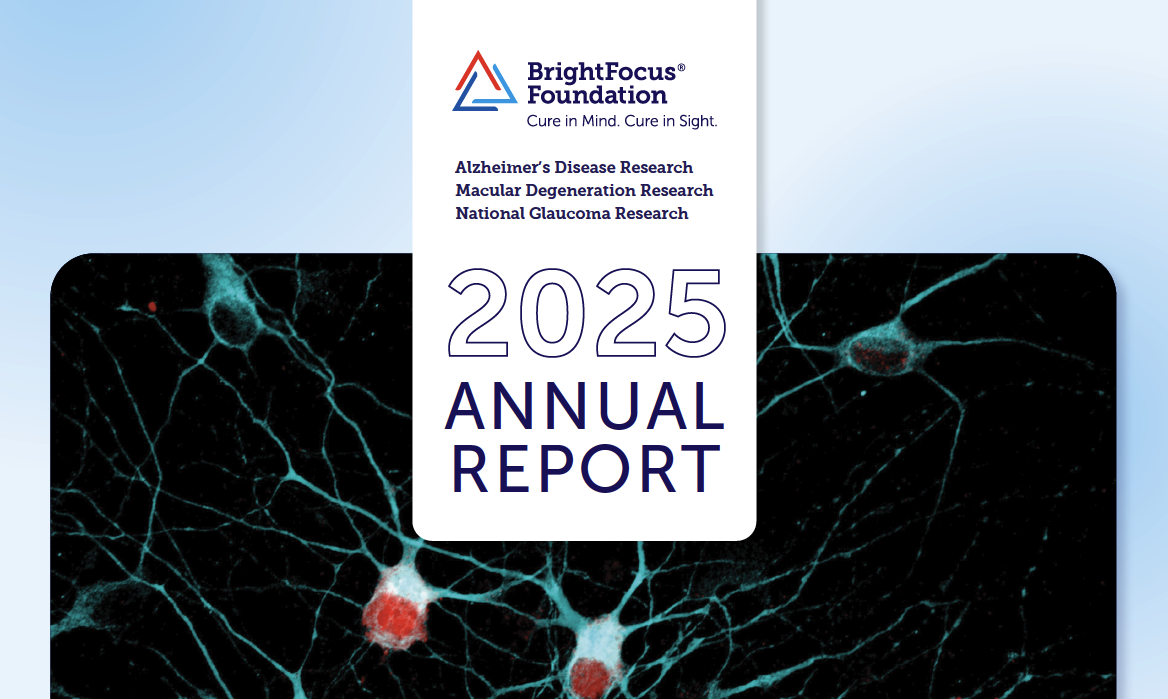
BrightFocus Foundation’s 2025 annual report celebrates groundbreaking research and public awareness.

Jimmy Liu, PhD, has joined BrightFocus as Director of Vision Science Programs, bringing deep expertise in eye disease research and a passion for advancing the next generation of vision treatments.
Donate Now to Fund Critical Research
Your gift today can help drive innovation in Alzheimer's, macular degeneration, and glaucoma research. By donating, you’ll support life-changing research and provide valuable resources for those affected by these devastating diseases. Give now to fuel hope and bring us closer to finding cures.