


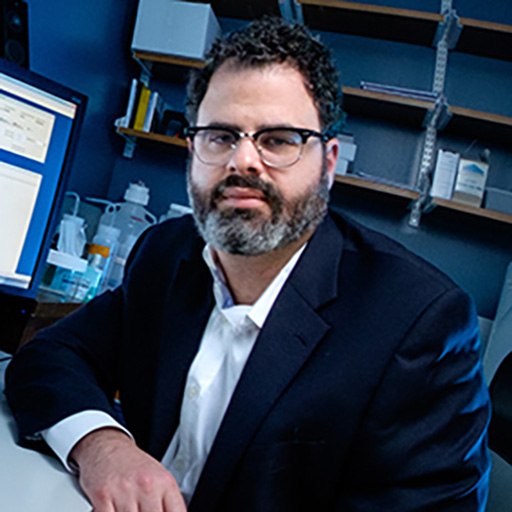
DanielSaban
PhD
Location
USA
Current Organization
Duke University Eye Center
Biography
Daniel R. Saban, PhD is the Joseph A.C. Wadsworth Distinguished Professor of Ophthalmology, Integrative Immunobiology, and Pathology at Duke University School of Medicine, and a member of the Faculty Network in the Duke Institute for Brain Sciences. His scientific journey began by studying the longstanding problem of how antigen-presenting cells are regulated in the immune-privileged environment. His approach to take advantage of the eye—where immune-privilege is arguably most well-characterized—sparking his enduring fascination with the eye as a model organ for studying fundamental immunology (Reyes, 2017). Building on this unique expertise, Saban’s laboratory harnesses the eye’s exceptional accessibility now to understand macrophage-neuron interactions under physiologic and diseased states. Using a powerful combination of in vivo imaging, electrophysiology, and behavioral analyses, his team can observe and manipulate immune cells and neurons in real-time. Studying the mouse retina in this way led to the first direct in vivo evidence of microglial heterogeneity at the functional level (O’Koren, 2019), with implications for both homeostasis and neurodegenerative states, including retinal degenerative diseases. Critical in this work was the application of tools to study native microglia versus recruited monocyte-derived macrophages (Yu, 2020). Most recently, Dr. Saban’s team has turned their attention to the peripheral nervous system, leveraging the cornea’s unique properties. This remarkable tissue, densely packed with nerves and in constant dialogue with the immune system, serves as an ideal platform for studying neuroimmune interactions. Through these research efforts, his team is uncovering fundamental principles of neuroimmune communication that will have broad implications for understanding various pathological conditions.
Grants
Macular Degeneration Research
Microglia’s Roles in AMD to Inform Therapies for Vision Loss Prevention
Active Dates
July 01, 2025 - June 30, 2027
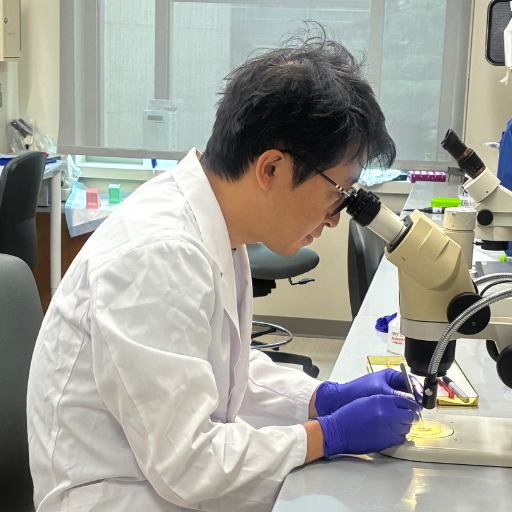
Principal Investigator
Nobuhiko Shiraki, PhD
Current Organization
Duke University School of Medicine
Microglia’s Roles in AMD to Inform Therapies for Vision Loss Prevention
Active Dates
July 01, 2025 - June 30, 2027
Principal Investigator
Nobuhiko Shiraki, PhD
Current Organization
Duke University School of Medicine
Macular Degeneration Research
Role of Bona Fide Microglia in Retinal Degeneration
Active Dates
July 01, 2017 - June 30, 2019
Principal Investigator
Daniel Saban, PhD
Current Organization
Duke University Eye Center
Role of Bona Fide Microglia in Retinal Degeneration
Active Dates
July 01, 2017 - June 30, 2019
Principal Investigator
Daniel Saban, PhD
Current Organization
Duke University Eye Center