


Identifying Which Retinal Ganglion Cell Types Die Earlier in Glaucoma
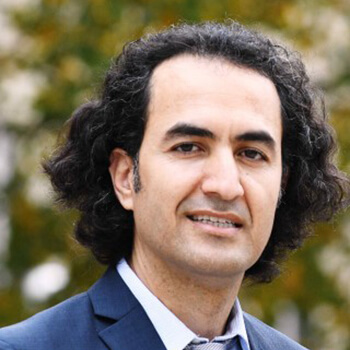
Principal Investigator
Siamak Yousefi, PhD
University of Tennessee Health Science Center
Miami, FL, USA
About the Research Project
Program
Award Type
Standard
Award Amount
$180,000
Active Dates
September 01, 2020 - August 31, 2023
Grant ID
G2020374
Goals
Glaucoma is the second leading cause of blindness worldwide. It affects over 90 million people, and its incidence is predicted to rise 2-fold over the next two decades. Glaucoma-induced vision loss and blindness result from the slow degeneration and death of retinal ganglion cells (RGCs). In humans, the large population of RGCs can be subdivided into at least 30 subtypes. The susceptibility of RGC subtypes to glaucoma-induced cell degeneration differs significantly. But it has been surprisingly difficult to identifying both RGC subtypes and their susceptibility to glaucoma. For the past three years, we have been developing single-cell technologies to study both RGC type and the early signature of glaucoma-associated cellular stress. We will develop artificial intelligence (AI) approaches to identify RGC subtypes that are more susceptible to glaucoma-induced insult. Our results could advance our understanding of the genetic bases for glaucoma-induced RGC cell death and possible therapeutic interventions.
Summary
Our long-term goal is to identify the impact of glaucoma on retinal ganglion cell (RGC) subtypes using transcriptome analysis of single retinal cells generated using powerful mouse models of glaucoma. The objective of our study is to develop and refine novel artificial intelligence (AI) approaches to study single-cell RNA-sequencing (scRNA-seq) data and to identify RGC subtypes that are more impacted by glaucoma. We hypothesize that state-of-the-art AI algorithms can delineate RGC subtypes from scRNA-seq data and subsequently improve the identification of the subtypes affected in the early stages of glaucoma. Such findings may advance our understanding of the genetic bases for glaucoma-induced RGC cell death leading to possible therapeutic interventions, such as nicotinamide and pregabalin.
Related Grants
National Glaucoma Research
Understanding Optic Nerve Head Astrocyte Contributions to Glaucoma
Active Dates
July 01, 2026 - June 30, 2028

Principal Investigator
Evan Cameron, PhD
Current Organization
Cleveland Clinic - Lerner Research Institute
Understanding Optic Nerve Head Astrocyte Contributions to Glaucoma
Active Dates
July 01, 2026 - June 30, 2028
Principal Investigator
Evan Cameron, PhD
Current Organization
Cleveland Clinic - Lerner Research Institute
National Glaucoma Research
Exploring Glucagon-Like Peptide-1 Receptor Agonists for the Treatment of Glaucoma
Active Dates
July 01, 2026 - June 30, 2028

Principal Investigator
Qi Cui, MD, PhD
Current Organization
University of Pennsylvania, Perelman School of Medicine
Exploring Glucagon-Like Peptide-1 Receptor Agonists for the Treatment of Glaucoma
Active Dates
July 01, 2026 - June 30, 2028
Principal Investigator
Qi Cui, MD, PhD
Current Organization
University of Pennsylvania, Perelman School of Medicine
National Glaucoma Research
Using AI to Detect Loss of Connections Between Neural Cells in Glaucoma
Active Dates
July 01, 2026 - June 30, 2028

Principal Investigator
Luca Della Santina, PhD, PharmD
Current Organization
University of Houston
Using AI to Detect Loss of Connections Between Neural Cells in Glaucoma
Active Dates
July 01, 2026 - June 30, 2028
Principal Investigator
Luca Della Santina, PhD, PharmD
Current Organization
University of Houston