


Stop Glaucoma: Eye Exams Save Sight
Most Americans aren’t visiting an eye doctor as often as they should to catch the early signs of glaucoma. This and other serious vision conditions can only be detected through a comprehensive, dilated eye exam—yet just half of people at high risk for vision loss visit an eye doctor every year. Half of those living with glaucoma may not even know they have it until permanent vision loss has already occurred. National Glaucoma Research, a BrightFocus Foundation program, funds innovative research around the world to better prevent, treat, and cure glaucoma and provides expert information on this disease. This nationwide public service campaign in English and Spanish raises awareness of the importance of regular, dilated eye exams for early detection of sight-stealing diseases like glaucoma. Learn about actions you can take today to protect your sight.
Watch the PSA
Perspectives
Stories of Glaucoma

Larry’s Story
Larry, an educator from North Carolina, lost his vision to glaucoma at age 56. Now, he’s a passionate advocate for the low vision community.

Hillary’s Story
During a routine eye exam for a stye, Hillary learned she had normal-tension glaucoma—after already losing 40% of her sight.

Cynthia’s Story
Cynthia knew she was at high risk for glaucoma. Regular eye exams help her protect her sight—and life’s joyful moments.

Get The Facts
- Glaucoma is a group of eye diseases that damage the optic nerve, leading to vision loss or complete blindness.
- The most common types of glaucoma often have no symptoms until irreversible damage to the eye has already occurred and vision loss has begun. That’s why glaucoma is called the “sneak thief of sight,” and why regular screening and early detection are so important.
- More than 4 million U.S. adults have glaucoma, and as many as half may not know they have it. Black people and Latinos are at higher risk of glaucoma.
- No matter your age, regular eye examinations are critical to detect these signs as soon as possible and prevent or delay permanent vision loss.
Understanding Glaucoma
Download a brochure explaining the various forms of glaucoma, tips for lowering your risk, how the disease is diagnosed and treated, and essential questions to ask your doctor.
Want a printed version? Call us at 855-345-6637 and we’ll mail one to you.
Explore More
Resources
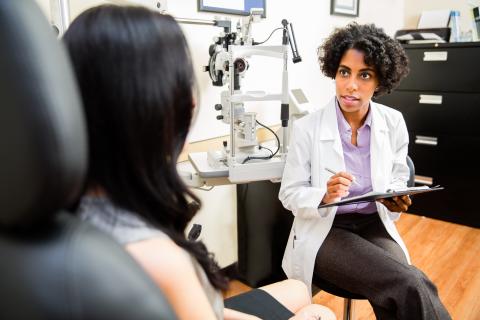
Questions to Ask Your Eye Doctor
Preparing ahead of time can help you best manage your vision health. Here are some questions you can take along when you visit the eye doctor.
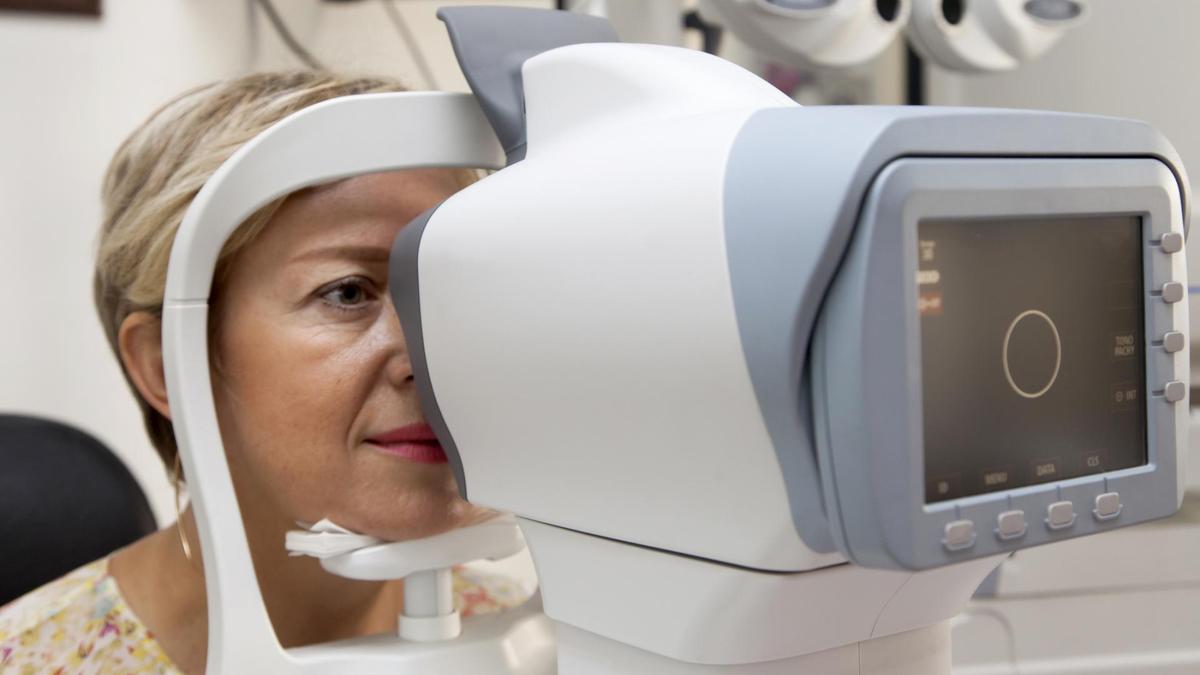
6 Common Tests for Glaucoma
An eye exam for glaucoma may include the visual field test, corneal thickness and angle tests, optic nerve imaging, or an eye pressure check.

Know Your Risk of Glaucoma
Age, race and ethnicity, and family history can all affect your risk of developing glaucoma.

Talking With Family Members About Glaucoma History
Family history is one of the biggest risk factors for glaucoma—having a first-degree relative with glaucoma can increase disease risk up to 10 times.

Tips for Healthy Vision
Whether you’ve been diagnosed with glaucoma or are at risk of developing it, a healthy lifestyle that includes regular exercise and a nutritious diet is especially important.
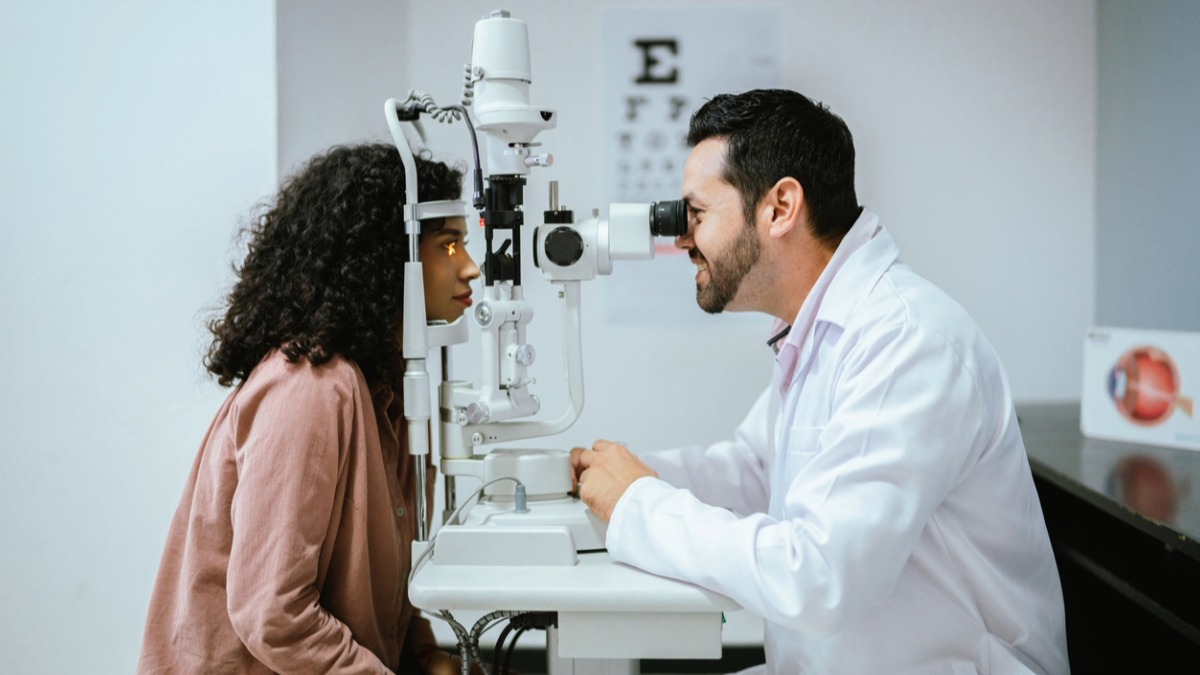
Glaucoma in the African American and Hispanic Communities
African Americans and Hispanics are at increased risk of developing glaucoma.
Help Fight Glaucoma & Save Sight
National Glaucoma Research funds groundbreaking studies on the root causes, prevention, and treatment of this sight-stealing disease. Support future breakthroughs and help bring vital information to the public.